
In Shinjuku, the tiny bars tucked into the lanes light their lanterns while office workers pour out of glass towers. A few stops away, Asakusa is full of the smell of grilled rice crackers and incense around its old temple.
Tokyo is a metropolis of many centers, and where you sleep decides which of these scenes becomes your neighborhood.
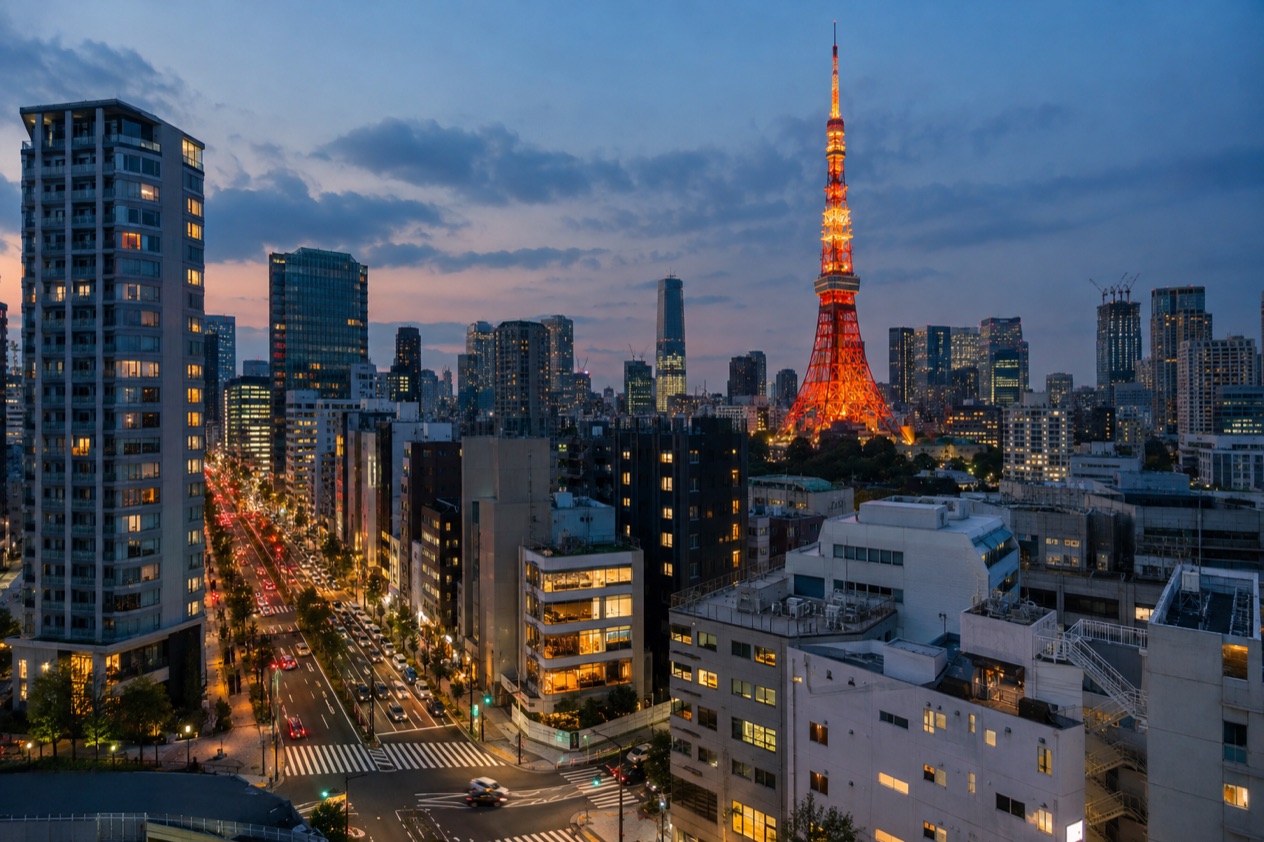
What is the best area to stay in Tokyo?
For a first visit, Shinjuku and Shibuya make the most natural bases, Asakusa suits travelers who want temples and old shops outside the door, Ginza and Nihonbashi suit a polished stay built around shopping and dining, and Roppongi suits those who plan late nights. Tokyo sits on Tokyo Bay, in the Kanto region, and the city is a patchwork of districts that each feel like a town of their own. Choosing an area is less about the hotel than about the street you want to step into at breakfast and the one you want to come home to at night.
The districts differ in mood more than in what they offer. The west side, with Shinjuku, Shibuya and Harajuku, is the Tokyo of skyscrapers, fashion and crowded crossings. The east side, around Asakusa, keeps the older rhythm of temple streets and craft shops. The center, around Ginza and Nihonbashi, is a place of department stores, banks and long dinners, and the south, with Roppongi, leans toward evenings out.
First visit and sightseeing
If this is your first time in Tokyo, Shinjuku and Shibuya give you the picture most people carry in their heads: neon, towers, department stores and streets that stay lit after dark. Both sit in the western part of the city, along with Harajuku, Aoyama and Omotesando, so a day of wandering can move from a youth-fashion lane to a tree-lined boulevard without any planning.
Asakusa gives a different first impression. Staying there means waking up in what is described as the heart of downtown Tokyo, with ancient temples and traditional shops as your neighbors. It suits travelers who prefer to start with history and add the skyscrapers later in the trip.
Shopping and dining
Tokyo is known for fashion and shopping, and the areas split the job. Harajuku and Shibuya are the trendy districts, with young labels and street style, while Ginza holds the luxury flagship stores and high-end restaurants. Nihonbashi adds an older merchant character, with heritage that goes back far beyond the glass of its modern streets.
If your days are planned around browsing and long meals, a hotel in Ginza or Shibuya lets you drop bags back in your room between stops. The mood differs sharply, though. Ginza feels polished and grown-up, while Shibuya feels younger and louder.
Nightlife
Two districts stand out after dark. Shinjuku combines glittering skyscrapers with lively alleys of tiny bars, where a counter might seat only a handful of people. Roppongi is popular for nightlife, especially among foreign visitors, and its clubs and late restaurants set the tone of the area.
If you want to be out until the last hours, sleeping in one of these two districts spares you the trip across town at the end of the night. Light sleepers might prefer a hotel on a side street rather than directly above the bar lanes.
Families and budget stays
For families and travelers watching their spending, the kind of lodging matters as much as the district. Business hotels, guesthouses and apartments appear across the city, so the useful question is how you will move around each day. A family with a full schedule of sights may be happier near a station with several lines, which is why Shinjuku, Ginza and Roppongi, each served by multiple metro lines, come up so often.
Asakusa is a good fit for families who want to spend their first morning among temple grounds and shop-lined lanes. Whatever the district, check the layout of the hotel’s surroundings on a map so you know how you reach the nearest station with a stroller or luggage.
The best areas to stay in Tokyo
Shinjuku
Shinjuku is a thriving business district that mixes glittering skyscrapers with lively alleys filled with tiny bars. By day it is a place of offices and department stores. After dark the lanes take over, with smoky yakitori counters, small izakaya (Japanese pubs) and bars with only a few stools. It is part of western Tokyo, alongside Shibuya, Harajuku and Nakano.
The area suits first-time visitors, night owls and anyone who likes to be in the thick of things. Lodging here ranges from large towers to business hotels, with smaller guesthouses and apartments in the streets around. Because it is a major business district, many rooms are built for people arriving with a suitcase and a schedule.
A tip: wander the alleys on your first evening, then decide which lane you want to come back to. The neon can feel overwhelming at first, but each small bar has its own character.
Shibuya and Harajuku
Shibuya and Harajuku are the trendy shopping districts of Tokyo. Shibuya is where the big crossing, department stores and late cafés sit. Harajuku runs on youth fashion, with side streets of small boutiques. Aoyama, Omotesando, Daikanyama and Shimokitazawa are all part of western Tokyo and add quieter shopping lanes, coffee shops and vintage stores.
This is an area for travelers who like energy at their door and shops within reach. Hotels here include modern towers, design-minded boutique hotels and smaller guesthouses. Roppongi and Akasaka can be reached from Shibuya Station in about ten minutes by train, which makes Shibuya a base for an evening elsewhere. A tip: pick your hotel according to which side of the district you want, the fashion lanes toward Harajuku or the late-night streets around Shibuya Station itself.
Asakusa
Asakusa is the heart of downtown Tokyo, with its ancient temples and traditional shops. It belongs to eastern Tokyo, along with Ryogoku, Skytree and the Fukagawa area. The lanes near the temple fill with stalls selling sweets and souvenirs, and the neighborhood keeps an older, slower rhythm than the glass districts of the west.
It suits travelers who like a lived-in feel, couples after a traditional atmosphere and anyone planning to see the temple and the surrounding streets at their own pace. Lodging tends toward guesthouses, small hotels and apartments, with a few inns that borrow from the ryokan style. A tip: the evenings are calmer here than in Shinjuku or Roppongi, so expect to travel to another district if you want a big night out.
Ginza and Nihonbashi
Ginza is an upscale downtown area with high-end restaurants and luxury shops, and the main shopping district sits right behind Ginza Station. Nihonbashi is known for its rich heritage and is the main financial district of Japan. Together they form a central, polished stretch of the city where department stores and offices share the sidewalks.
Ginza Station is served by the Tokyo Metro Hibiya, Marunouchi and Ginza lines. To reach the Nihonbashi shopping area, take the Hanzomon or Ginza line to Mitsukoshimae Station. The area suits travelers who want refined dining, shopping and a central base, in business hotels and larger hotels. A tip: central Tokyo also includes Tokyo Station and Marunouchi, Tsukiji and Akihabara, so a stay here puts several different districts on your list.
Roppongi and Akasaka
Roppongi is popular for nightlife, especially among foreign visitors, and the district name, meaning six trees, dates to the 1660s. Roppongi and Akasaka also host Japan’s largest film festival, which fills the district with screenings and red-carpet events. Both districts belong to the southern and central parts of the city, with Azabu Juban and Tokyo Tower nearby.
Roppongi Station is served by the Hibiya and Oedo lines, Nogizaka Station by the Chiyoda Line and Roppongi-Itchome Station by the Namboku Line. The area suits travelers who plan late evenings and want varied dining. Lodging includes international hotels and apartments. A tip: if you plan to sleep early, ask for a room facing away from the main nightlife streets.
Tokyo areas compared
The five areas differ in energy, in what sits at the door and in the lines that serve them. Reading across the rows shows quickly which one fits the way you like to travel.
| Area | Best for | Feel | Getting around |
|---|---|---|---|
| Shinjuku | First visit, nightlife | Skyscrapers and lanes of tiny bars | Part of western Tokyo |
| Shibuya and Harajuku | Fashion, shopping | Trendy shopping districts | Roppongi and Akasaka reached in about 10 minutes by train from Shibuya Station |
| Asakusa | Temples, traditional shops | Heart of downtown Tokyo, ancient temples | Part of eastern Tokyo |
| Ginza and Nihonbashi | Luxury shopping, dining, heritage | Upscale downtown and financial district | Ginza Station on the Hibiya, Marunouchi and Ginza lines. Mitsukoshimae Station on the Hanzomon and Ginza lines |
| Roppongi and Akasaka | Nightlife, film festival | Late evenings, popular with foreign visitors | Hibiya and Oedo lines at Roppongi, Chiyoda Line at Nogizaka, Namboku Line at Roppongi-Itchome |
The first trade-off is between being beside a big station and being on a side street. A hotel near Shinjuku or Shibuya Station puts you in the middle of the current, with shops and food at the door but also a steady flow of people. A room on a side street gives you a calmer entrance, at the cost of a walk to the trains.
The second trade-off is between the old town and the new. Asakusa gives you temples, traditional shops and an older rhythm, while Shinjuku and Shibuya give you towers, neon and the pace most visitors imagine. Ginza and Nihonbashi sit between the two, with luxury stores next to a district of heritage and finance.
The third is between the evening you want and the morning you want. Roppongi and Shinjuku reward late nights, but a hotel above the bar lanes may not suit an early start. Asakusa is calmer after dark, which suits travelers who want to be up for a temple visit and then explore the rest of the city.
Light matters too. Nights draw in around five o’clock in winter, while summer evenings stay bright until around half past seven. In winter, a hotel in a lit, lively district gives you somewhere to be after dark, while in summer you can linger outdoors a little longer wherever you stay.
How to choose your hotel in Tokyo
Choose the kind of lodging first and the district second, because Tokyo offers several quite different ways to sleep. A hotel gives you a conventional room and a lobby. A ryokan gives you a traditional inn with its own rituals. A capsule hotel, a business hotel and a guesthouse each fit a different style of trip.
Hotels in the big districts
In Shinjuku, Shibuya, Ginza and Roppongi, hotels are usually built around the station and the shopping streets nearby. Larger towers have lobbies, restaurants and rooms that look out over the lights, while boutique hotels and smaller properties sit on side streets.
When comparing rooms, think about the walk from the nearest station exit and what the surrounding streets are like at night. A room in a lively area gives you nightlife on the doorstep, while one on a calmer street gives you a gentler return.
Ryokan and heritage stays
Ryokan, traditional Japanese inns, are believed to have emerged in Japan in the 8th century. A stay typically includes tatami floors, futons, private baths (sometimes outdoor), yukata (light cotton robes), a kaiseki dinner (a multi-course meal) and a traditional Japanese breakfast. It is a way of sleeping that is part of the trip, not only a bed.
Heritage Stays go a step further. Guests can take part in cultural activities such as tea ceremony and calligraphy, or wear traditional Japanese clothing. Reservations for Heritage Stays are required and can often be made through the property’s website or by phone. These stays suit travelers who want the lodging itself to be a cultural experience.
Capsule hotels, business hotels and guesthouses
A capsule hotel offers a compact sleeping pod, a business hotel a plain, practical room, and a guesthouse a smaller, often more personal setting. They are found in many parts of the city, including the central districts and the older neighborhoods of the east.
These options suit travelers who spend their days out and use the room mainly to sleep. The question to ask is what the property gives you besides the bed, whether that is a shared lounge, a lobby or a street full of places to eat.
Families and mobility
Families and travelers with limited mobility should look closely at how a hotel connects to the nearest station. Tokyo stations can be large, and stations such as Shinjuku and Shibuya have many exits, so it helps to know which exit leads to your hotel. A hotel near a station served by several metro lines, as Ginza and Roppongi are, can reduce transfers.
If your plans center on temples, a base in Asakusa puts the old streets close. Suitcases are part of this picture too, since the airports, Haneda and Narita, lie outside the central districts, and your first and last trips will involve luggage.
Good to know before you go
Tokyo is served by two airports, Haneda Airport (officially Tokyo International Airport) and Narita Airport, Japan’s largest international airport. The city is nine hours ahead of GMT and does not use daylight saving time. Electricity in Japan runs at 100V with type A sockets, two flat holes, and foreign appliances will need a frequency converter and plug adaptor.
Sources
- Japan National Tourism Organization, Tokyo (https://www.japan.travel/en/destinations/kanto/tokyo/), checked October 11, 2026
- GO TOKYO, the official Tokyo travel guide (https://www.gotokyo.org/en/), checked October 11, 2026
- GO TOKYO, getting around (https://www.gotokyo.org/en/plan/index.html), checked October 11, 2026
- GO TOKYO, spots (https://www.gotokyo.org/en/spot/index.html), checked October 11, 2026
- Japan National Tourism Organization, ryokan stays, what is included, etiquette (https://www.japan.travel/en/guide/japanese-ryokan/), checked October 11, 2026
- Japan National Tourism Organization, heritage stays (https://www.japan.travel/en/heritage-stays/), checked October 11, 2026
To plan your stay
- Best Time to Visit Tokyo: Cherry Blossoms, Autumn Leaves, Weather by Month and Festivals
- Things to Do in Tokyo: Temples, Towers, Markets and Day Trips
- Tokyo from the airport: Narita and Haneda, the Skyliner, Local Trains and Taxis
- Know Before You Go to Tokyo: Entry, Money, Getting Around and Local Etiquette