
Steam rises from vents between the houses of Beppu, and in a few spots the ground itself seems to be cooking. Eggs go into baskets lowered into hot water, and a faint mineral smell drifts along the street.
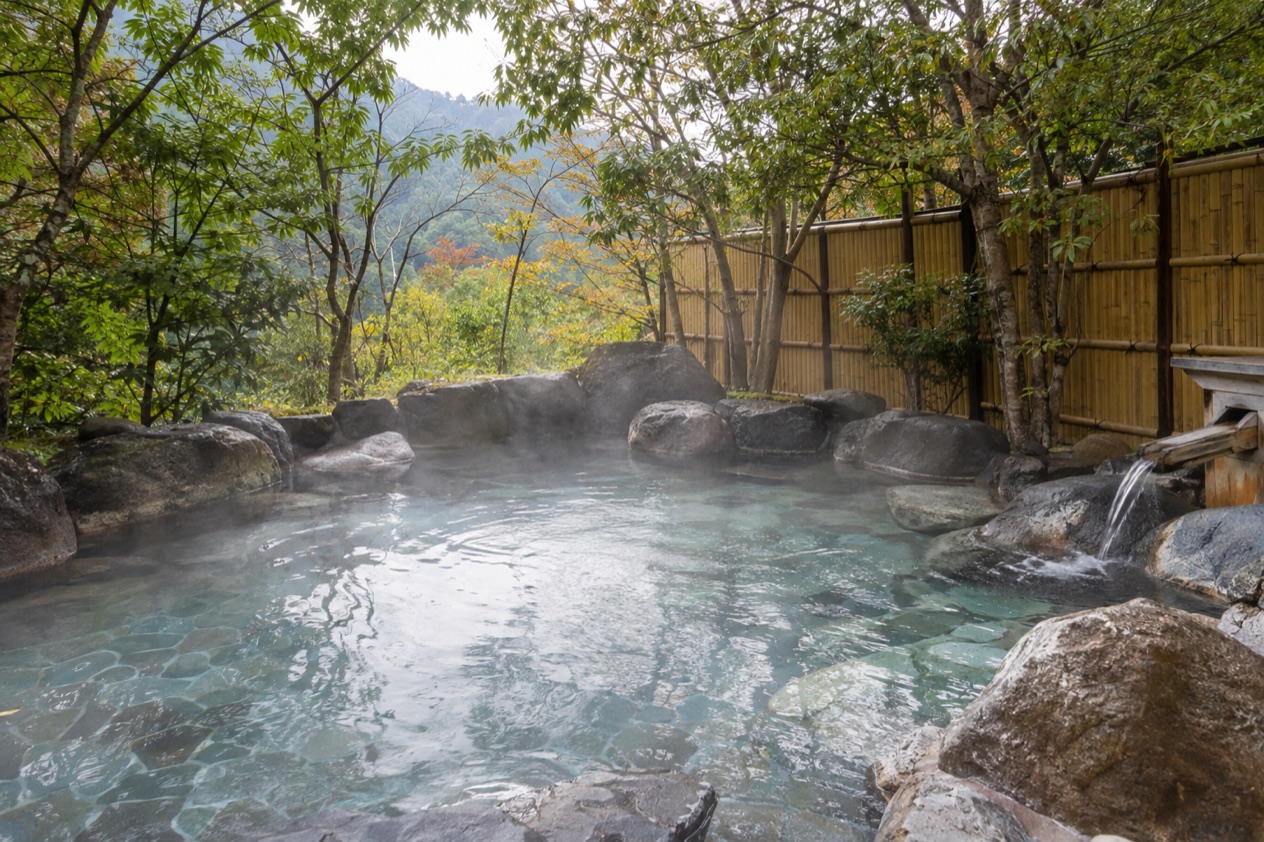
What is Beppu Onsen?
Beppu Onsen is the hot spring landscape of Beppu, a town in Oita prefecture on the island of Kyushu where thermal water shapes the look of the place. Onsen are Japan’s natural hot springs, and the word also covers the baths, inns and towns built around them.
In Beppu the water is not only something to soak in. It also bubbles, steams, colors pools and shoots up as a geyser, and visitors walk from one spring to the next to see it.
That distinction matters when you plan your days. The Hells of Beppu are hot springs intended for viewing rather than bathing, so a visit to them is closer to touring a garden of strange pools than to a day at the baths. The ordinary onsen of a town like this, with a changing room, a tiled or stone bath and a towel over your shoulder, are a separate pleasure and belong to a different part of the day.
Springs for looking, springs for soaking
Japanese hot spring culture rests on a simple idea: water heated by the earth is worth traveling for. In the baths themselves, habits are well known. You wash before you get in, you leave your shoes at the entrance, and the bath is a place to sit quietly, not to swim. A yukata, the light cotton robe handed out at many inns, often goes with an evening soak.
The hells are the other side of the same landscape. Here the water is too hot and too mineral-heavy to enter, and the point is to stand at the edge and watch. Think of them as the town’s open-air displays: a few minutes at each, a look at the color of the water, a cloud of steam on your face, then on to the next.
What a day in a hot spring town feels like
A day in Beppu tends to move at the pace of the water. You walk, you stop where steam is coming out of the ground, you eat something cooked by the heat of a spring, and you finish in a bath. Onsen eggs, called onsen tamago, are the small emblem of this: eggs cooked gently in hot spring water until the white is barely set and the yolk is creamy.
At Sea Hell, the water is used to boil exactly those eggs, and the temperature there is 98 degrees Celsius. That makes the first stop of the tourist course also a snack stop, which suits a visit that will take you through several springs before lunch. For travelers the egg is what they remember first.
What are the Beppu hells?
The Beppu hells, known as jigoku, are hot springs in Beppu meant to be viewed, not entered. The name comes from the look of them: boiling water, rising steam and strong colors that recall the hells of old Buddhist imagery. Together they make up a tourist circuit called Beppu Jigoku Meguri, which includes seven hells and takes about two to two and a half hours to complete.
Each hell has its own character. One is a sea-colored pool, one is a geyser, one is a red-tinted pond, and one is home to a colony of crocodiles. Walking the course is less about ticking off seven names than about seeing how differently the same heat can behave from one spring to the next.
Sea Hell, the starting point
Sea Hell is where the Beppu Jigoku Meguri begins. The water here is 98 degrees Celsius, close to boiling, and it is used to cook onsen tamago, so steam and the smell of warm eggs set the tone before you have walked far. You stand at the edge of the pool and watch the surface, which gives the hell its name.
It also anchors the course geographically. Five of the seven hells are within walking distance of Sea Hell, which means the first part of the circuit can be done on foot, from spring to spring, without arranging any transport. That makes it a natural place to settle into the rhythm of the visit.
Chinoike Hell and Tatsumaki Hell
Chinoike Hell is one of the two hells that should be reached by car or bus. The pond is the subject here, and visitors come to look at the color of the water and the steam hanging above it.
Tatsumaki Hell is next door, which pairs the two neatly. It is the only geyser among the Beppu hells, and it erupts every 30 to 40 minutes. A roof covers the vent, and without it the jet would reach 30 meters into the air. You wait on a bench, watch the water gather, and then it goes. Arriving just after an eruption simply means a pause.
Oniyama Jigoku, the Crocodile Hell
Oniyama Jigoku, often called Crocodile Hell, is the one that surprises people most. It contains about 80 crocodiles, kept in warm spring water, so the usual picture of a hot spring gives way to a row of reptiles lying still near the edge of their pools. It is a different kind of hell, and children and adults tend to react to it very differently.
What ties it to the rest of the course is the water. Even here the springs are the reason for the place, and the crocodiles are another way the heat of Beppu gets put to use. Expect a visit built around looking, as at every other hell on the circuit.
| Hell | What to know |
|---|---|
| Sea Hell | Starting point of the course, water at 98 degrees Celsius, used to boil onsen eggs |
| Chinoike Hell | About 10 minutes by bus or car from the previous hells |
| Tatsumaki Hell | Only geyser among the hells, erupts every 30 to 40 minutes, next to Chinoike Hell |
| Oniyama Jigoku (Crocodile Hell) | Home to about 80 crocodiles |
How do you get there?
The hells are reached by following the Beppu Jigoku Meguri, a course that mixes walking with a bus or car ride. Five of the seven hells are within walking distance of Sea Hell, the starting point, and the other two should be reached by car or bus. The whole circuit takes about two to two and a half hours.
The part you walk
Start at Sea Hell and let the walking part unfold from there. Five hells sit within walking distance of it, so this stretch is a stroll between steaming pools, with time to stop at each and see what makes it different from the last one. Steam drifts across the streets between them, and you will smell the minerals before you see the water.
This is the part of the visit where the pace is yours. You can linger at a pool, taste an onsen egg or simply stand and watch the vapor rise. Because the walking hells are clustered around the starting point, the first stretch feels like one continuous visit rather than a series of separate outings.
The part you ride
Two hells of the seven should be accessed by car or bus. Chinoike Hell is about 10 minutes by bus or car from the previous hells, and Tatsumaki Hell stands next to it, so a single ride covers both. That turns the transport into a single leg of the day rather than a string of connections.
The geyser’s schedule is worth keeping in mind once you arrive, since it erupts every 30 to 40 minutes. If you reach it between eruptions, you wait a little, and the pond next door fills the time. Together, the two stops make the ride worth it.
Planning the day
Count on about two to two and a half hours for the full course, which leaves the rest of the day free. The soaking side of Beppu fits naturally around it, since the hells are for looking and the baths are for the evening. A visit that begins with the steam and eggs of Sea Hell can end in a hot bath at the end of the day.
Because five hells can be reached on foot and two need a car or bus, the shape of the day is set by that split: a walking stretch, a ride, and then whatever you choose next. Travelers who take the course in this order see the town first as a walker and then as a passenger, which gives a fuller picture of how the springs are spread out.
Good to know before you go
The hells are springs for viewing, so a visit means standing at the edge and watching rather than bathing. Allow the two to two and a half hours the course takes, and expect the air around the pools to feel warm and damp from the steam.
Wear shoes you are comfortable walking in, since five of the seven hells are reached on foot. For soaking, the baths of Beppu are a separate outing, with their own habits of washing first and leaving shoes at the door.
Sources
- Wikipedia, Beppu Hells (https://en.wikipedia.org/wiki/Beppu_Hells), checked October 11, 2026