
A Kyoto morning can begin under the glass roof of the station, with commuters hurrying past a floor of ramen counters that are only starting to heat their broth. By evening it has moved to a lantern-lit lane in an old geisha district, where wooden façades hold the last of the daylight. The city spreads across several very different districts, and where you sleep decides which of those two Kyotos you wake up in.
What is the best area to stay in Kyoto?
For a first visit, the area around Kyoto Station is the most straightforward base, while travelers focused on temples, old lanes and evening strolls tend to prefer Eastern Kyoto, and those who want a grid of shops and restaurants on their doorstep look at Central Kyoto.
Kyoto Station is served by the Tokaido Shinkansen, and the building itself holds a full floor of ramen restaurants, an Isetan department store, a theater and a Granvia hotel. That makes it a natural fit for families, for anyone arriving with bags, and for people planning day trips to other cities. Sleeping here means you step out of the hotel and into the rail network, with no transfer on the first night.
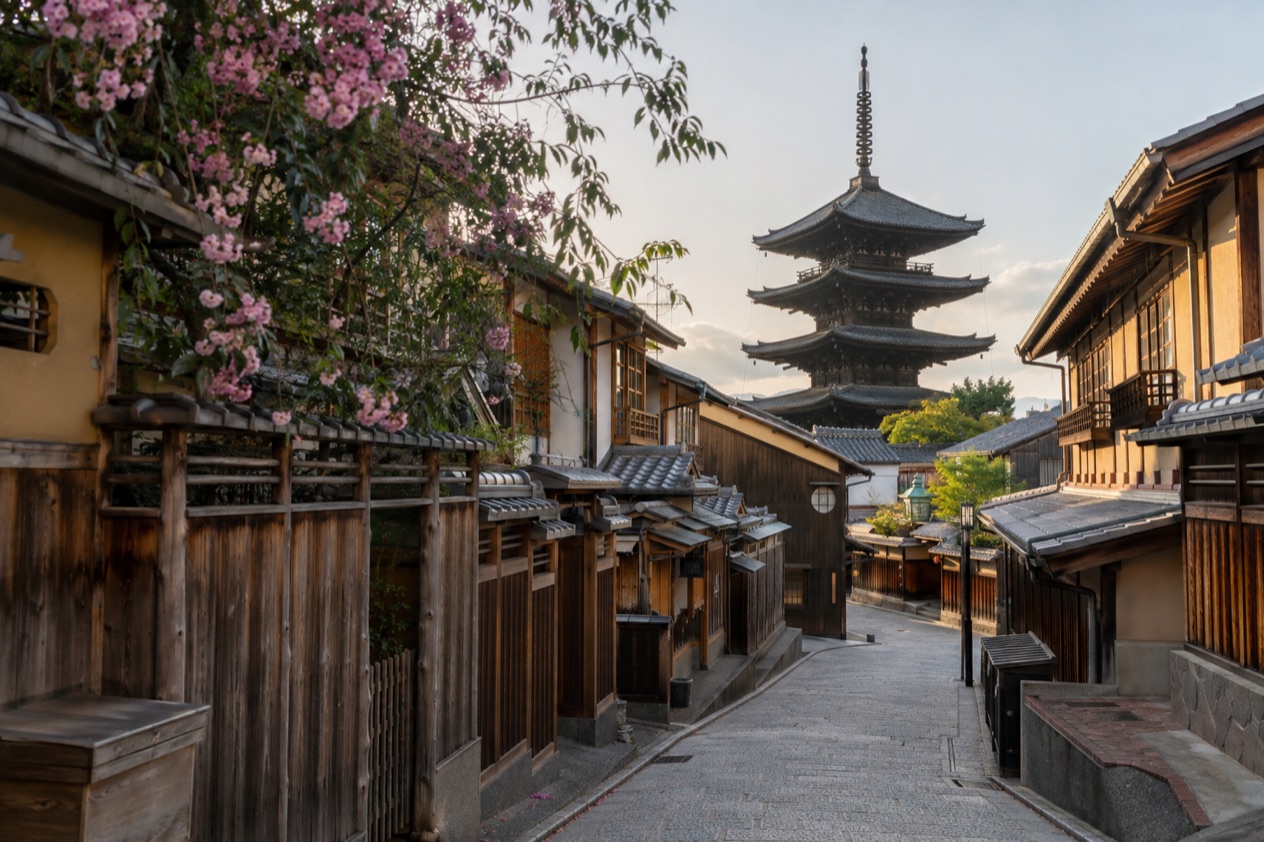
Eastern Kyoto is where many people picture the city: Kiyomizu-dera, Gion and Ginkaku-ji are all reached by Kyoto City buses and the subway. A stay here suits couples, photographers and anyone who likes to walk out of a guesthouse into the old streets.
Nijo Castle and Kyoto Gosho sit here, along with the kind of everyday streets where you find a coffee shop, a tofu maker and an izakaya (a casual pub) on the same block.
If you are watching your budget, guesthouses and business hotels are the kinds of lodging to look at, and they exist in several districts. If you want an evening out, the central grid and the lanes of Eastern Kyoto give you the most to wander through after dark. Travelers who want a night in a traditional inn should look at ryokan, which you can find in the city and in the hills beyond it.
The difference between areas is mostly a difference of rhythm. The station area keeps train hours and travels in every direction. The old town moves at the pace of its temple bells and shuttered shopfronts. Western and Northern Kyoto trade the city grid for bamboo, mountains and hot springs. Pick the rhythm first, then the building.
The best areas to stay in Kyoto
Around Kyoto Station
Kyoto Station is the point where the Tokaido Shinkansen arrives, and Kyoto Tower stands a few steps from the main entrance, visible across the entire city. The station building works like a small town under one roof, with a full floor of ramen restaurants, a department store, a theater and a luxury hotel. Lodging in the surrounding blocks leans toward business hotels and larger city hotels, with a scattering of guesthouses and apartments.
This is the base for travelers who arrive by train and want to leave bags and plans in one place. From Tokyo Station, the most direct shinkansen takes about 2 hours and 20 minutes. From Kansai International Airport, the Haruka Express runs to Kyoto Station in about 1 hour and 15 minutes, so you can reach your hotel without changing to a city bus or subway first.
A tip: the station is also the starting point for Southern Kyoto, where Fushimi is one of Japan’s three main sake brewing areas and Uji serves Japanese tea. Staying here keeps those outings simple to plan, and you come home to the same ramen floor for dinner.
Central Kyoto
Central Kyoto is the old capital’s core, where the emperor lived and Japan was governed for over 1,000 years. Its streets follow a grid, so the district is easy to understand even if you have never visited. Nijo Castle, built in 1603 by Tokugawa Ieyasu, the first shogun of the Edo period, stands here with its nightingale floors that chirp like birds underfoot, and its garden of ornamental plums and maples that take on exceptional colors in autumn.
Kyoto Gosho, the palace left unoccupied since 1868 when the capital moved to Tokyo, sits in a park of its own. Visitors can reserve a guided tour of the interior through the Imperial Agency office in the park or directly in front of the building entrance. A night in Central Kyoto puts both within reach, along with the city’s machiya townhouses, the narrow wooden houses that some owners have turned into small stays.
Lodging here ranges from business hotels and boutique hotels to guesthouses and apartments in renovated townhouses. It suits travelers who like to shop, eat in small places and come back to a neighborhood that feels lived in. A cooking class or a stamp-carving workshop, where you turn your name into kanji, is among the activities listed for the Central area.
Eastern Kyoto
Eastern Kyoto holds the Kyoto many visitors came for: Kiyomizu-dera Temple, the district of Gion and Ginkaku-ji Temple. Kyoto City buses and the subway provide access to all three, and Kyoto City also runs a Sightseeing Limited Express Bus for visitors. Gion is one of the hanamachi districts where geishas live and work, so an evening here has a different feel from daytime, with wooden teahouses and lanterns along the lanes.
Lodging in this area includes guesthouses, small boutique hotels and ryokan with tatami rooms and a kaiseki dinner. It suits couples and travelers who want to be near the temples. The area also offers kimono rental, with Kyoto Kimono Rental Kyokomachi among the businesses in Eastern Kyoto, and it is a setting where a stroll in a kimono and a rickshaw ride feel natural.
A tip: the city recommends visiting shrines at less crowded times, such as early morning or late evening when they are illuminated. A bed in Eastern Kyoto lets you act on that advice without a long ride at either end of the day. Kyoto also offers a crowding forecast map and live cameras to see how busy popular places are.
Western Kyoto and Arashiyama
The Nishikyo area in western Kyoto has quiet, unexplored bamboo forests and many unique cycling routes. Arashiyama, the district many travelers associate with the bamboo grove, is also a place to take a rickshaw tour, a ride that is offered in both Eastern and Western Kyoto City. Lodging here tends toward ryokan and small inns, giving you a night in a traditional room with a yukata (a light cotton robe) laid out for you.
This is the choice for travelers who want mornings among green hills instead of city blocks. It suits those who like to cycle, who want a ryokan evening, or who are returning to Kyoto and have already seen the main temples. Staying here means sightseeing in the center takes a bus or train ride, so it works best as a second base or a one-night change of pace.
Northern Kyoto: Ohara and the countryside
Northern Kyoto is the choice for people who want to leave the city behind altogether. The Ohara area has ancient temples, famous gardens and spacious hot springs in a relaxing rural setting, and the Takao area has three mountains, the Sanbi, known for their temples and lush greenery. Further out, Keihoku offers farm stays that put visitors in touch with nature and agriculture.
Lodging here is a different kind of stay: farm stays, country inns and onsen ryokan rather than city hotels. It suits slow trips and travelers who already know the main sights. Far to the north near the Sea of Japan, the sandbar of Amanohashidate and the boat houses of Ine fishing village are part of the same prefecture, though they are a different kind of outing from a night in the city.
Kyoto areas compared
| Area | Best for | Feel | Getting around |
|---|---|---|---|
| Around Kyoto Station | First visit, families, day trips | Shinkansen hub with ramen floor, department store and Kyoto Tower | Tokaido Shinkansen, Haruka Express from Kansai International Airport |
| Central Kyoto | Castle and palace visits, shops and restaurants | Old capital laid out on a grid, machiya townhouses | City buses and subway |
| Eastern Kyoto | Temples, geisha district, kimono rental | Wooden lanes, Kiyomizu-dera, Gion, Ginkaku-ji | City buses, subway, Sightseeing Limited Express Bus |
| Western Kyoto | Bamboo forests, cycling, ryokan stays | Quiet bamboo forests and cycling routes | Rickshaw tours in Arashiyama |
| Northern Kyoto | Hot springs, farm stays, rural escape | Temples, gardens and mountains in a rural setting | Reached from the city |
The main trade-off is between the station and the old town. Near the station, you gain a place where the shinkansen, the airport train and a large building of shops and restaurants are all under one roof, and you give up the sense of waking up inside the historic city. In Eastern Kyoto, you wake near temples and lanes, but you rely on buses and the subway to reach the station and the wider region.
A second trade-off is between the old and the new. The grid of Central Kyoto and the lanes of Gion belong to a city that served as capital for over a thousand years, while the station area is the part built around trains. Many travelers split their stay, one or two nights near the station or in the center and one night in a ryokan in the east or the west, so that both sides of the city get their evening.
A third is between the city and the countryside. Ohara, Takao and Keihoku give a slower pace with hot springs and farm stays, but they take you out of reach of the evening life of Gion or the central grid. If this is your first visit, the city districts give you more to see on foot and by bus. If you have been before, the northern and western districts reward a night.
How to choose your hotel in Kyoto
Start with the kind of night you want, because Kyoto offers several kinds of lodging. A city hotel or a business hotel gives you a private room, a bathroom and a location near a station or a bus line. A guesthouse or an apartment in a machiya townhouse gives you a smaller, more personal setting inside a residential street. A ryokan gives you the full ritual of a traditional inn.
A ryokan is a traditional Japanese inn, and the form is believed to have emerged in the 8th century. Rooms typically have tatami floors and futons, and many have private baths, sometimes outdoor.
A kaiseki dinner, a multi-course meal of small seasonal dishes, and a traditional Japanese breakfast are part of the stay, and you change into a yukata. Staff explain the customs to guests, including removing shoes indoors, bathing in the onsen and wearing the yukata.
Heritage Stays are another option for travelers interested in culture. At these properties, visitors can take part in activities such as tea ceremony, calligraphy and wearing traditional Japanese clothing. Reservations are required and can often be made through the property’s website or by phone. These stays suit travelers who want the night itself to be part of the trip rather than a place to drop their bags.
For a trip built around trains, the deciding factor is the station. Staying at Kyoto Station, or in a hotel near a subway stop, puts the Tokaido Shinkansen or the Haruka Express close to your door. If you plan to ride city buses, know that Kyoto City operates the Raku Bus, the Kyoto Okazaki Loop Bus and a Sightseeing Limited Express Bus, and that holders of the JR-WEST RAIL PASS can use the Subway & Bus 1-Day Pass in Kyoto.
Families can look to the station area, where a department store and a full floor of ramen restaurants sit in the same building as the trains. During Eco-Summer, up to two elementary school students can ride Kyoto City buses for free, which affects how you plan days from a base with a bus stop nearby. Travelers with limited mobility should think about how many transfers lie between the hotel and the sights, which favors places close to a station.
Finally, think about how you will spend your early mornings and late evenings. Shrines are less crowded in early morning or late evening, when they are illuminated, so a base within reach of Fushimi Inari, Gion or another sight you care about makes those hours possible. A guided Fushimi Inari Taisha tour is one featured activity in Kyoto, and a samurai experience at Myokakuji Temple includes a sword fighting lesson from a professional actor.
Good to know before you go
From Kansai International Airport, the Haruka Express reaches Kyoto Station in about 1 hour and 15 minutes, and from Kyoto Station the buses and subway take you on to Gion, Kiyomizu-dera and Ginkaku-ji. Hotels near the station put you at the end of that line on arrival, while ryokan and guesthouses in the east and west mean a further ride. Kyoto’s crowding forecast map and live cameras help you decide when to go out.
Sources
- Japan National Tourism Organization, Kyoto (https://www.japan.travel/en/destinations/kansai/kyoto/), checked October 11, 2026
- Kyoto City Official Travel Guide, activities (https://kyoto.travel/en/activities), checked October 11, 2026
- Kyoto City Official Travel Guide, areas (https://kyoto.travel/en/areas), checked October 11, 2026
- Kyoto City Transportation Bureau, bus and subway guide (https://www2.city.kyoto.lg.jp/kotsu/webguide/en/), checked October 11, 2026
- Japan National Tourism Organization, ryokan stays, what is included, etiquette (https://www.japan.travel/en/guide/japanese-ryokan/), checked October 11, 2026
- Japan National Tourism Organization, heritage stays (https://www.japan.travel/en/heritage-stays/), checked October 11, 2026
- Japan National Tourism Organization, wellness and onsen (https://www.japan.travel/en/guide/wellness-travel-in-japan/), checked October 11, 2026
To plan your stay
- Best Time to Visit Kyoto: Cherry Blossoms, Autumn Leaves, Weather by Month and Festivals
- Things to Do in Kyoto: Temples, Gardens, Food and Day Trips
- Kyoto from Tokyo: Shinkansen Trains, Nozomi vs. Hikari and Kodama, and a First Day in Kyoto
- Know Before You Go to Kyoto: Entry, Money, Getting Around and Local Etiquette