
You step off the plane and the air smells of wet spruce and cold water, and someone nearby is already pulling a rain shell out of a daypack. Alaska rewards people who arrive with the right layers, a feel for how far apart things are and a healthy respect for the animals. A few habits, learned before the trip, change how the whole visit goes.
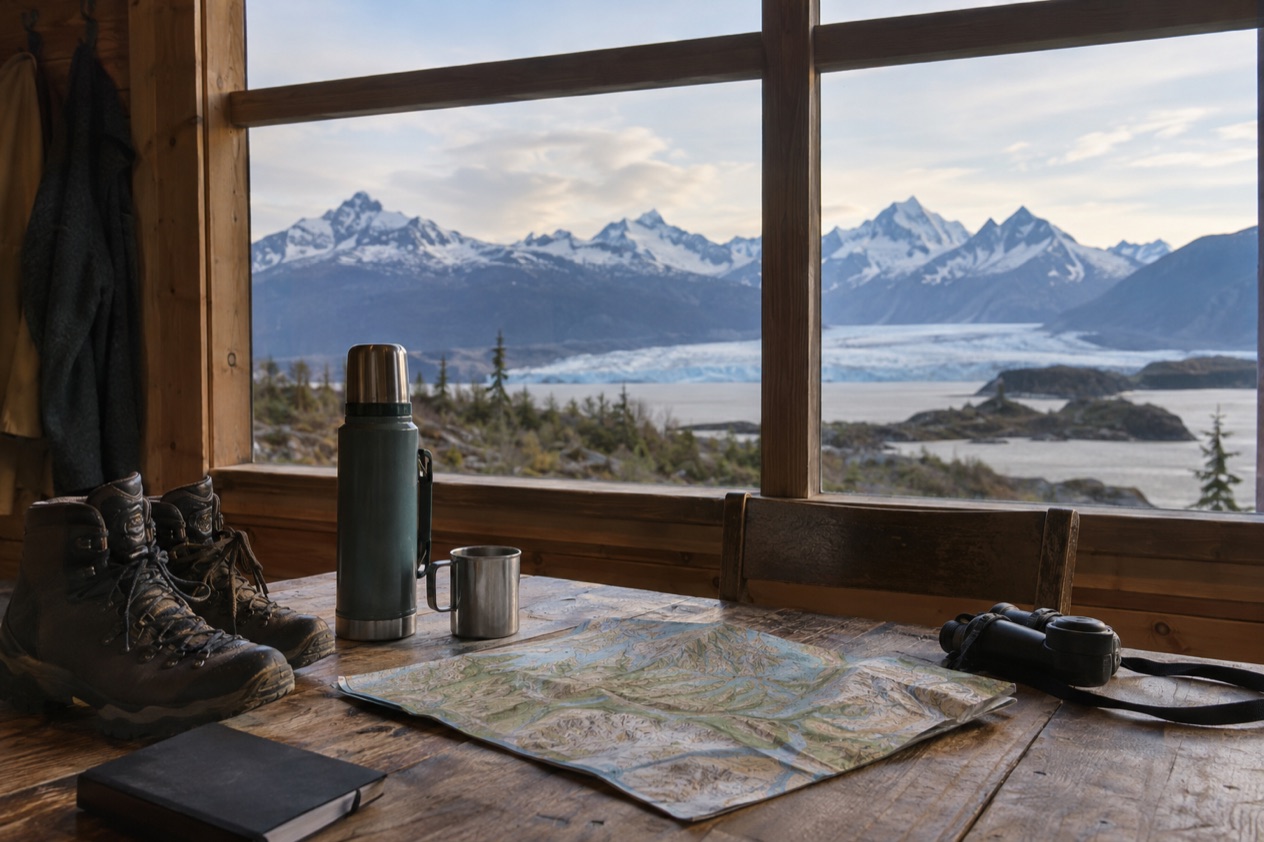
What should you know before visiting Alaska?
Four things matter most: dress in layers, keep your food secure from bears, check road conditions before you drive, and remember that Alaska is a very big place with its own weather in every corner. Get those right and the rest of the trip tends to fall into place.
What surprises first-time visitors is how local the weather is. Juneau is a rainforest town that gets over 50 inches of precipitation a year, and some areas of Southeast Alaska receive as much as 275 inches. A day in a town on the Inside Passage can look nothing like a day in the Interior, and the same goes for the Arctic: Utqiaġvik is the northernmost city in the United States, a reminder that Alaska stretches well beyond the places most people picture.
The second surprise is that wildlife is not a backdrop. Three species of North American bears live in Alaska, and the state treats food storage as a real obligation rather than a polite suggestion. It shapes how people camp, how they handle a picnic and how they set up a cabin porch.
The third is how much planning happens on a phone or a laptop. Road conditions, closures and cameras are posted online, and travelers who look before they leave a town often save themselves a long wait or a turnaround. Alaskans do it as routine, the way others check a forecast.
Fees, passes and reservations
The one rule that applies everywhere in Alaska, with no paperwork, is about bears: people must keep all human sources of food secure from them. That covers the cooler in a campsite, the groceries in a vehicle, the snacks in a cabin and the trash left out overnight. Settle your plan for storing food before you head out, and you have dealt with the item that matters most.
If a bear situation turns dangerous, Alaska Department of Fish and Game asks that it be reported through its wildlife encounter form. Beyond that, the fee, pass or reservation for a particular park, campground, ferry or tour belongs to that place and its operator, so confirm it with the park or the company you are visiting rather than assuming one arrangement covers the state.
Money, phones and getting online
Alaska is a U.S. state, so prices are in dollars and nothing about money changes when you cross from another state. There is no currency to exchange and no separate set of rules for visitors from the Lower 48.
The most useful thing to have online is the Alaska 511 website. The Alaska Department of Transportation has partnered with Waze to publish Waze-reported incidents and closures on that site, so what drivers report on the road can appear alongside the official information. Open it on your phone or laptop before you set off for the day, and again if your plans change.
On the 511 map page, you can build a small set of favorite cameras. Click a camera icon, then the My Cameras button in the popup, and the view is saved for later. It is a handy habit if your route depends on one stretch of road.
Getting around and staying connected
For anyone who drives, Alaska 511 is the reference. It sorts road conditions into categories: Good, Fair, Difficult, Very Difficult, Hazardous, Road Closure and No Winter Maintenance. The words are plain, and they tell you quickly whether a stretch is routine or whether you should rethink the day.
The last category deserves a second look. No Winter Maintenance means exactly what it says about a road, and it is a good reason to read the map before you commit to a route. A road that looks like a clear line on a paper map can carry a very different label on the 511 page.
Because the site carries incidents reported through Waze as well as official closures, the picture can change over a morning. Looking at the map more than once, especially before a long day on the road, fits the way Alaskans travel. Cameras on the same map let you see for yourself what a road looks like instead of guessing from a number or a label.
For everything else, such as how a particular town handles buses, rides or rentals, the answer comes from the operator or the place itself. Treat each community as its own small system and ask locally.
Weather, daylight and wildlife
From spring to early fall, temperatures run roughly from 50 to 70 degrees Fahrenheit, with possible rain and wind. That is pleasant for walking and sightseeing, and it is exactly the range that calls for layers rather than one heavy coat. A warm morning at the harbor can turn into a cool, damp afternoon on the water.
The advice is simple and consistent. Dress in layers and carry a backpack so you can shed or add a layer as the weather changes. Make the outer layer a fully waterproof and breathable shell with a hood, which keeps you warm when it is windy and dry when it rains. Everything under it can be adjusted to the day.
Daylight depends on where you are and when, and it changes as the seasons turn, so read the figure for your own town and month rather than assuming one pattern for the state.
On wildlife, all three North American bear species, black, brown (including grizzly) and polar, flourish in Alaska. The rule to carry in your head is the one about food: keep every human source of food secure from bears. If a dangerous situation happens, report it to ADF&G with its wildlife encounter form.
Local customs and etiquette
Alaskans tend to dress for the weather, not for the occasion. Practical clothes are part of the local style, and arriving in them makes you fit in at once.
People chat in lines at the bakery, wave from trucks on quiet roads and take time over a story. If a plan shifts because of weather, most people shrug and adjust, and you will have a better time if you do the same. Patience is a habit here, not a virtue anyone makes a fuss about.
Alaska is home to many Alaska Native peoples, including the Tlingit, Haida, Athabascan, Yup’ik and Iñupiat, and their communities, cultural centers and traditional places deserve the same respect you would give anyone’s home or place of worship. Ask before photographing people, listen when a guide or elder speaks, and treat a totem pole, a carving or a gathering as something that belongs to a living culture.
Respect for wildlife is the other shared habit. Locals keep their distance, store food carefully and talk about animals with a mix of affection and caution. Leaving a place as you found it, with no trash, no food scraps and no pressure on an animal for a better photo, is how Alaskans expect guests to behave.
Good to know before you go
The Alaska Time Zone runs nine hours behind UTC in standard time and eight hours behind during daylight saving time. Clocks change on the second Sunday in March and again on the first Sunday in November, so a trip around either date is worth a second look at your watch. Seasonal closures vary by road, park and service, and Alaska 511 labels a road No Winter Maintenance when that applies.
One last habit: check the road map, pack a waterproof shell with a hood, and keep your food secure every time you stop. Those three things cover most of what goes wrong for people who arrive unprepared.
Sources
- Wikipedia, Climate of Alaska (https://en.wikipedia.org/wiki/Climate_of_Alaska), checked October 11, 2026
- Alaska 511 (https://511.alaska.gov/), checked October 11, 2026
- Alaska Department of Fish and Game, Living with bears (https://www.adfg.alaska.gov/index.cfm?adfg=livingwithbears.main), checked October 11, 2026
- Alaska.org, what to wear (https://www.alaska.org/advice/what-to-wear-in-alaska), checked October 11, 2026
- Wikipedia, Alaska Time Zone (https://en.wikipedia.org/wiki/Alaska_Time_Zone), checked October 11, 2026