
Somewhere on the Denali Park Road, a bus rounds a bend, the mountain shows itself, and half the passengers reach for phones that have nothing to say. In much of Alaska’s wild country the signal simply ends, and the planning happens before you leave the parking lot. Service depends on the place: it is thin inside the great national parks, absent in some, and replaced by other tools on the road.
Is there cell service in Alaska?
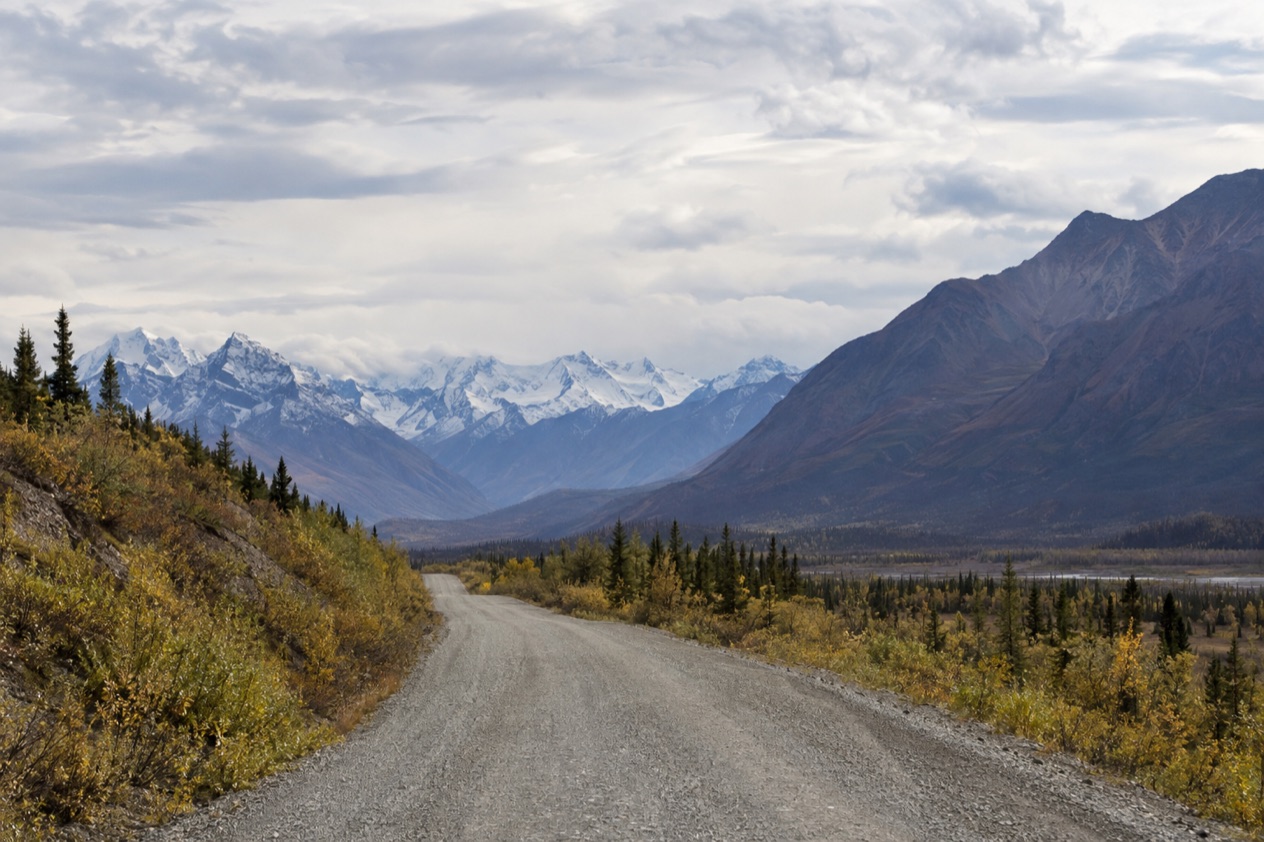
Yes in places, but the national parks are where it stops being a given. In Denali National Park, cell phone coverage exists only within three miles of the park entrance. That is a small pocket around the entrance area, and beyond it the park is a long road with no signal, which matters because the Denali Park Road runs 92 miles.
Gates of the Arctic National Park and Preserve is the plainest case. There is no cell phone service and there are no amenities or services in the preserve, which protects 8.4 million acres of the central Brooks Range. Wrangell-St. Elias National Park and Preserve has limited visitor services, and its facilities can be separated by as much as 260 miles, some of them outside the park boundaries.
Denali: a signal near the entrance, then the road
The three-mile pocket near the entrance is the place to send the last message, check the day’s plans and make calls. After that, the road takes over. In summer, private vehicles may drive only the first 15 miles of the Denali Park Road, from the park entrance to Savage River, and buses carry travelers along the rest. Neither stretch comes with a promise of coverage past those first three miles.
The bus ride is therefore a good time to let the phone rest. Use it as a camera, watch the tundra and the river bars from the window, and keep the conversations for the people sitting beside you. In an emergency inside the park, dial 9-1-1 and be ready to give your location as Denali National Park.
Gates of the Arctic: no service at all
Here the question answers itself. Visitors must be self-reliant and able to carry out self-extraction and communication in an emergency, which is a polite way of saying the phone in your pocket is not the plan. The National Park Service recommends two forms of communication in the backcountry, such as a satellite phone or a satellite messaging device.
Wrangell-St. Elias: big distances, few services
Wrangell-St. Elias is mostly backcountry, and only two roads enter the park, both unpaved. Services are limited, access can be challenging and weather varies widely.
Where is service limited?
Service is limited across most of the three big parks: nearly all of Denali beyond its entrance area, all of Gates of the Arctic, and the backcountry that makes up most of Wrangell-St. Elias. These are places measured in days and miles rather than in bars.
| Place | Cell service |
|---|---|
| Denali National Park | Within three miles of the park entrance only |
| Gates of the Arctic National Park and Preserve | None in the preserve |
| Wrangell-St. Elias National Park and Preserve | Limited visitor services, facilities up to 260 miles apart |
The Denali Park Road beyond the entrance
Only the first 15 miles of the Denali Park Road are paved, and the road is closed for most of the winter. In winter only the first 3 miles are open for public vehicles, the rest being closed by snow, which happens to match the small area where coverage exists. Buses do not run in fall, winter or spring, and the main visitor season runs from May 20 through the second or third week in September.
Even the entrance of Denali is several hours from the nearest hospital. That is a good reason to treat the lack of signal as part of the risk picture, not just an inconvenience. A ranger is available by phone at 907 683-9532 from 9 am to 4 pm daily, except on major holidays, so questions are best settled before you head out of range.
The backcountry of Gates of the Arctic and Wrangell-St. Elias
In Gates of the Arctic, air taxis are often unable to fly in inclement weather, so visitors should bring extra food and allow for weather days. With no phone service, a delayed pickup is not something you can sort out with a call, which is why the park asks for self-reliance. Permits are not required to enter, though certain activities may need them.
In Wrangell-St. Elias, temperatures can differ by as much as 70 degrees F across the park at any one time, and wildlife can be encountered. Permits are needed for several activities, including subsistence use, sport hunting and fishing, and off-road vehicles. The park is a fee-free park.
Wildlife and weather, when you cannot call
Out of range, the park rules matter more. In Denali, visitors must stay 300 yards from bears and 25 yards from other animals at all times, and bear spray is strongly encouraged for all hikers. Hypothermia is always a factor in the subarctic, so layers of wool or synthetic material and rain gear are the advice, and snow can fall nearly any month of the year.
What should you do before you go?
Settle your plans, your route and your emergency communication before you leave the signal behind. In Denali, that means telling someone where you are going, since visitors should always hike with at least one other person and make sure someone else knows the route. Falls cause more deaths in the park than anything else, which is a sober reason to move carefully.
Check the road with Alaska 511
Alaska 511, run by the Alaska Department of Transportation, is the place to look at roads while you still have a connection. It uses condition categories of Good, Fair, Difficult, Very Difficult, Hazardous, Road Closure and No Winter Maintenance, and it publishes Waze-reported incidents and closures through a partnership with Waze. On the map, you can add a camera to My Cameras by clicking a camera icon and then the My Cameras button in its popup.
You must log in to save routes for future viewing, and an account also lets you receive notifications. Route notifications are sent by default on weekdays from 6 AM to 6 PM via SMS. To see when a maintenance vehicle was at a location, hover your mouse over the vehicle’s breadcrumb trail on the map.
Plan communication for the backcountry
For Gates of the Arctic, the National Park Service suggests two forms of communication, such as a satellite phone or a satellite messaging device. Bear-resistant food containers are required for overnight visits and are provided free of charge at the Anaktuvuk Pass, Bettles, Coldfoot and Fairbanks Visitor Centers. They are first come, first served, and no reservations can be taken. Visitors must also follow Leave No Trace principles.
Because the air taxis cannot always fly in bad weather, pack extra food and leave room in the schedule for weather days. In Wrangell-St. Elias, the park’s mailing address is PO Box 439, Mile 106.8 Richardson Highway, Copper Center, AK 99573, and each visitor center keeps its own hours and seasons.
Denali: the season and what is open
Most Denali visitor centers are open in summer only, roughly mid-May through mid-September, and overnight camping is allowed only in designated campgrounds or with a backpacking permit. Pets are welcome but are not allowed on most trails. No refunds are given due to inclement weather, which is worth knowing when a cloud sits on the mountain.
Good to know before you go
Denali charges an entrance fee year-round for visitors 16 and up, while younger visitors are free, and an annual pass or America the Beautiful pass covers the passholder and up to three other adults. Wrangell-St. Elias is a fee-free park. In the parks, keep wildlife wild: never feed or harass animals. Some plants, such as cow parsnip, can cause allergic reactions, though Denali has no poison oak, sumac or ivy.
Sources
- National Park Service, Denali National Park & Preserve, plan your visit: basicinfo (https://www.nps.gov/dena/planyourvisit/basicinfo.htm), checked October 11, 2026
- National Park Service, Denali National Park & Preserve, plan your visit: safety (https://www.nps.gov/dena/planyourvisit/safety.htm), checked October 11, 2026
- National Park Service, Wrangell – St. Elias National Park & Preserve, plan your visit: basicinfo (https://www.nps.gov/wrst/planyourvisit/basicinfo.htm), checked October 11, 2026
- National Park Service, Gates of the Arctic National Park & Preserve, plan your visit: basicinfo (https://www.nps.gov/gaar/planyourvisit/basicinfo.htm), checked October 11, 2026
- Alaska 511 (https://511.alaska.gov/), checked October 11, 2026
- Alaska Department of Fish and Game, licenses (https://www.adfg.alaska.gov/index.cfm?adfg=fishlicense.main), checked October 11, 2026
- Alaska Department of Fish and Game, Living with bears (https://www.adfg.alaska.gov/index.cfm?adfg=livingwithbears.main), checked October 11, 2026
- Fairbanks International Airport (https://www.dot.alaska.gov/faiiap/), checked October 11, 2026
- University of Alaska Fairbanks Geophysical Institute, Aurora forecast (https://www.gi.alaska.edu/monitors/aurora-forecast), checked October 11, 2026
- Holland America Line, Alaska cruises (https://www.hollandamerica.com/en/us/cruise-destinations/alaska-cruises), checked October 11, 2026