
Standing at the rail of a ship as it slides up to a glacier, you feel the air change before you see the ice: a cold breath comes off the face and suddenly the sweatshirt you wore on deck is not enough. That moment, or a sudden shower on a trail, is when Alaska packing decisions get tested. The short answer is a small set of layers, a real rain shell, sun and bug protection, and shoes you already trust.
What should you pack for Alaska?
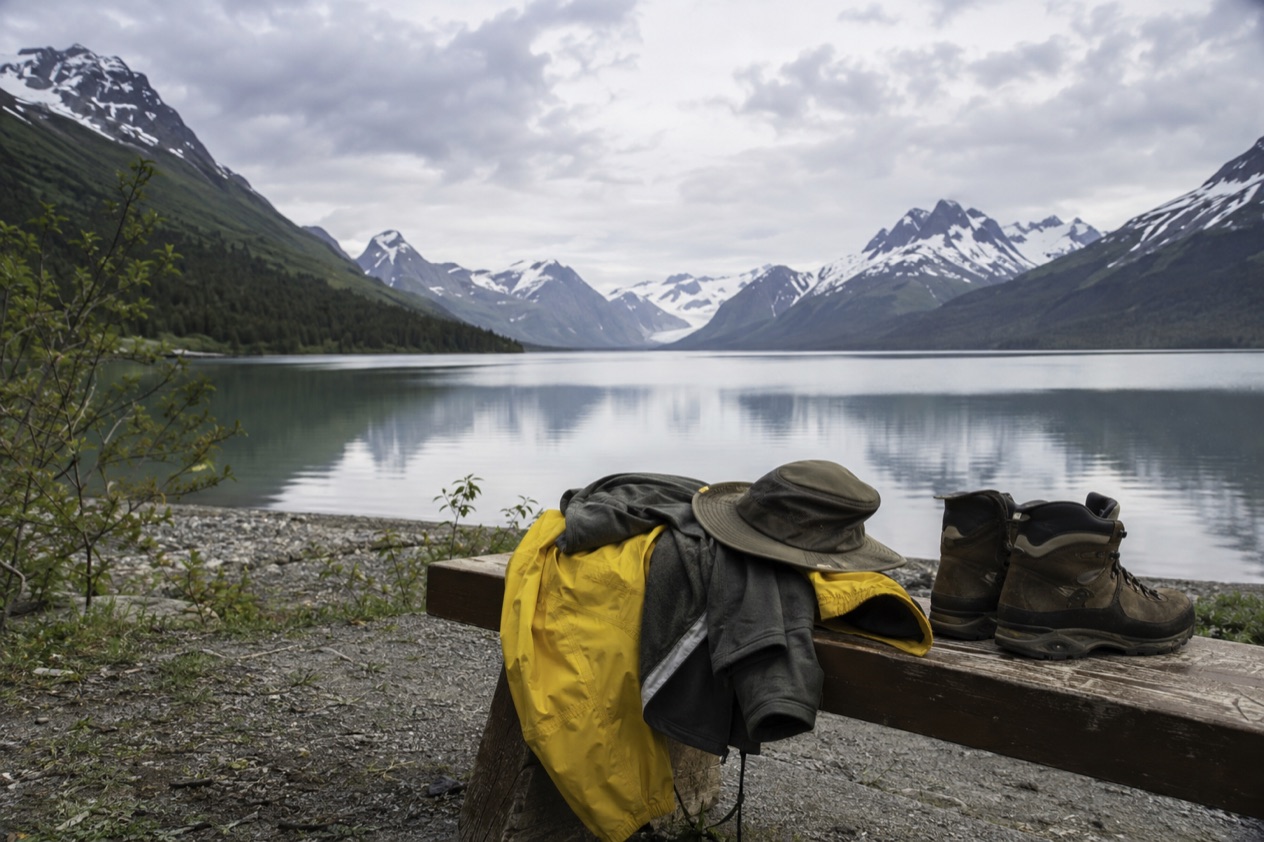
Pack for changing weather rather than for one season: layers, a waterproof shell with a hood, a brimmed hat, sunglasses, sunscreen, bug repellent and well-worn shoes. From spring to early fall, temperatures run from 50 to 70 degrees Fahrenheit, with rain and wind possible. In the height of summer, from June 15 to July 15, conditions are warm and dry, but the same bag still needs to cover a cool, wet day.
A small backpack earns its place on every outing. It lets you shed a layer when the sun comes out and pull it back on when a cloud settles in, and it carries water, a snack and the shell you hope not to need.
Rain gear that matches where you are going
The outer layer should be a fully waterproof and breathable shell with a hood. It keeps you warm when the wind picks up and dry when the rain arrives, and it folds small enough to live in a daypack.
In the rain forest country of Prince William Sound and Southeast Alaska, sustained downpours can overwhelm breathable-waterproof fabrics. For extended charters there, coated waterproof raingear such as Helly Hansen is the recommended choice. If your trip is mostly a day on a trail or a stop in port, the breathable shell is the lighter option to carry.
Sun, bugs and gloves
Bring a lightweight brimmed hat, sunglasses and sunscreen. Long summer days give Alaska about double the hours of daylight of the Lower 48, so you spend more time under the sun than you expect, even when the air feels cool.
Bug repellent with Deet works well against mosquitoes, black flies and no-see-ums, especially on calm days along coastal beaches and in the backcountry. Mosquitoes come out in early June and die off by early August, so the weeks in between are when the repellent matters most. Thin synthetic liner gloves, such as polypropylene, weigh almost nothing and are worth having when a ship pulls up to a glacier and the deck turns chilly.
Shoes and bear spray
Never bring new shoes to Alaska. Pack well-worn shoes, or break in a pair of lightweight hikers before you leave, so blisters do not cut a day short.
In Denali, bear spray is strongly encouraged for all hikers. Anyone heading into the park should also know that cell phone coverage exists only within three miles of the entrance.
Buying or renting gear once you arrive
If something is missing from your bag, you can buy or rent in Alaska. The Hoarding Marmot, a consignment shop in Anchorage, sells used gear. Big Ray’s has stores in Anchorage, Fairbanks and Kodiak. 6th Avenue Outfitters in Anchorage rents or sells fishing gear.
What layers do you need?
You need three things: a base layer against your skin, an insulating middle layer, and a waterproof shell on top. Dressing in layers keeps you warm and dry when it turns chilly or wet, and lets you peel off a piece as the weather changes through the day.
Daytime highs in summer range from 60°F to 80°F, and nights dip into the 40s to 50s. May and September run 5 to 10 degrees cooler. That spread, warm afternoons and cool evenings, is exactly why one heavy coat fails and several light pieces work.
Fabrics that work
In the subarctic, hypothermia is always a factor, so layers are best made of wool or synthetic material. Cotton holds moisture and is a poor partner once you are damp. Bring rain gear or an umbrella as well, since a wet afternoon can follow a dry morning.
A simple kit might be a synthetic or wool long-sleeve shirt, a fleece or light insulated jacket, the hooded shell, and a pair of quick-drying pants. Add the thin liner gloves and a warm hat if you plan to spend time near a glacier or on the water.
What the weather can do
Rain is a real possibility on any trip. May is the driest month, with a 25% chance of rain on any given day, and the chance rises to 50% in September. The best window for a visit runs from May 10 to September 15, with temperatures in the 60s to low 70s and 16 to 24 hours of daylight.
Denali deserves its own caution: snow can fall nearly any month of the year there. Even a July trip to the park is worth a warm layer.
Layers for cruise days and for the trail
The Alaska cruise season runs from May through September, with small ship cruises starting as early as mid-April. Stops include Juneau, Ketchikan and Skagway, and each port day can mean a trip from a sheltered street to an open deck. Wearing layers lets you handle both without going back to the cabin.
On trails, the same system applies. Near Anchorage, lower-elevation trails are clear of snow by May and mountain trails by early June, with good conditions until mid-October. Closer to the Arctic, wait until the end of June. Early and late in that window, add the warmer middle layer.
Winter and aurora trips
The northern lights are visible from late August to early April, and February and March are the best months for a winter aurora vacation. The best area to view them is near Fairbanks. A trip like that calls for much warmer clothing than anything above, built on the same layering idea with wool or synthetic fabrics.
What can you leave at home?
You can leave your dressy clothes, your new shoes and anything cotton-heavy at home. Alaskans dress casually, and most restaurants, museums and retailers welcome people in the same clothing they wore for outdoor activities.
The exception is a special event, such as a wedding or a formal evening you already know about. Otherwise, the jacket and trail pants that carried you through the day will get you through dinner too, which frees a good deal of suitcase space.
New shoes and fancy outfits
Brand-new shoes are the first thing to leave behind. Blisters on a first long day are a poor way to start, so bring the pair you have already worn in. Heels and dress shoes have little use when the dress code is casual. If you wonder about an evening on a cruise or in a lodge, the same advice holds: Alaska is relaxed, and clean outdoor clothes are enough unless an event says otherwise.
Heavy gear you can rent or buy
Bulky specialty items, such as fishing gear, do not need to cross the country in your luggage. 6th Avenue Outfitters in Anchorage rents or sells fishing gear. For general outdoor equipment, The Hoarding Marmot in Anchorage and Big Ray’s in Anchorage, Fairbanks and Kodiak are places to look.
Food and wildlife habits
Leave behind any idea of feeding or approaching animals. In Denali, visitors must keep wildlife wild and never feed or harass it, and must stay 300 yards from bears and 25 yards from other animals at all times. Across Alaska, people must keep all human sources of food secure from bears.
Poison oak, sumac and ivy are not a concern in Denali, so you do not need to plan around them. Some other plants, such as cow parsnip, can cause allergic reactions, so do not assume every green plant is harmless.
Good to know before you go
A few habits matter more than any item in your bag. In Denali, hike with at least one other person and make sure someone else knows where you are going, because falls cause more deaths in the park than anything else and even the entrance is several hours from the nearest hospital. Dial 9-1-1 in an emergency and give your location as Denali National Park.
A ranger is available by phone at 907 683-9532 from 9 am to 4 pm daily, except on major holidays. Bus tours on the Denali Park Road begin around May 15 each year, and in May and September some hotels, tours and cruises offer 10 to 25 percent discounts.
Sources
- Alaska.org, what to wear (https://www.alaska.org/advice/what-to-wear-in-alaska), checked October 11, 2026
- Alaska.org, best time (https://www.alaska.org/advice/best-time-to-visit-alaska), checked October 11, 2026
- National Park Service, Denali National Park & Preserve, plan your visit: safety (https://www.nps.gov/dena/planyourvisit/safety.htm), checked October 11, 2026
- Alaska Department of Fish and Game, Living with bears (https://www.adfg.alaska.gov/index.cfm?adfg=livingwithbears.main), checked October 11, 2026
- Princess Cruises, Alaska cruise tips (https://www.princess.com/en-us/cruise-destinations/alaska-cruises/alaska-cruise-tips), checked October 11, 2026