
Step out of the terminal in Fairbanks and the first thing you notice is how small the town feels beside the sky. Bush planes taxi past, and some travelers are already checking the forecast for the northern lights.
Fairbanks International Airport, known by its code FAI, is the state-owned gateway to Interior Alaska, set just southwest of downtown. It serves visitors heading into the city, out to the river villages, or on toward the Arctic.
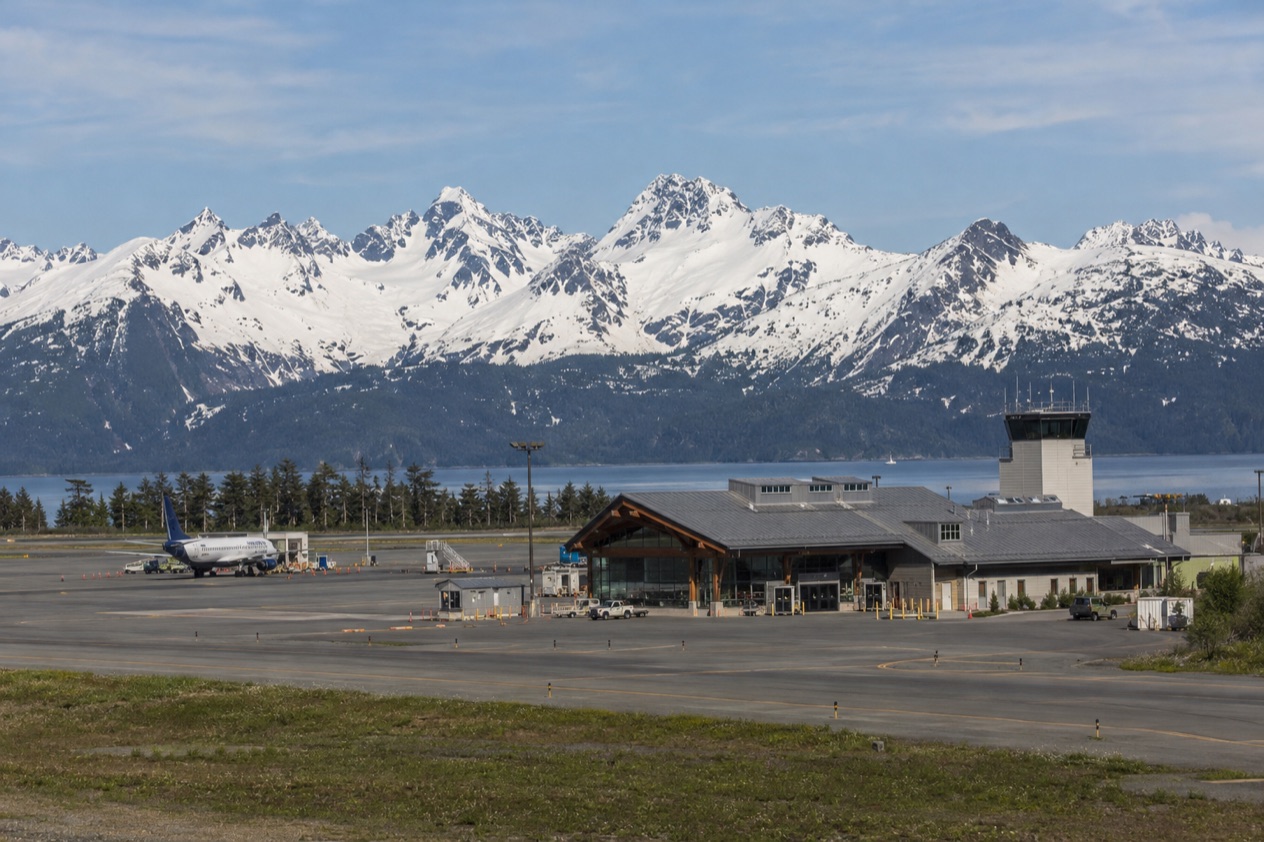
What is Fairbanks’s airport?
Fairbanks International Airport is the main commercial airport of Interior Alaska, owned by the State of Alaska Department of Transportation and Public Facilities. It sits southwest of the central business district, close enough that the city is part of the view as you land. For travelers it is the start of an Interior trip built around the aurora, the Chena River and long drives or flights north.
The terminal is compact. It has eight gates, two for commuter carriers and six for larger ones. That layout tells you a lot about the place: the little planes that link far-flung villages share a roof with the jets that connect Fairbanks to the rest of the country.
Hours and offices
The airport itself never closes, which suits a place where flights come and go around odd hours and where daylight does not follow the clock the way it does farther south. The offices and the security checkpoints keep their own schedules, set out here.
| Service | Open |
|---|---|
| Fairbanks International Airport | 24 hours a day |
| Administrative Office | Monday through Friday, 8am to 5pm |
| Passenger screening checkpoints | Open 2 hours before the first flight each day, including all holidays |
| Badging Office | By appointment only |
The Badging Office is for airport workers and others who need credentials, not for ordinary passengers. The Administrative Office is the place for business with the airport itself rather than with an airline.
The runways, from jets to skis
The main runway, 2L/20R, is an asphalt strip 11,800 feet long, built for the largest aircraft that serve the region. Beside it are shorter runways, among them a gravel and ski strip and a water and winter ski strip.
That detail says something about flying here. Planes in this part of Alaska land on wheels, skis or floats, depending on where they are going and what the ground or water looks like when they arrive.
For a visitor, this means the airfield is more than a place to catch a flight to Anchorage or beyond. Watching light aircraft come and go is part of the atmosphere. It is a reminder that much of the state has no roads, and that in places like this the airplane is the way people get around.
Before you reach security
FAI recommends arriving at least two hours before departure, so nobody ends up rushing at the last minute. The terminal is a working space with limited room, and the airport asks that you not enter unless you are traveling or assisting unaccompanied minors, passengers with disabilities or others who need help. Friends and family who come to see you off are better saying goodbye at the curb.
At the checkpoint, TSA allows up to 12 ounces of hand sanitizer through security. Pack it where you can reach it.
What airlines fly from it?
The available information identifies Warbelow’s Air Ventures, seasonal Air North charter flights and Amazon Air cargo service. The shape of the list reflects the town: part gateway to the Lower 48, part hub for the Interior.
Bush flights to river villages
Warbelow’s Air Ventures serves Beaver, Central, Circle, Manley Hot Springs, Minto, Rampart and Stevens Village from Fairbanks. These are small communities scattered across the Interior, and the names alone sketch a map of the Yukon, Tanana and surrounding country. These routes connect Fairbanks with Beaver, Central, Circle, Manley Hot Springs, Minto, Rampart and Stevens Village.
If you are drawn to the idea of seeing the Interior from a small plane, this is where it begins. The villages are real places where people live and work, so the trip is about the journey and the landscape rather than a sightseeing stop built for tourists.
Seasonal and international links
Air North operates seasonal charter flights from Fairbanks to Dawson City, Canada. Dawson City is a former gold rush town in the Yukon, and the link ties Fairbanks to a neighboring story of northern mining history. It is a seasonal service, so it is not part of a trip in every month.
Fairbanks has also had a taste of European service. The detail speaks to how far the aurora and the midsummer light draw visitors from overseas.
Cargo at FAI
Not every plane at the airport carries passengers. Amazon Air flies cargo from Fairbanks to Portland, Oregon, and Spokane, Washington. In a city this far north, freight flights matter, since much of what arrives in the Interior comes by air or along a limited number of roads. Passengers will not board these planes, but you may see them on the airfield.
How do you get to town?
How far is the airport from downtown? That proximity is one of the small pleasures of arriving here: after landing, you are not facing a long haul before you see the city.
Fairbanks itself is a modest place. The city proper had a population of 32,515 at the 2020 census, and it is the seat of the Fairbanks North Star Borough. E. T.
Barnette set up a trading post on the south bank of the Chena River in August 1901, and the town grew from that river bank. The Chena is still the heart of the city, and walking beside it is a pleasant way to take in the place after a flight.
Arriving by air, then by rail in summer
In summer, the Alaska Railroad operates tourist trains to and from Fairbanks. For travelers building a trip across the state, that means Fairbanks can be an end point reached by rail as well as by plane. Some visitors fly into FAI, others arrive on the train, and the two can be paired in either direction.
The railroad’s tourist service is a summer operation, so it belongs to those months and not to a winter trip. If you arrive by air outside the summer season, plan on the airport and the road rather than the train.
What you find once you are in town
Fairbanks is known for cold. It is the coldest city in the United States among cities with a population of at least 10,000, and its January mean temperature sits at −8.3 °F. July is a different world, with a mean of 62.9 °F. The contrast shapes what you see on arrival, whether snow banked against buildings or long green days on the river.
The aurora borealis is visible on average more than 200 days per year in the vicinity of Fairbanks. That is a chance, not a promise, and the sky has to cooperate, but it explains why people come to this airport in the dark months. The Arctic Circle lies 196 miles by road to the north, which gives a sense of how far into the high latitudes you have flown.
Good to know before you go
The airport is open around the clock, but the checkpoints open only ahead of the day’s first flight, so an early departure means arriving as they begin to operate. Keep hand sanitizer within the TSA limit in your carry-on, and leave the terminal to travelers and those helping them. Fairbanks was incorporated as a city in November 1903, and it still feels like a frontier town: compact, practical and used to travelers passing through.
Sources
- Fairbanks International Airport (https://www.dot.alaska.gov/faiiap/), checked October 11, 2026
- Wikipedia, Fairbanks, Alaska (https://en.wikipedia.org/wiki/Fairbanks,_Alaska), checked October 11, 2026
To plan your stay
- Best Time to Visit Fairbanks: Midnight Sun, Northern Lights, Weather and Festivals
- Things to Do in Fairbanks: Riverboat, Aurora, Chena Hot Springs and Day Trips
- Where to Stay in Fairbanks: Downtown, Birch-Wood Cabins, Chena Hot Springs and Denali Lodges
- Know Before You Go to Fairbanks: Midnight Sun, Aurora Season, Layers and Local Habits