
Standing on the deck as the ship edges up to a glacier, you feel the air change: a cold breath comes off the ice, the wind finds your neck, and the people who packed only a sweatshirt start to shiver. Alaska rewards a different way of dressing from the one you use at home. Layers, a waterproof shell and well-worn shoes will carry you through almost any day, whether you are at the rail of a ship, on a trail or at dinner in town.
What should you wear in Alaska?
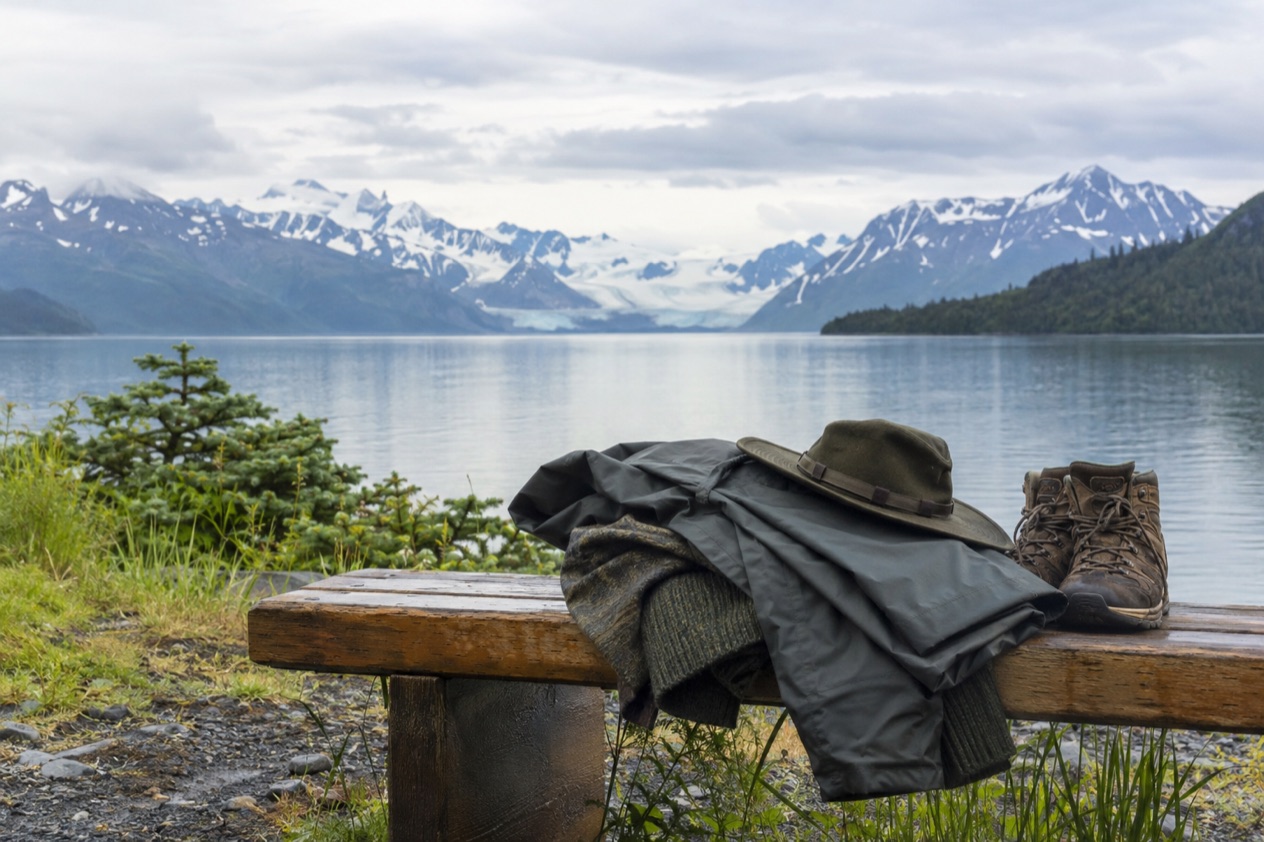
Dress in layers, with a fully waterproof, breathable shell with a hood on top, and keep everything else comfortable and casual. That one idea covers most of the state, because the weather can turn from chilly to wet to bright within a single outing. The point of layering is that you can peel a piece off when the sun comes out and put it back on when the wind picks up.
A small backpack is part of the system. It holds the layers you take off, so you are never stuck carrying a jacket in your hands or leaving it at the hotel on the day it turns cold.
The layers that do the work
Start with a base layer you do not mind sweating in, add a warm middle layer such as fleece, and finish with the shell. The shell is the piece that matters most: it should be waterproof and breathable, and it needs a hood. With the hood up it keeps you warm when the wind blows and dry when the rain arrives, and it folds into the pack when neither is happening.
From spring to early fall, temperatures run from the 50s into the 70s, with rain and wind possible. That is a range where a T-shirt, a fleece and a shell can all be in use in the same afternoon. Daytime highs in the middle of summer can climb higher, while nights slip into the 40s and 50s, so the fleece rarely stays at the bottom of the bag.
Sun, bugs and gloves
It surprises people, but Alaska calls for sun protection. Summer days are so long that you get roughly double the hours of daylight of the Lower 48, so bring a lightweight brimmed hat, sunglasses and sunscreen. The light can be strong on the water and on snowfields, and a long evening on a trail adds up.
Bug repellent with Deet works well against mosquitoes, black flies and no-see-ums, and it earns its place on calm days along coastal beaches and in the backcountry. A pair of thin synthetic liner gloves, polypropylene for example, weighs almost nothing and is welcome when a ship pulls up to a glacier and the air turns chilly.
Shoes and everyday clothes
Never bring brand-new shoes. Pack well-worn ones, or break in lightweight hikers before you leave, so blisters do not ruin a trail day. Comfortable, sturdy footwear is the one item worth thinking about long before the trip.
Alaskans dress casually. Most restaurants, museums and shops welcome you in the same clothes you wore outdoors that day, so you do not need dressy outfits unless you are going to a special event. Jeans, a clean fleece and your walking shoes will do at most tables.
Buying or renting gear in Alaska
If something is missing from your bag, you can buy or rent gear in the state. The Hoarding Marmot in Anchorage is a consignment shop, Big Ray’s operates in Anchorage, Fairbanks and Kodiak, and 6th Avenue Outfitters in Anchorage rents or sells fishing gear. Picking up a secondhand shell or a pair of boots there can be a practical fix when the forecast changes your plans.
How does it change by season?
The summer wardrobe of layers and a shell works from May into September, but the edges of the season ask for warmer pieces and the rest of the year is another matter. The window many travelers aim for runs from May 10 to September 15, when temperatures sit in the 60s to low 70s and daylight lasts between 16 and 24 hours. May and September run 5 to 10 degrees cooler than the middle of summer.
Early summer and the height of the season
The warmest, driest stretch comes from June 15 to July 15. Daytime highs range from 60°F to 80°F, so lighter layers do most of the work, with the shell kept handy for a passing shower. Mosquitoes come out in early June and die off by early August, so repellent belongs in your day pack for that whole stretch, and long sleeves help in the backcountry.
The light shapes what you wear, too. On June 21 Anchorage has 19 hours of daylight, Southeast Alaska 18 and Fairbanks 22. Evenings stay bright, so a hat and sunglasses are useful long after dinner, and a warm layer is still welcome once the air cools.
May and September
In the shoulder months, add a warmer fleece, a hat and the thin gloves. Near Anchorage, trails at lower elevations are clear of snow by May, and in the mountains by early June, with good conditions until mid-October. Closer to the Arctic, hikers wait until the end of June, so boots and a bit of patience matter more there.
Rain is the other change. May is the driest month, with a 25 percent chance of rain on any given day, and that rises to 50 percent in September. A September trip should lean on the waterproof shell more than a May one does. The Alaska cruise season runs from May through September, with small ships starting as early as mid-April, so deck layers and liner gloves suit the whole cruise calendar.
Winter and the far north
The northern lights are visible from late August to early April, and February and March are the months named for a winter aurora trip, with the area near Fairbanks the one named for viewing. Winter is a different wardrobe entirely, and the numbers explain why. Alaska’s record low is −80 °F, set at Prospect Creek Camp, and Fairbanks can see ice fog during especially cold periods between November and March.
Snow is part of the picture in several places. Anchorage gets around 75 inches in a year, and Valdez up to 300 inches. Near Palmer, strong southeast winds known as the Knik wind blow frequently, especially in winter, so a windproof outer layer matters there. In Utqiaġvik, the northernmost city in the United States, snow may fall in any month of the year.
What about rain and mud?
Expect rain in many parts of Alaska and dress for it, especially in the coastal rain forest of the southeast and Prince William Sound. Rain is not the same everywhere: it depends on where you are standing, and a packing list that works in one town may be wrong two regions over.
Where it rains most
Juneau averages over 50 inches of precipitation a year, and some areas of Southeast Alaska receive as much as 275 inches. Some places between Dillingham and Bethel average around 100 inches. Cruise stops such as Juneau, Ketchikan and Skagway sit in that wet southeast setting, so a hooded shell is not optional gear for a port day.
At the other end of the scale, Anchorage gets 16 inches a year, and the northern side of the Seward Peninsula gets less than 10 inches, which makes it a desert. On the North Slope, as little as 4 inches of rainfall equivalent is typical. In those drier places, the layers, hat and sun protection count for more than heavy rain gear.
Rain gear for long wet days
In rain forest areas like Prince William Sound or Southeast Alaska, sustained downpours can overwhelm breathable waterproof fabrics. For extended charters, coated waterproof raingear, Helly Hansen being the example given, is the recommendation. If your plans put you on a boat for many hours, that heavier gear is the one to pack.
For a normal day of walking in town, the breathable shell with a hood is enough. Keep the hood, a hat and a dry middle layer in the pack, so a wet jacket is never your only warm piece.
Trails and footwear
Mud and wet ground come with spring thaw and rainy spells, and the shoes you break in beforehand are the ones you want under you. Lightweight hikers that already fit your feet keep a long, damp trail from turning into a blister problem.
If you arrive without proper footwear or a shell, the Anchorage, Fairbanks and Kodiak outfitters named earlier can fill the gap. Wet days are also the days when a small backpack with spare layers proves its worth.
Good to know before you go
Pack for the weather at hand and leave the dress-up clothes at home, since a casual look fits nearly every restaurant and museum. Think about the long summer light when you plan evenings, and about the winter hazards such as ice fog if your trip falls between November and March.
Bus tours on the Denali Park Road begin around May 15, and the aurora season runs from late August to early April, so match your clothing to the part of the calendar you are traveling in. In May and September, some hotels, tours and cruises offer 10 to 25 percent discounts, and those are also the cooler months that call for the warmer layers.
Sources
- Alaska.org, what to wear (https://www.alaska.org/advice/what-to-wear-in-alaska), checked October 11, 2026
- Alaska.org, best time (https://www.alaska.org/advice/best-time-to-visit-alaska), checked October 11, 2026
- Wikipedia, Climate of Alaska (https://en.wikipedia.org/wiki/Climate_of_Alaska), checked October 11, 2026
- Princess Cruises, Alaska cruise tips (https://www.princess.com/en-us/cruise-destinations/alaska-cruises/alaska-cruise-tips), checked October 11, 2026