
The sound of a sanshin, the three-stringed Okinawan banjo, drifts out of a doorway while a plate of goya champuru steams on the table and a stone shisa lion grins from a rooftop. Okinawa feels like Japan with the dial turned toward the tropics, a place with its own language, its own kingdom in the past and its own pace. It suits travelers who want beaches, reefs, island food and a different side of Japan in one trip.
Where is Okinawa and what is it like?
Okinawa is a subtropical island chain between mainland Japan and Taiwan, and it is the southernmost and westernmost prefecture of Japan. The main island, Okinawa Island, lies roughly 400 miles south of Kyushu and about 310 miles northeast of Taiwan. Naha, the prefectural capital, sits on this island and is where most journeys begin.
The prefecture is far bigger than its main island suggests. It is made up of three island groups, the Okinawa Islands, the Sakishima Islands and the Daito Islands, and it counts 160 islands in all.
Only 49 of them are inhabited, which leaves 111 uninhabited ones scattered across the water. Visitors never leave the main island, but the smaller ones, such as the Kerama group, are what give the region its reputation for island hopping.
The character is easy to feel within a day. Okinawa was formerly the Ryukyu Kingdom, with its own language and culture, and you still see it in the red-tiled roofs, the pottery, the music, the textiles and a cuisine that tastes quite different from what you eat in Tokyo or Kyoto.
Karate grew up here, and awamori, the local distilled spirit, is poured in place of sake. The climate is humid and warm, and the tempo is looser than on the mainland.
Okinawa rewards people who like to mix a city day with a beach day and who are happy to let a meal become the main event. It may disappoint travelers hoping for the temple-and-garden rhythm of Kyoto, since the main island has no equivalent, and anyone who wants a dense rail network will find that Naha holds the only one. The island has a long green interior, a coast of beaches and a mountain, Mount Omoto, as its highest point.
What is there to do in Okinawa?
The big reasons to come are the aquarium, the city of Naha with its castle hill and markets, the beaches, and the reefs around the smaller islands.
Okinawa Churaumi Aquarium
Churaumi opened on November 1, 2002, and was at one time the largest aquarium in the world. Inside, the tanks are built around the waters of the Ryukyu region, so you walk past reef fish, rays and sharks in settings that echo the sea just outside.
The aquarium also does serious work with its animals. A baby bottlenose dolphin was born there, and visitors can watch the young one swimming beside its mother. The staff has also made headlines with a world first, the successful artificial insemination, incubation and hatching of the Bigeye Pacific Opah, and a new female Japanese sawshark has arrived in an effort to breed that species.
| Site | Open |
|---|---|
| Okinawa Churaumi Aquarium | 08:30 to 18:30, last admission 17:30 |
Pair it with the rest of the day around the aquarium. The same stretch of the island has the Emerald Beach among its named sands, and it is a good place to plan a slow afternoon after the tanks. It suits families, couples and anyone who likes to watch big water creatures in the dim blue light.
Naha, Shuri and the markets
Naha is the largest city in Okinawa, home to about 21 percent of the main island’s residents, and it is the place to taste the local table. Think of Okinawa soba in a pork broth, rafute (braised pork belly), umibudo (sea grapes that pop on the tongue), taco rice, sata andagi doughnuts and beni-imo purple sweet potato in everything from tarts to ice cream. The Kokusai-dori shopping street and the public market lanes are where much of this gets eaten, and the potter’s quarter of Tsuboya is where the local ceramics live.
Shuri is the old royal seat of the Ryukyu Kingdom, and the Yui Rail monorail connects it to the center of Naha. Shuri Castle is partly open to the public, but the main castle is closed because of the fire in 2019. You can still walk the grounds and see the stonework and gates, and understand how the kingdom looked out over the sea.
This part of the trip works for travelers who like to graze, wander and look at craft. Plan on a full day to let a market lunch, a pottery street and the castle hill unfold without hurrying.
Beaches on Okinawa Island
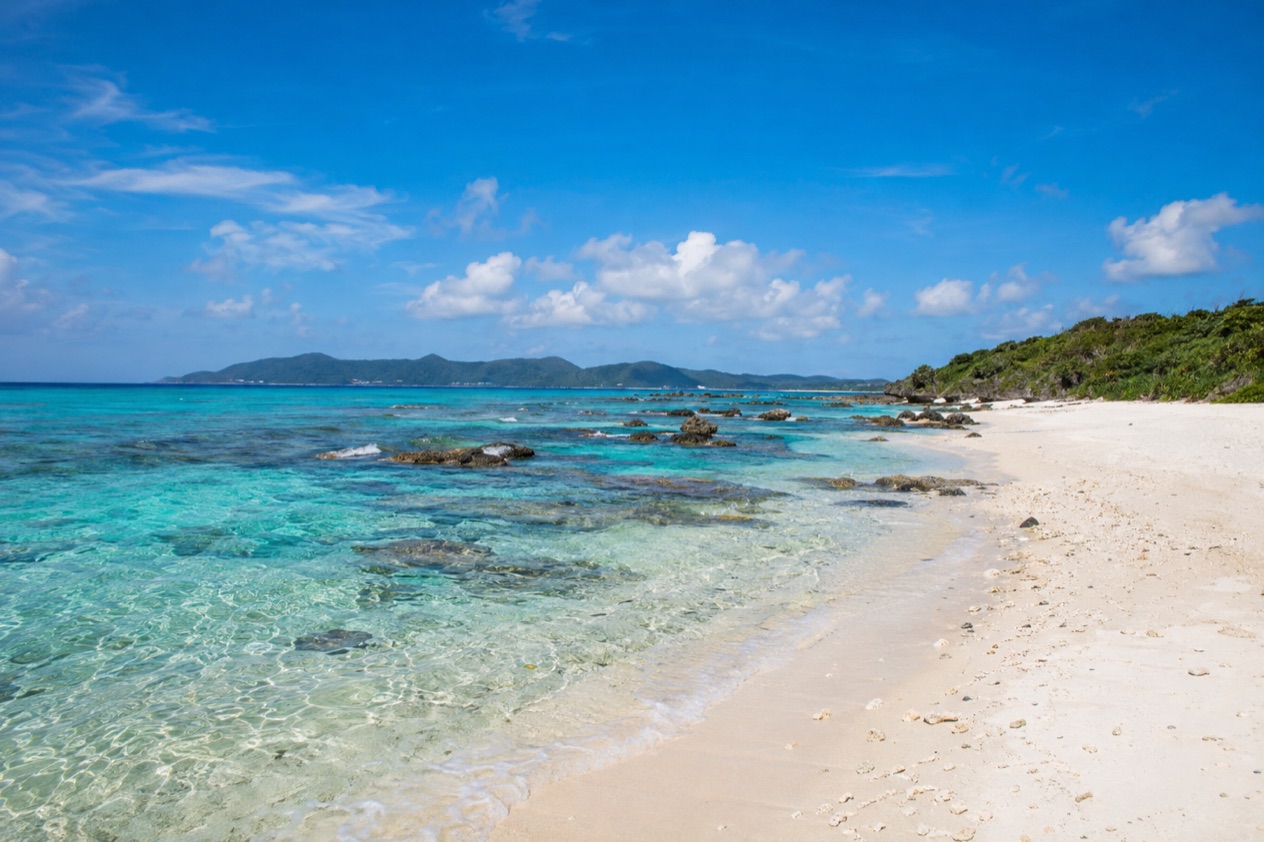
The island has several named beaches, including Manza Beach, Emerald Beach, Okuma Beach, Zanpa Beach, Moon Beach and Sunset Beach in Chatan. Each has its own personality, from resort frontage with shade and rental stands to quieter curves of sand. The sea can change from one day to the next, so it is wise to read the conditions on the day rather than assume anything.
Other sights on the island round out a beach day. Century Beach, Pineapple Park, the Orion Beer Factory and Hiji Falls are all named attractions on Okinawa Island, and they give you something to do on a day when the weather turns. A visit to the brewery fits the mood of the island well, since Orion is the local beer you see on nearly every table.
The Kerama Islands and diving
Four of the Kerama Islands are inhabited: Tokashiki, Zamami, Aka and Geruma. They are the usual answer when someone asks where to go for the clearest reef scenery near Naha, and they reward a night or a day trip. The diving season is open all year in Japan, so the question for Okinawa is less when to dive than which season suits you, with the warm months bringing the most summery days and the cooler ones a quieter mood.
On the islands you can expect villages of low houses, small harbors and the sort of slow evening where dinner stretches out. Snorkelers and divers get the most from a visit, though anyone who simply likes a small island with a view of blue water will enjoy it.
How many days do you need in Okinawa?
A long weekend is enough to taste Okinawa, and a week lets you see it properly. With three or four days you can build a trip around Naha and one big outing, giving a day to the city, the castle hill and the markets, and a day to the aquarium and a beach on the main island.
The city day works well on foot with the monorail doing the long hops. Start at Shuri and let the afternoon drift down into the lanes of Tsuboya and the Kokusai-dori area, finishing with an izakaya dinner of champuru, grilled fish and a glass of awamori. The other day belongs to Churaumi and the sand around it, with room to linger over a beach lunch and an island sunset.
That pace leaves space for rain, which can interrupt plans in any season, and it keeps the trip from becoming a checklist.
Ten days or more opens the islands. A night on Zamami or Tokashiki, with a day of diving or snorkeling around the Kerama reefs, changes the trip from a main-island holiday into an island adventure. Aka and Geruma are smaller still, and they suit travelers who like a pared-down stay with little more than a harbor, a beach and a good meal.
Where to stay in Okinawa
Naha is the base for travelers who want a city, and the beach coast is the base for those who want sand. Naha has the monorail, the restaurants, the markets and the nights out, and a stay there puts the airport, Shuri and the center within a few stops of each other. It suits first-timers, food lovers and anyone who prefers to wake up in a lively street rather than beside a beach.
The beach side of the island is built around names like Chatan with its Sunset Beach, Manza, Okuma, Zanpa and Moon Beach. Resort stays there lean toward long mornings on the sand and dinners that run late over the water, and they work for couples, families and groups who want the sea within easy reach of the door. Not every beach has the same character, so it helps to read about each before choosing.
The northern end of the main island pairs well with the aquarium, since the area around Churaumi has its own beaches and a calm, green feel. The Kerama Islands suit travelers who want to wake up on the reef itself, with Tokashiki, Zamami and Aka offering a small island rhythm. People split a trip, with a few nights in Naha and a few by the beach or on an island.
How do you get to Okinawa and get around?
You reach Okinawa through Naha Airport, the gateway to all of the prefecture’s islands, served by flights from dozens of cities across Japan, including low-cost carriers. The city of Naha is about a 15-minute drive from the airport, or a few stops on the monorail.
The Okinawa Urban Monorail, known as the Yui Rail, is the only public rail network in Okinawa. It connects Naha Airport to the city center and Shuri, which makes the first days in the capital simple to plan without a car. Beyond that line, the rest of the main island has no rail service, so the beaches, the aquarium and the interior are reached by other means.
That spread is worth thinking about when you plan the days, because a city base and a beach base lead to quite different trips. For the Kerama Islands, Naha is the starting point for an island stay.
When is the best time to visit Okinawa?
October is a fine month to be here, and so is April. October still feels like summer in Naha, with highs in the low 80s and nights in the mid-70s, and it brings plenty of sun. Rain arrives as showers rather than as long gray spells. It is also the season of the great tug-of-war in Naha, usually in October, when a giant rope is pulled through the streets.
April is gentler, with highs in the mid-70s and a mild, humid feel that grows as the month goes on. The rainy season comes in late spring, so a spring trip may bring wetter stretches toward the end. January stays mild, with highs in the upper 60s and lows in the upper 50s, and rain falls on about a third of the days, so a city-and-museum trip suits it better than a beach week.
July is the hot month. Highs reach nearly 90, nights stay near 80, and the sun is very strong, so it is the season for the sea, the reef and long evenings at an outdoor table. It is also the time of Eisa, the drum dances performed in towns and villages in summer. Humidity is high all year, which is part of the island’s climate, and a heavy shower can come in any month.
Good to know before you go
Okinawa has a subtropical climate with warm temperatures and high rainfall throughout the year, so a light rain layer is a sensible companion in any season. Pack for the sun and the humidity as well, and plan a flexible day or two for weather. Yen is the currency here as elsewhere in Japan, and Naha is the place to sort out what you need before heading to a smaller island.
Sources
- Japan National Tourism Organization, Okinawa (https://www.japan.travel/en/destinations/okinawa/okinawa/naha-and-the-main-island/), checked October 11, 2026
- Okinawa Churaumi Aquarium (https://churaumi.okinawa/en/), checked October 11, 2026
- Wikipedia, Okinawa Island (https://en.wikipedia.org/wiki/Okinawa_Island), checked October 11, 2026
- Wikipedia, Okinawa Prefecture (https://en.wikipedia.org/wiki/Okinawa_Prefecture), checked October 11, 2026
- Wikivoyage, Okinawa (https://en.wikivoyage.org/wiki/Okinawa), checked October 11, 2026
- Wikipedia, Shuri Castle (https://en.wikipedia.org/wiki/Shuri_Castle), checked October 11, 2026
- Wikipedia, Naha (https://en.wikipedia.org/wiki/Naha), checked October 11, 2026
- Japan National Tourism Organization, diving (https://www.japan.travel/en/guide/diving/), checked October 11, 2026
- Wikipedia, Kerama Islands (https://en.wikipedia.org/wiki/Kerama_Islands), checked October 11, 2026
- Japan Meteorological Agency (JMA), Normal values 1991-2020, monthly (https://www.data.jma.go.jp/stats/etrn/view/nml_sfc_ym.php?prec_no=91&block_no=47936), station Naha, elevation 28 m, checked October 11, 2026
All our pages
When to go
- Best Time to Visit Okinawa: Weather by Month, Sea Temperatures, Festivals and Seasons
- Okinawa in January: Cherry Blossoms, Weather, Swimming and a Two-Day Plan
- Okinawa in February: Weather, Sea Temperature, Island Food and a Two-Day Plan
- Okinawa in March: Weather, Sea Temperature, Naha and Churaumi Aquarium
- Okinawa in April: Weather, Beach Days and What to Do
- Okinawa in May: Weather, Sea Temperatures, Golden Week and a Two-Day Plan
- Okinawa in June: Weather, Beaches and What to Do
- Okinawa in July: Weather, Sea Temperature, Churaumi Aquarium and Naha
- Okinawa in August: Weather, Sea Temperature, Obon and What to Do
- Okinawa in September: Weather, Sea Temperature, Eisa Dances and What to Do
- Okinawa in October: Weather, Warm Sea, Naha's Tug-of-War and a Two-Day Plan
- Okinawa in November: Weather, Swimming, Churaumi Aquarium and a Two-Day Plan
- Okinawa in December: Weather, Sea Temperature, Churaumi Aquarium and Okinawan Food
Things to do
- Things to Do in Okinawa: Churaumi Aquarium, Shuri Castle, Kerama Reefs and Okinawan Food
- Day Trips from Okinawa: Churaumi Aquarium, Main Island Beaches, Ishigaki and Miyako
- 3 Days in Okinawa: Naha, Shuri, Churaumi Aquarium and the Kerama Islands
- 5 Days in Japan: Itinerary for Naha, Churaumi Aquarium and Miyako Island
- Best Beaches in Okinawa: Named Beaches, Churaumi Aquarium, Weather and Getting There
- Okinawa Longevity and the Blue Zone: Island Food, Naha Markets, Churaumi Aquarium and Weather
- Okinawa Food: Soba, Pork Dishes, Sweet Potatoes and Awamori
- Diving and Snorkeling in Okinawa: Wrecks, Caves, Manta Rays and the Reef Seasons
- The Okinawa Islands Travel Guide: Naha, Miyako, Ishigaki and Island Food
Where to stay
- Where to Stay in Okinawa: Naha, Chatan, the Aquarium Coast and Beach Resorts
- Naha Airport to Your Hotel: Monorail, Buses, Taxis and What Waits in the Terminal