
In August, Okinawa sounds like taiko drums. Eisa dancers parade through neighborhood streets at Obon, shouting and spinning while families gather to honor their ancestors. It is a month for beaches, aquariums, island food and the old Ryukyu traditions at their liveliest.
What is the weather like in Okinawa in August?
August in Naha is hot and humid, with frequent rainy days and plenty of sunshine.
| Month | Average high (°F) | Average low (°F) | Precipitation (in) | Days with 1 mm or more of precipitation | Hours of sunshine | Daylight on the 15th | Sea (°F) |
|---|---|---|---|---|---|---|---|
| July | 89.4 | 80.6 | 7.41 | 9.4 | 227 | 13 h 38 min | 84.4 |
| August | 89.2 | 80.2 | 9.45 | 12.3 | 206 | 13 h 05 min | 86.0 |
| September | 87.1 | 78.4 | 10.83 | 11.8 | 181 | 12 h 21 min | 86.1 |
Nights barely cool the island down, and humidity hovers around 78 percent, so the air feels heavy even in the shade. Plan on thin, loose clothes that dry fast, and expect to change a shirt more than once on a day of walking. A sweater is for the air conditioning in malls, restaurants and the monorail, not for the weather.
August in Naha brings frequent rainy days alongside generous sunshine. Sunshine is generous, so sun protection matters as much as an umbrella. A light rain jacket or a compact umbrella handles the showers, and the warmth means you dry out quickly afterward.
The days are long without being as long as in July, which leaves room for a full sightseeing day and a late dinner. Because the sea stays this warm, a swimsuit under your clothes is a sensible habit on any day you are near the coast.
Can you swim in Okinawa in August?
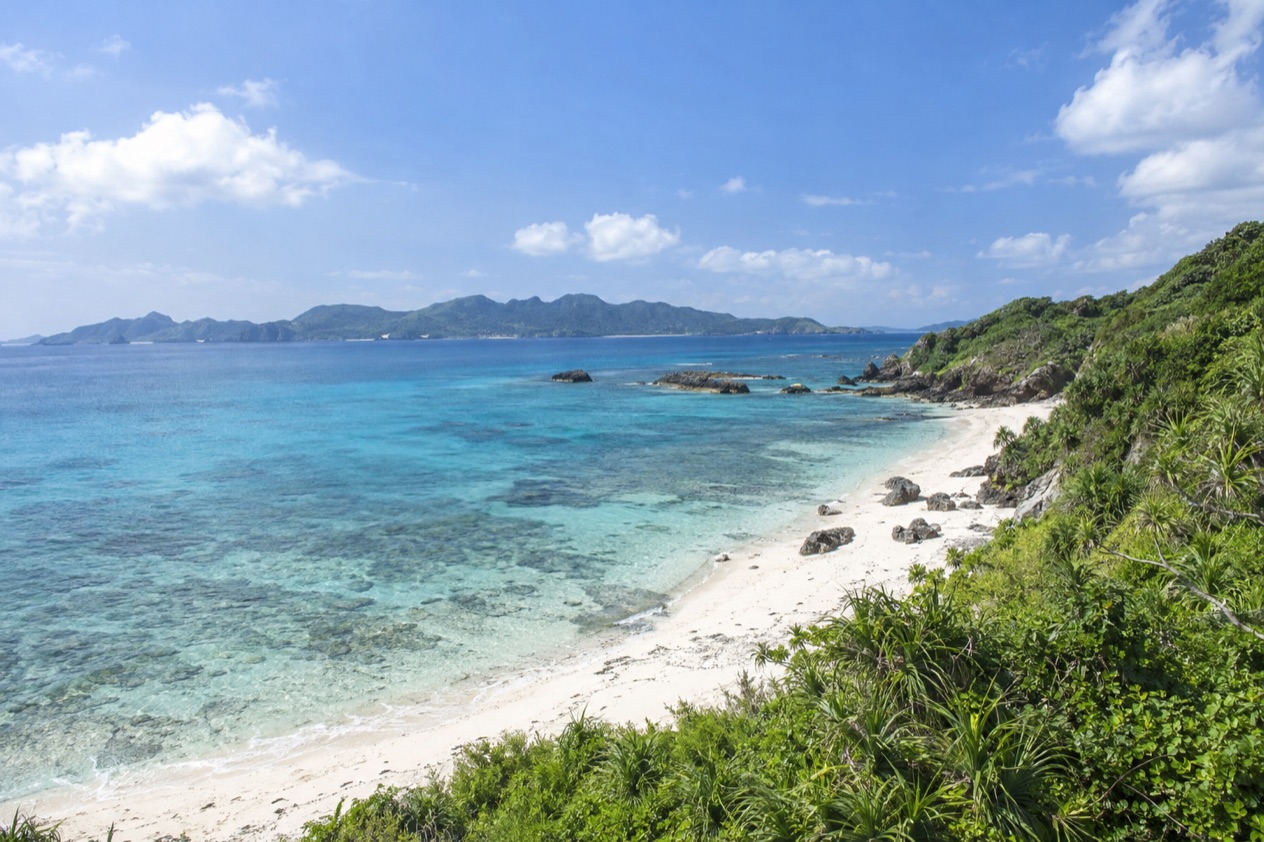
Yes, the sea near Naha sits in the mid-80s in August, warm enough for a long swim with no shiver at the first step. It is the kind of water you stay in for an hour, then dry off and walk straight to lunch.
Okinawa Island has several named beaches. Manza Beach, Emerald Beach, Okuma Beach, Zanpa Beach and Moon Beach all draw swimmers and sun seekers, and Sunset Beach in Chatan-cho takes its name from the evening view. Each is a different stretch of shoreline, so a day can be spent sampling one or two rather than settling for the first.
For a look at what lives beneath the surface, Okinawa Churaumi Aquarium shows the island’s marine world indoors, which is useful when a shower rolls through. Snorkeling and diving outings are part of what the island is known for, but the details of any one trip are best taken from the operator you choose. Look for local signs at each beach for guidance on where and how to enter the water.
What to do in Okinawa in August
August is Obon season, the Buddhist custom of honoring the spirits of one’s ancestors. People return to ancestral family places, visit and clean their ancestors’ graves, and the festival lasts three days. In Okinawa it takes its own island shape, with family gatherings at home and street dancing in many neighborhoods. The exact days follow a calendar that shifts from year to year, so ask where you stay when the evenings fall.
Obon and eisa dancing
Eisa is the sound of an Okinawan summer. Groups of dancers in bright costumes, some beating drums slung at the waist, others clapping and chanting, move through streets in loose formation, followed by singers and sometimes a flute. It began as a way of guiding ancestral spirits and still carries that weight, although the energy of a performance feels more like a block party.
You may come across a troupe on a side street, in a park or at a community event in Naha or a smaller town. Standing at the edge to watch is the natural way to take part. Pay attention to the feel of the evening, because families are marking something personal, and the dancing is part of it.
Churaumi Aquarium
Okinawa Churaumi Aquarium is the indoor day for a month that mixes sun and showers. Its tanks show the reef and open-sea life of the Ryukyu waters, and the big central tank is where visitors often gather to watch large fish glide past. A newly arrived female Japanese sawshark is part of an effort to breed the species, a detail that rewards a slower look at the quieter tanks.
The aquarium also cautions visitors about an increase in bite-wound injuries from white-banded triggerfish during their breeding season, a reminder that reef life has its own temper. Here the animals stay safely behind glass. It suits a gray morning, a hot midday or a family that wants a break from the beach.
Beach days
With the sea this warm, a beach day is the center of the month. Choose one named beach and give it time: swim, float, eat something cold from a stand, and swim again. Zanpa Beach and Sunset Beach in Chatan-cho have different personalities, so which you pick depends on whether you want a long swim or a view to stay for.
The sun is strong across the month, and sunshine hours remain high even as showers pass. Wear a hat, bring water and give yourself shade breaks. Okinawa Island rises to Mount Omoto at 1,724 feet, and its green hills form the backdrop to many shorelines.
Eating through the heat
Okinawan food tastes made for August. Goya champuru, bitter melon stir-fried with tofu, egg and pork, is the summer plate. Okinawa soba pairs wheat noodles with a savory broth and may be topped with braised pork. Taco rice, a local invention, is a filling lunch after a swim. Sata andagi, a fried donut, shows up at snack counters.
To drink, there is Orion beer, shikuwasa citrus juice and awamori, the local spirit distilled from rice, often served over ice in summer. Ice cream is the island habit after a long walk. Urban shops are generally open from 10:00 a.m. to 8:00 p.m. every day, which suits a slow dinner and an evening stroll.
Naha is the largest city in Okinawa, home to about 21 percent of the main island’s residents, and it holds the island’s only public rail network, the Okinawa Urban Monorail, known as Yui Rail. Markets, side streets and dining counters fill the city, and the monorail is one way to link them. A city day is also the answer to a hot afternoon, with air conditioning, shade and shops around every corner.
The history under the surface is worth a moment too. Okinawa was formerly the Ryukyu Kingdom, with its own language and culture, and that separate identity shows in the music, the dress, the food and the dances you will see in August. Visitors find the island feels distinct from the rest of Japan for exactly this reason.
A two-day itinerary for Okinawa in August
Day 1 belongs to Naha, and the heat sets the order. Start with a stroll through the market streets while the shops are opening, then move indoors for lunch: a bowl of Okinawa soba or a plate of goya champuru at a local diner. After lunch, take in a gallery or museum, where the air conditioning gives the hottest hours a rest.
In the late afternoon, ride the Yui Rail monorail across the city for the view from above, then wander the shopping streets as the evening opens up. Dinner is an izakaya (a casual pub) with small plates, awamori and Orion beer.
If eisa dancers are performing in the neighborhood during Obon, join the crowd that gathers to watch. If rain turns the day, shift to covered arcades and shops, which are generally open until 8:00 p.m.
Day 2 is for the aquarium and the sea. Spend the morning at Okinawa Churaumi Aquarium, which keeps a rainy day productive, then break for lunch nearby with a plate of something local and a cold drink. Daylight stretches past thirteen hours, so there is no rush to leave the coast early.
In the afternoon, move to a beach such as Emerald Beach or Okuma Beach for a long swim in warm water. Stay for the late light, then have dinner at a seaside place with grilled fish or taco rice.
Is Okinawa busy in August?
August is a lively month on the island, shaped by summer beach weather and by Obon, when people return to ancestral family places. Naha Airport is the gateway to all of Okinawa’s islands, served by flights from dozens of cities across Japan, including low-cost carriers, and that connection brings travelers from across the country as well as from abroad.
The pace of the city shifts with the family occasion. Households gather, graves are cleaned and visited, and the streets carry a sense of reunion, with eisa groups adding music in the evenings. Visitors feel this in the mood more than anything else, a month that mixes holiday energy with a family tradition.
Beyond Naha, rural areas change gears. Shops there often close earlier, sometimes as early as 6:00 p.m., so a trip into the countryside or a small coastal town is best planned around the afternoon. The prefecture spreads across 160 islands, 49 of them inhabited, which means those who want a different rhythm have places to go beyond the main island.
What to pack for Okinawa in August
Pack for heat, humidity, sun and the odd shower, with a day at the sea always possible.
- A swimsuit or two, so one can dry while you wear the other.
- Light, breathable clothes that dry fast in humid air.
- A hat and sunscreen for the strong sun on beaches and city streets.
- A compact umbrella or light rain jacket for the showers.
- Sandals that handle sand and wet pavement.
- A light layer for air-conditioned restaurants and the monorail.
Good to know before you go
August in Okinawa means heat and humidity, plus showers that can arrive on any day. The Japan Meteorological Agency issues Emergency Warnings to alert people to the likelihood of catastrophes from natural phenomena of extraordinary magnitude, so keep an eye on weather news if conditions turn. The Japan National Tourism Organization offers a Japan Safe Travel Information page with safety tips and government information for travelers.
Shops in urban areas are generally open from 10:00 a.m. to 8:00 p.m. every day, while rural shops often close earlier. Obon lasts three days, and the family gatherings of those days shape the mood around the island, so expect a sense of reunion in the streets.
Okinawa in August vs July and September
Going four weeks earlier brings July, with a little more sunshine, fewer rainy days and longer daylight. The sea is a touch cooler but still warm enough to swim. Obon belongs to the August calendar for many families, so the festival atmosphere is part of what you gain by choosing the month itself.
Going four weeks later brings September, with the sea at its warmest of the three months, but also the most rain and the least sunshine. Days shorten, the heat eases slightly, and the beach days grow a little more dependent on the sky. The Obon dancing and family gatherings will mostly be behind you.
If you want sun and the eisa tradition at its liveliest, stay with August. If you want the longest days and the least rain, shift toward July. If you can accept more showers for the warmest water, September is the move.
Is August a good time to visit Okinawa?
Yes, for travelers who like heat, warm water and a month with real local tradition. Beach lovers, snorkelers, aquarium visitors and anyone who enjoys island food will find the month rewarding. Those who struggle with humid air or want cooler walking weather should choose another time.
On arrival, start with the sea. A first swim in warm water resets the trip, and a bowl of Okinawa soba afterward sets the tone for everything else. Then fold in Naha, the aquarium and an evening of eisa if the calendar lines up with your visit.
What sets August apart is the way sea, family memory and music come together. The ancestors are honored, the drums roll through the streets, and the sea is warm enough to enjoy every day of the trip.
Sources
- Japan Meteorological Agency (JMA), Normal values 1991-2020, monthly (https://www.data.jma.go.jp/stats/etrn/view/nml_sfc_ym.php?prec_no=91&block_no=47936), station Naha, elevation 28 m, checked October 11, 2026
- Open-Meteo Marine API, average 2015-2024, checked October 11, 2026
- Computed from the date and the latitude of the place (sunrise equation, solar elevation -0.833 degrees), October 11, 2026
- Japan National Tourism Organization, shop and attraction hours, national holidays (https://www.japan.travel/en/plan/business-hours-and-holidays/), checked October 11, 2026
- Wikipedia, Obon (https://en.wikipedia.org/wiki/Obon), checked October 11, 2026
- Wikipedia, Public holidays in Japan (https://en.wikipedia.org/wiki/Public_holidays_in_Japan), checked October 11, 2026
- Japan National Tourism Organization, summer in Japan (https://www.japan.travel/en/guide/summer-guide/), checked October 11, 2026
- Japan National Tourism Organization, festivals and events (https://www.japan.travel/en/see-and-do/festivals-and-events/), checked October 11, 2026
- Wikipedia, Hanabi (https://en.wikipedia.org/wiki/Hanabi), checked October 11, 2026
- Japan Meteorological Agency, Emergency Warnings (https://www.jma.go.jp/jma/en/Emergency_Warning/ew_index.html), checked October 11, 2026
- Japan National Tourism Organization, safety information (https://www.japan.travel/en/japan-safe-travel-information/), checked October 11, 2026
- Japan National Tourism Organization, weather and seasons in Japan (https://www.japan.travel/en/plan/weather/), checked October 11, 2026
- Wikipedia, Awa Odori (https://en.wikipedia.org/wiki/Awa_Odori), checked October 11, 2026
- Wikipedia, Climate of Japan (https://en.wikipedia.org/wiki/Climate_of_Japan), checked October 11, 2026
- Japan National Tourism Organization, Mount Fuji guide (https://www.japan.travel/en/fuji-guide/), checked October 11, 2026
- Official website for Mt. Fuji climbing, about the climb (https://www.fujisan-climb.jp/en/about/), checked October 11, 2026
- Wikipedia, Nebuta (https://en.wikipedia.org/wiki/Nebuta), checked October 11, 2026
- Japan National Tourism Organization, Okinawa (https://www.japan.travel/en/destinations/okinawa/okinawa/naha-and-the-main-island/), checked October 11, 2026
- Okinawa Churaumi Aquarium (https://churaumi.okinawa/en/), checked October 11, 2026
- Wikipedia, Okinawa Island (https://en.wikipedia.org/wiki/Okinawa_Island), checked October 11, 2026
- Wikipedia, Okinawa Prefecture (https://en.wikipedia.org/wiki/Okinawa_Prefecture), checked October 11, 2026
- Wikivoyage, Okinawa (https://en.wikivoyage.org/wiki/Okinawa), checked October 11, 2026
To plan your stay
- Things to Do in Okinawa: Churaumi Aquarium, Shuri Castle, Kerama Reefs and Okinawan Food
- Where to Stay in Okinawa: Naha, Chatan, the Aquarium Coast and Beach Resorts
- Okinawa from Tokyo: Flying to Naha, Why No Train Goes There and a First Day on the Island
- Know Before You Go to Okinawa: Entry, Money, Getting Around and Local Etiquette