
A plate of Yaeyama soba arrives with its pork slices and thin noodles, a bottle of homemade chili oil sits beside the soy sauce, and somewhere in the next room someone is tuning a sanshin, the three-stringed instrument of the southern islands. This is Ishigaki, a town on a subtropical island that feels a long way from the Japan of bullet trains and temple gardens.
Where is Ishigaki and what is it like?
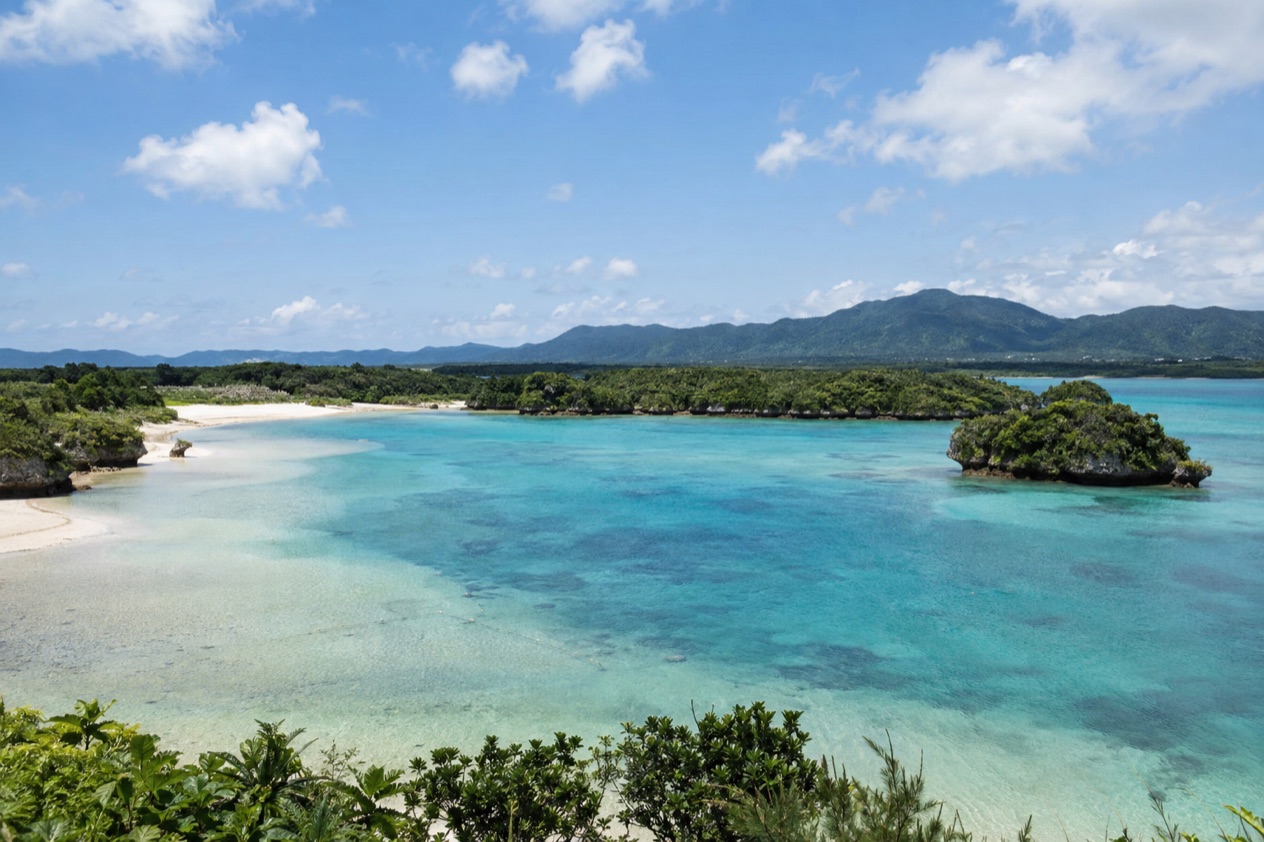
Ishigaki is a city in Okinawa Prefecture, and it sits at the far southern end of Japan, about 1243 miles from Tokyo. The city covers Ishigaki Island and also takes in the Senkaku Islands territory. The island itself is the second-largest and most populated of the Yaeyama Islands, and the city is the political, cultural and economic center of that group.
Despite that role, the feeling is of a small island town rather than a big city. About 49,000 people live on the island, which covers 222 km² (86 mi²).
The center around Ishigaki Port holds the covered market streets, the izakaya (casual Japanese pubs) serving awamori, the local distilled spirit, and the shops selling pineapple, mango, brown sugar candy and chili oil. Beyond the town, the island opens into coastline, farmland and hills, with beaches and bays strung along its edges.
The pace is slower than on the Japanese mainland, and the culture is its own. Yaeyama has its own music, its own pottery and textile traditions, and a food repertoire that leans on pork, island vegetables, seaweed and tropical fruit.
Travelers who like to spend days in the water, eat local, and use one island as a launch pad for others will feel at home. Those who want a dense list of temples, castles and museums, or a place where everything is a short hop from a rail station, may find it too spread out and too quiet.
The place also works as a stepping stone. Ishigaki is where flights from the big cities land, and from here the other Yaeyama Islands come into reach. That mix of its own attractions and its role as a gateway is what gives the island its character.
What is there to do in Ishigaki?
The big reasons to come are the water, the food, the island’s own culture and the neighboring islands. What sets Ishigaki apart from its neighbors is that it combines all of these in one place, with the largest town of the Yaeyama group and the airport that most visitors use.
Yonehara Beach
You enter the water from the sand, put your face down and look for coral and reef fish in the shallows. It is an activity for people who like to float and watch, with no schedule other than your own.
One caution matters here. Rip currents at Yonehara are notoriously strong, and visitors are told to stay in the western portion of the beach, between the stream mouth and the cliff. Stay inside it, and keep in mind that conditions can change from one day to the next.
Eating your way through town
A day of eating on Ishigaki can start with Yaeyama soba, a bowl of noodles in a clear pork broth, and go on to goya champuru, a stir-fry of bitter melon, tofu and egg that shows up on most island menus. Sata andagi, a round, crisp-edged doughnut, is the snack to carry in a paper bag. The island is also known for its beef, served grilled or as part of a set meal.
In the evening the izakaya near the port take over. Plates of sea grapes, grilled fish, fried island vegetables and pork dishes arrive in small portions, and awamori comes with water and ice. The covered market streets are good for browsing tropical fruit and bottles of chili oil to bring home. This is eating for people who want to try several small things rather than sit down to one formal meal.
Island culture and music
As the cultural center of the Yaeyama Islands, Ishigaki carries traditions that differ from those of the main island of Okinawa and from the mainland. Folk songs, sanshin music, dance, and crafts such as pottery and dyed textiles are part of daily life. In town you can look for small shops selling local crafts and, in the evenings, bars where someone may pick up a sanshin and play.
This side of the island is easy to miss if you spend every hour at the beach. A walk through the market streets, an evening at a music bar, or a stop in a pottery shop gives you a sense of the island beyond its coastline. It rewards curious travelers who like to talk with shopkeepers and cooks.
Using Ishigaki as a base for the Yaeyama Islands
Ishigaki Port serves the city, and the Yaeyama Islands around it, including Taketomi and Iriomote, are the other major draw of a stay here. Each has a different character, from a village of low houses to a large, forested island, and each makes a different kind of outing from the town.
Because Ishigaki is the political and economic center of the group, it is the natural place to sleep and eat well while you explore. You can base yourself in one spot, head out to a neighboring island for the day, and come back to a familiar bowl of soba in the evening. For travelers who dislike packing up every night, that is a real advantage.
How many days do you need in Ishigaki?
A long weekend is enough to taste the island, and a week lets you settle into its rhythm and reach the nearby islands. Because getting here takes a flight, most travelers want a few full days on the ground to make the trip worth it.
Leave one day loose for weather, because a gray or windy day on an island is easier to absorb when your plans bend.
With a week, you can add one or two days on neighboring Yaeyama Islands, such as Taketomi and Iriomote, and still return to Ishigaki to sleep each night. You can also add a slower stretch: a long beach day, a visit to a pottery or textile workshop, or an evening of listening to island music. A week also gives you room to repeat a favorite meal, which on an island with so many small restaurants is half the pleasure.
If you are combining Ishigaki with other parts of Japan, the flight in from Tokyo or Naha makes it a separate leg of the trip rather than a quick stop. Give it at least a few nights so that the travel time pays off.
Where to stay in Ishigaki
The two main choices are staying in the port town or staying out along the island’s coast. The town around Ishigaki Port is the practical base. It is where the market streets, the izakaya, the shops and the port itself are found, so you can eat well in the evening without needing a car and step out the door to the sights of the center.
This suits travelers who want to try many restaurants, who plan day trips to other Yaeyama Islands from the port, or who like to wander at night. It also suits those who prefer to keep transport simple, since the port is the departure point for the islands nearby.
Out along the coast, the feel changes. The airport is located 9.3 miles from the center of Shiraho, on the island’s eastern side, so Shiraho is another area to consider if you want to be near the arrival point.
A mix works well for a longer stay: a few nights in town for the food and the island trips, then a few near the coast for the water. For a short stay, pick one and settle in. Travelers who plan to eat out every evening will likely prefer the town, while those who care most about time in the water will lean toward the coast.
How do you get to Ishigaki and get around?
You get to Ishigaki by air, landing at New Ishigaki Airport, which serves the city. Flights come in from Naha Airport on Okinawa’s main island and from Haneda Airport in Tokyo. A direct flight from Haneda takes about three hours.
Other airports also have flights to Ishigaki: Narita Airport in Tokyo, Chubu Centrair International Airport in Nagoya, Kansai International Airport in Osaka, and Fukuoka Airport. Miyako Airport and Yonaguni Airport are also linked to the island. For many travelers from the United States, that means a flight to Tokyo or another major Japanese airport, then a connection south.
The airport is located 9.3 miles from the center of Shiraho on Ishigaki Island. From there you continue to your lodging in town or along the coast. Ishigaki Port is the other gateway, serving the city and the sea routes to the neighboring islands.
Once on the island, the town center is where you can wander among the market streets and eateries on foot. Getting out to beaches, bays and viewpoints along the coast takes more planning, since the island covers 222 km² (86 mi²) and its sights are spread out.
Think of your days in two modes: on foot in town, and a different kind of outing when you head out to the shore. The port is also your starting point for time on the other Yaeyama Islands.
When is the best time to visit Ishigaki?
Ishigaki sits at the southern end of Japan, so its seasons are shaped by a subtropical position and feel different from those of Tokyo or Kyoto. The island is a destination for the water and for time outdoors, which is why the warmer part of the year draws most of the attention.
The cooler months suit a different kind of trip. Without the pull of the beach, the focus shifts to the town, the food, the music, the crafts and the nearby islands.
You can eat Yaeyama soba and goya champuru in any season, and the market streets are open to browse whatever the weather. Tropical fruit such as pineapple and mango is part of the island’s identity and appears in shops and on menus through the warmer part of the year.
Because the island is exposed to the sea, expect weather that can change, with wind and rain interrupting plans on some days. Keep a flexible day in any itinerary. Whichever season you choose, the beach rules stay the same: at Yonehara, stay in the western portion between the stream mouth and the cliff, where rip currents are less of a worry.
Good to know before you go
Ishigaki is a small island city, so it helps to carry some yen for the market stalls, small eateries and shops of the port town. Plan for the sea with respect: the rip currents at Yonehara are a real hazard, and the stretch between the stream mouth and the cliff on the western side of the beach is where visitors are advised to stay. As a subtropical island, Ishigaki can see wind, rain and storms at times, so build a spare day into the plan and watch the forecast before boat outings or flights.
Sources
- Japan National Tourism Organization, Ishigaki (https://www.japan.travel/en/destinations/okinawa/okinawa/ishigaki-island-and-around/), checked October 11, 2026
- Wikipedia, Ishigaki, Okinawa (https://en.wikipedia.org/wiki/Ishigaki,_Okinawa), checked October 11, 2026
- Wikivoyage, Ishigaki (https://en.wikivoyage.org/wiki/Ishigaki), checked October 11, 2026