
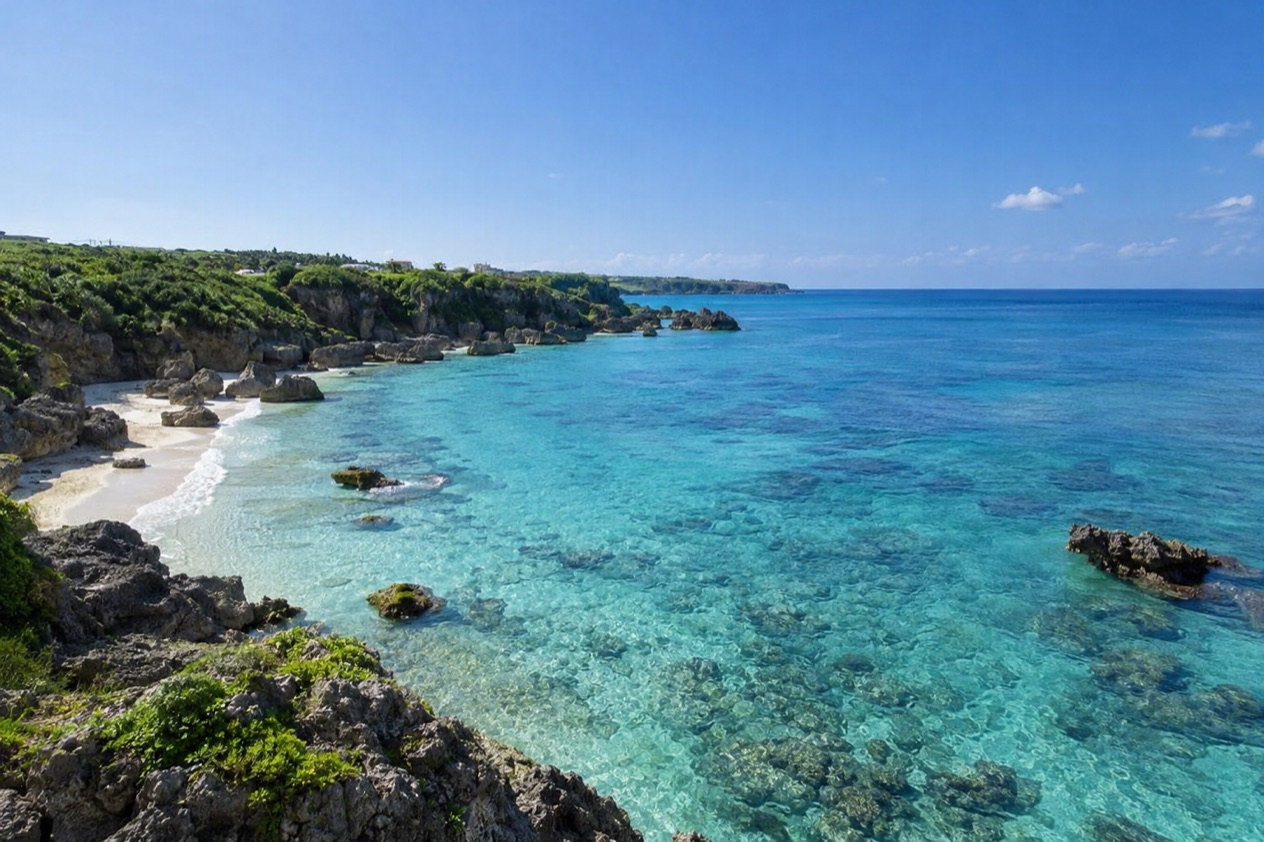
A destroyer lies on the sea floor off Kouri Island, and a cave glows blue on the main island, while reef fish drift over coral in water that stays inviting to divers all year. Okinawa is where many travelers in Japan first put on a mask and fins. The islands of the chain add manta rays, sea turtles, hammerhead sharks and limestone caves to the picture, and this is a trip built around what lives and lies beneath the surface.
Is visiting diving and snorkeling in Okinawa worth it?
Yes, for anyone who wants Japan to include warm-water reefs, wrecks and big animals as well as temples and rail lines, whether you hold a dive certification or simply like floating over coral with a snorkel. Japan’s national tourism organization describes the diving season as open all year, which means this is a trip you can plan around your own calendar rather than around a narrow window.
What sets Okinawa apart from diving elsewhere in the country is the variety packed into one island chain. Hokkaido offers ice diving, and it asks for dry suit experience, an Advanced Open Water certification and a good command of Japanese. The Izu and Ogasawara archipelagos need a plane or a long ferry ride.
Okinawa sits on a different footing. Naha Airport is the gateway to all of Okinawa’s islands, and from the main island you can reach a sunken warship, a cave, limestone caverns and, farther along the chain, manta ray colonies and hammerhead sharks.
There is also the pleasure of the dry days. The main island has an aquarium for rainy afternoons, beaches with names like Emerald and Sunset, and a humid subtropical climate that makes shorts and sandals the normal outfit. The water is only part of the trip, but it is the reason to come.
What to see at diving and snorkeling in Okinawa
The underwater sights split into two groups. The first sits on or near the main island, and the second lies out along the chain, where each island has its own signature animal or formation.
The USS Emmons off Kouri Island
Off Kouri Island lies the USS Emmons, a sunken destroyer. For divers, a warship on the sea floor is a different experience from a reef: the shapes are man-made, and the hull has been turned into a surface for coral and a shelter for fish. You drift along a structure that once carried a crew, and the sense of scale is part of the appeal.
A wreck dive is a dive-certified outing, so snorkelers should treat this one as a site for others to explore. Bring your curiosity about the history of the Pacific war, and expect a quieter, more reflective dive than a colorful reef drift.
The Blue Cave on the main island
Okinawa’s main island is home to the Blue Cave, a cave diving site that has become one of the best known in the country. The name comes from the color of the light inside, as sunlight enters from below and turns the water a glowing blue. Divers swim through that glow, often with small reef fish moving through the beams.
For visitors, it is the kind of place that photographs well and lingers in memory. If you are choosing one cave to see on the main island, this is the name you will hear most.
Limestone caves around Miyakojima
Miyakojima, part of Okinawa, offers cave diving through numerous limestone caves and around natural rock formations. Limestone shapes the underwater scenery into arches, swim-throughs and chambers, so a dive here feels more like exploring a landscape than watching fish. Light falls through openings in the rock and lands on pale walls.
This is a place for travelers who like geology as much as marine life. Pair it with the main island’s reef and wreck sites for a trip that shows three faces of Okinawan diving.
Manta rays, turtles and hammerheads farther along the chain
Ishigaki is known for its manta ray colonies, especially in the area called Manta Scramble, where divers often meet these wide, slow-gliding animals. Tokunoshima is a prime spot for sea turtles, which you may see grazing or rising to breathe. Wildlife is never guaranteed, but these islands are where the chances run high.
Yonaguni Island adds two very different sights: hammerhead sharks and a large underwater stone structure that divers come to swim around and puzzle over. Together, these islands turn a main-island trip into the start of a longer island-hopping dive journey.
Hours, tickets and rules
The sea itself keeps no opening hours, and the diving season is open all year in Japan. The one dry-land stop with set hours is Okinawa Churaumi Aquarium, where the reef fish you hoped to meet underwater swim in tanks you can visit between dives or on a day the weather keeps you out of the water.
| Site | Open |
|---|---|
| Okinawa Churaumi Aquarium | 08:30 to 18:30 (last admission 17:30) |
One rule applies at the aquarium. It cautions visitors about an increase in bite-wound injuries from white-banded triggerfish during their breeding season, a reminder that even small reef fish can defend their nests. The aquarium has also welcomed a new female Japanese sawshark in an effort to breed the species, one of the animals you may see there.
How to get to diving and snorkeling in Okinawa
Everything starts at Naha Airport, the main hub for the Ryukyu Islands and the gateway to all of Okinawa’s islands. It is served by flights from dozens of cities across Japan, including low-cost carriers, so travelers who are already in Japan can reach the chain without a long overland leg. The main island lies far to the south of Kyushu, which is why the sea and the climate feel so different from the rest of the country.
From the airport into Naha
Naha is Okinawa’s largest city and home to about a fifth of the main island’s residents. It also has the island’s only public rail network, the Okinawa Urban Monorail, known as the Yui Rail. It runs from Naha Airport to Tedako-Uranishi Station in Urasoe, via Akamine Station.
That line is a way to move around the city, but it does not reach the dive sites themselves. For the rest of the main island, the road network takes over.
By road along the main island
The Okinawa Expressway is a toll road that runs from Naha to Nago, with a speed limit of 50 miles/h, the highest on the island. It is the main artery for anyone traveling north from the capital, toward the area around Okinawa Churaumi Aquarium and the beaches on the island’s coast. Beaches such as Manza Beach, Emerald Beach, Okuma Beach, Zanpa Beach, Moon Beach and Sunset Beach in Chatan-cho all belong to the main island’s shoreline, so a trip here can be built around the road rather than a boat.
By ferry to nearby islands
Tomarin Port in Naha has ferries to nearby islands such as Aguni, Tokashiki and Zamami. For a visitor staying in the city, these departures put smaller islands within the reach of a trip from Naha. For the farther islands named in the sea sections above, including Ishigaki, Miyakojima, Tokunoshima and Yonaguni, you start from the same gateway at Naha Airport and plan each leg of the island-hopping separately.
When to visit diving and snorkeling in Okinawa
Any month can work, because the diving season is open all year in Japan, so the question is really what you want from the days on land. Naha’s air figures show a mild winter, a hot July and a long stretch of warm weather in between. The island’s rainy season falls in late spring, and the air stays humid year-round.
| Month | Average high (°F) | Average low (°F) | Rain days | Sunshine (hours) |
|---|---|---|---|---|
| January | 67.6 | 58.8 | 10.2 | 93 |
| April | 75.7 | 66.4 | 10.3 | 121 |
| July | 89.4 | 80.6 | 9.4 | 227 |
| October | 82.6 | 74.3 | 8.8 | 163 |
January is the cool end of the range, with gray spells and about as much sun as a rainy season month. April warms up and brings more rain. July is the hottest and sunniest month in the table, with air that feels thick and tropical. October stays warm, with more sunshine than January or April, and fewer rainy days than any other month in the table.
For the wildlife, think by island. Hokkaido’s ice diving belongs to February and March, which makes it a different trip entirely from Okinawa. Squid around Miyakejima in May belongs to the waters near Tokyo. For Okinawa, choose the month that suits you and your tolerance for heat and humidity, and keep the aquarium in mind for a day when the weather is not on your side.
Tips for your visit
Pack for humid, warm air and for time on boats and beaches: light clothing, a hat, sunglasses and a dry bag for your phone. Divers who want to do wreck, cave or big-animal dives should bring their certification card, since the more demanding sites call for training. Snorkelers can build days around the main island’s coast and keep the wreck and cave dives as something to watch others prepare for.
Combine the water with the land
Okinawa Island has plenty to fill the hours between dives. Okinawa Churaumi Aquarium, once the world’s largest, shows the reef life you may meet in the sea. Century Beach, Pineapple Park, the Orion Beer Factory and Hiji Falls round out the list of attractions on the main island.
In Naha, Shuri Castle and Nakagusuku Castle are UNESCO World Heritage Sites, a reminder that the Ryukyu Islands have a history and a culture of their own, apart from the rest of Japan. The island’s highest point, Mount Omoto, rises to 1,724 feet, and the hills of the north make a green backdrop to the coast.
Planning your days
A trip built on the main island alone can fill a week, with dives, beach days and a day at the aquarium. A longer journey adds one or two islands from the chain, each reached from Naha. Pick the animal you most want to see, whether manta rays, turtles or hammerhead sharks, and let that choose the island.
Families and travelers with mixed interests can split the days: one in or on the water, one at the aquarium, one in Naha. Wildlife is never a promise, so leave a spare day for the sea to cooperate.
Good to know before you go
The rainy season arrives in late spring and the air stays humid all year, so plan for damp towels and quick-drying clothes. Reef fish can bite when they guard their nests, as the aquarium’s warning about triggerfish reminds visitors, so give nesting fish room. The islands beyond the main island are reached through Naha Airport, which makes it the place to sort out your onward legs.
Sources
- Japan National Tourism Organization, diving (https://www.japan.travel/en/guide/diving/), checked October 11, 2026
- Wikipedia, Okinawa Island (https://en.wikipedia.org/wiki/Okinawa_Island), checked October 11, 2026
- Japan National Tourism Organization, Okinawa (https://www.japan.travel/en/destinations/okinawa/okinawa/naha-and-the-main-island/), checked October 11, 2026
- Okinawa Churaumi Aquarium (https://churaumi.okinawa/en/), checked October 11, 2026
- Japan Meteorological Agency (JMA), Normal values 1991-2020, monthly (https://www.data.jma.go.jp/stats/etrn/view/nml_sfc_ym.php?prec_no=91&block_no=47936), station Naha, elevation 28 m, checked October 11, 2026
To plan your stay
- Best Time to Visit Okinawa: Weather by Month, Sea Temperatures, Festivals and Seasons
- Where to Stay in Okinawa: Naha, Chatan, the Aquarium Coast and Beach Resorts
- Okinawa from Tokyo: Flying to Naha, Why No Train Goes There and a First Day on the Island
- Know Before You Go to Okinawa: Entry, Money, Getting Around and Local Etiquette