
You step out of the terminal at Naha Airport and the air is soft and warm, with a faint salt smell that tells you this is not Tokyo or Kyoto. Okinawa was once the Ryukyu Kingdom, with its own language and culture, and you notice it quickly in the food, the music and the pace. A few practical things are worth settling before you land: the paperwork, how to pay, how to move around the island, and what the weather does.
What should you know before visiting Okinawa?
Four things matter most: U.S. citizens need a valid passport for the whole stay, Naha has the only rail line on the islands, cards are widely accepted but not everywhere, and the weather is humid and subtropical, with a rainy season in late spring. Shoes come off indoors, and you should always carry your passport.
First-time visitors are often surprised by how far Okinawa is from the rest of Japan. It is the southernmost and westernmost prefecture, a chain of 160 islands of which 49 are inhabited, lying between mainland Japan and Taiwan. Naha, the capital, sits on Okinawa Island and is the largest city, home to about a fifth of the main island’s residents.
The second surprise is how different it feels from the mainland. The Ryukyu Kingdom left its own language, its own culture and its own way of doing things, and you see that in the local cooking and in the names on the map.
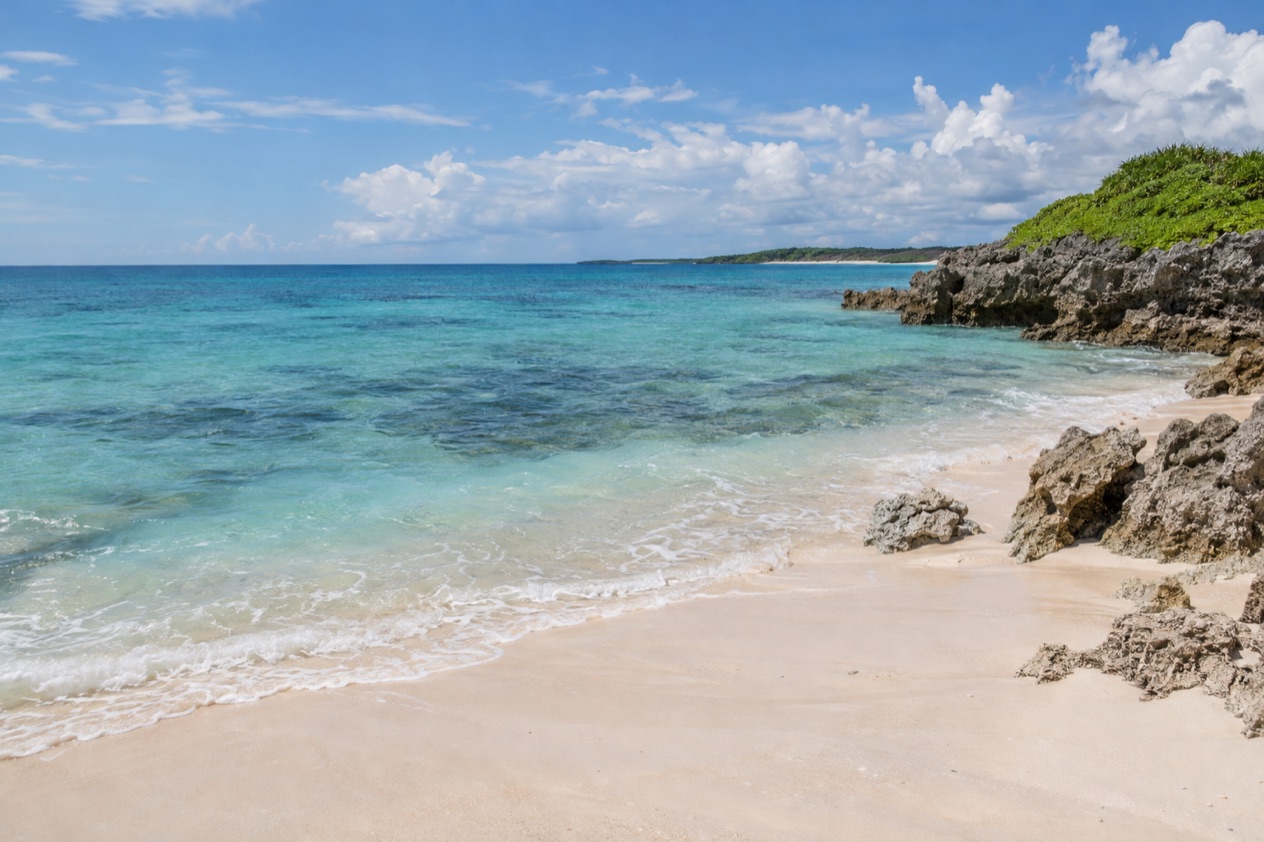
Beaches such as Manza Beach, Emerald Beach, Okuma Beach, Zanpa Beach, Moon Beach and Sunset Beach in Chatan-cho give the island a resort side that few visitors expect from Japan. Inland, the highest point on the island is Mount Omoto, a ridge of green forest well above the coast.
Entry, customs and paperwork
The U.S. State Department says that U.S. citizens visiting Japan for tourism or business can stay without a visa for up to 90 days. They need a valid passport and should have proof of a return or onward ticket. The passport must be valid for the entire time you are in Japan, not just on arrival.
A visa-free stay does not allow you to work on the local economy. Visitors to Japan must also carry their U.S. passport at all times (or a Japanese Residence Card for residents), and may be questioned or detained if they cannot show proof of identity and status. A photocopy left in the hotel safe will not do the job, so keep the passport with you when you go out to the aquarium, a beach or a restaurant.
One more point on the legal side: CBD products may be illegal in Japan depending on the amount of THC they contain. If you use them at home, leave them at home.
Money, cards and tipping
International credit, debit and prepaid cards are generally accepted throughout Japan, and that includes Okinawa. Some shops do not display the symbols of the cards they take, so when the sign is missing, it is simple to ask the seller whether your card works before the items are rung up.
Beyond that, think of money in Okinawa as you would anywhere you are visiting for the first time: a mix of card and the local currency, the yen, keeps you flexible. Tipping is not part of the local way of doing things, and a thank-you said with a small bow or a smile does the work a tip does elsewhere. If a server brings you a bill, you pay what it says at the register on your way out, a habit that surprises many Americans at first.
At small family-run places, such as a neighborhood diner serving Okinawa soba or a stall near a market, you will often settle up at the counter rather than at the table.
Getting around and staying connected
Naha has Okinawa’s only public rail network, the Okinawa Urban Monorail, known as Yui Rail. It is the one rail line on the islands, so outside Naha you will be looking at other ways of getting around, and the island’s beaches, mountains and aquarium sit well beyond the monorail’s reach.
Visitors begin at Naha Airport, the gateway to all of Okinawa’s islands, served by flights from dozens of cities across Japan, including low-cost carriers. Naha city is only a 15-minute drive from the airport, or a few stops on the monorail, so you can be in the center of town quickly after landing.
From Naha, the main island stretches north toward places like Okinawa Churaumi Aquarium, where the opening hours are 08:30 to 18:30, with last admission at 17:30. The aquarium also shares news about its animals: a new female Japanese Sawshark has arrived in an effort to breed the species, and a baby bottlenose dolphin has been born, so visitors can watch the baby swimming with its mother. The aquarium also cautions visitors about bite-wound injuries from white-banded triggerfish during their breeding season, a reminder to follow the signs near the water.
| Site | Open | Last admission |
|---|---|---|
| Okinawa Churaumi Aquarium | 08:30 to 18:30 | 17:30 |
Health, water and the weather
Okinawa Island has a humid subtropical climate that borders on a tropical rainforest climate, with a rainy season in the late spring.
| Month | Avg high (°F) | Avg low (°F) | Precipitation (in) | Days with rain (1 mm+) | Sunshine (hours) | Humidity (%) |
|---|---|---|---|---|---|---|
| January | 67.6 | 58.8 | 4.00 | 10.2 | 93 | 66 |
| April | 75.7 | 66.4 | 6.34 | 10.3 | 121 | 75 |
| July | 89.4 | 80.6 | 7.41 | 9.4 | 227 | 78 |
| October | 82.6 | 74.3 | 7.06 | 8.8 | 163 | 72 |
In words: January is mild enough for a light jacket in the evening, with gray spells and showers on about one day in three. April is warm and getting damp. July is hot and bright, the sunniest of the four months, and October still feels like summer, with warm nights and showers that come and go.
With that much sun and humidity, the usual island habits make sense: drink water often, seek shade at midday and plan indoor stops, like the aquarium, for the wetter hours.
Local customs and etiquette
In Japan it is customary to remove your shoes at the entrance of a building, put on indoor slippers and leave your shoes in a shoe box or to the side. Okinawa follows the same habit, and you will see it at homes, guesthouses and many small restaurants with raised floors.
Inside a Japanese home or ryokan, slippers also come off on tatami mats, and a separate pair of toilet slippers is often provided for the bathroom. It is easy to forget, so the slip-off, slip-on rhythm becomes second nature after a day or two.
Beyond shoes, everyday manners tend to be quiet and considerate. People speak softly on public transport, keep phone calls short and wait their turn in line. A small bow and a quiet thank-you go a long way, whether you are buying a snack or getting directions. Trash is something you often carry with you until you find a proper bin, since public bins can be few.
Okinawa’s own history shows up in small ways too. Locals take pride in the Ryukyu Kingdom’s language and culture, and asking about a dish or a word is a friendly way to start a conversation. Respect for shrines, family tombs and sacred groves is part of everyday life, so photographs are best taken with a light touch.
Good to know before you go
The U.S. State Department rates Japan Level 1: Exercise Normal Precautions.
The rainy season arrives in late spring, and the island’s humid climate means showers can turn up in any month, so a light rain jacket is worth having. Keep your passport with you, along with your proof of return or onward travel, and carry your card as well as some yen for the places that do not take it. Before you head out for the day, check the opening hours of anything you want to see, then settle in and enjoy the slower island pace.
Sources
- Japan National Tourism Organization, Okinawa (https://www.japan.travel/en/destinations/okinawa/okinawa/naha-and-the-main-island/), checked October 11, 2026
- Okinawa Churaumi Aquarium (https://churaumi.okinawa/en/), checked October 11, 2026
- Wikipedia, Okinawa Island (https://en.wikipedia.org/wiki/Okinawa_Island), checked October 11, 2026
- Wikipedia, Okinawa Prefecture (https://en.wikipedia.org/wiki/Okinawa_Prefecture), checked October 11, 2026
- Wikivoyage, Okinawa (https://en.wikivoyage.org/wiki/Okinawa), checked October 11, 2026
- U.S. Department of State, Japan travel information, local laws and special circumstances (https://travel.state.gov/content/travel/en/international-travel/International-Travel-Country-Information-Pages/Japan.html), checked October 11, 2026
- Japan National Tourism Organization, manners, etiquette, shoes, bowing, chopsticks, public behavior (https://www.japan.travel/en/guide/understanding-and-mastering-japanese-manners-and-etiquette/), checked October 11, 2026
- Japan National Tourism Organization, credit cards and cash, where cards are accepted (https://www.japan.travel/en/plan/credit-cards/), checked October 11, 2026
- U.S. Department of State, Japan travel advisory (https://travel.state.gov/content/travel/en/international-travel/International-Travel-Country-Information-Pages/Japan.html), checked October 11, 2026
- U.S. Department of State, Japan travel information, entry and exit requirements (https://travel.state.gov/content/travel/en/international-travel/International-Travel-Country-Information-Pages/Japan.html), checked October 11, 2026
- Japan Meteorological Agency (JMA), Normal values 1991-2020, monthly (https://www.data.jma.go.jp/stats/etrn/view/nml_sfc_ym.php?prec_no=91&block_no=47936), station Naha, elevation 28 m, checked October 11, 2026
To plan your stay
- Best Time to Visit Okinawa: Weather by Month, Sea Temperatures, Festivals and Seasons
- Things to Do in Okinawa: Churaumi Aquarium, Shuri Castle, Kerama Reefs and Okinawan Food
- Where to Stay in Okinawa: Naha, Chatan, the Aquarium Coast and Beach Resorts
- Okinawa from Tokyo: Flying to Naha, Why No Train Goes There and a First Day on the Island