
In September, the drums of Eisa dancers still carry through Okinawa’s towns, with young men in bright costumes beating handheld drums and shouting as they parade down the street. Bowls of goya champuru (stir-fried bitter melon) steam on lunch tables, and the sea off Naha stays warm enough that summer has not quite let go. It is a month for island hopping in spirit, for beaches, an aquarium, a rebuilt castle hill and long, slow meals, in a place that was once the Ryukyu Kingdom with its own language and culture.
What is the weather like in Okinawa in September?
September in Okinawa is still full summer: hot, humid and bright, with a sea like bathwater and enough rain to keep everything green.
| Month | Average high (°F) | Average low (°F) | Precipitation (in) | Days with 1 mm or more of precipitation | Hours of sunshine | Daylight on the 15th | Sea (°F) |
|---|---|---|---|---|---|---|---|
| August | 89.2 | 80.2 | 9.45 | 12.3 | 206 | 13 h 05 min | 86.0 |
| September | 87.1 | 78.4 | 10.83 | 11.8 | 181 | 12 h 21 min | 86.1 |
| October | 82.6 | 74.3 | 7.06 | 8.8 | 163 | 11 h 35 min | 83.2 |
In Naha, the nights barely cool the air, so there is no need for a sweater after dinner. Thin cotton and linen are the clothes that make sense, and you will probably want a change of shirt if you spend a day on foot. Humidity hangs in the air, and it is the reason a walk through the old streets feels slower than the map suggests.
Rain is part of the month, with more than ten wet days in a typical September. Showers can be heavy when they come, and the total for the month is higher than in either August or October. A compact umbrella or a light rain jacket earns its place in the daypack, and a plan with an indoor option for a gray day keeps the trip relaxed.
The light is generous without being endless. Days are a little shorter than in August, which gives you less evening for a late beach stop, but there is still plenty of sun for the coast. The sea is a pleasure from the first dip.
Can you swim in Okinawa in September?
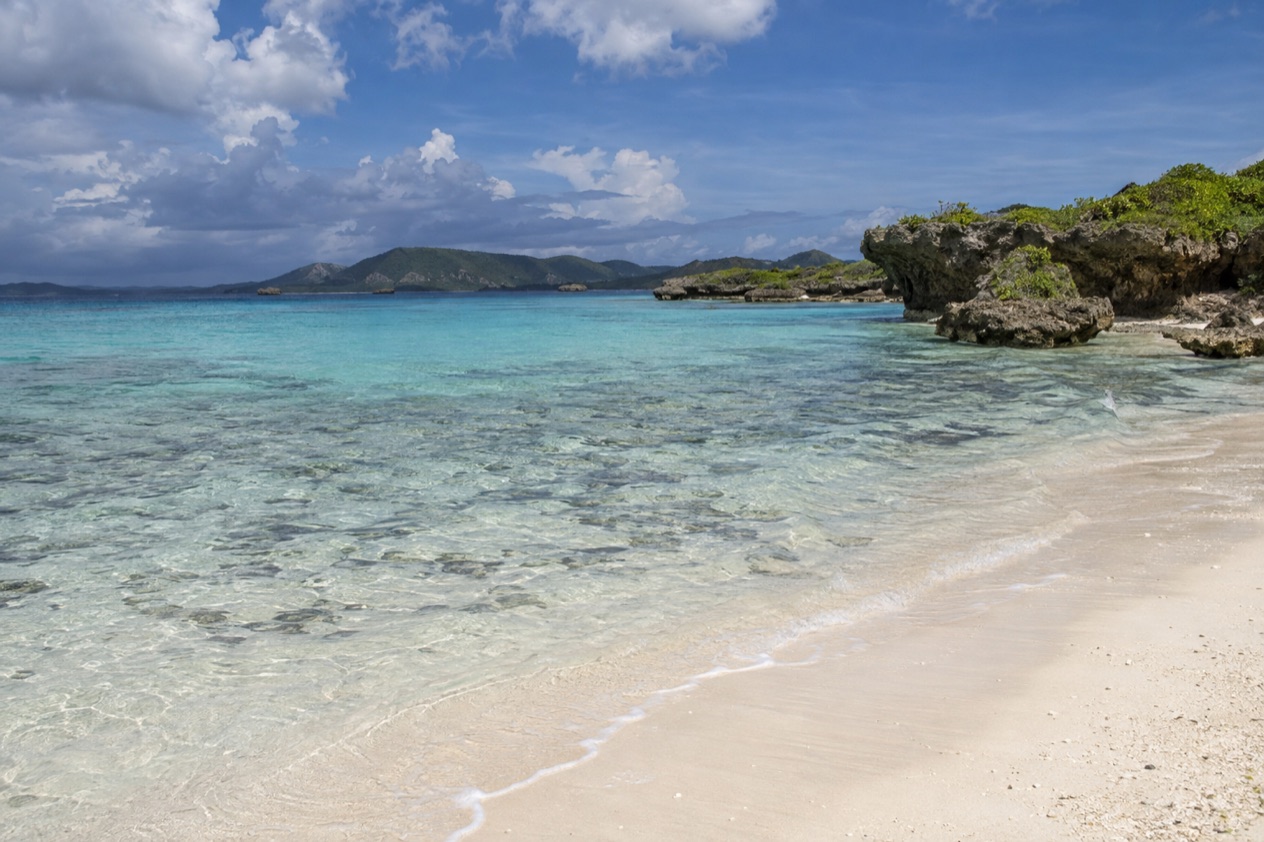
Yes, the sea is warm enough for a long swim, with water near Naha sitting in the mid-80s. You can stay in without the shock that cooler seas give, and a swimsuit is the clothing you will reach for most.
Okinawa Island has several named beaches. Manza Beach and Emerald Beach are among them, as are Okuma Beach, Zanpa Beach and Moon Beach. Sunset Beach in Chatan-cho is another, and its name tells you what people go there for.
Choose a beach the way you would choose a day: some are set up as resort strips with hotels behind them, others are simply a stretch of sand with a few umbrellas. Whichever you pick, look at the posted signs on the day before you get in the water. Conditions can differ from one beach to the next and from one day to the next.
Churaumi Aquarium also has a warning about white-banded triggerfish. During their breeding season, the aquarium cautions visitors about an increase in bite-wound injuries from this fish, which is a good reason to read local notices before wading in anywhere.
What to do in Okinawa in September
The first thing September brings is Eisa. This is the drum dance of Okinawa, performed in groups that move through the streets with drums, chants and a lot of swagger.
It belongs to the Obon season, when families honor their ancestors, and Okinawa keeps that season by the old lunar calendar, so the dances can land in late summer rather than on the mainland’s dates. If you come across a troupe, stop and watch. The sound reaches you well before the dancers do.
Food is the second reason to be here. Okinawan cooking has its own character: goya champuru, Okinawa soba in a pork broth, slow-braised pork belly called rafute, and taco rice, which came out of the island’s mix of cultures.
Little stalls sell sata andagi, a round fried doughnut, and a purple sweet potato shows up in sweets and pastries. For a drink there is Orion beer, and awamori, the island’s distilled spirit. Hot, humid weather suits cold soba noodles and fresh sea grapes, the bubbly green seaweed served with dipping sauce.
Naha: Kokusai Dori, the market and the monorail
Naha is the capital of Okinawa Prefecture and the largest city on the island, home to roughly a fifth of the main island’s residents. It is also the only place on Okinawa with a public rail network, the Okinawa Urban Monorail, known as Yui Rail. The monorail glides above the traffic and gives a first look at the city’s low concrete roofs and red tiles.
Kokusai Dori, the main shopping street, is lined with souvenir shops, izakaya (casual pubs) and snack counters. Makishi Public Market is the place to look at the island’s produce and seafood, with bright fish, pork cuts and tropical vegetables laid out on ice. In the heat, it is a good place to duck under a roof, eat something cold and watch how locals shop.
Rain does not spoil Naha. Covered arcades and the market keep you dry, and a plate of noodles is waiting at the end of the walk.
Shuri Castle
Shuri Castle was the seat of the Ryukyu Kingdom, and its red-lacquered halls reflect a culture shaped by trade with China, Japan and Southeast Asia. The site is partly open to the public, but the main castle is closed due to the fire in 2019. What you can still see are the surrounding grounds, the stone walls and the gates, along with the sense of a royal hill above the city.
Go for the history rather than a checklist of interiors. Standing on the hill, you understand why Okinawa feels distinct from the mainland: it had its own court, its own language and its own way of doing things. In September’s humidity, it is better to take the walk slowly and keep water with you.
Okinawa Churaumi Aquarium
Churaumi Aquarium opened on 1 November 2002 and is the main reason visitors head up the main island. Its tanks hold the creatures of the surrounding seas, and the aquarium has been working to breed the Japanese sawshark, with a new female recently arrived for that effort.
On a day when the showers roll in, this is the right place to be. You spend the hours indoors in cool, dim halls, then step back out to the grounds when the clouds break. Triggerfish are on the aquarium’s list of cautions in their breeding season, so read the notices around the pools.
| Site | Open |
|---|---|
| Okinawa Churaumi Aquarium | 08:30 to 18:30, last admission 17:30 |
Mount Omoto is the highest peak on the island, and the green hills behind the coast are a reminder that the interior is not just beaches.
Okinawa Prefecture is made of many islands, and the main island is only one door into them. Naha Airport is the gateway to all of them.
Moon viewing is another habit of early autumn in Japan, and Okinawa has its own take on it, with families gathering for the full moon of the old calendar. If your dates line up, an evening with a rice cake and a bright sky over the water is a nice way to end a day.
A two-day itinerary for Okinawa in September
Day 1 belongs to Naha. Start on the hill at Shuri Castle, where the grounds and the stone walls come before the day’s heat builds. Come down into the city for lunch, and make it Okinawa soba or goya champuru at a small local place. Then walk the covered lanes around Makishi Public Market, where the roofs keep you out of the sun and any passing shower.
In the afternoon, take the Yui Rail and drift along Kokusai Dori, buying sata andagi and looking over the souvenir shops. When the evening arrives, choose an izakaya for rafute and a cold Orion, or an awamori tasting if you prefer. If you are lucky, an Eisa troupe will be performing somewhere in the city.
Rain card for Day 1: stay in the market and the arcades, lengthen lunch, and keep Shuri for a break between showers. Day 2 goes to the coast. Head for Okinawa Churaumi Aquarium, which opens at half past eight, and plan your visit around that. The aquarium is a full outing, and the grounds around it give you a reason to linger.
After lunch, give the afternoon to the sea. Pick a beach from the island’s list, such as Emerald Beach, Zanpa Beach or Manza Beach. The water is warm and a swim is the right way to cool off. Sunset Beach in Chatan-cho suits the end of the day, with a dinner of taco rice or fresh seafood nearby.
Rain card for Day 2: the aquarium is your shelter, so stretch the visit and leave the beach for a clear window. If the whole day is gray, return to Naha for noodles and a quiet drink.
Is Okinawa busy in September?
September is still part of the summer season in Okinawa, a month when the warm sea and long sunny hours keep the beaches inviting. The islands are reached from dozens of Japanese cities through Naha Airport, including by low-cost carriers, which gives the island many ways in.
What you can count on is the pace. Naha moves at a warm-weather speed, with long lunches, open-air stalls and evenings that stretch out. The heat shapes the day more than any schedule does, and that gives September a relaxed feel, with no rush to see everything.
The places visitors head for, the aquarium and the castle hill, run on their own hours. The aquarium’s day runs from the morning to early evening, and the castle site is partly open. Plan around those two and the rest of the trip falls into place around meals and the sea.
On the beaches, the mood is one of summer winding down rather than winding up. Sand and water are there for the taking, and the evening hours are given to eating and drinking outdoors. There is no need to treat September as a rush month, only as a good moment to be near the water.
What to pack for Okinawa in September
Pack for heat, humidity and the chance of a heavy shower, with beach time in mind.
- Light cotton or linen clothes, because the air stays hot and damp even at night.
- A compact umbrella or light rain jacket for the showers that come with a wet month.
- A swimsuit and a quick-dry towel, since the sea is warm and inviting.
- A sun hat and sunscreen for days on the sand and on the castle hill.
- Sandals or comfortable walking shoes that dry fast, for market lanes and wet pavements.
- A refillable bottle, for the long walks in humid air.
Good to know before you go
September falls in the wet part of the year in Okinawa, with a lot of rain across the month, so keep your plans flexible and put an indoor option on every day. The sea is warm, but it is worth reading the signs at any beach and at the aquarium, which warns about white-banded triggerfish in their breeding season.
Shuri Castle is open only in part, with the main castle closed since the 2019 fire, so expect the grounds rather than the interiors. The Japan Meteorological Agency runs an Emergency Warning System for natural phenomena of extraordinary magnitude. If a warning is issued, local plans should give way to it.
Okinawa in September vs August and October
Move the trip four weeks earlier and you land in August, which is hotter, brighter and a little longer in the day. The sea is about the same as in September, so the swimming is the same. The difference is in the air, which feels heavier, with more hours of sun and slightly less rain than September in total.
Move it four weeks later and October brings a noticeable softening. The air cools, the rain eases and the days shorten, while the sea slips a few degrees. It is a more comfortable month for walking around Naha and the castle hill, though the beach is slightly less of a pleasure.
Choose August if heat, sun and the longest days are what you want. Choose October if you would rather walk than swim, and want milder air and less rain. Stay with September if you want the summer sea with a little of the edge taken off the heat, plus the chance to catch the end of the Eisa season.
Is September a good time to visit Okinawa?
Yes, for travelers who want warm water, long lunches and a subtropical island in its late-summer mood. September suits beach lovers, food lovers and anyone drawn to the Ryukyu story, from the castle hill to the drums of Eisa.
It suits less well anyone who dislikes humidity or wants dry weather every day. The month is wet, and rain can interrupt an outdoor plan. If heat bothers you, October is milder, and if you want hours of guaranteed sun, another season may serve you better.
On arrival, spend your first day in Naha, where the market, the monorail and the castle hill give you a sense of the island. Then head to the coast for the aquarium and the beach. What makes September special here is the tail end of summer: a sea that still invites you in, drums in the street and a bowl of cold Okinawa soba after a hot walk.
Sources
- Japan Meteorological Agency (JMA), Normal values 1991-2020, monthly (https://www.data.jma.go.jp/stats/etrn/view/nml_sfc_ym.php?prec_no=91&block_no=47936), station Naha, elevation 28 m, checked October 11, 2026
- Open-Meteo Marine API, average 2015-2024, checked October 11, 2026
- Computed from the date and the latitude of the place (sunrise equation, solar elevation -0.833 degrees), October 11, 2026
- Japan Meteorological Agency, Emergency Warnings (https://www.jma.go.jp/jma/en/Emergency_Warning/ew_index.html), checked October 11, 2026
- Japan National Tourism Organization, safety information (https://www.japan.travel/en/japan-safe-travel-information/), checked October 11, 2026
- Japan National Tourism Organization, weather and seasons in Japan (https://www.japan.travel/en/plan/weather/), checked October 11, 2026
- Japan National Tourism Organization, summer in Japan (https://www.japan.travel/en/guide/summer-guide/), checked October 11, 2026
- Wikipedia, Climate of Japan (https://en.wikipedia.org/wiki/Climate_of_Japan), checked October 11, 2026
- Japan Meteorological Agency, maple color-change dates 2025-2026 with difference from the 1991-2020 normal (https://www.data.jma.go.jp/sakura/data/phn_014.html), checked October 11, 2026
- Japan Meteorological Agency, kaede2020.pdf (https://www.data.jma.go.jp/sakura/data/kaede2020.pdf), checked October 11, 2026
- Japan National Tourism Organization, autumn in Japan (https://www.japan.travel/en/guide/autumn-guide/), checked October 11, 2026
- Japan National Tourism Organization, spring in Japan (https://www.japan.travel/en/guide/spring-guide/), checked October 11, 2026
- Japan National Tourism Organization, Okinawa (https://www.japan.travel/en/destinations/okinawa/okinawa/naha-and-the-main-island/), checked October 11, 2026
- Okinawa Churaumi Aquarium (https://churaumi.okinawa/en/), checked October 11, 2026
- Wikipedia, Okinawa Island (https://en.wikipedia.org/wiki/Okinawa_Island), checked October 11, 2026
- Wikipedia, Okinawa Prefecture (https://en.wikipedia.org/wiki/Okinawa_Prefecture), checked October 11, 2026
- Wikivoyage, Okinawa (https://en.wikivoyage.org/wiki/Okinawa), checked October 11, 2026
- Wikipedia, Shuri Castle (https://en.wikipedia.org/wiki/Shuri_Castle), checked October 11, 2026
- Wikipedia, Naha (https://en.wikipedia.org/wiki/Naha), checked October 11, 2026
To plan your stay
- Things to Do in Okinawa: Churaumi Aquarium, Shuri Castle, Kerama Reefs and Okinawan Food
- Where to Stay in Okinawa: Naha, Chatan, the Aquarium Coast and Beach Resorts
- Okinawa from Tokyo: Flying to Naha, Why No Train Goes There and a First Day on the Island
- Know Before You Go to Okinawa: Entry, Money, Getting Around and Local Etiquette