
In the middle of January, Naha’s hillsides turn pink while the rest of Japan is still waiting for spring. The Hikan-zakura, a cherry that opens in deep pink bells, flowers beside bowls of steaming Okinawa soba and the first jackets of the season.
What is the weather like in Okinawa in January?
January in Okinawa is cool and damp rather than cold, with spring-like afternoons, mild nights and a good share of gray, showery days.
| Month | Average high (°F) | Average low (°F) | Precipitation (in) | Days with 1 mm or more of precipitation | Hours of sunshine | Daylight on the 15th | Sea (°F) |
|---|---|---|---|---|---|---|---|
| December | 70.7 | 62.2 | 4.33 | 9.3 | 107 | 10 h 31 min | 74.9 |
| January | 67.6 | 58.8 | 4.00 | 10.2 | 93 | 10 h 40 min | 71.7 |
| February | 68.4 | 59.2 | 4.51 | 9.9 | 93 | 11 h 16 min | 71.4 |
Think in layers. A cotton shirt with a light sweater or a windbreaker over it covers most of a day in Naha, and the evenings call for the sweater. Nothing here asks for a winter coat, but the damp air makes the low temperatures feel cooler than the thermometer suggests when the wind picks up.
Rain arrives on roughly one day in three, usually as a passing gray spell instead of a long storm, so a compact umbrella or a light rain shell earns its place in the bag. The sun does come out between the clouds, but this is a month of soft, filtered light, which suits photographs of tile roofs, stone walls and pink blossoms better than it suits a tanning schedule.
Daylight is short compared with summer. Sightseeing plans that depend on seeing a castle wall, a garden or a market stall in good light are best front-loaded, with dinner and indoor stops saved for the end of the day.
Can you swim in Okinawa in January?
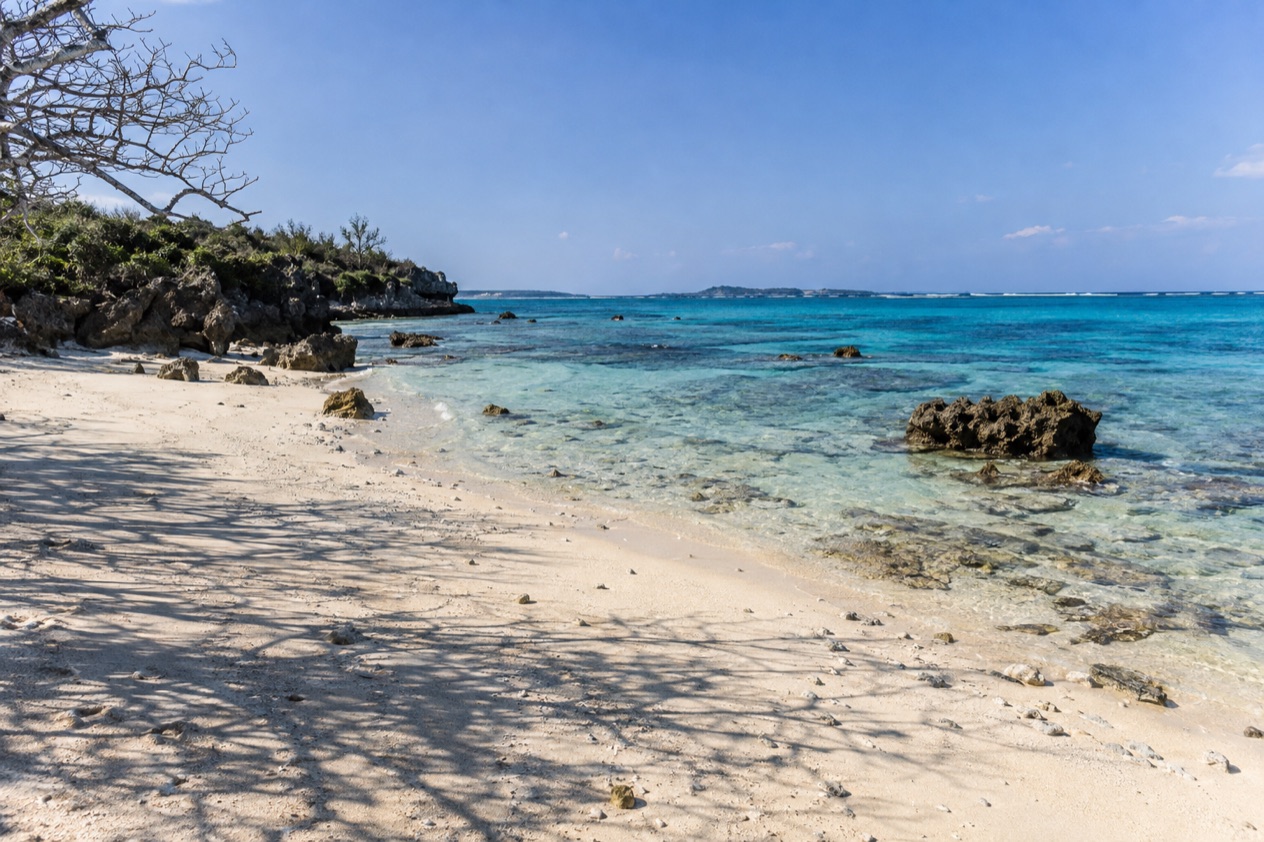
Yes, for a brisk dip: the sea off Naha sits in the low 70s, which is cool for a long soak but swimmable for people who like their water fresh.
Okinawa Island has several beaches with names worth knowing, and January is a month for walking them as much as for swimming off them. Manza Beach and Emerald Beach are two of the stretches of sand on the island, and Okuma Beach and Zanpa Beach add two more. In Chatan, Sunset Beach and Moon Beach sit within reach of one another.
Because the air is cooler than the water in the middle of the day, many visitors treat the shoreline as a place for a barefoot stroll, a picnic of bento from a convenience store or a seat with a view. If you do plan to get in, bring a towel you can wrap around yourself quickly and a dry layer for afterward.
What to do in Okinawa in January
The signature sight of the month is the cherry blossom, and it comes early here. The Hikan-zakura at Naha usually opens its first flowers around January 16, long before the pale cherries of mainland Japan.
The blooms are a rich pink and hang downward like small lanterns, so a walk under the trees feels quite different from the cloud-white hanami (blossom-viewing picnic) of the north. Cherry blossom festivals in towns on the main island, Nago and Motobu among them, gather around this time with stalls, music and families strolling the slopes.
Food fits the cool weather. Okinawa soba, wheat noodles in a clear pork and bonito broth topped with braised pork, is the bowl to order when the air turns damp.
Goya champuru (a stir-fry of bitter melon, tofu, egg and pork), rafute (pork belly simmered in awamori and brown sugar) and sata andagi (round, crackly doughnuts) are on most menus, and a glass of awamori, the island’s distilled spirit, warms an evening at an izakaya, a casual pub. Early in the month, remember that many restaurants and attractions across Japan close for the New Year holidays, and the osechi dishes eaten at New Year are a mainland tradition you may see in shop windows.
Naha: Kokusai-dori, markets and Tsuboya
Naha is the largest city in Okinawa and the place most trips begin, and its main axis is Kokusai-dori, a long street of souvenir shops, snack stands, izakaya and side-street cafés. In January the cooler air makes the stroll comfortable enough to follow the street from end to end, ducking into covered arcades if a shower passes.
Makishi Public Market sits off the main street and is a place to see the island’s pantry: brightly colored tropical fish, pig faces, bitter melon and seaweed. Tsuboya, the old pottery district, is where Okinawan shisa (lion-dog guardians) and glazed bowls are made, and its lanes are pleasant when you want something quieter than the shopping streets. The city also has Okinawa’s only public rail network, the Yui Rail monorail, which links parts of Naha.
Shuri Castle and the Ryukyu story
Okinawa was once the Ryukyu Kingdom, with its own language and culture, and the hill of Shuri Castle is where that history is easiest to feel. The castle is partly open to the public, but the main castle is closed after the fire in 2019, so the visit is about the grounds, the walls and the surrounding area rather than the main hall.
The stone walls curve along the hillside in a way that looks very different from mainland Japanese castles, and the red lacquer touches around the site hint at the royal court’s links with China. It is a good place to pair with Tsuboya, since a day of walking old streets and hills suits the cooler weather of January.
Churaumi Aquarium and the northern coast
A day at the Okinawa Churaumi Aquarium is a reliable plan when the sky is gray, because most of the visit is indoors. The big attractions are the huge tank, the sharks and rays that glide past the viewing windows, and the exhibits of reef life. The aquarium has recently received a new female Japanese Sawshark as part of an effort to breed the species, and it cautions visitors about bite-wound injuries from white-banded triggerfish during their breeding season.
Around the aquarium, the coast has beaches and a long waterfront where families walk after the visit. In January this stretch is a place to enjoy the sea view rather than a place for swimming holidays, and the cherry blossom festivals in the nearby hills can fit into the same day.
Whale watching is a seasonal chance in the winter months, when humpback whales sometimes pass through the waters around Okinawa. Treat it as something you may see on a boat trip and not as a promise.
A two-day itinerary for Okinawa in January
Day 1 is about Naha on foot. Start the morning on the hill at Shuri, walking the castle grounds and the stone walls while the air is cool, then head down into the city for a bowl of Okinawa soba at midday. After lunch, wander through Tsuboya’s pottery lanes and stop at a workshop or two, because the shops are indoors and make a ready shelter if a shower comes.
In the afternoon, move to Kokusai-dori and Makishi Public Market for snacks, souvenirs and the covered arcades. January daylight is limited, so the market and arcades fit well toward late afternoon, and dinner comes at an izakaya, with goya champuru, rafute and a glass of awamori. If the weather turns, the market, the pottery shops and the covered arcades all work as rain cards.
Day 2 leaves the city for the Okinawa Churaumi Aquarium and the coast around it. Spend the morning inside, watching the sharks and rays and the reef exhibits, then eat a simple lunch of soba or a bento nearby. Midday and early afternoon go to the shoreline, where you can walk a beach such as Emerald Beach or Okuma Beach and, if you feel brave, take a short swim in the cool water.
Later, look for the pink Hikan-zakura at a blossom spot on the way back, or visit a local festival if one is on. End the evening with sata andagi doughnuts or a late bowl of noodles. If the rain is steady, stay longer at the aquarium and skip the beach, since the day works as an indoor plan.
Is Okinawa busy in January?
January in Okinawa is a month shaped by the New Year holidays, the early cherry blossoms and a sea that is too cool for most beach vacations.
The first days of the month fall in the New Year holiday period, when many restaurants and attractions across Japan close. That can make early January feel quiet, with some doors shut and some streets slow, so plan on a few meals at places that stay open, such as convenience stores and larger markets. Shops in urban areas are generally open from 10:00 a.m. to 8:00 p.m., while rural shops often close earlier, sometimes as early as 6:00 p.m.
Later in the month, the cherry blossom is the draw. Festivals around the blooms bring locals and visitors out in the daytime, and the weather suits walking and sightseeing. Mainland Japan is in the grip of winter and its ski season, which opens in December and lasts until April, so Okinawa is the warmer alternative for travelers who want a break from the snow.
What January does not offer is a beach-and-sun crowd. With the sea in the low 70s and the sun often hidden, the pace is more about markets, castles, aquariums and food than about the shore. That gives the city a relaxed rhythm.
What to pack for Okinawa in January
Pack for cool, damp days with mild but not warm afternoons, plus a few outings that put you outdoors for hours at a time.
- A light sweater or fleece for the evenings, when the air feels cooler than the daytime.
- A compact rain jacket or umbrella for the showers that pass about one day in three.
- Comfortable walking shoes for Shuri’s hills, Tsuboya’s lanes and the long stretch of Kokusai-dori.
- A swimsuit and quick-dry towel for a short dip, since the water is cool but not cold.
- A sun hat and sunscreen for the hours when the clouds break.
- A small bag for market snacks and souvenirs, such as pottery from Tsuboya.
Good to know before you go
The main thing to remember in January is the New Year closure. Many restaurants and attractions close during the holidays, so early in the month it helps to have a few meal options that stay open. Shops in urban areas are generally open from 10:00 a.m. to 8:00 p.m. every day, and rural shops may close as early as 6:00 p.m.
When a national holiday falls on a Sunday, the next working day becomes a public holiday, and a day between two other holidays also becomes one, which can shift opening days. Shuri Castle is only partly open, because the main castle is closed after the fire in 2019, so expect the grounds and not the main hall.
Okinawa in January vs December and February
Moving the trip to December means a warmer sea, with the water in the mid-70s, a little more sun and slightly fewer rain days. The New Year closures come at the end of the month, so you may meet shut restaurants when the holiday arrives. The cherry blossoms have not yet opened, so you give up the pink hillsides.
Going in February keeps the air about the same, with a sea just a touch cooler and a little more rain. Days are longer, and the blossoms may still be around early in the month. The New Year closures are over, so restaurants and attractions are back to regular schedules.
Choose December if swimming matters most, February if you want more daylight and no holiday closures, and January if the early cherry blossom is the reason for the trip. Travelers who mainly want museums, markets and food will find all three months similar.
Is January a good time to visit Okinawa?
Yes, for travelers who want castles, markets, food and early cherry blossoms more than a beach holiday.
It suits people who like walking cities in cool air, eating noodles and pork in warm bowls and seeing the blossom a couple of months before the rest of Japan. It also works for travelers escaping the snow of the mainland, since Okinawa sits far to the south and the cities there rarely see any. Beach lovers who want long swims and bright sun should choose a warmer month.
On arrival, start in Naha, where Kokusai-dori, Makishi Market and the Tsuboya lanes give you a feel for the island in a day. Then head for the coast and the aquarium, saving the blossom viewing for a clear spell. What is special about January here is the pink Hikan-zakura, flowering on Okinawa’s hills while the rest of Japan is still in winter.
Sources
- Japan Meteorological Agency (JMA), Normal values 1991-2020, monthly (https://www.data.jma.go.jp/stats/etrn/view/nml_sfc_ym.php?prec_no=91&block_no=47936), station Naha, elevation 28 m, checked October 11, 2026
- Open-Meteo Marine API, average 2015-2024, checked October 11, 2026
- Computed from the date and the latitude of the place (sunrise equation, solar elevation -0.833 degrees), October 11, 2026
- Japan National Tourism Organization, shop and attraction hours, national holidays (https://www.japan.travel/en/plan/business-hours-and-holidays/), checked October 11, 2026
- Wikipedia, Japanese New Year (https://en.wikipedia.org/wiki/Japanese_New_Year), checked October 11, 2026
- Wikipedia, Public holidays in Japan (https://en.wikipedia.org/wiki/Public_holidays_in_Japan), checked October 11, 2026
- Japan National Tourism Organization, winter in Japan (https://www.japan.travel/en/guide/winter-guide/), checked October 11, 2026
- Japan National Tourism Organization, skiing and snowboarding in Japan: regions, resorts, seasons (https://www.japan.travel/en/sports/snow/), checked October 11, 2026
- Wikipedia, Climate of Japan (https://en.wikipedia.org/wiki/Climate_of_Japan), checked October 11, 2026
- Japan National Tourism Organization, weather and seasons in Japan (https://www.japan.travel/en/plan/weather/), checked October 11, 2026
- Japan National Tourism Organization, skiing guide (https://www.japan.travel/en/guide/skiing/), checked October 11, 2026
- Wikipedia, List of ski areas and resorts in Japan (https://en.wikipedia.org/wiki/List_of_ski_areas_and_resorts_in_Japan), checked October 11, 2026
- Japan National Tourism Organization, flowers by season: cherry blossom, plum, wisteria, hydrangea, where and when (https://www.japan.travel/en/see-and-do/flowers/), checked October 11, 2026
- Wikipedia, Prunus mume (https://en.wikipedia.org/wiki/Prunus_mume), checked October 11, 2026
- Japan Meteorological Agency, 2026 cherry blossom first-bloom status (https://www.data.jma.go.jp/sakura/data/sakura_kaika.html), checked October 11, 2026
- Japan Meteorological Agency, biological season observations (https://www.data.jma.go.jp/sakura/data/index.html)
- Japan National Tourism Organization, Okinawa (https://www.japan.travel/en/destinations/okinawa/okinawa/naha-and-the-main-island/), checked October 11, 2026
- Okinawa Churaumi Aquarium (https://churaumi.okinawa/en/), checked October 11, 2026
- Wikipedia, Okinawa Island (https://en.wikipedia.org/wiki/Okinawa_Island), checked October 11, 2026
- Wikipedia, Okinawa Prefecture (https://en.wikipedia.org/wiki/Okinawa_Prefecture), checked October 11, 2026
- Wikivoyage, Okinawa (https://en.wikivoyage.org/wiki/Okinawa), checked October 11, 2026
- Wikipedia, Shuri Castle (https://en.wikipedia.org/wiki/Shuri_Castle), checked October 11, 2026
- Wikipedia, Naha (https://en.wikipedia.org/wiki/Naha), checked October 11, 2026
To plan your stay
- Things to Do in Okinawa: Churaumi Aquarium, Shuri Castle, Kerama Reefs and Okinawan Food
- Where to Stay in Okinawa: Naha, Chatan, the Aquarium Coast and Beach Resorts
- Okinawa from Tokyo: Flying to Naha, Why No Train Goes There and a First Day on the Island
- Know Before You Go to Okinawa: Entry, Money, Getting Around and Local Etiquette