
In the early morning a howler monkey roar rolls across the canopy like distant surf, and a few hours later you may be eating warm fry jacks on a wooden porch with the Caribbean flickering green behind the palms. Belize packs rainforest, Maya cities, Garifuna drumming and a long coral reef into a country small enough to feel like one big neighborhood. It suits travelers who like to alternate between water, jungle and a good plate of stew chicken.
What are the best things to do in Belize?
The essentials fall into three groups: the water, the ancient Maya world and the wildlife of the forest.
- Snorkel or dive along the Belize Barrier Reef, the second largest in the world and a World Heritage Site, where the water over the coral is the main attraction.
- Look into the Great Blue Hole from the air or dive its rim, a perfectly round marine sinkhole at the center of Lighthouse Reef.
- Drift over Hol Chan Marine Reserve near Ambergris Caye and Caye Caulker, a mix of coral, seagrass and mangrove.
- Walk the plazas of Xunantunich, a Maya city on a ridge above the Mopan River in the Cayo District.
- Stand at the foot of Caana at Caracol, the tallest manmade structure in the country, deep in the forest.
- Take a boat up the New River to Lamanai, where the Maya name remembers the crocodiles along the banks.
- Watch for toucans, parrots and the hundreds of other birds in the forests and wetlands, or visit the animals of the Belize Zoo.
- Eat your way through Belizean, Creole, Garifuna and Maya cooking, from rice and beans to cassava bread.
Beyond the headline sights, Belize rewards slow days. A morning on a caye with a book, an afternoon in a market town, an evening of Garifuna drumming: these moments are what travelers tend to remember afterward. The country is also English-speaking, which makes striking up a conversation with a guide, a cook or a boat captain easy, and the stories you collect that way become part of the trip.
If you have time for only a few things, choose one reef experience, one Maya site and one stretch of forest.
Sights and landmarks in Belize
The landmarks of Belize are mostly ancient. The Maya built cities here that rose above the forest long before any road existed, and today the stone plazas, temples and ball courts sit in clearings full of birdsong. Some sites are tidy and manicured, others still feel half swallowed by trees, and together they tell a long story.
Caracol
Caracol is a large Maya city in the Cayo District, roughly 25 miles south of Xunantunich and the town of San Ignacio. Its centerpiece is Caana, the largest building on the site and the tallest manmade structure in Belize at 141 feet. You approach through dense forest, and the sudden view of the pyramid rising out of the trees is the moment people talk about afterward.
The only road to Caracol is paved for its last stretch and connects to the Western Highway between San Ignacio and Belmopan and to Santa Elena. That journey is part of the experience, since it carries you through the green interior of the country. Bring curiosity about the Maya, because the plazas, palaces and ball court reward anyone who likes to imagine a busy city where birds now call.
Xunantunich
Xunantunich sits atop a ridge above the Mopan River, about 70 miles west of Belize City, and the Guatemala border is less than a mile away. Its core holds six plazas surrounded by more than two dozen temples and palaces, so there is plenty to wander through. From the high ground you look over the river valley and the hills beyond.
The site is a natural companion to a stay in San Ignacio, where the town’s cafés and market give the evenings a lively feel. Many travelers pair Xunantunich with a second outing in the Cayo District, since the area packs caves, rivers and ruins close together.
Other Maya sites and Garifuna culture
Belize holds many more Maya places, each with its own mood. Altun Ha in the north, Cahal Pech above San Ignacio, and Lubaantun and Nim Li Punit in the south of the country each give a different angle on the same civilization, and Lamanai, told in the day trips, stands apart for its riverside setting.
Living culture counts as a landmark too. In 2001 UNESCO proclaimed the language, dance and music of the Garifuna a Masterpiece of the Oral and Intangible Heritage of Humanity, and in towns such as Dangriga and Hopkins you hear the drums that carry it. Contemporary musicians like Andy Palacio, Mohobub Flores and Aurelio Martinez have helped bring Garifuna music to new listeners, and a recording of any of them is a good way to start.
Beaches and outdoor things to do in Belize
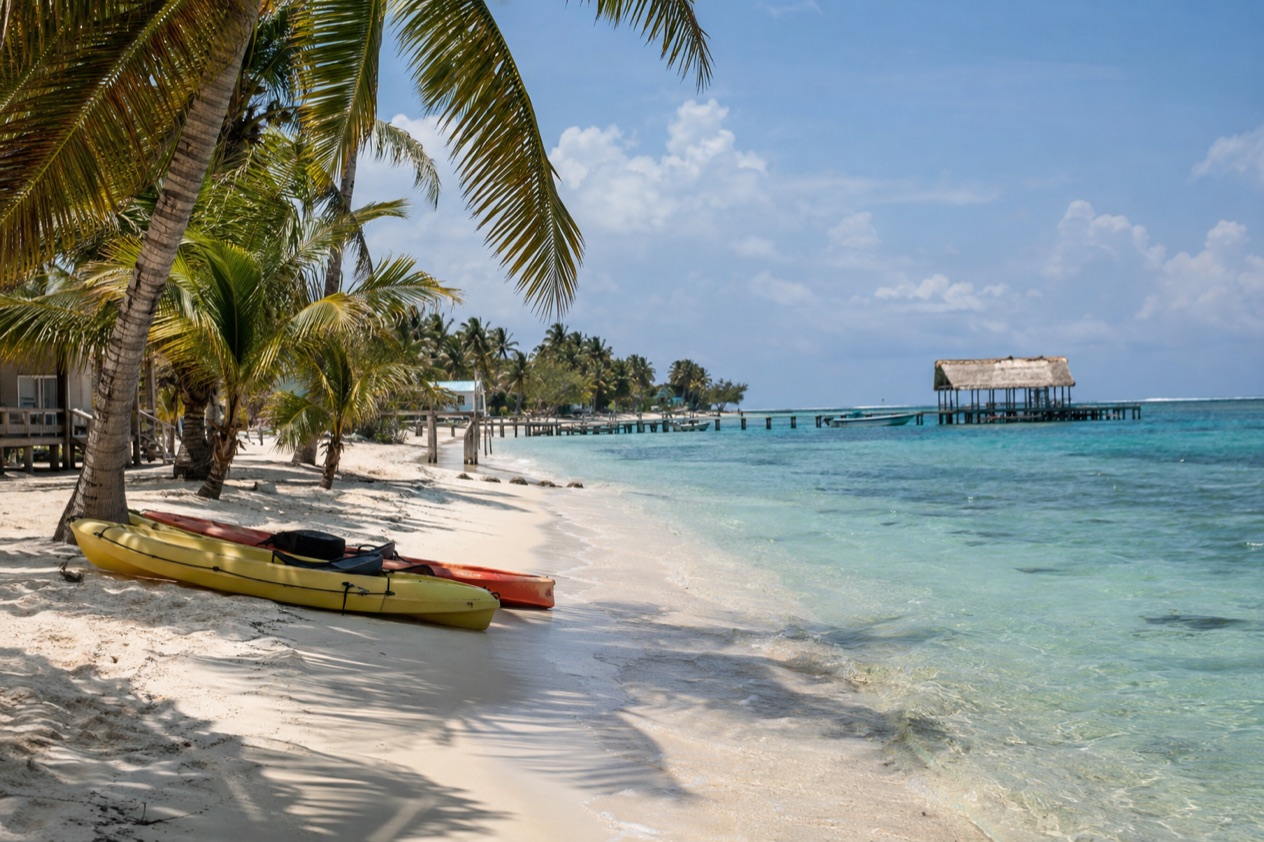
Belize is better known for its reef and cayes than for long surf beaches. The coast is lined by mangrove and seagrass, and the real attraction lies offshore, where the Belize Barrier Reef runs the length of the country. Sandy stretches on the cayes, hammocks under palms and boat trips to the reef make up the typical seaside day.
Hol Chan Marine Reserve and the cayes
Hol Chan Marine Reserve lies close to Ambergris Caye and Caye Caulker and covers about 4,448 acres of coral reef, seagrass beds and mangrove forest. The name is Maya for little channel, and it refers to the cut in the reef that gives the reserve its identity. Snorkelers drift over coral heads and schools of tropical fish, and the nearby spot known as Shark Ray Alley is often where nurse sharks and stingrays gather.
San Pedro Town on Ambergris Caye sits about 43 miles off the coast of Belize, and the cayes have a relaxed, flip-flop rhythm. Evenings revolve around the dock, and the days around boats heading out to the reef. Choose Caye Caulker for a slower, sandier feel and San Pedro for a livelier stretch of restaurants and bars.
The Great Blue Hole and the atolls
The Great Blue Hole is a circular marine sinkhole near the center of Lighthouse Reef, an atoll about 43 miles from the mainland and Belize City. It measures 1,043 feet across and 407 feet deep, and from above it looks like a dark blue eye set in pale turquoise shallows. Jacques Cousteau made it famous in 1970, and it remains a protected natural monument and a prime ecotourism destination.
Lighthouse Reef is the most easterly diving area in Belize, and it is one of three Caribbean atolls in the reef system, along with Turneffe Atoll and Glover’s Reef. Each atoll has its own character, from remote diving to quiet island stays. Even if you never descend, seeing the hole from a sightseeing flight or from a boat gives a sense of the scale of the reef.
Cockscomb Basin and the forest
Cockscomb Basin Wildlife Sanctuary is a nature reserve in the Stann Creek District of south-central Belize, designated in 1984 and operated by the Belize Forest Department and the Belize Audubon Society. The sanctuary protects forest where jaguars are the great prize, though you are more likely to hear birds and see tracks than a cat. Trails wind past streams and under tall trees.
The keel-billed toucan, the national bird, is one of almost 600 bird species in the country, and birders find them in wetlands, moist broadleaf forest and small cayes along the coast. The Great Backyard Bird Count takes place over four days in mid-February, and the whole season is a draw for people with binoculars. Remember that wildlife is protected by law, so watching is the way to enjoy it.
Day trips from Belize
Belize is compact, so a base in Belize City, San Ignacio or on a caye puts several highlights within reach. The most rewarding day trips head west into the Cayo District or north up the New River, and each gives you a different version of the country.
Lamanai by river
Lamanai takes its name from the Maya term for submerged crocodile, a nod to the crocodiles that live along the banks of the New River. Tourists reach it by organized day boat trips from Orange Walk Town, and the river ride itself is half the pleasure, with herons, kingfishers and sometimes monkeys along the way.
There is also a dirt and gravel road through the Mennonite area of Shipyard in Orange Walk District, which gives a glimpse of farming country with a very different culture. At the site, forest closes around the plazas and temples, and howler monkeys often announce themselves overhead. It suits travelers who like their archaeology wrapped in nature.
Actun Tunichil Muknal
Actun Tunichil Muknal, known locally as ATM, is a cave near San Ignacio inside the Tapir Mountain Nature Reserve. It is notable as a Maya archaeological site, with skeletons, ceramics and stoneware left where the Maya placed them. One piece, the Monkey Pot, is one of just four of its type found in Central America.
It pairs naturally with a base in the Cayo District, where San Ignacio offers restaurants and rooms for the night after the outing.
The Belize Zoo
The Belize Zoo sits at Mile 29 on the George Price Highway in the Belize District, a 45-minute drive from the international airport. It opened in 1983 and moved to its current home in 1991, and it shows animals native to the country in settings that feel like forest. Expect jaguars, tapirs, birds and other species you might otherwise only glimpse on a trail.
It is an easy stop on the way to or from the west, and it makes a good primer before you head into the wild. After seeing a tapir or a harpy eagle up close, a hike in the forest feels more meaningful, because you know what the tracks and calls belong to.
Smaller outings fill the gaps: a visit to Xunantunich on the way through the Cayo District, a boat ride to a nearby caye, or a stop in a Garifuna village for a drumming lesson. Each is a way to spend a few hours without a long plan.
What to eat in Belize
Eating in Belize means crossing cultures on one plate. Creole, Garifuna, Maya, Mestizo and Mennonite traditions all show up, and the Caribbean supplies seafood while the interior supplies corn, beans and fruit. Breakfast alone can be a small education.
The everyday plate
Rice and beans, cooked with coconut milk, is the heart of Belizean cooking, and it is served with stew chicken, stewed beans or fried fish. Add a side of fried plantain and a spoonful of potato salad, and you have the classic Sunday lunch. Hot sauce from the country is on most tables, and a little goes a long way.
For breakfast, look for fry jacks, puffy triangles of fried dough, served with beans, eggs and cheese. Johnnycakes, a kind of dense biscuit, are another morning staple. Street stands sell tamales, panades and salbutes, small fried tortillas topped with chicken and cabbage, which make good snacks between sights.
Seafood and Garifuna dishes
On the cayes and the coast, seafood leads the menu. Ceviche, conch fritters, grilled fish and lobster in season show what the reef offers, and many places cook them simply with lime and spice. Fresh coconut water or a fruit smoothie goes well with them.
Garifuna cooking has its own pride. Hudut is a fish stew in coconut broth served with mashed plantain, and cassava bread is baked into large flat rounds. Eating these dishes in a Garifuna village, with drumming nearby, ties the food to the culture that made it.
Drinks and markets
Belikin is the national beer, and rum punch turns up at beach bars everywhere. Cashew wine and other fruit wines are made in village kitchens and sold at roadside stands. Fresh juices from limes, watermelons and soursop are cold, sweet and easy to find.
Markets in towns such as San Ignacio are good places to taste local produce and see how people shop. Wander among the stalls, sample a piece of fruit and buy a bag of cashews or a jar of hot sauce to carry home.
Things to do in Belize at night
Evenings in Belize are relaxed and mostly outdoors. The country does not have a big nightclub scene, and the pleasure is in a cold drink, a table by the water and music drifting from somewhere nearby. Dusk often finds people heading toward the dock or the plaza.
Music and drums
Garifuna drumming is the sound most travelers remember. In Dangriga and Hopkins, drummers play punta and other rhythms, and visitors can often join in the dance or at least tap a foot. Because UNESCO recognized this tradition, the music carries real pride.
Beach bars on the cayes mix reggae, soca and Belizean pop, and some host live bands. A rum punch in hand and sand underfoot is the standard setting, and conversation with locals and other travelers drifts easily from one table to the next.
Evenings on the cayes and in the hills
On Ambergris Caye, San Pedro Town fills with restaurants and open-air bars after sunset, and the main street is lively. Caye Caulker keeps a slower tempo, with lanterns, small bars and a general lack of hurry. Both are places to linger over dinner and watch the sky change color.
In the Cayo District, San Ignacio has cafés, bars and restaurants that stay busy after dark, and travelers swap stories about the day’s cave or ruin. Out at a jungle lodge, the night belongs to insects, frogs and the sound of the forest, a kind of nightlife of its own.
Quiet options
If you prefer calm, a hammock with a view of the stars is hard to beat on the cayes, and many lodges serve dinner on a veranda. Away from town lights, the sky can be dark enough to show a long scatter of stars.
Reading, board games and a slow cup of coffee make up the rest of the quiet menu. Belize rewards people who let the evening unfold without a plan, and the best moments often come unscheduled.
Things to do in Belize with kids
Children in Belize get animals, boats and forests, which is a strong combination. The country is a real-life nature lesson, and the English language helps families feel at ease. Sun, heat and long days outdoors call for hats, water and breaks in the shade.
Animals up close
The Belize Zoo is the obvious first stop, with native animals such as jaguars, tapirs and birds in forest-like enclosures. Its grounds cover about 29 acres, and the walkways make it a comfortable outing for families. Children can spot the keel-billed toucan, the national bird, with its oversized rainbow bill.
Seeing these animals first gives kids names and faces for what they might later spot in the wild. On a river trip, a crocodile slipping into the water or a heron lifting off becomes more exciting when the child already knows what it is.
Boats, reef and river
A boat ride is an adventure in itself for many children. The river trip to Lamanai passes birds and sometimes monkeys, and reef trips from the cayes let families look at fish through a mask or from the deck. Hol Chan Marine Reserve is a place to see marine life, with coral, seagrass and mangrove all in one reserve.
Keep in mind that the sun on the water is strong, and that boat days are long. Pack sun protection, snacks and extra layers for the ride, and let children set the pace on any outing.
Ruins and play
Maya sites can be a hit with curious kids, who enjoy imagining a city full of people. Xunantunich, with its plazas and temples above the Mopan River, gives room to roam and plenty of views. Telling a few stories about the Maya beforehand brings the stones to life.
Distances in Belize are not huge, but roads and boat rides still add up, so spread the big outings across several days. Leave time for a simple afternoon on a caye, building sandcastles or watching pelicans, because those unscheduled hours often become a child’s favorite memory.
Good to know before you go
The U.S. State Department rates Belize Level 2, “Exercise increased caution”, because of crime, and says the south side of Belize City has historically had the highest concentration of violent crime.
Belize is easy to enjoy in a loose, unhurried way, and English is widely spoken, which smooths conversations about everything from tours to tacos. Many travelers combine a caye stay with a few nights in the Cayo District.
The Atlantic hurricane season runs from June 1 to November 30, so keep that window in mind when you set dates.
Sources
- Wikipedia, Tourism in Belize (https://en.wikipedia.org/wiki/Tourism_in_Belize), checked October 11, 2026
- Wikipedia, Wildlife of Belize (https://en.wikipedia.org/wiki/Wildlife_of_Belize), checked October 11, 2026
- Wikipedia, Belize Barrier Reef (https://en.wikipedia.org/wiki/Belize_Barrier_Reef), checked October 11, 2026
- Wikipedia, Great Blue Hole (https://en.wikipedia.org/wiki/Great_Blue_Hole), checked October 11, 2026
- Wikipedia, Hol Chan Marine Reserve (https://en.wikipedia.org/wiki/Hol_Chan_Marine_Reserve), checked October 11, 2026
- Wikipedia, Xunantunich (https://en.wikipedia.org/wiki/Xunantunich), checked October 11, 2026
- Wikipedia, Caracol (https://en.wikipedia.org/wiki/Caracol), checked October 11, 2026
- Wikipedia, Lamanai (https://en.wikipedia.org/wiki/Lamanai), checked October 11, 2026
- Wikipedia, Actun Tunichil Muknal (https://en.wikipedia.org/wiki/Actun_Tunichil_Muknal), checked October 11, 2026
- Wikipedia, Cockscomb Basin Wildlife Sanctuary (https://en.wikipedia.org/wiki/Cockscomb_Basin_Wildlife_Sanctuary), checked October 11, 2026
- Wikipedia, Belize Zoo (https://en.wikipedia.org/wiki/Belize_Zoo), checked October 11, 2026
- Wikipedia, Garifuna (https://en.wikipedia.org/wiki/Garifuna), checked October 11, 2026
- The Belize Zoo, Home (https://www.belizezoo.org/), checked October 11, 2026
- Belize Audubon Society, Birding (https://belizeaudubon.org/birding/), checked October 11, 2026
- U.S. Department of State, Belize Travel Advisory, Level 2, March 11, 2026 (https://travel.state.gov/), checked October 11, 2026
- NOAA National Hurricane Center, Climatology (https://www.nhc.noaa.gov/climo/), checked October 11, 2026