
Off the George Price Highway, a short stretch of savanna opens onto shaded paths where a howler monkey may be roaring somewhere out of sight and a tapir is nosing around its pond. The Belize Zoo shows only animals native to the country, many of them rescued, injured or once kept as pets. It is an easy place to meet the wildlife you might otherwise glimpse only as a flicker in the forest.
Is visiting the Belize Zoo worth it?
Yes, especially for travelers who want to put faces to the animals of Belize, and for families, wildlife lovers and anyone with a day built around the road between Belize City and Belmopan. It is a good stop for people who may never see a jaguar or a margay in the wild.
What sets it apart from a typical zoo is the story behind the residents. No animal here has ever been taken from the wild. They are former pets, donated animals, injured animals that were rehabilitated, animals born at the zoo, or animals transferred from other zoological facilities. The collection is entirely Belizean, with more than 150 animals representing 43 native species.
The zoo was founded by Sharon Matola in 1983 and moved to its current site in 1991. It also serves as headquarters for the Tapir Specialist Group of the International Union for Conservation of Nature, so the national animal is in good hands. The setting is a stretch of lowland savanna, and the mood is more of a walk through a nature reserve than an exhibition of cages.
It also suits people who care about accessibility, since every pathway allows wheelchairs, strollers and walkers. For a traveler comparing nature stops on a Belize trip, this one stands out for putting so many native species in one place.
What to see at the Belize Zoo
The wildcats
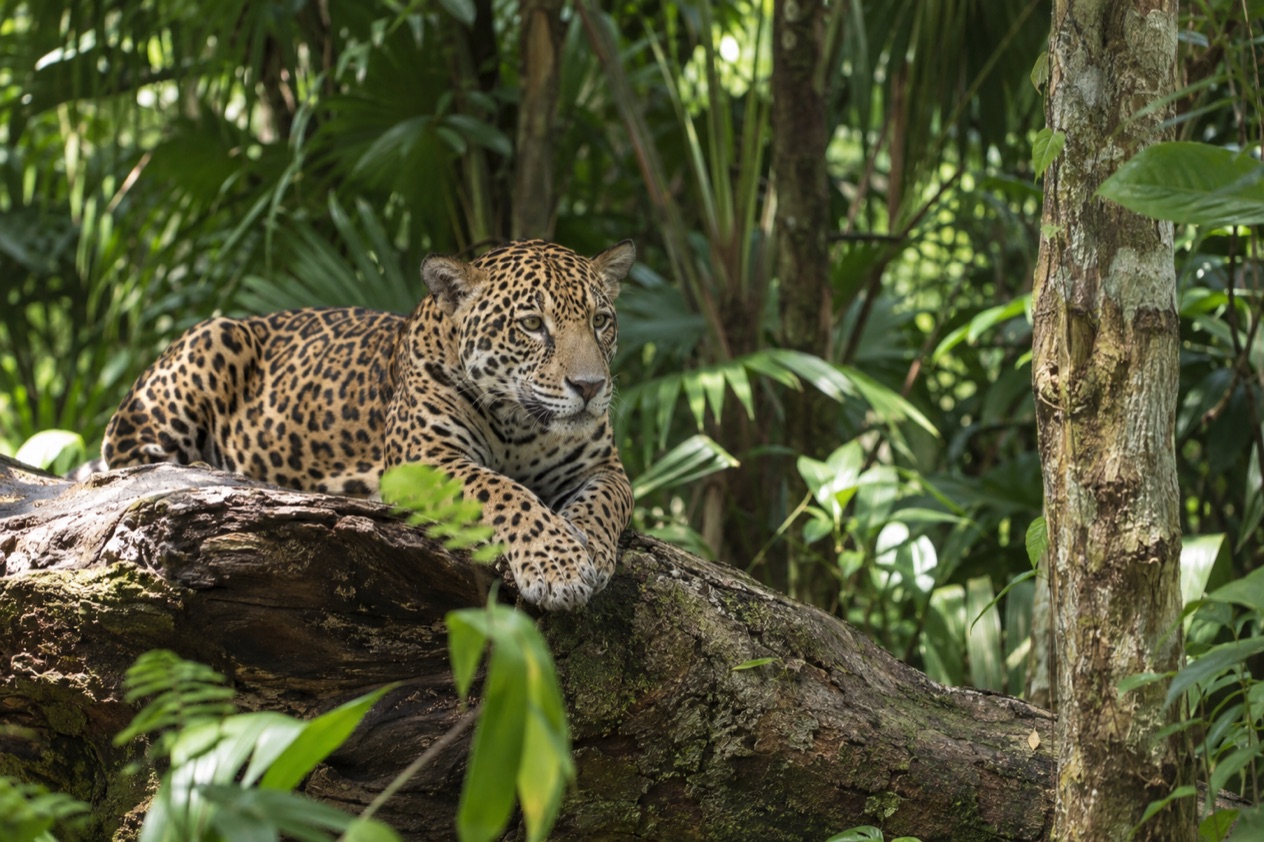
All five wildcat species found in Belize live here: jaguar, puma, ocelot, margay and jaguarundi. Seeing them side by side shows how different they are. The jaguar is heavy and muscular, the margay is a slim climber with huge eyes, and the jaguarundi looks almost like an otter on long legs.
Cats tend to be most active when the air is cooler, so the early hours are a good time to watch them move. A jaguar encounter is also on offer, and visitors can enter a cage within the jaguar exhibit for a personal meeting with Junior Buddy, a trained jaguar. That experience is arranged in advance through the zoo, using the booking contact in the tips below.
The tapirs and other mammals
The Central American tapir, the national animal of Belize, can be seen up close. It is a shy, stocky creature with a short flexible snout, and watching one wade and forage is a quiet pleasure. Locals often call it the mountain cow.
Nearly twenty native mammal species live here. Look for the anteater, coatimundi, both kinds of peccary, howler and spider monkeys, kinkajou, otter, paca, porcupine and white-tailed deer. The howler monkeys often announce themselves before you see them, and their deep roar carries across the grounds.
Birds, reptiles and amphibians
Seventeen bird species are in the zoo’s care, and the grounds also draw wild birds. Almost 280 wild species have been reported there on eBird checklists, so bring binoculars if you like birding. The branches overhead are as interesting as the enclosures.
The reptile displays include common Belizean snakes such as the imperial boa, the tropical ratsnake and the Fer-de-lance, along with two species of crocodile. The Critically Endangered Hicatee, or Central American River Turtle, is also here. On nocturnal tours, red-eyed treefrogs, veined treefrogs and Gulf Coast toads are commonly seen on the grounds.
Night tours
After dark the zoo changes character. Visitors can arrange night tours to observe crepuscular and nocturnal animals such as tapirs, jaguars, margays, kinkajous, crocodiles, peccaries and howler monkeys. These tours are arranged ahead through the zoo rather than offered on the spot, so use the booking contact in the tips below.
Hours, tickets and rules
The zoo keeps long daytime hours, a little shorter on Sundays, and it closes only on Good Friday and Christmas Day. International visitors pay more than Belizeans, and children ages 3 to 12 pay a reduced rate in both categories.
| Site | Open |
|---|---|
| The Belize Zoo, Monday to Saturday | 8:30 AM to 5:00 PM, last admission 4:00 PM |
| The Belize Zoo, Sundays and holidays | 8:30 AM to 4:30 PM, last admission 3:30 PM |
| The Belize Zoo, Good Friday and Christmas Day | Closed |
Parking and locker storage are complimentary. Pets are not allowed at the zoo or at its Tropical Education Center. Every pathway allows wheelchairs, strollers and walkers, and a limited number of wheelchairs are available for complimentary use.
How to get to the Belize Zoo
The zoo sits at Mile 29 on the George Price Highway in Belize District, roughly halfway between Belize City and Belmopan. That position makes it an easy add-on to a drive across the country, whichever direction you are heading. The Tropical Education Center, its sister site, stands in the same corridor.
From Belize City or the international airport, the zoo is a 30-minute drive. From Belmopan it is a 20-minute drive. The zoo’s own information also puts the drive from the international airport at 45 minutes, so allow for a range depending on the day.
Public buses stop at the zoo entrance roughly every half hour from either direction, with less frequent service on Sundays and holidays. That means you can reach the entrance without a vehicle and carry on toward Belmopan or back to Belize City afterward. On a Sunday or holiday, plan around the thinner service.
The zoo’s location is also described as 29 miles west of Belize City on the Western Highway. The two names, George Price Highway and Western Highway, refer to the same road, so either will lead you to the Mile 29 marker.
When to visit the Belize Zoo
Go early. The gates open at 8:30 AM, and the first hours are the natural time to walk the paths, when the animals tend to be more active and the savanna is most comfortable for a long stroll. Late in the day the closing time arrives sooner than you expect, especially on Sundays, when last admission is at 3:30 PM.
The zoo is open year-round except on Good Friday and Christmas Day, so a visit fits almost any trip. The Atlantic hurricane season runs from June 1 to November 30, which is worth remembering if your dates fall in those months, since a tropical system can bring heavy rain to the whole country.
If you want to see the zoo in a different light, a night tour offers a different set of animals and a different mood. Nocturnal and crepuscular residents such as kinkajous, margays and tapirs are the focus, and the grounds feel quite unlike the daytime walk. Tours are arranged ahead with the zoo.
Bird watchers may like the cooler hours of a morning visit, when wild birds on the grounds add to the zoo’s own residents. With almost 280 wild species reported there, a patient eye can add to a list.
Tips for your visit
Bring binoculars if you enjoy birds, and a camera for the cats and tapirs. Because lockers are complimentary, you can leave extra gear behind and walk the grounds lightly. Pets must stay home, as they are not allowed at the zoo or the Tropical Education Center.
For families, the paths allow strollers, and the animals are close enough to hold a child’s attention. Visitors with physical disabilities will find every pathway open to wheelchairs and walkers, and a limited number of wheelchairs can be borrowed at no charge. The zoo describes itself as the first and only nature destination in Belize accessible to persons with physical disabilities.
The zoo offers a variety of tours and animal encounters, and a tours and experiences catalogue is available. To book a tour or encounter, contact [email protected] or call or WhatsApp +501-613-4966.
To stay nearby, the Tropical Education Center is one mile away and offers lodging, meals and airport transfers. It is an 84-acre site of tropical lowland savanna in the Maya Forest Corridor, with a dining hall, library, pool and nature trails.
Reservations for the Guest House and Pine Cabins can be made online through the Book Now link, and the Savanna Castle Dormitories and Forest Cabanas are booked by calling +501-613-1832. You can also email [email protected]. Because the zoo lies halfway between Belize City and Belmopan, it fits neatly into a day that links the two, or into the drive from the airport toward the west.
Good to know before you go
The U.S. State Department rates Belize Level 2, “Exercise increased caution”, because of crime, and says the south side of Belize City has historically had the highest concentration of violent crime.
Admission is quoted in Belize dollars, so keep that in mind when you plan your day. More than 69,000 people visit the zoo each year, a good sign that it is well established on the Belize circuit. The Atlantic hurricane season runs from June 1 to November 30, and the zoo’s own closing days are Good Friday and Christmas Day.
Sources
- The Belize Zoo, Plan your visit (https://www.belizezoo.org/plan-your-visit/), checked October 11, 2026
- The Belize Zoo, Home (https://www.belizezoo.org/), checked October 11, 2026
- The Belize Zoo, The animals (https://www.belizezoo.org/the-animals/), checked October 11, 2026
- Wikipedia, Belize Zoo (https://en.wikipedia.org/wiki/Belize_Zoo), checked October 11, 2026
- The Belize Zoo, Tours and animal experiences (https://www.belizezoo.org/tours-and-animal-experiences/), checked October 11, 2026
- The Belize Zoo, Tropical Education Center (https://www.belizezoo.org/tec/), checked October 11, 2026
- U.S. Department of State, Belize Travel Advisory, Level 2, March 11, 2026 (https://travel.state.gov/), checked October 11, 2026
- NOAA National Hurricane Center, Climatology (https://www.nhc.noaa.gov/climo/), checked October 11, 2026