
Somewhere past the third river crossing, the jungle noise fades behind you and a cool breath of air comes out of a dark opening in the hillside. Headlamps click on, and the Maya world starts to feel very close. Belize’s caves lie mostly in the Cayo District around San Ignacio and along the Hummingbird Highway, and each one offers a different way into the underworld the Maya called Xibalba.
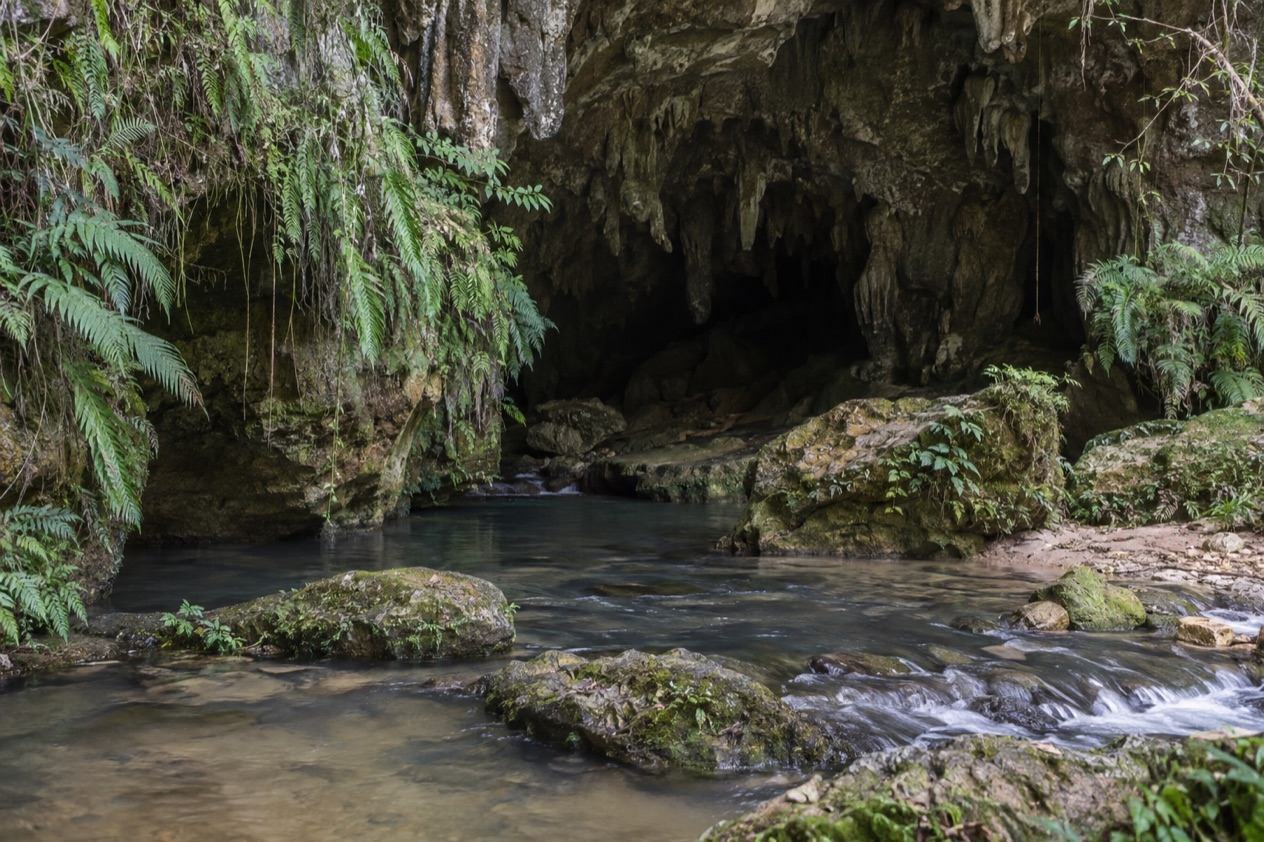
Which caves can you visit in Belize?
Four cave destinations anchor a visit: Actun Tunichil Muknal, Barton Creek Cave, Nohoch Che’en and St. Herman’s Cave. Together they cover a dramatic range, from a wet, skeleton-strewn ceremonial chamber to a canoe paddle through cathedral-like passages, a riverside cave system and a forest park with an easy start at the cave mouth.
All of them sit in or near the Cayo District, which makes it simple to combine two in one stay. Each has a different character, so the choice comes down to whether you want archaeology, paddling, tubing or a walk.
Actun Tunichil Muknal, the cave of the skeletons
Actun Tunichil Muknal, known locally as ATM, is a cave near San Ignacio in the Tapir Mountain Nature Reserve. It is notable as a Maya archaeological site with skeletons, ceramics and stoneware left where the Maya placed them. The main system runs about 3 miles, with a long river passage that ends at an upstream sump.
In the upper passage, 14 skeletal remains have been found, along with numerous examples of ancient Maya pottery. One artifact, the Monkey Pot, is one of just four of its type found in Central America. You walk among these objects in your socks, because visitors are told to remove their shoes and wear socks when they reach the upper dry chamber, which helps limit foot traffic.
Cameras without a permit are banned, a rule that followed a tourist accidentally dropping a camera and fracturing a human skull in late May 2012. Plan to take in the cave with your eyes rather than a lens.
Barton Creek Cave, by canoe
Barton Creek Cave is a natural cave in the upper Barton Creek area near San Ignacio, known both as an archaeological site and as a tourist destination. It is a Maya ceremonial cave with cathedral-like chambers and wide passages reached by canoe, so you glide in rather than wade. In 1974, two Peace Corps Volunteers working for the Department of Archaeology paddled over a mile into it with a local farmer.
Pottery sherds show the Maya used it between the Early Classic and the Late Classic periods, and evidence of that use appears on ten ledges within the first kilometer of passage. The remains of at least 28 humans have been found inside. Looting hit the cave soon after it was first reported, yet it remains an important site for archaeologists, and the survey has since reached about 5 miles of passage.
Nohoch Che’en and St. Herman’s Cave
Nohoch Che’en is an expansive cave system along the Sibun River in the eastern part of the Cayo District. St. Herman’s Cave lies inside St. Herman’s Blue Hole National Park, twelve miles southeast of Belmopan on the right side of the Hummingbird Highway.
The park covers 575 acres of forest rich with wildlife, and was first declared in November 1986 as Blue Hole National Park. Its name changed in 2005 to avoid confusion with the Blue Hole Natural Monument at sea.
At St. Herman’s you can walk 200 yards into the cave entrance without a guide. To go all the way through, you can hire a guide and see speleothems and Maya artefacts. Cave tubing and zip lining also appear as a combined full-day outing, which gives a splashier way into the Cayo caves.
| Site | Open | Admission |
|---|---|---|
| Nohoch Che’en | Daily, 8:00 am to 5:00 pm, including Sundays and public and bank holidays; last tour at 4:00 pm | BZ$15.00 to BZ$20.00, depending on residency status |
| St. Herman’s Blue Hole National Park | 8:00 am to 4:30 pm | BZD 8 per day for non-nationals; BZD 2 for Belizeans |
| Actun Tunichil Muknal | Tour starts 7:00 am from Chaa Creek | US$30 per person |
| Barton Creek Cave | Tours at 8:00 am and 1:00 pm from Chaa Creek | US$30 per person |
Which caves need a guide?
Nohoch Che’en requires a guide for every visitor, and Actun Tunichil Muknal and Barton Creek are visited on guided tours, while St. Herman’s Cave is the one where you can walk in a short way on your own. A guide turns a dark hole into a story, and in the Maya caves it also protects what is fragile.
Actun Tunichil Muknal on a day tour
The tour from Chaa Creek lasts all day and starts at 7:00 am. The cave is a one and a half hour drive from Chaa Creek. From there you follow a 45-minute walk along a jungle trail that crosses three rivers, so you arrive at the entrance already damp and warmed up.
The tour costs $164 USD per person for two or more people, and the entrance fee is $30 USD per person. Kids must be over 40 inches in height, and the tour requires a good to very good fitness level. Inside, the long river passage and the upper dry chamber with its remains make for a day people tend to remember for years.
Barton Creek Cave on a half-day tour
The tour from Chaa Creek departs at 8:00 am and 1:00 pm, and the entrance fee is $30 USD per person. It is a half-day outing, and lunch is not required. The fitness level is low to moderate, which makes it a gentler counterpart to Actun Tunichil Muknal.
For the paddle, wear short or long pants and comfortable walking footwear, and sleeve lengths are optional. Bring a hat, extra clothes, water, insect repellant, a camera and raingear if needed. Light plays on the limestone walls as you drift beneath high ceilings.
Nohoch Che’en and the guided traverse of St. Herman’s
At Nohoch Che’en, all visitors must be accompanied by a tour guide. Access to the first cave is allowed only after 3:00 pm. The last tour of the day begins at 4:00 pm, one hour before closing time. When booking, you choose a ticket type of either Resident or Non-Resident.
At St. Herman’s, a guide is optional for the first 200 yards but is what takes you through the whole cave to the speleothems and Maya artefacts.
What should you know before you go?
Know your fitness level, dress for water and mud, and expect to leave the camera behind at the most sensitive sites. The caves are not all the same, and the tours range from low to very good fitness, so match the cave to the group.
Matching the cave to the group
Barton Creek Cave suits those who want a low to moderate effort, since you travel by canoe. Actun Tunichil Muknal asks for a good to very good fitness level, plus the 45-minute jungle walk with three river crossings. The cave tubing and zip lining day asks for a moderate to good fitness level.
Children need to meet height minimums: kids must be over 40 inches for Actun Tunichil Muknal, and participants in the tubing and zip lining tour must meet a minimum of 40 inches too. St.
What to wear and bring
For cave tubing and zip lining, long or short pants and sturdy protective footwear are recommended. Because of the aquatic nature of the tour, a change of dry clothing is required. The zip line soars 80 feet above the forest floor with five runs from treetop to treetop on professionally installed double cables, and it ends with a rappel back to the ground.
For Barton Creek, bring a hat, extra clothes, water, insect repellant, a camera and raingear if needed. At Actun Tunichil Muknal, remember that cameras without a permit are banned, and that you wear socks without shoes in the upper chamber.
Timing and the season
Tours start early. The Actun Tunichil Muknal day begins at 7:00 am and the tubing and zip lining day at 8:00 am, while Barton Creek offers a morning and an afternoon departure. Nohoch Che’en is open every day, including Sundays and public and bank holidays, from 8:00 am to 5:00 pm.
The Atlantic hurricane season runs from June 1 to November 30, so a trip in those months falls inside it. Pair a morning cave with an afternoon at a second site, since the two Chaa Creek cave departures and the park hours leave room to do so.
Good to know before you go
The U.S. State Department rates Belize Level 2, “Exercise increased caution”, because of crime, and says the south side of Belize City has historically had the highest concentration of violent crime.
Bring a change of dry clothes, since nearly every cave outing gets you wet. Hurricane season in Belize runs from June 1 to November 30, so those months deserve a flexible plan.
Sources
- Wikipedia, Actun Tunichil Muknal (https://en.wikipedia.org/wiki/Actun_Tunichil_Muknal), checked October 11, 2026
- Wikipedia, Barton Creek Cave (https://en.wikipedia.org/wiki/Barton_Creek_Cave), checked October 11, 2026
- Chaa Creek, ATM cave tour (https://chaacreek.com/tour/actun-tunichil-muknal/), checked October 11, 2026
- Chaa Creek, Barton Creek cave tour (https://chaacreek.com/tour/barton-creek-cave-tour/), checked October 11, 2026
- NICH ticketing, Nohoch Che'en (https://ticketing.nichbelize.org/product/nohoch-cheen/), checked October 11, 2026
- Belize Audubon Society, St. Herman's Blue Hole National Park (https://belizeaudubon.org/shbh/), checked October 11, 2026
- Chaa Creek, cave tubing tour (https://chaacreek.com/tour/cave-tubing-zip-lining/), checked October 11, 2026
- U.S. Department of State, Belize Travel Advisory, Level 2, March 11, 2026 (https://travel.state.gov/), checked October 11, 2026
- NOAA National Hurricane Center, Climatology (https://www.nhc.noaa.gov/climo/), checked October 11, 2026