
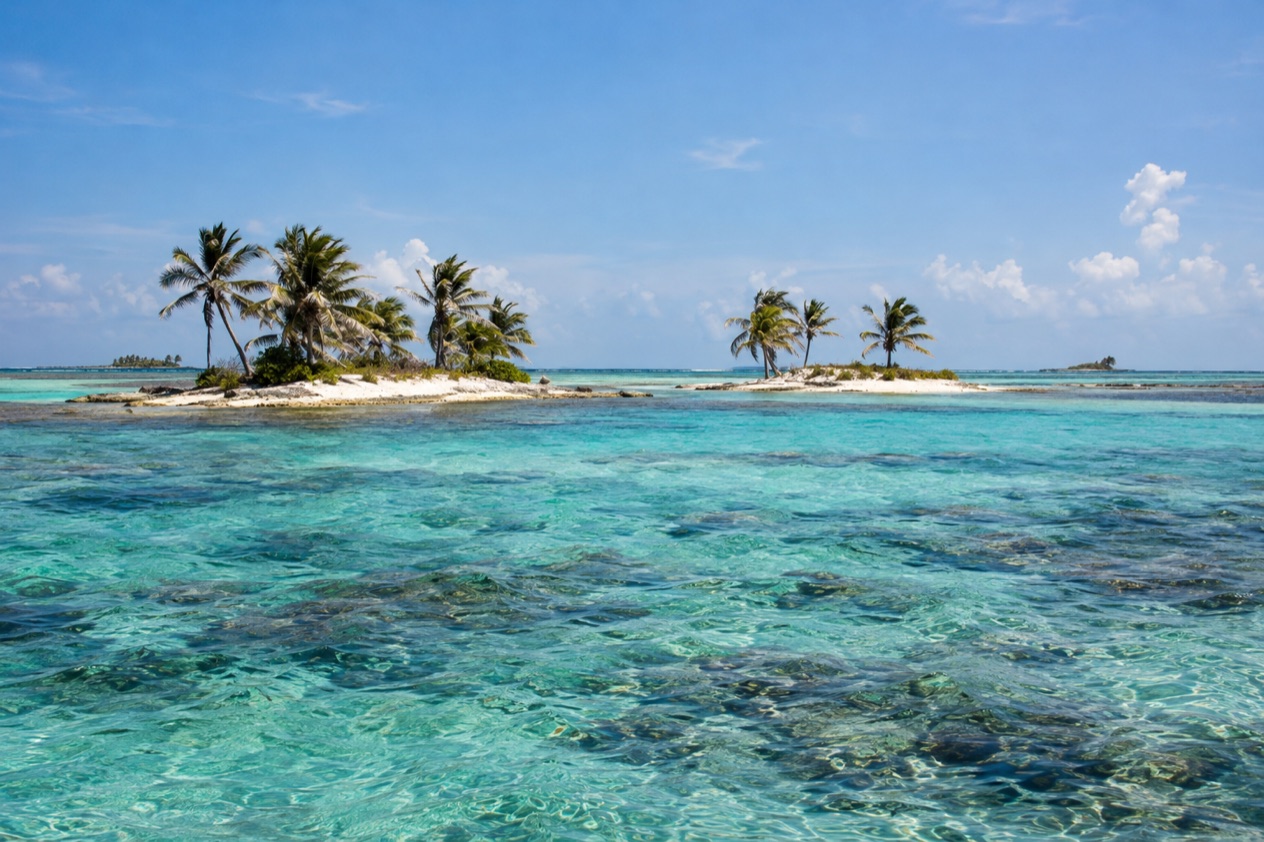
Three low, sandy cayes sit on the horizon off southern Belize, ringed by pale shallows that shade into deep blue where the reef drops away. Terns wheel over North Silk Caye, the palms lean in the wind, and the sea around you holds one of the great fish gatherings on the barrier reef. This is a visit to a protected marine reserve, made out of Placencia, for people who come to Belize for wildlife and the water itself.
Is visiting the Silk Cayes worth it?
Yes, if what you want from Belize is the sea and its animals rather than a resort beach, the Silk Cayes reward the trip. The cayes are small, and the real story is the water around them.
What sets this place apart from other cayes along the reef is that it is a working conservation area rather than a developed island. It is managed day to day by a community-based group, the Southern Environmental Association, which handles patrols and fee collection. The reserve lies within the Southern Belize Reef Complex, the same cluster that includes South Water Caye, Laughing Bird Caye National Park and the Sapodilla Cayes Marine Reserve, so it sits among other protected reef places rather than standing alone.
It also suits bird lovers. The reserve falls inside a large Important Bird Area recognized by BirdLife International, and a tern colony has been recorded on North Silk Caye. If you like the idea of a day built around reef, fish and seabirds, with no boardwalks or souvenir stands in the picture, this is the kind of outing you will remember. If you want a beach chair and a bar, look elsewhere on the coast.
What to see at the Silk Cayes
The cayes are what you see first, but the wider reserve is what explains why it exists.
North, Middle and South Silk Caye
Three small cayes make up the group: North Silk, Middle Silk and South Silk. They lie south of the Gladden entrance, just inside Queen Caye, and they look the way a postcard of the Caribbean reef is supposed to look, with pale sand, a few palms and shallow water in shifting shades of turquoise and green.
The water around the cayes falls inside a no-take zone, which means the fish and corals nearby are protected from harvest. That is part of what makes the reef here worth looking at. Look for the line where the pale shallows give way to darker blue, since that edge usually marks where the reef changes character.
The tern colony on North Silk Caye
A nesting colony of terns has been recorded on North Silk Caye, and seabirds are one of the quiet pleasures of the visit. Terns are slim, quick birds with forked tails, and they work the water by hovering, then folding and dropping on small fish. Even a few minutes spent watching them teaches you something about how rich this stretch of sea is.
The wider area is part of an Important Bird Area, and its list of significant populations includes white-crowned pigeons, red-footed boobies and roseate terns. Yucatan vireos, black catbirds and golden-winged and cerulean warblers are named too. Bring binoculars if you own a pair, because a bird on a distant caye is far easier to enjoy when you can see its markings.
Gladden Spit and its spawning gatherings
Gladden Spit is the point of reef that gives the reserve its name, and it is where the biggest natural event of the area happens. Groupers and snappers gather here in the thousands at full moon, and the reef is home to more than 30 species of fish. Fishermen have known the site since the 1920s, when they came to harvest mutton snapper and grouper during the ten-day spawning period between March and June.
That mass of spawning fish is what draws the whale sharks. The gathering here is one of the largest predictable whale shark congregations in Belize, which is why Placencia and other coastal communities count on it for tourism. Whale sharks are wild animals, so a sighting is a chance, not a promise, but this is the place in Belize where the odds are best known.
The protected whale shark zone
Within the reserve, the whale shark feeding site was declared a special protected zone in 2001. Two years later, the reserve was divided into four zones: a general use zone, the no-take zone around the Silk Cayes, a conch restoration zone, and a conservation zone for whale sharks and reef-fish spawning aggregations.
For a visitor, this layered map is a reminder that the water is managed with care. The areas you pass through were drawn on purpose, each one protecting something different, from the conch beds to the spawning grounds. Knowing that makes the sea feel less like scenery and more like a place with rules and a purpose.
Hours, tickets and rules
The Silk Cayes are not a gated site with a ticket window and posted hours. They are part of a marine reserve, and the Southern Environmental Association, which runs it, handles patrols and fee collection as part of its daily management. The reserve has a management plan, as every marine reserve in Belize does, and that plan is what guides how the area is used.
| Reserve | Detail |
|---|---|
| Declared | May 18, 2000 |
| Whale shark feeding site made a special protected zone | 2001 |
| Designated a Marine Reserve | 2003 |
| Area | 25,980 acres (10,510 hectares) |
| Managed by | Southern Environmental Association |
The rules that matter most are the zones. The water around the Silk Cayes is a no-take zone, and the whale shark feeding site is a special protected zone. Elsewhere in the reserve lie a general use zone, a conch restoration zone and a conservation zone for whale sharks and reef-fish spawning aggregations.
How to get to the Silk Cayes
The nearest base for the Silk Cayes is Placencia, in Stann Creek District. The reserve lies 22 miles off the coast there, out on the barrier reef, so this is an outing into open water and not a stroll from the shore. Placencia is the town that looks out toward Gladden Spit, and it is the community that benefits most from the whale shark gatherings.
Because the cayes lie so far from land, your day starts on the Placencia side and heads out across the lagoon and reef toward the south end of the reserve. The three cayes sit south of the Gladden entrance, just inside Queen Caye, so that name is useful to recognize on a chart or in conversation.
Placencia itself is a long, narrow peninsula with a village at its tip, and it is where you will find the lodgings, restaurants and shops that serve visitors to the southern reef. Staying there puts you close to the starting point for the reserve. If you are coming from elsewhere in Belize, the practical thing is to plan your base around Placencia and treat the Silk Cayes as the day you head out to sea.
When to visit the Silk Cayes
The calendar here follows the fish. The ten-day spawning aggregation at Gladden Spit occurs between March and June, and the fish gather in the thousands at full moon.
Birds give you another reason to go, since the area is a recognized bird zone and terns have been recorded nesting on North Silk Caye. For the sea and the cayes themselves, any month has something to offer, and the light over the shallows is what you notice first on a clear day.
One date frames the whole year. The Atlantic hurricane season runs from June 1 to November 30, and the reserve sits on the Caribbean side, so it follows that calendar. The spawning months of March to June straddle the start of the season, which is worth knowing when you set your dates. Outside those dates, from December through May, you are beyond the official season.
Tips for your visit
Think of the Silk Cayes as a wildlife outing and pack for it that way. Binoculars help with the terns and other seabirds, and a camera lets you hold on to the color of the shallows. You are heading out onto open water toward a reserve far from the mainland, so plan around the sea rather than around a beach.
Combine the visit with the rest of the southern coast. The reserve belongs to the Southern Belize Reef Complex, which also includes South Water Caye, Laughing Bird Caye National Park and the Sapodilla Cayes Marine Reserve. If you have more days, those neighbors make a natural way to see how varied the southern reef is.
- Bring binoculars for the terns and other seabirds on North Silk Caye.
- Learn the zones before you go, since the cayes sit inside a no-take zone.
- Stay in Placencia, the nearest town, to be close to where the reserve starts.
- Match your dates to the full moon between March and June if the spawning gathering is your goal.
If you travel with family, talk through the idea beforehand that the animals here are wild and protected. Children often take to the bird watching and the story of the fish that gather by the thousands. Whale sharks are a chance, never a promise, so go with open expectations and let the reef and the cayes be the reward in themselves.
Good to know before you go
The U.S. State Department rates Belize Level 2, “Exercise increased caution”, because of crime, and says the south side of Belize City has historically had the highest concentration of violent crime.
Fees for the reserve are collected by the Southern Environmental Association as part of its daily management and patrols. The Atlantic hurricane season runs from June 1 to November 30, which covers the Caribbean coast where the reserve lies, so build some flexibility into plans made for those months. Treat the water, the corals and the nesting birds with the care a protected area deserves, and keep to the zones that guard them.
Sources
- Wikipedia, Silk Cayes (https://en.wikipedia.org/wiki/Silk_Cayes), checked October 11, 2026
- Belize Fisheries Department, Gladden Spit and Silk Cayes Marine Reserve (https://fisheries.gov.bz/gsscmr/), checked October 11, 2026
- Wikipedia, Gladden Spit and Silk Cayes Marine Reserve (https://en.wikipedia.org/wiki/Gladden_Spit_and_Silk_Cayes_Marine_Reserve), checked October 11, 2026
- U.S. Department of State, Belize Travel Advisory, Level 2, March 11, 2026 (https://travel.state.gov/), checked October 11, 2026
- NOAA National Hurricane Center, Climatology (https://www.nhc.noaa.gov/climo/), checked October 11, 2026