
On a Kobe evening, the smell of searing beef drifts from a teppanyaki counter while a chef turns slices over a hot iron plate in front of you. Outside, the port lights flicker on the bay and the hills rise steeply behind the city. Kobe is a harbor town with mountains at its back, a place for food lovers, hot spring fans and anyone who wants a Kansai base with a calmer feel than its big neighbors.
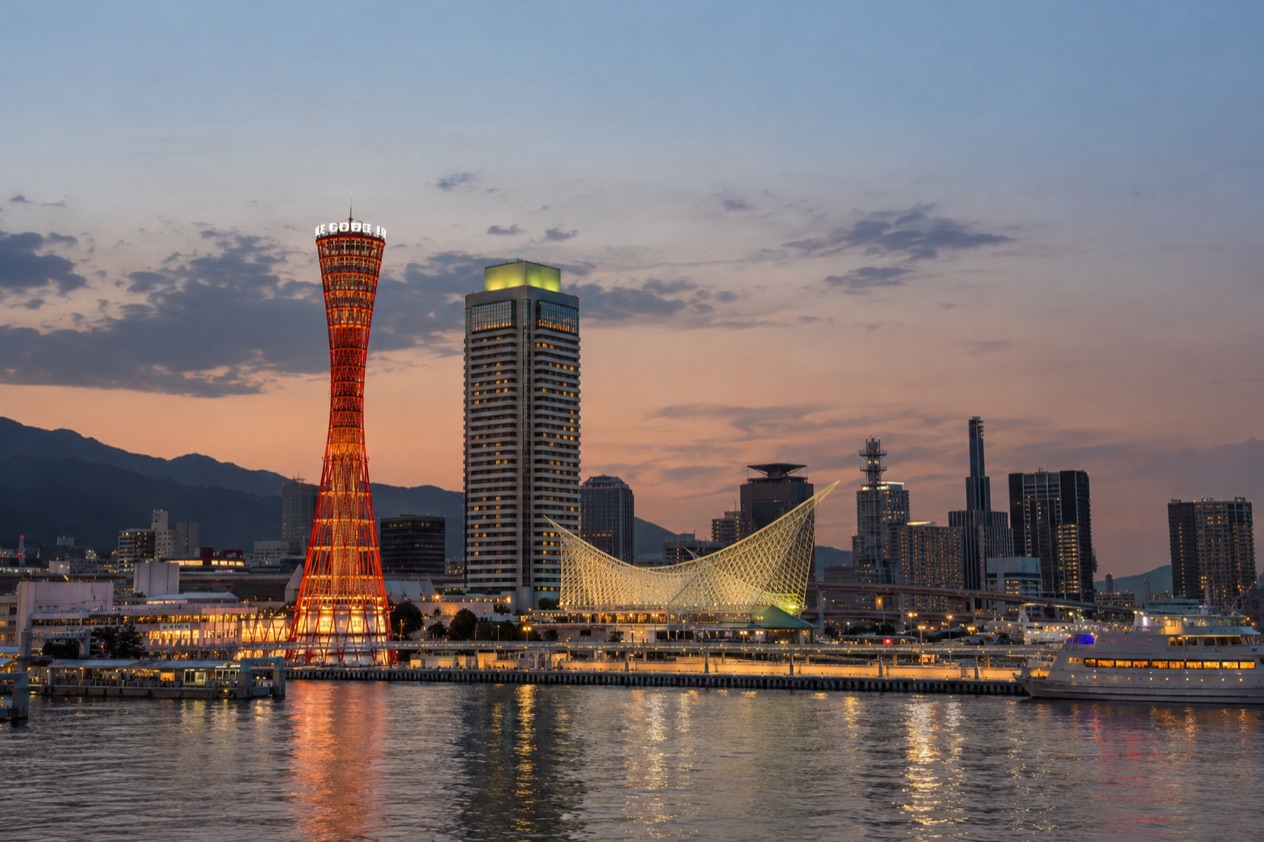
Where is Kobe and what is it like?
Kobe sits in the Kansai region on the north shore of Osaka Bay, and it is the capital of Hyogo Prefecture. The city center lies across the bay from Osaka, and it belongs to the same urban cluster as Osaka and Kyoto. Its long, narrow shape is squeezed between water and mountains, which gives the place its particular character: you can stand by the harbor and see green slopes right above the buildings.
It is a historic port city, and the port still shapes how the city feels. Kobe is the third-largest port city in Japan after Tokyo and Yokohama, and the waterfront is where the city’s long link with ships and trade shows most plainly. With around 1.5 million people, Kobe is among the larger cities in the country, yet it lives on a different rhythm from the dense streets of Osaka.
Kobe suits travelers who like to mix a city with something outdoors: a meal built around local beef, a stroll along the bay, then a hill or a hot spring within the same municipality. Kyoto lies to the southwest of its center by about 43 miles, which makes Kobe a workable base for exploring the region.
What is there to do in Kobe?
Kobe gives you three big reasons to come: its beef, its mountain and hot spring side, and the harbor city itself. Each one pulls you in a different direction, and together they make the city different from its neighbors, which lean on temples (Kyoto) or on street food and nightlife (Osaka).
Kobe beef
Kobe beef is the dish the city is known for, and it comes from Wagyu cattle. The Japanese Black breed makes up more than 90% of Wagyu raised in Japan and is the main source of highly marbled beef. Chefs prepare it in several ways: as steak, sukiyaki, shabu-shabu, sashimi and teppanyaki.
The teppanyaki counter is the most theatrical way to eat it, with the cook working at the iron plate right in front of you. Sukiyaki and shabu-shabu bring the beef to the table in a simmering pot, a gentler and more social meal. Pair a dinner like this with an evening walk by the port, and you have the heart of a Kobe visit.
Mount Rokko and Arima Onsen
Mount Rokko is a range of mountains in southeastern Hyogo Prefecture, rising right behind the city. It gives Kobe its green backdrop and is the reason the city feels so close to the outdoors. Arima Onsen, a hot spring resort in Kita-ku, Kobe, sits near Mount Rokko.
An onsen town is a slower kind of outing: you soak in mineral-rich baths, wander small lanes and rest between dips. Visitors pair the hot spring with a look at the mountain scenery around it.
The harbor and city views
The observation deck on the 24th floor of Kobe City Hall gives a free-standing look over the port, the bay and the hills behind. It is a good way to understand how the city is laid out between water and mountain, and to see the two together in a single glance.
| Site | Open |
|---|---|
| Kobe City Hall observation deck, 24th floor | Monday to Friday 08:15-22:00; Saturdays, Sundays and holidays 10:00-22:00 |
Shin-Kobe, the bullet train station, also stands within the city, so you can combine arrival with a first look at Kobe before you head out to the harbor or the hills.
How many days do you need in Kobe?
A long weekend is enough to cover Kobe’s essentials, and a night or two more lets you add the hot spring and the hills. The city rewards a relaxed pace rather than a checklist, so a short stay works well if you pick your priorities.
Spend the morning looking at the port and the city from the City Hall deck, then let the evening revolve around a teppanyaki or sukiyaki meal. That single day gives you the flavor of the place: sea, hills and a plate of the dish it is known for.
With two or three days, add Arima Onsen and the Mount Rokko side. A hot spring afternoon, with baths and a walk through the resort, makes a good counterpoint to a day in the city. This is also the length of stay where you can slow down and enjoy a second meal built around Kobe beef in a different style, say shabu-shabu after the steak.
With more time, Kobe works as a base for the wider region. Osaka lies across the bay, and Kyoto is farther to the southwest of the city center by about 43 miles. Both fit into day trips by rail, which lets you keep one hotel while seeing a very different side of Kansai each day. Staying put in Kobe also means returning in the evening to a calmer city than the ones you visited.
Where to stay in Kobe
The best base depends on how you plan to move: near the bullet train, near the harbor, or up in the hot spring resort. Kobe’s long, narrow layout between sea and mountain means these areas feel quite different from one another.
Around Shin-Kobe Station, you are next to the bullet train, which suits travelers arriving from Tokyo or heading onward along the Shinkansen line. It is a practical choice if your plan is to pass through Kobe, eat well and keep moving. Closer to the water, the harbor side puts the port, the bay views and the city center within reach, and it suits those who want to feel the seaside character of Kobe in the evening.
Arima Onsen, in Kita-ku near Mount Rokko, is the choice for a slower stay. A night at a hot spring resort, with baths and a quiet morning, is a different kind of vacation from a night in a city hotel. It suits couples and anyone who wants to rest rather than sightsee, though it takes you away from the harbor, so travelers combine a night in the hills with a night in town.
How do you get to Kobe and get around?
Visitors reach Kobe by rail, and the bullet train is the main link from Tokyo. The JR Tokaido/Sanyo Shinkansen connects Tokyo directly with Shin-Kobe Station, and the journey takes between 2 hours 40 minutes and 3 hours 15 minutes depending on the train. The Hikari service, which runs on this route, is covered by the Japan Rail Pass.
A cheaper but slower option from Tokyo is the night bus, with one-way prices ranging from 5,000 to 8,500 yen and a journey time of 8 to 9 hours. It suits travelers who prefer to save money and sleep on the way, and who are not in a hurry to reach the city.
Kobe lies about 22 miles west of Osaka, so it connects naturally with the rest of the Kansai area, and Kyoto is farther to the southwest. Once in the city, the places you will want to see are spread between the harbor, the bullet train station and the hills, which is part of what gives Kobe its stretched-out shape.
| From | To | Time |
|---|---|---|
| Tokyo | Shin-Kobe Station by Shinkansen | 2 hours 40 minutes to 3 hours 15 minutes |
| Tokyo | Kobe by night bus | 8 to 9 hours |
When is the best time to visit Kobe?
Spring and autumn are the best seasons, with April and October standing out as comfortable months for walking the harbor and the hills. In April the average high reaches the mid-60s Fahrenheit with lows in the low 50s, and the month brings around 195 hours of sunshine, though showers fall on about nine days. October is a touch warmer, with highs in the low 70s, fewer rainy days and enough sun to make the bay views pleasant.
Summer is the hot and humid stretch. July highs reach the upper 80s with lows in the mid-70s, humidity sits well up in the 70s percent range, and rain falls on about ten days of the month. It is a season for taking things slowly, seeking shade and keeping the day’s walking to the cooler hours.
Winter is cool and mostly for those who want fewer outdoor plans. January highs stay in the upper 40s with lows in the upper 30s, and snow or sleet shows up on a number of days. That makes it a fitting time for the hot spring at Arima and for a warm beef meal, rather than for long outdoor wandering.
| Month | Avg high (°F) | Avg low (°F) | Precipitation (in) | Days with precipitation |
|---|---|---|---|---|
| January | 48.9 | 37.6 | 1.51 | 4.7 |
| April | 66.0 | 52.5 | 3.96 | 9.0 |
| July | 86.7 | 76.5 | 7.40 | 10.0 |
| October | 73.8 | 62.1 | 4.65 | 7.8 |
Good to know before you go
Kobe is a city of long walks between harbor and hillside, so comfortable shoes matter more than anything else you pack. Summer brings heat and humidity, while winter calls for a warm layer, especially if you plan to spend an evening at the hot spring. Yen is the currency, and meals built around Kobe beef are the place to spend a little extra, since the dish is the reason people come.
Sources
- Japan National Tourism Organization, Kobe (https://www.japan.travel/en/destinations/kansai/hyogo/kobe-and-around/), checked October 11, 2026
- Visit Kobe, the official travel guide (https://www.feel-kobe.jp/en/), checked October 11, 2026
- Wikipedia, Kobe (https://en.wikipedia.org/wiki/Kobe), checked October 11, 2026
- Wikivoyage, Kobe (https://en.wikivoyage.org/wiki/Kobe), checked October 11, 2026
- Wikipedia, Wagyu (https://en.wikipedia.org/wiki/Wagyu), checked October 11, 2026
- Wikipedia, Mount Rokkō (https://en.wikipedia.org/wiki/Mount_Rokk%C5%8D), checked October 11, 2026
- Wikipedia, Arima Onsen (https://en.wikipedia.org/wiki/Arima_Onsen), checked October 11, 2026
- Japan Meteorological Agency (JMA), Normal values 1991-2020, monthly (https://www.data.jma.go.jp/stats/etrn/view/nml_sfc_ym.php?prec_no=63&block_no=47770), station Kobe, elevation 5 m, checked October 11, 2026
All our pages
When to go
- Best Time to Visit Kobe: Cherry Blossoms, Autumn Leaves, Weather and Festivals
- Kobe in January: Winter Weather, Kobe Beef, Harbor Walks and a Two-Day Plan
- Kobe in February: Setsubun, Plum Blossoms, Weather and a Two-Day Plan
- Kobe in March: Weather, Cherry Blossom Timing, Kobe Beef and a Two-Day Plan
- Kobe in April: Cherry Blossoms, Weather and What to Do
- Kobe in May: Golden Week, Kobe Beef, the Harbor and the Weather
- Kobe in June: Hydrangeas, Rainy-Day Museums, Kobe Beef and a Two-Day Plan
- Kobe in July: Weather, Harbor Evenings, Kobe Beef and a Two-Day Plan
- Kobe in August: Obon, Harbor Evenings, Hot Weather and What to Do
- Kobe in September: Weather, Kobe Beef, Harbor Walks and a Two-Day Plan
- Kobe in October: Weather, Autumn Mood and What to Do
- Kobe in November: Weather, Autumn Leaves, Kobe Beef and a Two-Day Plan
- Kobe in December: Winter Lights, Maple Leaves, Hot Springs and What to Do
Things to do
- Things to Do in Kobe: Kobe Beef, Kitano's Foreign Houses, Arima Onsen and Harbor Night Views
- Day Trips from Kobe: Himeji Castle, Osaka's Food Streets, Universal Studios Japan and Kyoto
- Kobe Beef: What Makes It Authentic, How It's Served and When to Visit Kobe
- Kobe Harborland: Waterfront Malls, Port Tower, Meriken Park and How to Get There
Where to stay
Getting there
- Kobe from Osaka: Trains, Two Stations, the Bus and a Day at the Harbor
- Kansai Airport to Kobe: Terminals, Free Shuttles and Arriving in the City