
Early in February, children and grown-ups across Kobe throw roasted soybeans out of doorways and shout at an invisible demon to leave. The air off the harbor is crisp, the plum trees are starting to open, and the shop windows of the old foreign quarter are steamy from hot cocoa and bowls of noodles. Kobe in February is a port city in its winter coat, made for good food, hillside views and warm baths.
What is the weather like in Kobe in February?
February in Kobe is cold, bright and mostly dry, a winter month with a few wet days and the first hints that the year is turning.
| Month | Average high (°F) | Average low (°F) | Precipitation (in) | Days with 1 mm or more of precipitation | Hours of sunshine | Daylight on the 15th |
|---|---|---|---|---|---|---|
| January | 48.9 | 37.6 | 1.51 | 4.7 | 146 | 10 h 04 min |
| February | 50.2 | 38.1 | 2.19 | 6.0 | 142 | 10 h 55 min |
| March | 56.3 | 43.3 | 3.71 | 8.9 | 176 | 11 h 55 min |
Afternoons in the low 50s call for a proper coat, a scarf and a sweater underneath. Nights drop close to freezing, so the walk back to the hotel after dinner is a cold one. Snow or sleet is logged on around ten days in the month, which means a flurry is possible even though the big cities of Japan rarely see real snow.
Rain is modest, with only a handful of wet days, but when it comes it is cold and calls for a sturdy umbrella rather than a light shell. The sun shines for a good part of the month, and the light is clear and low, which flatters the harbor and the hills. The days are noticeably longer than in January, so there is still some daylight left when dinner reservations begin.
What to do in Kobe in February
The month belongs to winter pleasures. Warm food, hot springs in the mountains, a stroll through the foreign residences of the hillside and a slow afternoon in a coffee shop all suit the cold. February in Kobe is also a month of small seasonal rituals, from soybeans thrown at the door to the first plum blossoms.
Kobe is a historic port city in Hyogo Prefecture, part of the Keihanshin region with Kyoto and Osaka, and it sits across the bay from Osaka. Its character comes from the harbor, which opened the city to foreign traders and left it with a mix of Japanese, Chinese and Western-style architecture. The winter air carries the smell of the sea and of grilled meat, and the streets feel unhurried.
Setsubun and the plum blossoms
Setsubun, in early February, marks the eve of the start of spring in the old calendar. The main ritual is mamemaki, in which roasted soybeans called fukumame are thrown out the front door or at a family member wearing an oni (demon) mask, with the cry of “Oni wa soto!
Fuku wa uchi!”, meaning devils out, fortune in. Many shrines and temples hold their own bean-throwing ceremonies, and in supermarkets you will see bags of beans and paper masks on sale.
After the throwing comes the eating. Custom says you eat one bean for each year of your life, plus one extra for luck in the coming year, counted in the traditional way known as kazoedoshi. It is a charming thing to watch from the edge of a shrine courtyard, and the beans themselves make an easy, crunchy snack to take back to the hotel.
Plum trees (Prunus mume) flower from January until late February in East Asia, so the end of winter has its own pale pink and white color. Look for them in parks, in shrine grounds and in gardens on the hillsides. They come before the cherry blossoms, with a scent that people find sweeter and more delicate than the cherry’s.
Kitano, Nankinmachi and the harbor
The foreign residences of Kitano, called ijinkan, are the part of Kobe travelers want to see. Wooden houses with bay windows, painted shutters and conservatories line the slopes, and in February their rooms are a welcome place to step in from the cold. Between visits, cafés in the neighborhood serve coffee and cake in a European mood.
Nankinmachi, Kobe’s Chinatown, is the place for a warm snack on a cold day. Steamed buns, dumplings and skewers are sold from open stalls under red lanterns, and eating while standing in the winter air is part of the fun. It suits a lunch stop between the hills and the waterfront.
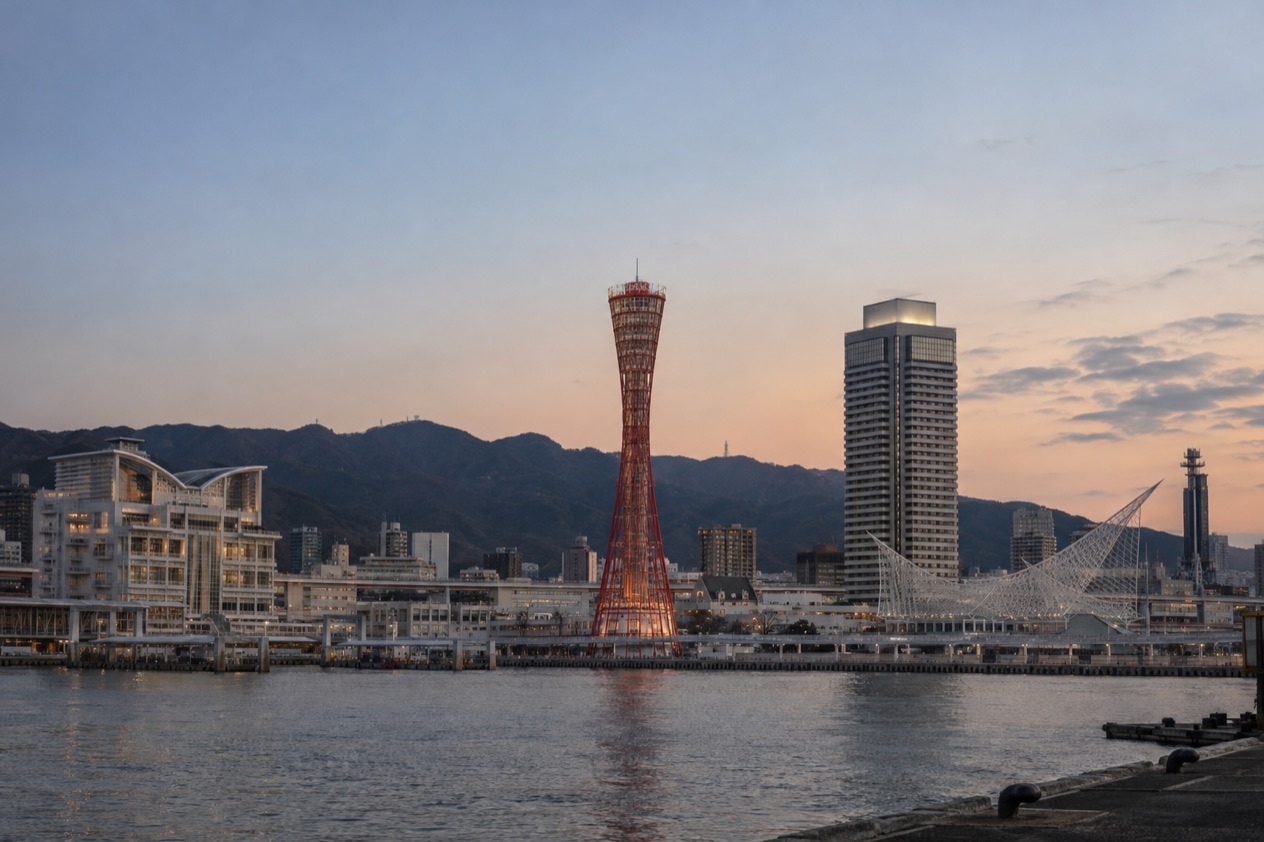
The harbor is where Kobe shows its face as a port city. The waterfront parks, with their red tower and white-roofed pavilions, give wide views over the water, and the winter light makes the bay glitter. For a view from above, the observation deck on the 24th floor of Kobe City Hall looks out over the city and harbor.
| Site | Open |
|---|---|
| Kobe City Hall observation deck (24th floor) | Monday to Friday 08:15-22:00, Saturdays, Sundays and holidays 10:00-22:00 |
Winter food: beef, sake and hot pots
Kobe is known around the world for its beef, and a steak cooked on a hot iron plate in front of you is a natural fit for a cold evening. The meat is rich and tender and is often served in small, careful portions with garlic chips and a dab of mustard. Lunch sets at some restaurants offer a gentler introduction than a full dinner.
Winter is also the season for hot pots, oden stewed in a light broth, and bowls of ramen. Sake is the drink of the season, served warm in small cups, and Kobe’s sake breweries are part of the region’s food culture. An izakaya, a casual Japanese pub, is a good place to try a few small dishes with a cup of warm sake.
Bakeries and sweet shops add to the picture. Kobe has a long tradition of bread, cakes and chocolates from its foreign-trade past, and a box of pastries from a neighborhood bakery is a fine souvenir. In February, chocolate counters get busy ahead of Valentine’s Day, with gift boxes in the windows.
Mountains, hot springs and a day away
The mountains behind the city add a second mood to the trip. Arima Onsen, a hot spring town in the Rokko area, is a classic cold-weather excursion, with baths of rust-colored and clear waters. Soaking in hot water while the air is cold is among the most memorable things to do in Kobe in winter.
Kobe also makes a base for other cities of the region. It is directly connected to Tokyo by the JR Tokaido/Sanyo Shinkansen, arriving at Shin-Kobe Station, and it belongs to the Keihanshin area with Kyoto and Osaka. A day in Osaka or Kyoto fits easily alongside a stay here.
A two-day itinerary for Kobe in February
Day 1 begins in the hillside neighborhood of Kitano, with a slow walk past the ijinkan houses and a coffee or two along the way. The cold makes stepping into the houses a pleasure, so take your time inside. Cold mornings are for indoor rooms and warm drinks, and there is no rush to see everything at once.
Lunch is in Nankinmachi, eating dumplings and buns from the stalls. The afternoon belongs to the waterfront, with the parks and the harbor views as the light turns golden over the bay. Daylight lasts a little under eleven hours in the middle of the month, so the harbor is best enjoyed before dusk.
After dark, go up to the observation deck at Kobe City Hall for the lights of the city and the port, then sit down to a Kobe beef dinner at a teppanyaki counter. If rain or sleet arrives, spend the middle of the day in cafés, bakeries and covered shopping streets instead, and keep the deck for the evening.
Day 2 is for the mountains and the hot springs. Spend the morning heading up toward the Rokko area and Arima Onsen, then wander the narrow lanes of the hot spring town, stopping for snacks and for sweets made to go with tea. A bath in the afternoon is the highlight, especially if the air is cold.
Come back to the city for the evening and look for an izakaya, where small plates and warm sake close the trip. If the weather turns, the baths are the answer, since soaking is as good in rain as in sun. In early February, ask around for a Setsubun ceremony at a local shrine and see the beans fly.
Is Kobe busy in February?
February is a winter month in Kobe, before the cherry blossom season that comes with spring, so the city’s calendar leans on seasonal rituals rather than on big spring events. What you meet is a working port city going about its business, with its own small celebrations along the way.
The main rhythm of the month is Setsubun, with bean-throwing at homes and shrines, and the plum trees that flower through late February. These are quiet, local pleasures, and they give the days a gentle shape without a single dominant event. The cold keeps many outings short and puts the emphasis on cafés, restaurants and baths.
Winter sports tend to draw travelers elsewhere in Japan. The peak of the ski season falls in January and February in Hokkaido and in the high mountains of Nagano, and the Sapporo Snow Festival fills a week in February in a different part of the country. Kobe is a different kind of winter trip, built around food, architecture and warm water.
What to pack for Kobe in February
Pack for cold, mostly dry days with a few wet ones, and for a lot of walking on hilly streets and indoor stops where you will be taking layers on and off.
- A warm coat, because afternoons stay in the low 50s and nights drop close to freezing.
- Layers such as a sweater and a thermal shirt, for stepping in and out of heated rooms.
- A sturdy umbrella, since the wet days bring cold rain and sometimes sleet.
- A scarf and gloves for evenings on the waterfront and the observation deck.
- Comfortable walking shoes for the slopes of Kitano, ideally ones that slip on and off, since shoes come off at the entrance of many houses and ryokan.
- A small towel and a bag for the hot springs, which are the best way to warm up.
Good to know before you go
The observation deck at Kobe City Hall opens later on weekends and holidays than on weekdays. Early February brings Setsubun, a good moment for a shrine visit if you want to see the ritual of throwing beans.
Kobe in February vs January and March
Moving the trip four weeks earlier puts you in January, the coldest of the three months, with slightly drier days and a little less daylight. The plum trees are just starting to flower, and the mood is a little more wintry. Nights are colder, so expect to wear your warmest layers and to lean even more on hot food and baths.
Moving four weeks later puts you in March, noticeably milder and wetter, with longer days and more sunshine. The cherry blossoms are close, with the first bloom at Kobe usually around the end of March and the full bloom in early April. That makes the end of March a different kind of trip, built around the flowers and the warmer air.
Travelers who want cold, clear days, Setsubun and plum trees should stay with February. Those who care most about cherry blossoms and walking outdoors in mild weather should shift toward late March or early April. Anyone who wants the longest evenings of winter and quiet hot spring afternoons will find February a good fit.
Is February a good time to visit Kobe?
Yes, for travelers who like winter, good food and a city with a story to tell, and who are happy to trade warm weather for hot baths and hot pots. Kobe’s mix of hillside houses, a Chinatown, a busy harbor and nearby mountains gives a February trip plenty to do, even on a cold or damp day.
It is less suited to those who want beach weather, long outdoor walks in mild air or the cherry blossoms. For those travelers, March and April make a better choice. If you do come in February, start with the observation deck or a walk through Kitano on your first afternoon, so you get your bearings and a sense of the city’s shape.
What is special about February in Kobe is its small, seasonal moments. A child throws a handful of beans at a paper demon, a plum branch opens beside a shrine path, and a plate of sizzling beef arrives at the counter on a cold night.
Sources
- Japan Meteorological Agency (JMA), Normal values 1991-2020, monthly (https://www.data.jma.go.jp/stats/etrn/view/nml_sfc_ym.php?prec_no=63&block_no=47770), station Kobe, elevation 5 m, checked October 11, 2026
- Computed from the date and the latitude of the place (sunrise equation, solar elevation -0.833 degrees), October 11, 2026
- Wikipedia, Setsubun (https://en.wikipedia.org/wiki/Setsubun), checked October 11, 2026
- Japan National Tourism Organization, festivals and events (https://www.japan.travel/en/see-and-do/festivals-and-events/), checked October 11, 2026
- Sapporo Snow Festival official website (https://www.snowfes.com/english/), checked October 11, 2026
- Wikipedia, Sapporo Snow Festival (https://en.wikipedia.org/wiki/Sapporo_Snow_Festival), checked October 11, 2026
- Japan National Tourism Organization, winter in Japan (https://www.japan.travel/en/guide/winter-guide/), checked October 11, 2026
- Japan National Tourism Organization, skiing and snowboarding in Japan: regions, resorts, seasons (https://www.japan.travel/en/sports/snow/), checked October 11, 2026
- Wikipedia, Climate of Japan (https://en.wikipedia.org/wiki/Climate_of_Japan), checked October 11, 2026
- Japan National Tourism Organization, flowers by season: cherry blossom, plum, wisteria, hydrangea, where and when (https://www.japan.travel/en/see-and-do/flowers/), checked October 11, 2026
- Wikipedia, Prunus mume (https://en.wikipedia.org/wiki/Prunus_mume), checked October 11, 2026
- Japan National Tourism Organization, skiing guide (https://www.japan.travel/en/guide/skiing/), checked October 11, 2026
- Wikipedia, List of ski areas and resorts in Japan (https://en.wikipedia.org/wiki/List_of_ski_areas_and_resorts_in_Japan), checked October 11, 2026
- Japan National Tourism Organization, weather and seasons in Japan (https://www.japan.travel/en/plan/weather/), checked October 11, 2026
- Japan Meteorological Agency, cherry blossom first-bloom dates 2021-2026 and 1991-2020 normal (https://www.data.jma.go.jp/sakura/data/sakura003_07.html), checked October 11, 2026
- Japan Meteorological Agency, cherry blossom full-bloom dates 2021-2026 and 1991-2020 normal (https://www.data.jma.go.jp/sakura/data/sakura004_07.html), checked October 11, 2026
- Visit Kobe, the official travel guide (https://www.feel-kobe.jp/en/), checked October 11, 2026
- Wikipedia, Kobe (https://en.wikipedia.org/wiki/Kobe), checked October 11, 2026
- Wikivoyage, Kobe (https://en.wikivoyage.org/wiki/Kobe), checked October 11, 2026
- Japan National Tourism Organization, Kobe (https://www.japan.travel/en/destinations/kansai/hyogo/kobe-and-around/), checked October 11, 2026
To plan your stay
- Things to Do in Kobe: Kobe Beef, Kitano's Foreign Houses, Arima Onsen and Harbor Night Views
- Where to Stay in Kobe: Shin-Kobe, the City Center, Harborland and Arima Onsen
- Kobe from Osaka: Trains, Two Stations, the Bus and a Day at the Harbor
- Kobe vs Osaka: Beef, Dotonbori Nights, Getting Around and Weather