
In September the harbor at Kobe still carries the weight of summer. Warm air hangs over the waterfront, insects start up in the hills, and teppanyaki grills send the smell of searing beef out into the street.
The city sits between the bay and the Mount Rokko range, and this month it trades the full glare of August for a softer, wetter, more changeable air. It suits travelers who want food, harbor walks and a bit of hill country without the hardest heat of the year.
What is the weather like in Kobe in September?
September in Kobe is still warm and humid, though the grip of August begins to loosen. It is also the wettest of the three months in the table, so rain gear belongs in the bag.
| Month | Average high (°F) | Average low (°F) | Precipitation (in) | Days with 1 mm or more of precipitation | Hours of sunshine | Daylight on the 15th |
|---|---|---|---|---|---|---|
| August | 90.0 | 79.0 | 4.07 | 6.5 | 230 | 13 h 30 min |
| September | 83.8 | 72.7 | 6.19 | 9.3 | 164 | 12 h 27 min |
| October | 73.8 | 62.1 | 4.65 | 7.8 | 170 | 11 h 22 min |
Afternoons are warm enough for short sleeves and a sweaty shirt by the time you reach a hilltop, and nights stay mild, so you can eat outdoors or stroll the waterfront after dinner without a jacket. Humidity stays noticeable, which means a damp feeling on the skin even when the sky is gray. Light cotton or quick-drying fabrics are more comfortable than denim.
Rain in September tends to come as showers and some longer gray spells, with a good share of the month still bright. A compact umbrella earns its place, and a thin rain jacket is useful when you head up into the hills. Sunshine is noticeably less abundant than in August, so the light feels a little softer and the days close in earlier.
What to do in Kobe in September
September in Kobe is a month for eating well, walking the harbor in the evening and slipping into the hills when the sky allows. No single festival defines it, which leaves the city’s year-round pleasures in the foreground: beef, bread and coffee, foreign-style houses, and a port that has faced the sea for generations. Kobe is the capital of Hyogo Prefecture and sits across the bay from Osaka, so it also works well as a base for a calmer stay in the Kansai region.
The weather shapes the rhythm. Warm and sticky hours suit indoor stops, shaded streets and long lunches, while evenings are for the waterfront. When a showery spell sets in, the city has plenty to offer under a roof.
Kobe beef at the table
Kobe beef is the reason travelers come, and it is served in several styles: as steak, in sukiyaki, in shabu-shabu, as sashimi and on the teppanyaki griddle. The beef comes from Japanese Black cattle, the breed behind most Wagyu in Japan, known for its fine marbling that melts as it cooks.
In warm, humid weather a lighter format can feel right. Shabu-shabu, where thin slices are swished through hot broth, and sashimi-style preparations are lighter than a heavy sukiyaki pot, though the choice is yours. A teppanyaki counter is also a show, with the chef working the griddle in front of you, and it makes a fine finish to a day of walking.
Pair the meal with a cold local drink. The sake breweries of the Nada area are part of Kobe’s food story, and a cup of cold sake sits well beside beef. Beyond beef, the city is also known for its bakeries and coffee shops, which give you something quick and cool between sights.
Kitano and Nankinmachi
Kitano is where Kobe shows its port past. Western-style houses called ijinkan, built for foreign residents, line the slopes above the center, and some can be entered as small museums. Climbing the lanes in warm, damp weather is slow work, so move at an unhurried pace and use the interiors as places to cool off.
Nankinmachi, Kobe’s Chinatown, is a short sequence of streets filled with steamed buns, dumplings, skewers and sweets eaten on the spot. It rewards a loose, grazing kind of afternoon, a bun here and a tea there, and the covered stretches of nearby shopping streets give you somewhere to go when showers pass over.
The harbor at Meriken Park and Harborland
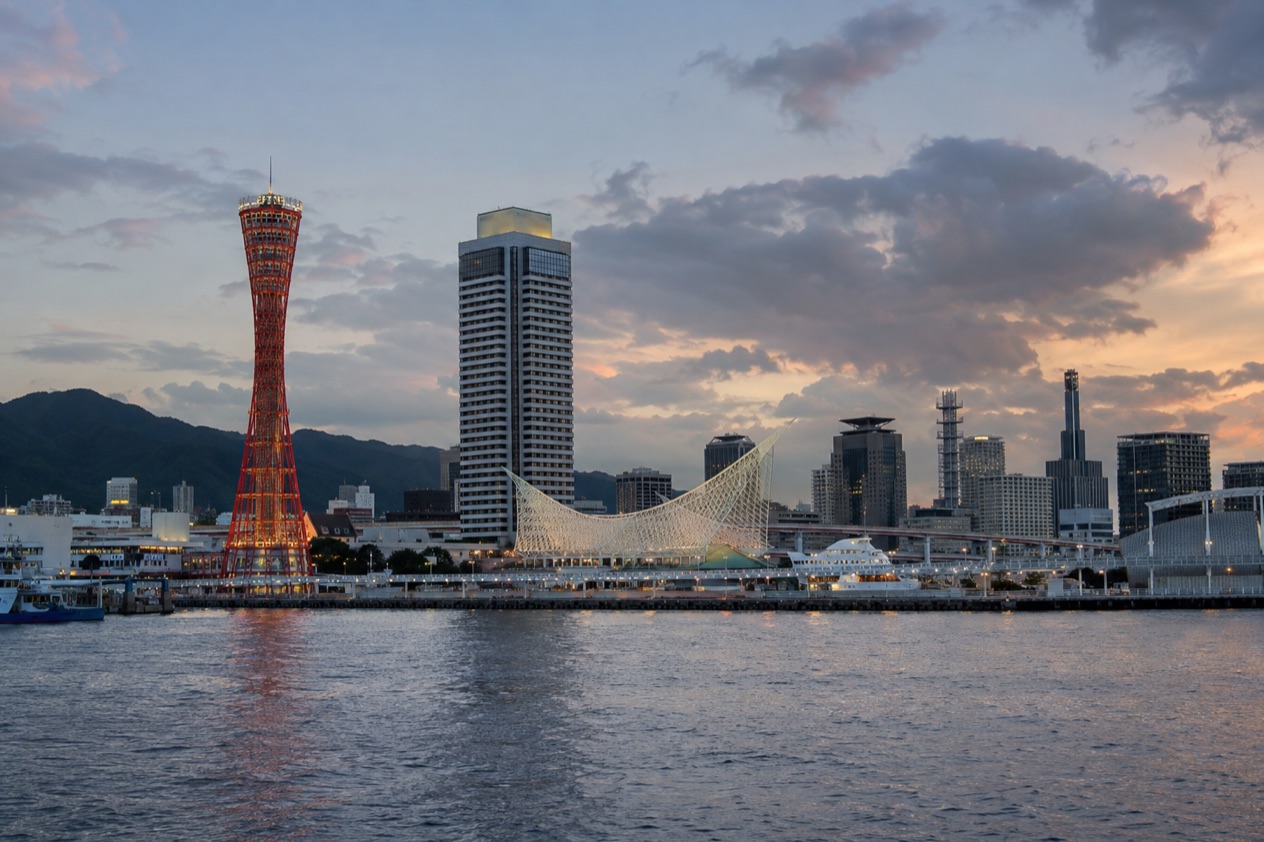
The waterfront is where September evenings belong. Meriken Park opens onto the bay, and the lights of the port come on across the water as the day closes. In a month when nights stay warm, you can walk without a coat and sit by the water with a drink.
Harborland, the shopping and dining district beside it, gives you a fallback in showery weather, with restaurants and shops under roofs. Between the two you can fill an evening with a walk, a meal and a slow return along the waterfront.
Up into the Rokko hills
Mount Rokko is a range in southeastern Hyogo Prefecture, and it stands right behind the city. A trip into the hills is a way out of the sticky air of the waterfront, and the green of September is fully in leaf. Maple color in this region is months away, as the Kinki region usually sees leaves turn from early to mid December.
Bring a light rain jacket and sturdy shoes, since showers are frequent this month. Arima, a hot spring town in Kobe’s hills, is a natural pairing for a damp day, with its baths and small streets. Choose a bright spell for hill time and keep the hot spring for the gray one. For a view that needs no climbing, Kobe City Hall has an observation deck on its 24th floor.
| Site | Open |
|---|---|
| Kobe City Hall observation deck (24th floor) | Monday to Friday 08:15-22:00. Saturdays, Sundays and holidays 10:00-22:00 |
A two-day itinerary for Kobe in September
Day 1 is for the old port quarter. Start in Kitano and look through the ijinkan while the legs are fresh, then drift downhill to Nankinmachi for a lunch of dumplings and buns. The order keeps the climbing before the warmest part of the day, with food and indoor stops once the air is heavy.
After lunch, wander the covered shopping streets and stop for coffee and a pastry in one of the city’s cafés. Toward evening walk to the waterfront at Meriken Park, then eat in Harborland. Dinner can be a Kobe beef meal at a teppanyaki counter. If rain comes, spend the afternoon indoors in the shops and cafés, and use the City Hall deck at night.
Day 2 turns to the hills. Go up into the Mount Rokko range on a drier spell and pick a trail or a lookout, with a rain jacket in your bag. Then settle into Arima for a hot spring bath and a slow lunch, which makes a restful second half of the day.
Return to the center for a last evening around Sannomiya, with an izakaya meal of small plates and cold drinks. In a wet spell, swap the trail for the baths and a visit to a sake brewery in Nada.
Is Kobe busy in September?
September is not a season that Kobe is known for in the way spring blossoms or autumn leaves are, and that tends to set a calmer tone. Cherry blossoms are long gone, and maple color in the Kinki region is still months off, so there is no seasonal draw pulling people to the city’s gardens and hills.
What remains is the everyday life of a large port city. Business and weekend visitors still arrive, since Kobe is linked to Tokyo directly by the Tokaido/Sanyo Shinkansen to Shin-Kobe Station. Restaurants and the waterfront run at their usual pace.
The mood in the streets is that of a city between seasons. The worst of August is over, evenings stay warm enough for terraces and the harbor, and the cooler months are on the way. It is a pleasant time for visitors who prefer to follow their own rhythm over a festival calendar.
What to pack for Kobe in September
Pack for warm, humid days with a real chance of rain, and for walks that include hills and waterfront.
- Light, quick-drying shirts and shorts or trousers, because the air stays humid and the slopes of Kitano make you sweat.
- A compact umbrella, since showers come often this month.
- A thin rain jacket for the Rokko hills, where an umbrella is awkward on a trail.
- Comfortable walking shoes that dry quickly, for hills and wet pavement.
- A light layer for air-conditioned restaurants and trains in the evening.
- A small towel or handkerchief for the walk up through the ijinkan streets.
Good to know before you go
September is a changeable month, with more rain than August and a good number of damp days. Make plans for the hills and the harbor flexible, and keep an indoor choice ready each day. The observation deck at Kobe City Hall opens later on weekends and holidays, so a Saturday or Sunday visit starts at ten.
If the weather turns severe, the Japan Meteorological Agency issues Emergency Warnings for natural phenomena of extraordinary magnitude. Keep an eye on official forecasts when the sky looks unsettled.
Kobe in September vs August and October
Moving the trip four weeks earlier puts you in August, when the heat is stronger, the nights are warmer and the sun shines for many more hours. It also brings long daylight and a drier month, though the hot, sticky air makes hill walking and long strolls harder work. Travelers who care most about bright days and the longest evenings might lean that way.
Moving four weeks later puts you in October, when temperatures drop noticeably and the evenings feel crisp, in line with how autumn in Japan gradually grows milder and suits walking. Daylight is shorter, but days are clearer than in September and the hill trips feel less sticky. Maple color in the Kinki region still waits until December.
September sits in the middle. It suits those who want warm evenings on the waterfront, and who are happy to build days around some rain. Choose October for cooler walking weather and August for the strongest summer light.
Is September a good time to visit Kobe?
Yes, for travelers who care more about food and harbor evenings than about a seasonal spectacle. September rewards people who like warm nights, long meals, hot spring baths and changeable skies, and who are happy to rearrange a day around a shower.
It is a weaker fit for anyone set on bright sunshine for every hour, or on blossoms and leaf color. Those travelers will find a better match in other months.
On arrival, drop your bags and head for the waterfront at Meriken Park to get your bearings, then choose the first dinner, whether Kobe beef on a teppanyaki griddle or a plate of dumplings in Nankinmachi.
Sources
- Japan Meteorological Agency (JMA), Normal values 1991-2020, monthly (https://www.data.jma.go.jp/stats/etrn/view/nml_sfc_ym.php?prec_no=63&block_no=47770), station Kobe, elevation 5 m, checked October 11, 2026
- Computed from the date and the latitude of the place (sunrise equation, solar elevation -0.833 degrees), October 11, 2026
- Japan Meteorological Agency, Emergency Warnings (https://www.jma.go.jp/jma/en/Emergency_Warning/ew_index.html), checked October 11, 2026
- Japan National Tourism Organization, safety information (https://www.japan.travel/en/japan-safe-travel-information/), checked October 11, 2026
- Japan National Tourism Organization, weather and seasons in Japan (https://www.japan.travel/en/plan/weather/), checked October 11, 2026
- Japan National Tourism Organization, summer in Japan (https://www.japan.travel/en/guide/summer-guide/), checked October 11, 2026
- Wikipedia, Climate of Japan (https://en.wikipedia.org/wiki/Climate_of_Japan), checked October 11, 2026
- Japan Meteorological Agency, maple color-change dates 2025-2026 with difference from the 1991-2020 normal (https://www.data.jma.go.jp/sakura/data/phn_014.html), checked October 11, 2026
- Japan Meteorological Agency, kaede2020.pdf (https://www.data.jma.go.jp/sakura/data/kaede2020.pdf), checked October 11, 2026
- Japan National Tourism Organization, autumn in Japan (https://www.japan.travel/en/guide/autumn-guide/), checked October 11, 2026
- Japan National Tourism Organization, spring in Japan (https://www.japan.travel/en/guide/spring-guide/), checked October 11, 2026
- Japan National Tourism Organization, Kobe (https://www.japan.travel/en/destinations/kansai/hyogo/kobe-and-around/), checked October 11, 2026
- Visit Kobe, the official travel guide (https://www.feel-kobe.jp/en/), checked October 11, 2026
- Wikipedia, Kobe (https://en.wikipedia.org/wiki/Kobe), checked October 11, 2026
- Wikivoyage, Kobe (https://en.wikivoyage.org/wiki/Kobe), checked October 11, 2026
- Wikipedia, Wagyu (https://en.wikipedia.org/wiki/Wagyu), checked October 11, 2026
- Wikipedia, Mount Rokkō (https://en.wikipedia.org/wiki/Mount_Rokk%C5%8D), checked October 11, 2026
To plan your stay
- Things to Do in Kobe: Kobe Beef, Kitano's Foreign Houses, Arima Onsen and Harbor Night Views
- Where to Stay in Kobe: Shin-Kobe, the City Center, Harborland and Arima Onsen
- Kobe from Osaka: Trains, Two Stations, the Bus and a Day at the Harbor
- Kobe vs Osaka: Beef, Dotonbori Nights, Getting Around and Weather