
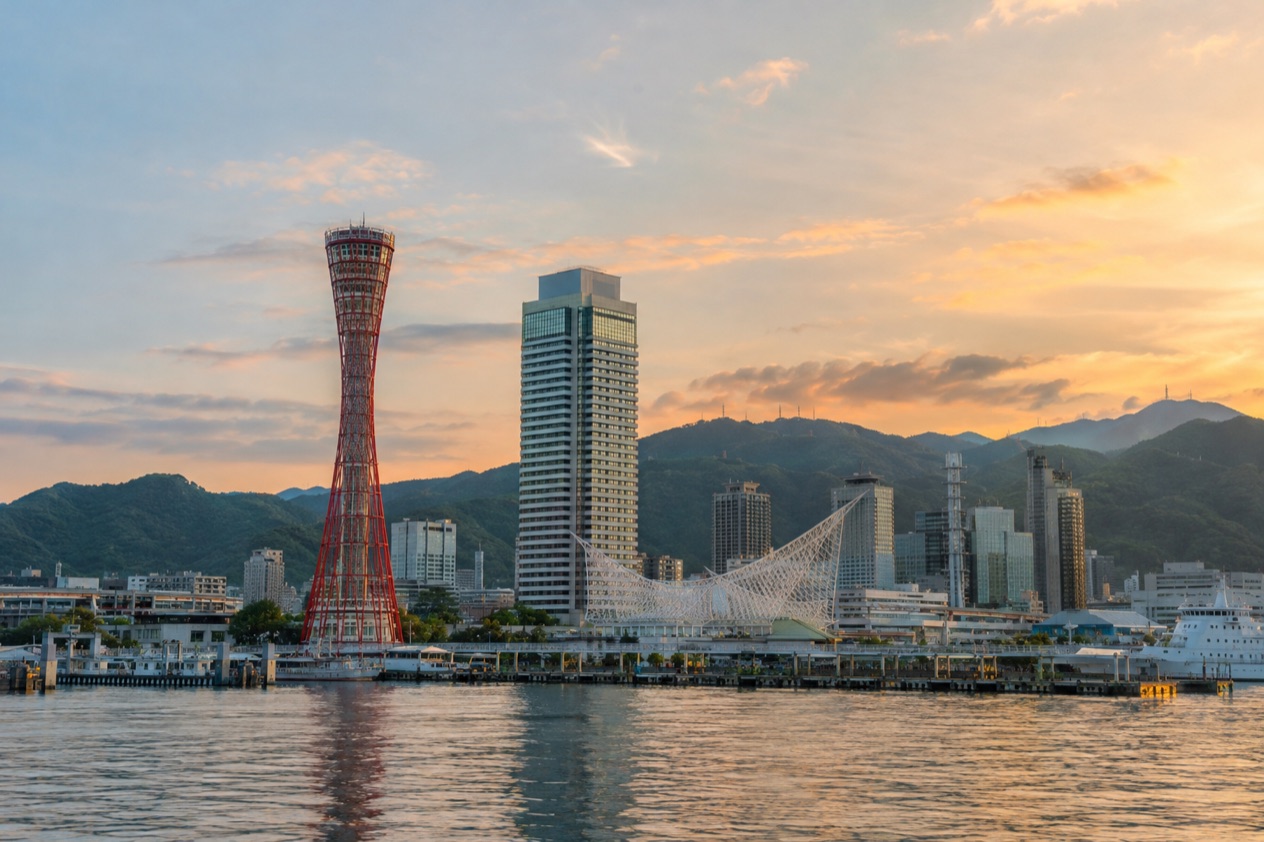
In July, Kobe’s evenings have a damp warmth that clings to the harbor, and cicadas keep up a steady rasp from the trees on the hillsides. Ships and the bright red Port Tower glow over the water, while café terraces and beef restaurants fill after dark. It is a hot, sultry month for travelers who like a port city with a mountain behind it, good food, and a slow pace in the middle of the day.
What is the weather like in Kobe in July?
July in Kobe is hot, humid and often overcast, with warm nights that bring little relief. It sits between a gray, showery June and a hotter, brighter August.
| Month | Average high (°F) | Average low (°F) | Precipitation (in) | Days with 1 mm or more of precipitation | Hours of sunshine | Daylight on the 15th |
|---|---|---|---|---|---|---|
| June | 80.1 | 69.1 | 6.96 | 10.7 | 164 | 14 h 28 min |
| July | 86.7 | 76.5 | 7.40 | 10.0 | 189 | 14 h 17 min |
| August | 90.0 | 79.0 | 4.07 | 6.5 | 230 | 13 h 30 min |
Afternoons reach the upper 80s, and lows stay in the mid-70s, so nights are warm enough that you will not need a layer outdoors. Humidity sits around 74 percent, which makes the air feel heavier than the thermometer suggests. Honshu summers are described as hot and sultry, and Kobe in July fits that description.
Rain falls on about one day in three, and July is the wettest of the three months in total. Bring a compact umbrella or a light rain jacket that breathes, since a heavy waterproof will feel like a sauna. Between the wet days there is a good amount of sun, so sunglasses and a hat belong in the bag as well.
Daylight stretches past fourteen hours, which leaves long evenings for the waterfront. Light cotton or linen, quick-drying fabrics and comfortable sandals or sneakers that can get wet suit the month. Indoor spaces cool things down, so a thin cardigan can be useful for museums and restaurants.
What to do in Kobe in July
July in Kobe is a month for harbor evenings, hillside districts, beef dinners and rainy-day museums. Kobe is the capital of Hyogo Prefecture, a port city of around 1.5 million people, and it sits across the bay from Osaka. It is part of the Keihanshin area with Kyoto and Osaka, so July’s biggest festival in the region is close in spirit even if it is held elsewhere.
That festival is the Gion Matsuri in Kyoto, which runs through the month and is best known for its two Yamaboko Junko processions of floats, held on July 17 and July 24. Travelers based in Kobe often build a day around it. In Kobe itself, July is less about a single event and more about the rhythm of a hot port city, with open-air evenings and cold drinks after sundown.
Kitano and the old foreign residences
Kitano is the hillside district where Western merchants built their houses after the port opened, and the ijinkan (foreigners’ houses) still stand among the slopes. Each one has its own character, with wooden verandas, bay windows and gardens that look quite unlike the rest of Japan. Moving between them means going up and down streets, so July’s humidity makes it a slow, shaded stroll with stops.
Many of the houses are small museums or have cafés tucked into them, which gives you places to sit out of the sun. Cold desserts and iced coffee suit the month. It is a good choice when the sky is overcast but the rain holds off, since much of the pleasure is in the views toward the harbor between the buildings.
The harbor, Meriken Park and Chinatown
The waterfront is where Kobe feels most like itself. Meriken Park holds the Port Tower and open lawns beside the water, and the Harborland area behind it has shops and restaurants whose lights come on as the long summer dusk fades. Walking the quay at the end of the day, with the water breeze and the ships’ lights, is the most natural way to spend a July evening here.
Nankinmachi, Kobe’s Chinatown, is a compact grid of food stalls, steamed buns, dumplings and noodles, good for a casual lunch or a snack on the go. Cold noodles and chilled drinks suit a humid day. The streets are lively with the smell of fried and steamed food, so it is a fun stop between the waterfront and the shopping streets.
Kobe beef, sake and summer food
Kobe beef is the reason people come to the city. It can be served as steak, sukiyaki, shabu-shabu, sashimi or teppanyaki, so you can choose between a sizzling iron griddle and a simmering pot. It comes from Japanese Black cattle, the breed behind most of the highly marbled wagyu in Japan. In July, shabu-shabu is lighter than it sounds, and a teppanyaki counter lets you watch the chef work.
Outside the beef restaurants, the season suits cold soba and somen noodles, shaved ice, and chilled sake or beer. Sake breweries in the Nada area are another reason to plan a tasting.
For a break from the city, Mount Rokko is a range of mountains in southeastern Hyogo Prefecture, rising behind Kobe, and its slopes give the city its backdrop of green hills. The Kobe City Hall observation deck gives a free overview of the port and the hills without needing a clear day to enjoy it.
| Site | Open |
|---|---|
| Kobe City Hall observation deck (24th floor) | Monday to Friday 08:15-22:00, Saturdays, Sundays and holidays 10:00-22:00 |
A two-day itinerary for Kobe in July
Day 1 starts in the hillside district of Kitano, where you can visit one or two of the old foreign houses before the day grows heavy. Move on to Nankinmachi for lunch, with steamed buns and noodles, then take the afternoon at a café or museum so you are out of the sun during the hottest hours. By late afternoon you can walk to Meriken Park and Harborland.
With daylight lasting more than fourteen hours, the waterfront has a long, slow dusk, and you can wait for the lights to come on. Dinner is a Kobe beef meal, either teppanyaki at the counter or shabu-shabu. If the rain arrives, spend the afternoon indoors in a shopping arcade, a bakery or a museum, and keep the harbor for the evening when it clears.
Day 2 gives you a choice. You can go up to the observation deck at Kobe City Hall for a first view of the city, then spend the morning in the Mount Rokko area, where the greenery gives a change from the port. A lunch of cold noodles or a light set meal fits the weather.
In the afternoon, tour a sake brewery in the Nada area or settle into a café for pastries. Alternatively, take a day trip toward Kyoto for the Gion Matsuri processions on July 17 or 24 if your dates match. Come back for a last evening of izakaya (casual pub) dishes and cold beer. For rain, spend the day among Kobe’s covered shopping streets and indoor attractions.
Is Kobe busy in July?
July in Kobe is a month with plenty of life but without one dominant event, so the pace is that of a working port city in summer. The rainy and humid weather gives the days a slower rhythm, particularly in the middle of the day when people retreat indoors.
Kobe is Japan’s seventh-largest city by population and one of its major ports, so there is always activity at the harbor, in the shopping streets and in the restaurants. The big July festival in the region, the Gion Matsuri, is held in Kyoto, and it draws attention in the area around the processions on July 17 and 24. Kobe itself does not depend on a single festival for its energy.
What July changes is the way people use the city. Outdoor attractions such as the hillside streets are visited with more breaks, while air-conditioned places, cafés and covered arcades feel busier in the afternoon heat. Evenings, when the air softens a little, bring people to the waterfront and to restaurants.
What to pack for Kobe in July
Pack for heat, humidity and the chance of rain, and expect to be walking uphill in Kitano and along the harbor. Light, breathable clothes will matter more than anything else.
- Lightweight cotton or linen clothing, because the air stays humid even in the evening.
- A compact umbrella or thin rain jacket for the wet days.
- Comfortable walking shoes or sandals that dry quickly, for the slopes of Kitano and the waterfront.
- A hat and sunglasses for the sunny stretches between showers.
- A thin cardigan or scarf for cold air-conditioning in restaurants and museums.
- A small towel or handkerchief to wipe off sweat.
Good to know before you go
July is a sultry month in Kobe, and the combination of heat and damp air makes the middle of the day tiring. Plan outdoor visits with pauses in cafés or museums. On Saturdays, Sundays and holidays, the Kobe City Hall observation deck opens at 10:00 rather than 08:15, which matters if you plan a morning visit.
Kobe in July vs June and August
June is cooler, with highs in the low 80s, but it is also grayer, with fewer hours of sun and a few more rainy days. If you prefer less heat and do not mind overcast skies, June is gentler on the legs for the hillside walks.
August is hotter, with highs around 90 degrees, and it is the sunniest of the three months. It also has the least rain, which means more days when the harbor evenings stay clear, but the heat is stronger on the slopes of Kitano and in the midday streets.
July sits between the two, with rain and humidity but also real sunshine. Choose June if you want milder temperatures, August if you want the driest and sunniest days and can handle the heat, and July if the Gion Matsuri dates fit your plans.
Is July a good time to visit Kobe?
Yes, for travelers who enjoy a hot, humid port city and plan their days around the weather. July suits people who like harbor evenings, indoor cafés and a big beef dinner more than long hikes under the sun.
It is less suited to anyone who dislikes humidity or wants to spend the day walking outdoors, since the damp heat makes that tiring. If that describes you, another month will treat you better. On arrival, start with the observation deck at City Hall to see the layout of the port and the hills, then plan your days around where the rain clouds are.
What stands out about Kobe in July is the combination of the harbor lights, the cicadas on the hillsides and a plate of Kobe beef after a warm day. The long dusk over the water ends the day.
Sources
- Japan Meteorological Agency (JMA), Normal values 1991-2020, monthly (https://www.data.jma.go.jp/stats/etrn/view/nml_sfc_ym.php?prec_no=63&block_no=47770), station Kobe, elevation 5 m, checked October 11, 2026
- Computed from the date and the latitude of the place (sunrise equation, solar elevation -0.833 degrees), October 11, 2026
- Japan National Tourism Organization, weather and seasons in Japan (https://www.japan.travel/en/plan/weather/), checked October 11, 2026
- Wikipedia, Climate of Japan (https://en.wikipedia.org/wiki/Climate_of_Japan), checked October 11, 2026
- Japan National Tourism Organization, summer in Japan (https://www.japan.travel/en/guide/summer-guide/), checked October 11, 2026
- Japan National Tourism Organization, festivals and events (https://www.japan.travel/en/see-and-do/festivals-and-events/), checked October 11, 2026
- Wikipedia, Hanabi (https://en.wikipedia.org/wiki/Hanabi), checked October 11, 2026
- Wikipedia, Gion Matsuri (https://en.wikipedia.org/wiki/Gion_Matsuri), checked October 11, 2026
- Japan National Tourism Organization, Mount Fuji guide (https://www.japan.travel/en/fuji-guide/), checked October 11, 2026
- Official website for Mt. Fuji climbing, about the climb (https://www.fujisan-climb.jp/en/about/), checked October 11, 2026
- Wikipedia, Tanabata (https://en.wikipedia.org/wiki/Tanabata), checked October 11, 2026
- Wikipedia, Kobe (https://en.wikipedia.org/wiki/Kobe), checked October 11, 2026
- Wikivoyage, Kobe (https://en.wikivoyage.org/wiki/Kobe), checked October 11, 2026
- Japan National Tourism Organization, Kobe (https://www.japan.travel/en/destinations/kansai/hyogo/kobe-and-around/), checked October 11, 2026
- Visit Kobe, the official travel guide (https://www.feel-kobe.jp/en/), checked October 11, 2026
- Wikipedia, Wagyu (https://en.wikipedia.org/wiki/Wagyu), checked October 11, 2026
- Wikipedia, Mount Rokkō (https://en.wikipedia.org/wiki/Mount_Rokk%C5%8D), checked October 11, 2026
To plan your stay
- Things to Do in Kobe: Kobe Beef, Kitano's Foreign Houses, Arima Onsen and Harbor Night Views
- Where to Stay in Kobe: Shin-Kobe, the City Center, Harborland and Arima Onsen
- Kobe from Osaka: Trains, Two Stations, the Bus and a Day at the Harbor
- Kobe vs Osaka: Beef, Dotonbori Nights, Getting Around and Weather