
Somewhere between a photo of pink petals over a Fukuoka park, a night of fireworks in Niigata and a red maple garden in Tokyo, most trips to Japan start to wobble on one question: when to go. The country has four distinct seasons, and each one has its own festivals, flowers, food and clothing. Because Japan runs from Hokkaido down to subtropical Okinawa, the seasons also arrive at different times depending on where you stand.
What are the four seasons like in Japan?
Japan has four clearly marked seasons, and each has a signature: cherry blossoms in spring, humid heat and fireworks in summer, red and gold leaves in autumn, and snow in the mountains and the north in winter. Most of the calendar of festivals, gardens and outdoor plans follows that rhythm, so it helps to know what each season feels like before you pick dates.
Spring: blossoms, wisteria and a light jacket
Spring is the season of cherry blossoms, which bloom from south to north between March and May depending on where you are. In southern Kyushu the first flowers appear around late March, and the wave then moves gradually northward, reaching Honshu and Hokkaido in April. In Fukuoka, late March to early April is the moment to walk through Nishi Park, Shiranoe Botanical Gardens or Katsuyama Park under the trees.
The blossoms release a lot of pollen, and people react to it, which is worth remembering if you are prone to allergies. Wisteria follows the cherry trees, and the display at Ashikaga Flower Park in Tochigi Prefecture is counted among the most beautiful spring flower scenes in Japan.
The end of April brings Golden Week, a string of consecutive public holidays when much of the country goes on vacation, so visitors should plan around its peak days. In mid-April the Tateyama Kurobe Alpine Route opens, crossing Mount Tateyama and Mount Akazawa-dake in Toyama and Nagano prefectures.
Summer: humid heat, mountains and matsuri
On Honshu and Kyushu, summers are hot, very humid and sultry, which shapes the day: plans revolve around water, mountains and evenings out. Mount Fuji’s climbing season runs from the beginning of July to about the first week of September. In Yamanashi Prefecture you can try kayaking and rafting in the mountains, and windsurfing is possible on the beaches near Tokyo in Kanagawa Prefecture.
The Nebuta Matsuri in Aomori runs from August 2 and ends on August 7 with fireworks, while the Nagaoka Matsuri in Niigata Prefecture takes place in the first week of August. The Tenjin Matsuri in Osaka is considered one of Japan’s three greatest festivals, alongside Tokyo’s Kanda Matsuri and Kyoto’s Gion Matsuri.
Autumn: mild days and a slow wave of color
Japan grows gradually milder after summer, and autumn temperatures are moderate and well suited to walking. Honshu and Kyushu enjoy pleasant weather in October and November, while on Hokkaido a coat is comfortable for much of the season. The foliage moves from Hokkaido toward the south between late September and early December, and from mid-November to early December the trees show red, yellow and orange.
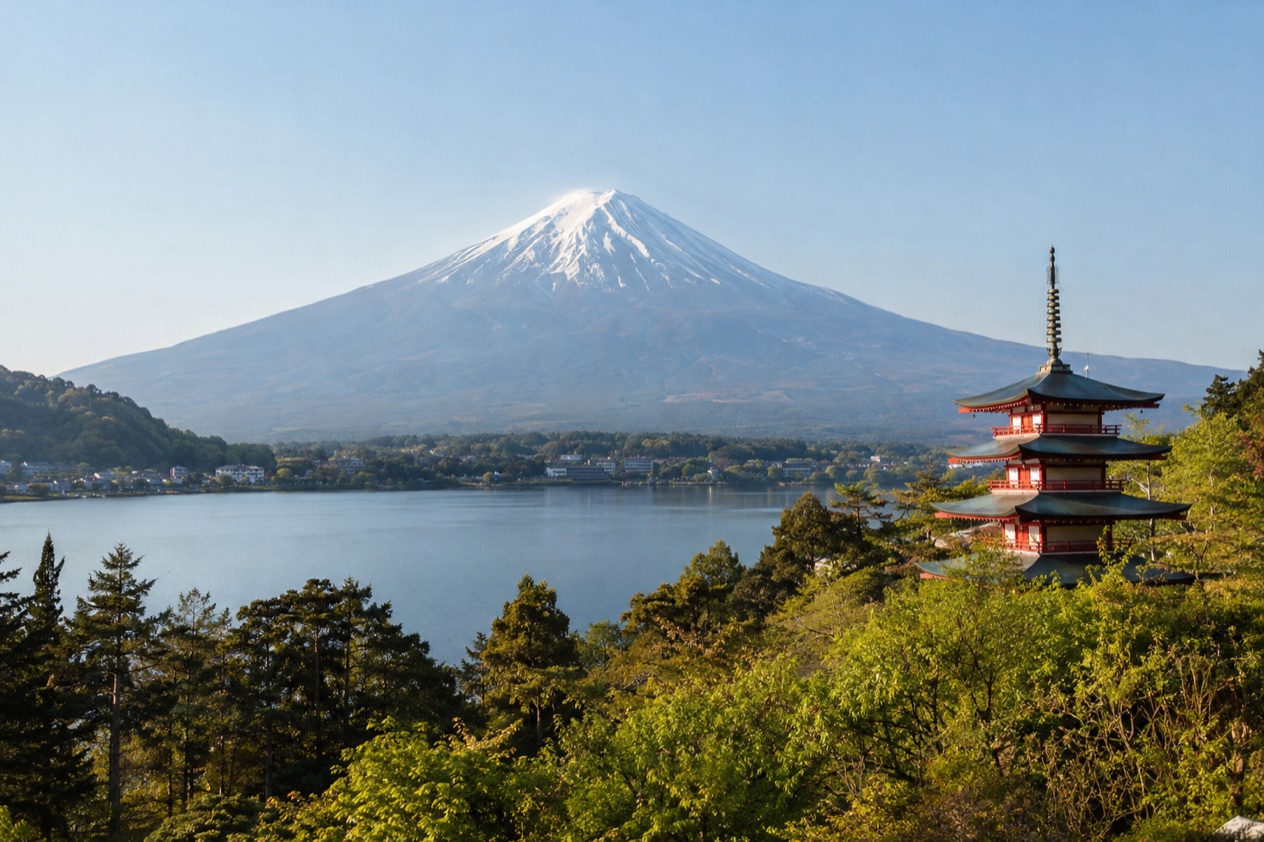
Gardens and temples set the stage. In Tokyo, Rikugien is a traditional Japanese garden radiant in autumn, and in Kyoto, Kiyomizudera Temple offers stunning landscapes. At Lake Kawaguchiko at the foot of Mount Fuji, a night by the lake lets you see the mountain reflected on calm water, framed by purple trees. Autumn also brings the harvest festival Nagasaki Kunchi, created in 1634, in early October.
Winter: snow in the north, shrines on New Year’s Day
In winter, heavy snow regularly covers the mountains and northern regions, though most major cities rarely see any. Ski areas near Tokyo and in Hokkaido draw winter travelers, and the mood in the cities turns to shrine visits. On January 1, many Japanese people go to a temple or shrine to pray for good luck and prosperity, a ritual called hatsumode.
In Kyoto, the official New Year ceremony at Heian-jingu takes place at 6 a.m. on January 1. In Tokyo, Meiji-jingu is one of the best destinations for hatsumode, with forest paths leading to the main building. At Sumiyoshi Taisha in Osaka, more than two million visitors welcome the new year. In early February the Sapporo Snow Festival fills the city with snow and ice sculptures.
| Event | Where | When |
|---|---|---|
| Nagasaki Kunchi | Nagasaki | Early October |
| Jidai Matsuri | Kyoto | Later in October |
| Kobe Marathon | Kobe | Mid-November |
| Rikugien illuminations | Tokyo | Mid-November to early December |
| Hatsumode | Shrines and temples across Japan | January 1 |
| Sapporo Snow Festival | Sapporo | First week of February |
| Tateyama Kurobe Alpine Route opens | Toyama and Nagano prefectures | Mid-April |
| Mount Fuji climbing season | Mount Fuji | Beginning of July to about the first week of September |
| Nagaoka Matsuri | Niigata Prefecture | First week of August |
| Nebuta Matsuri | Aomori | August 2 to August 7 |
How do they differ across the country?
They differ a great deal, because Japan stretches from Hokkaido, near Russia, to the subtropical region of Okinawa, and it is shaped by mountains that cut the country into very different climates. Dense forests and mountainous terrain cover 70% of the territory, backed by the Japan Alps across central Honshu. Japan has six principal climatic zones, so the same week can feel like three different seasons.
Hokkaido and the Sea of Japan coast: long winters
Hokkaido has a humid continental climate with long, very cold winters, and areas such as Sapporo and Asahikawa receive snowfall measured in hundreds of inches. It is also the one major region without a rainy season.
Part of Hokkaido, the Okhotsk Subprefecture, receives as little as 30 inches of precipitation per year. Autumn color starts here before it reaches the rest of the country, and the coat that is comfortable on Hokkaido in fall is not needed in the same way further south.
On the Sea of Japan coast, the northwest seasonal wind in winter brings heavy snowfall. South of Tohoku most of it melts before spring begins. That is why the mountains and northern regions are white in winter while cities like Tokyo mostly are not.
For skiing, Niseko has four interconnected resorts and sits a two-hour drive from New Chitose Airport, with Rusutsu just over 30 minutes by car from Niseko. Nagano and the Hakuba Valley are the ski names to know on Honshu.
Central Honshu, Kansai and the Seto Inland Sea
The Central Highland has a typical inland climate with large temperature swings between summer and winter and between day and night. That matters if you plan a trip through the Japan Alps, where a warm afternoon can give way to a cold evening. In the Kansai region (Osaka, Kyoto, Nara and Kobe), winter visitors can take a day trip to Biwako Valley in the mountains around Lake Biwa.
The Seto Inland Sea area is milder, with many fine days throughout the year, because mountains in the Chugoku and Shikoku regions block the seasonal winds. Blossoms and leaves are the clearest way to read the differences between regions. Cherry blossoms arrive first in the south, then move to Honshu and Hokkaido, while autumn color travels in the opposite direction, from the north toward the south.
Okinawa and the far islands: warm all year
The Ryukyu Islands have a humid subtropical climate in the north and a tropical rainforest climate in the south, with warm winters and hot summers. Precipitation is very high and shaped by the rainy season and typhoons.
Surfing and diving are not limited to the far south. Japan is also on the Pacific Ring of Fire, with more than 100 active volcanoes, which is part of why the landscape of mountains and hot springs shapes so many seasonal trips.
Which season suits you?
The right season depends on what you most want to see, so start from the picture in your head: pink petals, a summer fireworks night, red maples or a snow-covered shrine. Each of the four has a clear draw, and each comes with one thing to plan around.
For blossoms and gardens: spring
If cherry blossoms are the goal, spring is the answer, and the timing depends on the city. The flowers bloom from south to north between March and May, beginning in southern Kyushu around late March and reaching Honshu and Hokkaido in April. A light jacket covers most days. The cost of the season is pollen, which causes many allergic reactions, and Golden Week at the end of April, when the country takes its vacation.
Spring also suits people who like to follow a flower from place to place. Wisteria at Ashikaga Flower Park follows the cherry trees, and the Tateyama Kurobe Alpine Route opens from mid-April for those who want to cross the mountains.
For festivals and the outdoors: summer
Summer is for people who like matsuri, mountains and water, and who can handle heat. Fireworks light the sky at the Nagaoka Matsuri, which features about 20,000 in a typical year, and at the close of the Nebuta Matsuri in Aomori.
The trade-off is the weather. Honshu and Kyushu are very humid, hot and sultry, and August and September fall inside the typhoon season. Summer fits travelers who plan around the festival dates and accept the heat.
For walking, color and lights: autumn
Early October brings Nagasaki Kunchi, later in the month Kyoto holds the Jidai Matsuri, and in mid-November the Kobe Marathon welcomes nearly 20,000 runners and more than 600,000 supporters and spectators. From mid-November to early December Rikugien in Tokyo holds its illuminations.
On Kyushu, the Kingdom of Light at Huis Ten Bosch, a theme park recreating the Netherlands, offers a spectacular illumination, with seasonal illuminations available throughout the year. If you want to see Mount Fuji mirrored in a lake framed by purple trees, a night at Lake Kawaguchiko is the way to do it.
For snow and New Year traditions: winter
Winter fits skiers and anyone drawn to the New Year rituals. Nagano, the Hakuba Valley, Niseko and Rusutsu all appeal to skiers and winter travelers, and Nagano is a favorite with travelers from Tokyo for its good slopes and access. The Sapporo Snow Festival in early February draws nearly two million people to its snow and ice sculptures.
Cities stay mostly snow-free, so a winter trip can combine a day on the slopes with temples and shrines. Many restaurants and attractions close during the New Year holidays, which is the one thing to keep in mind if you travel then.
Good to know before you go
Two weather patterns can shape a trip regardless of the season you choose. In Honshu, Shikoku and Kyushu the rainy season lasts from mid-June to mid-July, and it begins between May and June as summer approaches.
Five or six typhoons pass over or near Japan every year from early August to early October, sometimes causing significant damage, and typhoon season in August and September can disrupt travel plans. Hokkaido has no rainy season. Keep an eye on the forecast when your dates fall in those windows, and keep your plans flexible for the days you spend moving between cities.
Sources
- Japan National Tourism Organization, autumn in Japan (https://www.japan.travel/en/guide/autumn-guide/), checked October 11, 2026
- Japan National Tourism Organization, spring in Japan (https://www.japan.travel/en/guide/spring-guide/), checked October 11, 2026
- Japan National Tourism Organization, summer in Japan (https://www.japan.travel/en/guide/summer-guide/), checked October 11, 2026
- Japan National Tourism Organization, winter in Japan (https://www.japan.travel/en/guide/winter-guide/), checked October 11, 2026
- Japan National Tourism Organization, weather and seasons in Japan (https://www.japan.travel/en/plan/weather/), checked October 11, 2026
- Wikipedia, Climate of Japan (https://en.wikipedia.org/wiki/Climate_of_Japan), checked October 11, 2026
To plan your stay
- Autumn Leaves Dates by City: Usual Maple Dates, 2025 Results and How Much They Shift
- Japan Autumn Leaves Forecast: Maple Dates by City, Sources and Reliability
- Autumn Leaves in Hakone: Sengokuhara Susuki Grass, Lake Ashi and Getting Around
- Autumn Leaves in Hiroshima: Color Dates, Peace Park, Miyajima and Rail Access