
On the first morning of the year, crowds file through shrine gates in Kyoto and Tokyo to pray for good luck, while far to the north the mountains are buried under snow. Winter in Japan is a season of two moods: ritual and festivals in the cities, deep cold and powder in the mountains. It suits travelers who want shrine visits, snow festivals and skiing, and who accept that a few places pause for the holidays.
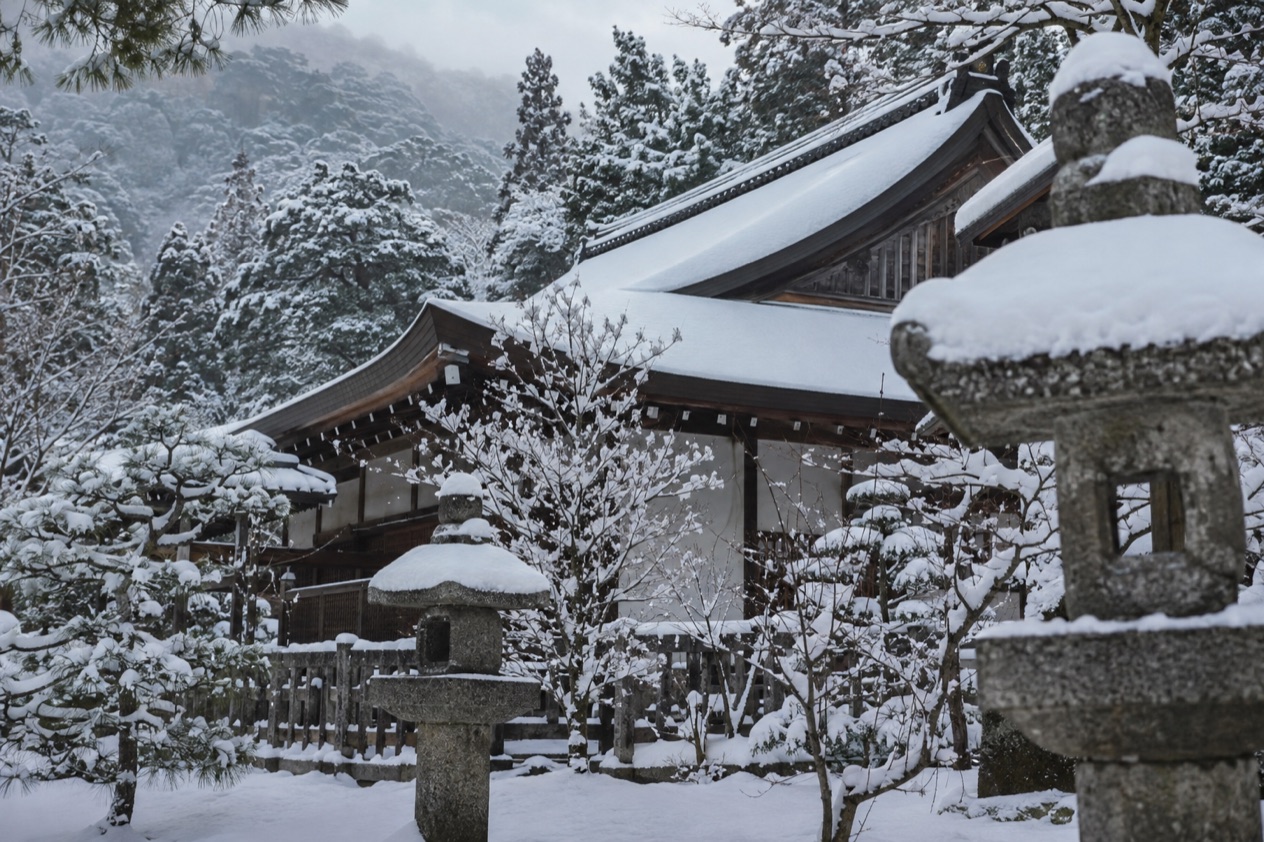
What is winter like in Japan?
Winter in Japan depends heavily on where you stand: heavy snow regularly covers the mountains and the northern regions, while most major cities rarely see snow at all. The country stretches from Hokkaido, near Russia, to the subtropical islands of Okinawa, so a single trip can cross very different climates. Mountains and dense forest cover most of the territory, and the Japan Alps run across the center of Honshu, which shapes where the snow falls.
Hokkaido and the Sea of Japan coast
Hokkaido has a humid continental climate with long, very cold winters. Around Sapporo and Asahikawa the snowfall runs to hundreds of inches over the season, and on the ski slopes in January and February the cold is far below freezing, which is simply normal there. Because the climate is so cold, Hokkaido has the longest ski season in the country.
The Sea of Japan coast has its own pattern. In winter a northwest seasonal wind pushes heavy snow onto that side of the country. South of Tohoku, most of it melts before spring begins. Hokkaido’s Okhotsk area, by contrast, is among the places that receive far less precipitation over the year.
The cities and the central highlands
Tokyo, Kyoto, Osaka and the other big cities rarely see snow, so a winter city trip is mostly about cold air and short winter days rather than drifts. The Central Highland, the inland mountain region, has large temperature swings between day and night and between summer and winter, so mornings and evenings there feel very different from the middle of the day.
Along the Seto Inland Sea the climate is mild, with many fine days through the year, because the mountains of the Chugoku and Shikoku regions block the seasonal winds. It is a gentler backdrop for temples, gardens and island hopping while the north is under snow.
The warm south
The Ryukyu Islands, Okinawa among them, have warm winters. The north of the chain is humid subtropical and the south tropical, with high precipitation across the year. Farther out in the Pacific, the Ogasawara Islands stay warm to hot in every month. Travelers who want to escape the cold can build a trip around these islands instead of the snow.
Winter also sits between two other seasons the country is known for. Autumn colors move from Hokkaido southward until early December, and cherry blossoms begin in the south in March. A trip in the middle of winter falls in the gap between them.
What can you do?
Winter in Japan offers New Year shrine visits, a snow and ice festival in Sapporo, and a ski season that runs from early December to late April. The first of these starts on January 1, when the country turns toward its temples and shrines.
Hatsumode, the first shrine visit of the year
On January 1, many Japanese people visit a temple or shrine to pray for good luck and prosperity in the new year. The custom is called hatsumode. In Kyoto, the official New Year ceremony at Heian-jingu takes place at 6 a.m. on that day. At Fushimi Inari Taisha, visitors walk among thousands of orange torii gates and pray for a successful year in the main building.
In Tokyo, Meiji-jingu is described as one of the best destinations for hatsumode, with forest paths leading to the main building. In Osaka, Sumiyoshi Taisha welcomes the new year with visitors in the millions, more than two million in all. These shrines make a natural thread for a New Year trip through the three cities.
| Shrine | City | New Year note |
|---|---|---|
| Heian-jingu | Kyoto | Official New Year ceremony on January 1 at 6 a.m. |
| Fushimi Inari Taisha | Kyoto | Thousands of orange torii gates, prayer in the main building |
| Meiji-jingu | Tokyo | Forest paths to the main building |
| Sumiyoshi Taisha | Osaka | More than two million visitors |
The Sapporo Snow Festival
The Sapporo Snow Festival takes place during the first week of February. Its snow and ice sculptures draw crowds counted in the millions, nearly two million people each year. It puts Hokkaido’s winter on display as something to walk through rather than endure, and it falls in the middle of the long Hokkaido ski season, so the two can share a trip.
Skiing in Nagano and Hokkaido
Nagano is a popular ski destination for travelers from Tokyo because of its good slopes and easy access. The Hakuba Valley is a popular choice among the mountain ski areas of the region. In Hokkaido, Niseko and Rusutsu are popular with skiers and winter travelers. Niseko is made up of four separate ski areas, Hirafu among them. The Epic Pass is valid at Hakuba and Rusutsu.
Japanese slopes typically use three grades: green for easy, red for intermediate and black for difficult. Helmets are not required by law, although some resorts are starting to require them to use the lifts. Most Japanese ski instructors speak only Japanese. Larger international resorts have English-speaking instructors, who often charge a premium.
Gala Yuzawa is Japan’s only ski resort with its own dedicated Shinkansen station. Sapporo’s New Chitose Airport is the closest major airport to the Hokkaido ski fields, and it has direct seasonal flights from Australia and Canada.
A day trip from Kansai
Visitors based in the Kansai region (Osaka, Kyoto, Nara and Kobe) can easily take a day trip to Biwako Valley, in the mountains around Lake Biwa. It gives winter-minded travelers in the Kansai cities a taste of the mountains without moving hotels.
What closes?
During the New Year holidays, many restaurants and attractions are closed. That is the main pause in the winter calendar, and it falls just as the shrines are at their fullest. Shrine visits are the thing to plan around those days, while a long restaurant meal or a museum afternoon may need another day.
The New Year pause
The shift is a matter of rhythm. For these days the country goes to the shrines, to family and to home, and many businesses follow. The cities are not shut down, but a restaurant or attraction you had your heart set on may well be among the closed ones.
The ski areas work the opposite way. New Year is one of the two peak ski periods in Japan, along with Chinese New Year. January is also busy because of the Australian summer vacation. Plan around the pause in town and the rush on the slopes at once.
The end of the ski season
The Japanese ski season lasts from early December to late April, and Hokkaido’s colder climate allows the longest season. That means the lifts you plan for in the mountains stop turning once the season ends, and the length depends on how cold the region is.
Travelers heading for the slopes with equipment should think about the trains. Japanese trains are generally not well equipped for bulky luggage, so travelers with skis or snowboards should check ahead or use a courier service, available at major airports and resorts. On domestic flights through Tokyo, avoid transfers that require changing airports between Haneda and Narita, because it adds significant time and hassle.
Good to know before you go
Winter planning in Japan is about snow and cold, not about the other seasons’ weather. The rainy season arrives between May and June, and typhoon season in August and September can disrupt travel, so neither belongs to a winter trip.
What does matter is how far north or into the mountains you go, since the same week can bring heavy snow in Hokkaido and mild days on the Seto Inland Sea. Pick the places first and the weather follows.
Sources
- Japan National Tourism Organization, winter in Japan (https://www.japan.travel/en/guide/winter-guide/), checked October 11, 2026
- Japan National Tourism Organization, weather and seasons in Japan (https://www.japan.travel/en/plan/weather/), checked October 11, 2026
- Wikipedia, Climate of Japan (https://en.wikipedia.org/wiki/Climate_of_Japan), checked October 11, 2026
- Wikivoyage, Winter sports in Japan (https://en.wikivoyage.org/wiki/Winter_sports_in_Japan), checked October 11, 2026
To plan your stay
- Japan Rainy Season (Tsuyu): Dates, Regions and How to Plan Your Trip
- Seasons in Japan: Blossoms, Fall Color, Snow Festivals and Summer Matsuri
- Typhoon Season in Japan: When It Hits, Which Regions Take the Brunt and How the Warning Alerts Work
- Autumn Leaves Dates by City: Usual Maple Dates, 2025 Results and How Much They Shift