
By midsummer, the cicadas in a Japanese park are so loud they seem to hum in the air, and a bowl of shaved ice with syrup starts to look like a sensible lunch. Evening festivals bring out cotton yukata robes and paper fans, and everyone moves a little slower. Summer in Japan is hot and sticky on the main islands, but it is also the season of fireworks, mountain climbs and sea sports, so the heat shapes a trip more than it ruins one.
How hot does Japan get in summer?
On the islands of Honshu and Kyushu, where travelers spend their time, summer is hot, very humid and sultry. Tokyo, Kyoto, Osaka, Hiroshima and Fukuoka all sit in that zone, and the sensation of a summer day there has as much to do with the thick air as with the thermometer. Cities hold the warmth into the evening, so walking tours that feel fine at breakfast can feel heavy by the afternoon.
Japan is long enough that summer does not feel the same everywhere. The country stretches from Hokkaido in the far north to the subtropical Okinawa islands, and dense forest and mountains cover most of the land. The six climate zones that geographers recognize show up in your itinerary as very different days, depending on whether you are in a Honshu city, a highland valley or a southern island.
Honshu and Kyushu: the sultry core
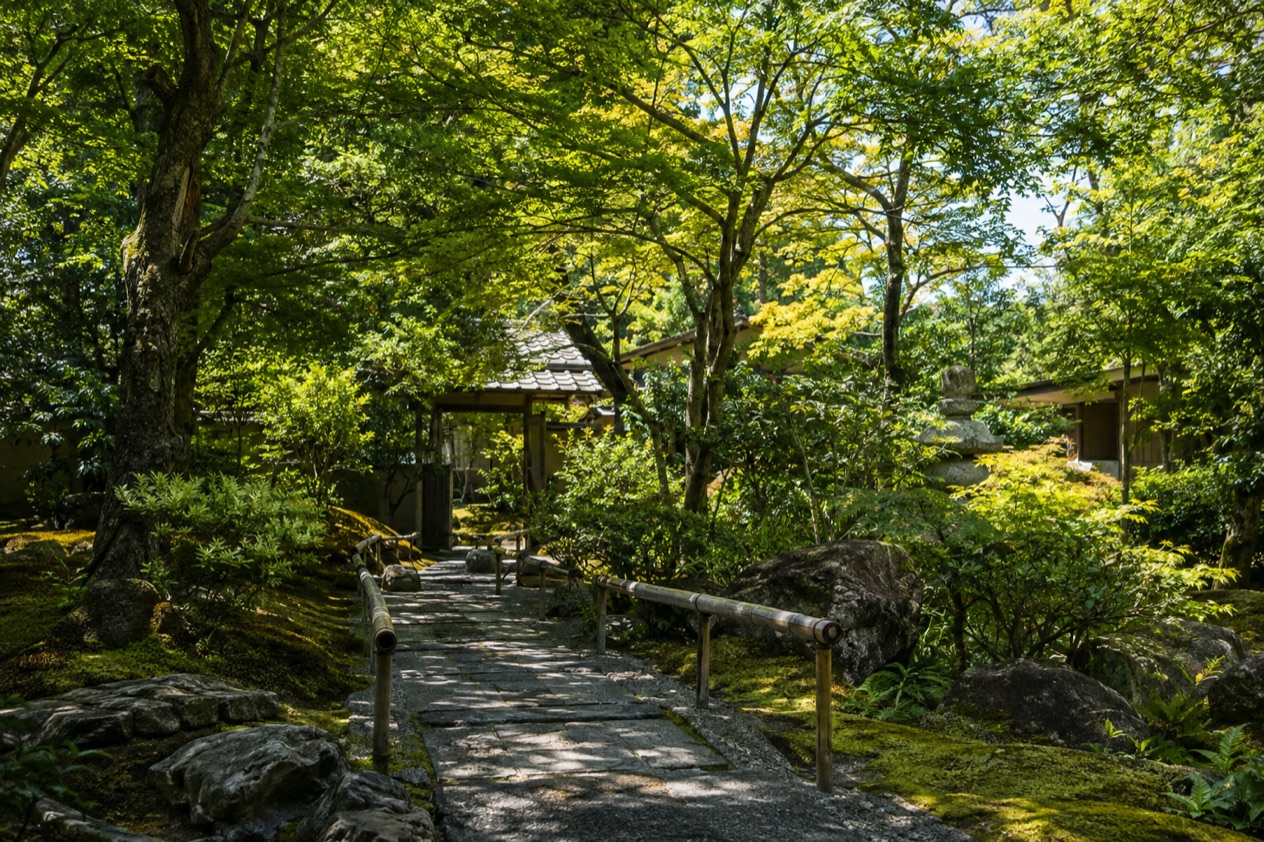
This is the Japan of the classic summer image: stone lanterns at a shrine, a thin curtain of heat over the pavement, a convenience store door that opens onto cold air. Sightseeing here tends to settle into a rhythm of outdoor stops followed by long pauses indoors, in a department store basement food hall, a museum or a café with a cold drink.
Temples and gardens are still lovely in this season, with moss at its greenest and the sound of water in every courtyard.
The highlands, the north and the islands
The Central Highland, in the mountainous middle of Honshu, has a typical inland climate, with large swings in temperature between summer and winter and between day and night. For a summer traveler, that means a highland stop can feel different from the coast the moment the sun goes down. The Japan Alps, which run through the center of Honshu, are the backdrop for this region.
Hokkaido sits at the other end of the country and has its own climate, and it is the one major island without a rainy season. Okinawa and the Ryukyu Islands are humid subtropical in the north and tropical rainforest in the south, with hot summers and very high precipitation. The Ogasawara Islands, far out in the Pacific, are warm to hot all year round.
Summer on the mountain and by the water
Heat is also the reason summer is the season for the outdoors. Mount Fuji’s climbing season typically runs from the beginning of July to about the first week of September, which makes these weeks the window for the mountain. Travelers build a Tokyo trip around that stretch.
Water is the other draw. In Yamanashi Prefecture you can try kayaking and rafting in the mountains, and windsurfing is possible on the beaches near Tokyo in Kanagawa Prefecture. The Boso, Izu and Kii peninsulas are known for their surf.
What is the humidity like?
Very humid on Honshu and Kyushu, where summers are described as hot and sultry, and that stickiness is the thing visitors remember. The air feels close even in the shade, and a cloudy day does not bring relief. Evenings stay warm, so the cooling-off you might expect after sunset is mostly a matter of stepping into air conditioning.
The humidity also changes how a day feels on foot. Climbing the steps of a hillside shrine, crossing a long station concourse or waiting at a crosswalk all take more out of you than the same walk in dry weather. It is the reason many summer plans in Japan are built around a slow pace and frequent stops.
The rainy season before the heat
As summer approaches, the rainy season begins between May and June. In Honshu, Shikoku and Kyushu it lasts from mid-June to mid-July. Those weeks are gray and damp, with showers that can settle in for days, and the air is already humid before the real heat arrives. Hydrangeas bloom around Japanese temples in this stretch, which gives it a look of its own.
Hokkaido does not have a rainy season, which sets it apart from the other main islands. Travelers who dislike gray, drizzly weather sometimes look north for exactly that reason. On the Ryukyu Islands, by contrast, precipitation is very high and affected by both the rainy season and typhoons.
Places that feel different
The Seto Inland Sea area has a mild climate and many fine days through the year, because mountains in the Chugoku and Shikoku regions block the seasonal winds. It is a region of small islands, ferries and citrus groves, and it makes a calm change of scene from the big Honshu cities.
In the Central Highland, the large gap between day and night means a mountain town can feel noticeably different after dark than at noon. Okhotsk Subprefecture in Hokkaido receives as little as 30 inches of precipitation per year, a reminder that the north follows a different pattern from the humid south.
Eating and drinking with the weather
Japanese summer food is built around the heat. Cold somen noodles are dipped in a light broth, chilled soba comes on a bamboo tray, and kakigori, shaved ice with fruit syrup, appears at festival stalls and café counters. Grilled eel is a well-known summer dish, and barley tea is served cold.
Vending machines line streets and station platforms and sell cold drinks and hot ones side by side. Izakaya, the casual pubs where people gather after work, put cold beer and edamame on every table once the evenings turn warm.
How do you cope?
You cope by building the trip around the season rather than fighting it: slow days, indoor breaks, evenings out and a destination that suits the weather. Summer in Japan offers festivals, fireworks, mountains and water that you cannot find in other months, and most of them come with a reason to be outside after dark or up high.
Evenings and festivals
Many of the best summer events take place at night. The Nagaoka Matsuri in Niigata Prefecture is held during the first week of August and features about 20,000 fireworks during a typical year. The Nebuta Matsuri in Aomori begins on August 2 and ends on August 7 with a fireworks display. In Aomori, the festival is known for its huge lantern floats.
The Tenjin Matsuri in Osaka is considered one of Japan’s three greatest festivals, alongside Tokyo’s Kanda Matsuri and Kyoto’s Gion Matsuri. Festival crowds often wear yukata, the light cotton robe, and stalls sell cold drinks and shaved ice. A festival evening is also a good answer to a hot afternoon, since you can spend the daytime resting and head out as the light fades.
| Event | Place | Dates |
|---|---|---|
| Nagaoka Matsuri | Niigata Prefecture | First week of August |
| Nebuta Matsuri | Aomori | August 2 to August 7 |
| Mount Fuji climbing season | Mount Fuji | Beginning of July to about the first week of September |
Mountains and water
Mount Fuji’s climbing season, from the beginning of July to about the first week of September, gives summer a headline outing. If a climb does not appeal, the mountains of Yamanashi Prefecture offer kayaking and rafting, and Honshu’s Japan Alps are the backdrop for highland stays. Seeing green forest from a river is a good use of a warm day.
Coastal plans work in the same spirit. The Ogasawara Archipelago, a World Heritage site far into the Pacific south of Tokyo, is another option for those who want to go further out.
Choosing where to be
Because Japan covers so many climates, one practical way to cope is to pick the region that suits your tolerance. Hokkaido has no rainy season, the Seto Inland Sea has many fine days, and the highlands have large swings between day and night. The Honshu and Kyushu cities are the sultriest part of the picture, but they are also where most of the museums, department stores and underground arcades are, which suits a day of breaks.
Even a rainy day has its uses. A museum, an aquarium, a covered shopping street or a long lunch is a fair trade for a gray afternoon, and the mid-June to mid-July rainy season on Honshu, Shikoku and Kyushu is a good moment to plan more of these.
Good to know before you go
Typhoon season in August and September can disrupt travel plans. Five or six typhoons pass over or near Japan every year from early August to early October, sometimes resulting in significant damage, so a summer itinerary that includes a ferry, a flight or a remote island benefits from some slack. Okinawa and the Ryukyu Islands are affected by both the rainy season and typhoons, and the Pacific coast and southern islands are where those storms matter most for planning.
Japan also sits on the Pacific Ring of Fire, with more than 100 active volcanoes, which is part of the reason its mountains and hot springs are so varied. Cherry blossoms and autumn leaves belong to other seasons, so summer is the time for green forests, festivals and the water.
Sources
- Japan National Tourism Organization, summer in Japan (https://www.japan.travel/en/guide/summer-guide/), checked October 11, 2026
- Japan National Tourism Organization, weather and seasons in Japan (https://www.japan.travel/en/plan/weather/), checked October 11, 2026
- Wikipedia, Climate of Japan (https://en.wikipedia.org/wiki/Climate_of_Japan), checked October 11, 2026
To plan your stay
- Japan Rainy Season (Tsuyu): Dates, Regions and How to Plan Your Trip
- Seasons in Japan: Blossoms, Fall Color, Snow Festivals and Summer Matsuri
- Typhoon Season in Japan: When It Hits, Which Regions Take the Brunt and How the Warning Alerts Work
- Autumn Leaves Dates by City: Usual Maple Dates, 2025 Results and How Much They Shift