
Early in the spring, carp-shaped windsocks begin to ripple from poles and balconies, a sign that the longest string of days off in the Japanese calendar is close. Trains fill, families head out of town, and the country settles into a festive mood. Golden Week is the run of public holidays that stretches from the end of April into the first days of May, and it shapes how a trip to Japan feels in that stretch.
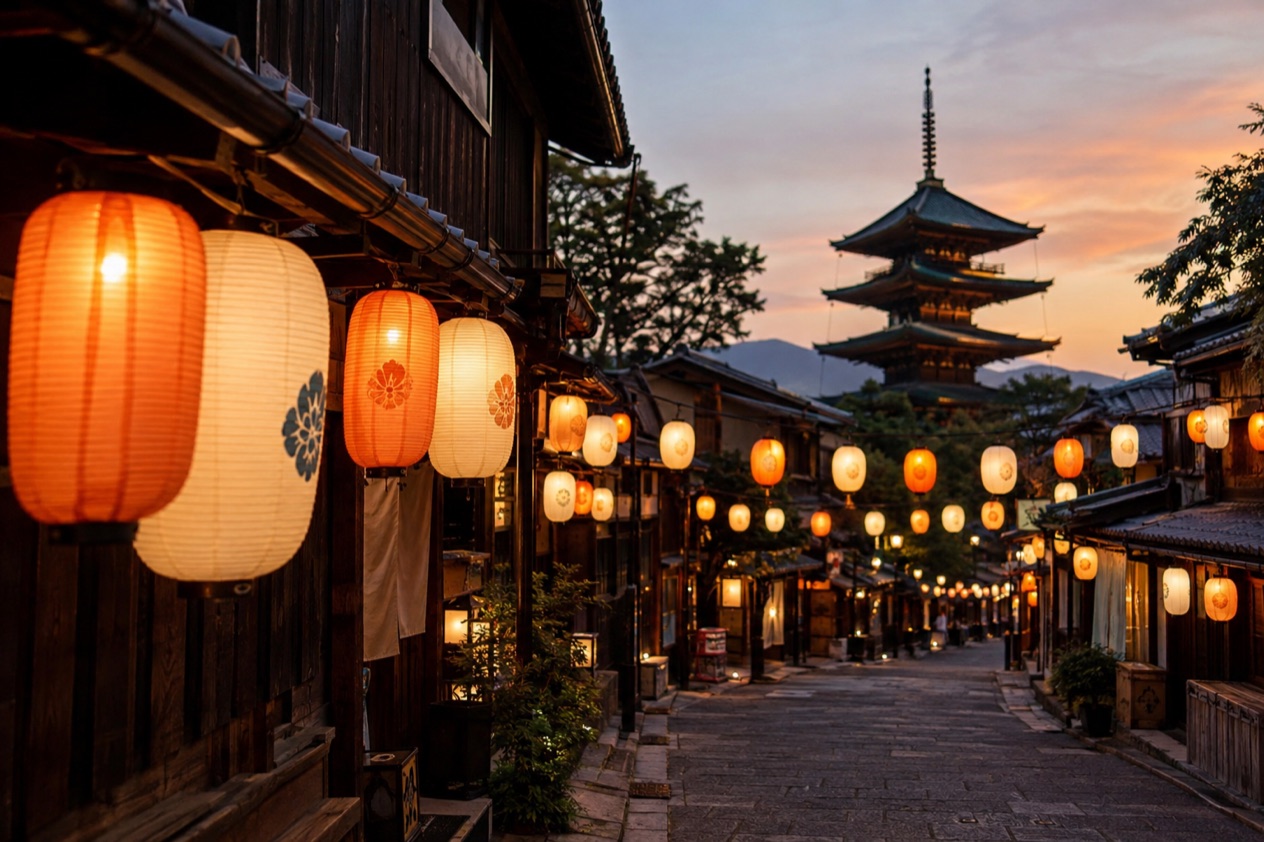
What is Golden Week?
Golden Week is a holiday period in Japan that runs from April 29 to May 5 and holds several public holidays in a single week. For people in Japan it works as a spring vacation, and that is the key to understanding everything else about it: offices pause, families plan trips, and the whole country seems to be on the move at once.
The week opens with Showa Day and closes with Children’s Day. In between come two more holidays, Constitution Memorial Day and Greenery Day. Each has its own character, and a visitor who knows what they celebrate will read the week better, from the flags in a neighborhood to the plants sold at a market stall.
A week of travel, at home and abroad
Golden Week often brings a surge in vacation travel throughout Japan. Many Japanese travelers go domestic, visiting hometowns, hot spring towns, gardens and cities elsewhere in the country, and a smaller share go abroad. The result is a week when you are not the only one with a plan, and the places that fill most are the ones everyone has on a list.
For a visitor, this means that the Japan you see in those days is a Japan on vacation. Parks hold picnics, streets near stations are lively, and in the evening you may notice that restaurants and trains carry the same holiday energy as the daytime sights.
Festivals and events that fall in the week
A few events are tied to these days. The Takatsuki Jazz Street Festival takes place during Golden Week in Takatsuki, in northern Osaka, with two days of live jazz. It counts 300 acts and more than 3,000 artists spread across 72 different locations, so the music spills out of concert halls and into the town itself.
Motorsport fans have a date too: the Super GT Fuji 311 miles car race is held on May 4. The week also has quieter traditions, such as the carp streamers of Children’s Day, which you can spot on poles and balconies as you travel.
When the festival was cancelled
The Golden Week Festival was cancelled in both 2020 and 2021 because of the COVID-19 pandemic in Japan. Those years are the exception, and the holidays themselves belong to the calendar again.
Which days are holidays?
Four days of Golden Week are officially public holidays: Showa Day on April 29, Constitution Memorial Day on May 3, Greenery Day on May 4, and Children’s Day on May 5. The days in between are not named holidays, which is why the week reads as a sequence with a few gaps that depend on the calendar.
| Date | Holiday | Role in the week |
|---|---|---|
| April 29 | Showa Day | Marks the start of Golden Week |
| May 3 | Constitution Memorial Day | Observed during Golden Week |
| May 4 | Greenery Day | Observed during Golden Week |
| May 5 | Children’s Day | Marks the end of Golden Week |
What each holiday marks
Showa Day opens the week on April 29 and is the first of the run. Constitution Memorial Day follows on May 3, and Greenery Day comes on May 4. Each is a day off across the country, which is why even a small town can feel quieter in its offices and busier in its parks.
Children’s Day on May 5 closes the period. It is also known as Boys’ Day or the Feast of Banners, and it is the day behind the carp windsocks you see flying from poles. After it, the country goes back to its ordinary calendar.
When a holiday lands on a Sunday
Japan has a rule for weekends. When a national holiday falls on a Sunday, the next working day becomes a public holiday, known as furikae kyujitsu. The practical meaning is that the week can grow by a day when the calendar lines up that way, so the dates above are the fixed core and not always the whole story.
A second rule applies to the gaps. Any day that falls between two other national holidays becomes a holiday itself, known as kokumin no kyujitsu. Together the two rules explain why the length of the break changes from one spring to the next, and why it pays to look at the calendar of the year you travel.
Other holidays in the Japanese year
Golden Week is one of several breaks. New Year’s Day on January 1 is a national holiday, and the New Year season generally refers to the first one, three or seven days of the year.
Coming of Age Day falls on the second Monday of January, National Foundation Day on February 11, and the Emperor’s Birthday on February 23. Vernal Equinox Day falls around March 20, and Obon in mid-August is a family holiday when people return to their hometowns.
How does it affect travel?
Golden Week means heavy crowds and full transportation across Japan. That is the headline for a visitor: the week is a peak of domestic movement, and trains, popular sights and busy streets feel it. Plans that work on an ordinary spring day may need more patience in these days.
Trains and getting around
Most trains in Japan run from about 5:00 a.m. to midnight, and that does not change the character of the week so much as the load they carry. With transportation full across the country, stations feel the movement of families heading to hometowns and holiday spots.
On ordinary weekdays, morning rush hour runs from about 7:30 a.m. to 9:00 a.m., when trains on major lines can be extremely crowded, and evening rush hour runs from 5:30 p.m. to 7:00 p.m. Those are worker patterns. During Golden Week the offices are closed on the holiday days, so the pattern of the day is different, and the pressure comes from travelers and not commuters.
Shops, offices and everyday needs
In urban areas, shops are generally open from 10:00 a.m. to 8:00 p.m. every day, while in rural areas they often close earlier, sometimes as early as 6:00 p.m. Offices are open from 9:00 a.m. to 5:00 p.m. on weekdays and are closed on weekends, so any errand that involves an office is best set aside on holiday days.
Many convenience stores such as 7-Eleven, FamilyMart and Lawson are open 24 hours a day, even on national holidays. That makes them a steady point for snacks and basics when other doors are closed. Shrines and temples are generally open all year and often accessible from early morning until late afternoon, so a visit fits the week, though you will share the grounds with other holiday visitors.
Compared with the other big breaks
During the New Year period, from late December to early January, many shops close for several days, a different rhythm from the open streets of spring. Obon in mid-August is another family holiday, when people return to their hometowns. Golden Week is the spring one, and it is the week when the crowds come with full trains and holiday plans in every direction.
Good to know before you go
Golden Week is a spring holiday, so the practical habits are about patience: expect full trains and busy sights, and keep in mind that convenience stores stay open around the clock when other places close for the holidays. Shops in cities keep their usual hours, and rural ones may close earlier in the evening. The week ends on Children’s Day, May 5, and the ordinary rhythm of the country returns the next day.
Sources
- Japan National Tourism Organization, shop and attraction hours, national holidays (https://www.japan.travel/en/plan/business-hours-and-holidays/), checked October 11, 2026
- Wikipedia, Golden Week (Japan) (https://en.wikipedia.org/wiki/Golden_Week_(Japan)), checked October 11, 2026
- Wikipedia, Public holidays in Japan (https://en.wikipedia.org/wiki/Public_holidays_in_Japan), checked October 11, 2026
To plan your stay
- Japan Rainy Season (Tsuyu): Dates, Regions and How to Plan Your Trip
- Seasons in Japan: Blossoms, Fall Color, Snow Festivals and Summer Matsuri
- Typhoon Season in Japan: When It Hits, Which Regions Take the Brunt and How the Warning Alerts Work
- Autumn Leaves Dates by City: Usual Maple Dates, 2025 Results and How Much They Shift