
You step off the plane into air that smells of salt and warm asphalt, a straw hat bobs past in the arrivals hall, and somewhere a radio is playing rake-and-scrape. The Bahamas is an island nation, and each island has its own pace, its own airstrip and its own rules of the road. A few things are worth settling before you leave home: the documents at the border, the money in your pocket, the side of the road, the sun and the laws that surprise people.
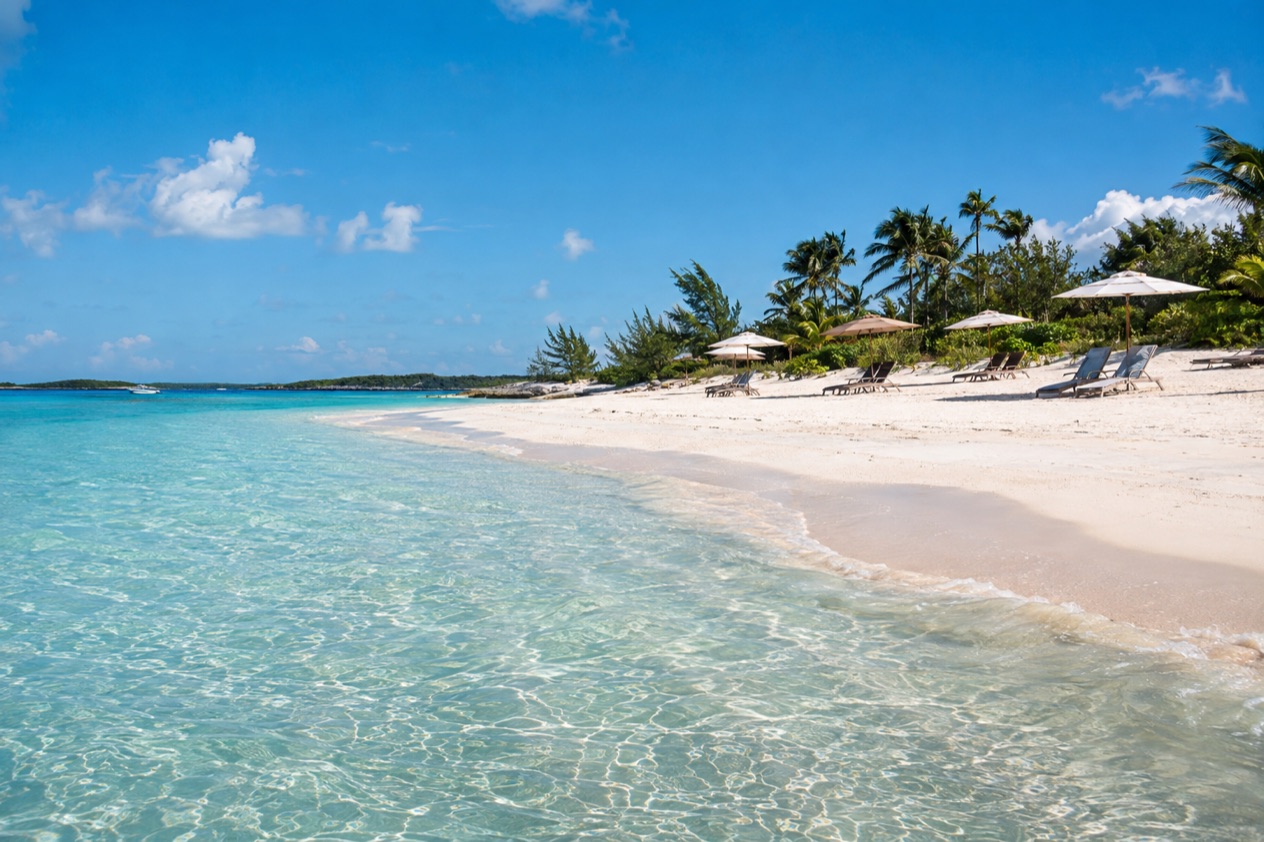
What should you know before visiting the Bahamas?
Four things matter most: a passport in good order with a return or onward ticket, cash for the Out Islands, driving on the left, and the strict drug laws. The sun is a close fifth, since it is stronger than many visitors expect. Beyond those, the Bahamas is easy to enjoy. Dinner is casual, the dollar is the one you already carry, and the welcome tends to be warm.
First-time visitors are often surprised by how separate the islands are. The Bahamas spans 100,000 square miles of famously clear water, and a fact about Nassau says little about Eleuthera or Abaco. Medical care, ATMs and roads all change from one island to the next.
The second surprise is the law: marijuana is illegal in all its forms, even with a prescription from home. The third is the dress code at dinner, because flip-flops and cargo shorts in a restaurant are completely ordinary.
The mood of arriving is part of the trip. Conch is sold at roadside stands, church bells carry across the harbor on Sunday morning, and conversations begin with a greeting before anything else. Slow down to match it and the rest tends to fall into place.
Entry, fees and paperwork
Passports are required of everyone entering the Bahamas. For arrivals by air, the Bahamas Department of Immigration says the passport must be valid for at least six months, and passport cards are not accepted. Travelers also hand over a completed Bahamas Immigration Disembarkation/Embarkation Card.
U.S. citizens entering as bona fide visitors do not need a Bahamian visa for a stay of up to eight months. They do need a return or onward ticket, and proof of anticipated departure from the Bahamas is also asked of U.S. citizens.
If your onward trip takes you to another country, you need whatever travel document that country requires. Officers may also ask for evidence that you have enough money to support yourself during the visit.
The length of stay written in your passport can be shorter than the maximum, because the immigration officer decides at the port of entry. To stay beyond the period granted, you must ask the Department of Immigration for permission. The Bahamas Health Visa and the pre-arrival COVID-19 testing requirement have both been eliminated, so all visitors can travel freely to and throughout the islands, whatever their vaccination status.
Shopping has its own small rules. Stores displaying the Global Blue Tax-Free Shopping signage let qualifying shoppers skip the VAT and the service fee, and you show a passport or valid ID. In Freeport on Grand Bahama, goods entered conditionally duty-free must be entered in writing within five days (Sundays and public holidays excluded), which matters to the importers who hold a Grand Bahama Port Authority license rather than to travelers.
| Item | Amount | Who it applies to |
|---|---|---|
| Tax-free shopping, minimum purchase | More than $25 | Shoppers at stores with Global Blue signage, with passport or valid ID |
| VAT saving | Up to 7% of the purchase price | Shoppers who qualify for VAT Free Shopping |
| Freeport bond status, minimum surety | $5,000.00 on the C.B.9 form | Non-stocking businesses applying as Grand Bahama Port Authority licensees |
Money and cards
The Bahamian dollar is on par with the U.S. dollar, and both are accepted interchangeably on every island. You can pay with the bills in your wallet and receive change in either currency, so no exchange stop is needed on arrival. Bahamian notes and coins make fine souvenirs and are valid throughout the country.
On the Out Islands, carrying cash is advised. A settlement on a quiet cay may have a single grocery, a few restaurants and a dock, so a small stash of dollars in your bag is a sensible habit before you leave Nassau or Freeport. It also helps for the roadside stands and small shops where a plate of conch salad or fried snapper is made to order.
In the stores that carry the Global Blue Tax-Free Shopping signage, bring your passport or another valid ID when you buy something. Keeping the receipts for those purchases in one place makes the tax-free paperwork go quickly at the counter.
Getting around
Driving in the Bahamas is on the left-hand side of the road, which takes some getting used to for American drivers, especially at roundabouts and when pulling out of a parking lot. Traffic congestion in Nassau is severe, and drivers frequently display aggressive or careless tendencies. Accidents involving pedestrians on New Providence are common, so crossing a busy road in Nassau deserves full attention.
Rain changes the road picture. Road flooding occurs frequently in many areas, including Nassau and Freeport, during and after rainstorms, and a street that was dry in the morning can hold standing water after an afternoon downpour. Plan a little slack into any day built around a drive or a connection.
Because the Bahamas is an archipelago, a trip often means leaving the island where you landed, by plane, boat or ferry, and each island has its own rhythm once you arrive. Think of each stop as a separate small country with its own harbor, its own settlements and its own pace. Ambulance service exists on the major islands, but traffic on New Providence can slow it down.
Health and the sun
Medical care is available on New Providence and Grand Bahama, but serious illnesses or injuries might not be treatable locally. The outer islands have only small clinics, and care there is limited. That shapes how you plan a quiet week on a remote cay: minor problems are handled on the spot, and anything bigger means getting to a larger island or leaving the country.
Serious health problems requiring hospitalization or medical evacuation to the United States can cost tens of thousands of dollars in up-front costs. That is a reason to look at your medical coverage, and at whether it includes evacuation, before you leave home.
The sun in the Bahamas is intense, and sunscreen is really needed, even on a cloudy day on the water. Women are advised to bring a hat, wide-brimmed or otherwise, to block the sun on the beaches. Men should pack standard swim trunks for the beach. A boat day, a long stretch on a white-sand beach or a walk through a settlement at midday all add up faster than you expect.
Shade is part of the local routine. Lunch under a palm-thatch roof, a pause on a dock or a long afternoon in a hammock is a sensible rhythm in the heat, and the evening is for walking.
Local customs and etiquette
Bahamians greet before they ask. A good morning or good afternoon to the shopkeeper, the taxi driver or the person at the next table is expected, and a conversation that starts without it can feel abrupt. A handshake and a smile are the usual way to meet someone, and small talk about the weather, the island or the food is how business starts.
Dress is relaxed, and dining in a restaurant in flip-flops and cargo shorts is commonplace. Swimwear belongs on the beach and by the pool, though, so a cover-up or a shirt is the courtesy when you walk into a town, a shop or a restaurant.
Churches are central to island life, and Sunday morning is a time when many people dress up and gather. If you pass a service or visit a church, dress modestly and keep your voice low.
Straw markets are a classic place for souvenirs, and friendly conversation with the vendor is part of the purchase. Take your time, ask about the weaving and the maker, and keep the tone good-humored if you negotiate. Food is social too: the Fish Fry at Arawak Cay in Nassau is where locals and visitors share conch salad and fried snapper, and a table of strangers can turn into a conversation.
The People-to-People program pairs travelers with volunteer locals who share their love of the islands. Its ambassadors may take you to a Fish Fry, lead a tour of Fort Fincastle and the Queen’s Staircase in Nassau, or invite you into their homes for an authentic Bahamian meal.
If you are invited to a table, accept with thanks and bring your appetite. Marijuana is another matter: it is illegal, drug violators are regularly arrested even for small quantities, and a medical card from home makes no difference.
Good to know before you go
The U.S. State Department rates the Bahamas Level 2, “Exercise increased caution”, and says most crime occurs in Nassau on New Providence and in Freeport on Grand Bahama.
The Atlantic hurricane season runs from June 1 to November 30, and the Bahamas Ministry of Tourism & Aviation monitors tropical storms and hurricanes in the Atlantic. Travelers are encouraged to check the Bahamas.com hurricane page regularly for storm updates.
Keep your return or onward ticket and your passport together, along with any receipts from tax-free purchases, so they are at hand at the airport. And carry a little cash for the island you are headed to.
Sources
- Bahamas Department of Immigration, Entry requirements (https://www.immigration.gov.bs/entry-requirements/), checked October 10, 2026
- Bahamas Customs and Excise, Conditionally duty-free items (https://www.bahamascustoms.gov.bs/imports-and-exports/conditionally-duty-free-items/), checked October 10, 2026
- U.S. Department of State, The Bahamas Travel Information, Health (https://travel.state.gov/), checked October 10, 2026
- U.S. Department of State, The Bahamas Travel Information, Traveling and transportation (https://travel.state.gov/), checked October 10, 2026
- U.S. Department of State, The Bahamas Travel Information, Local laws and special circumstances (https://travel.state.gov/), checked October 10, 2026
- Bahamas Ministry of Tourism, Investments & Aviation (bahamas.com), Island FAQ (https://www.bahamas.com/plan-your-trip/island-faq), checked October 10, 2026
- Bahamas Ministry of Tourism, Investments & Aviation (bahamas.com), People-to-People program (https://www.bahamas.com/plan-your-trip/people-to-people), checked October 10, 2026
- Bahamas Ministry of Tourism, Investments & Aviation (bahamas.com), travel blog, VAT-free shopping rules (https://www.bahamas.com/blog/taking-advantage-of-value-added-tax-free-shopping-in-the-bahamas), checked October 10, 2026
- Bahamas Ministry of Tourism, Investments & Aviation (bahamas.com), travel blog, dress code and what to wear (https://www.bahamas.com/blog/how-to-dress-during-your-visit-to-the-bahamas), checked October 10, 2026
- Bahamas Ministry of Tourism, Investments & Aviation (bahamas.com), Sustainability (https://www.bahamas.com/plan-your-trip/sustainability), checked October 10, 2026
- Bahamas Department of Immigration, Before your arrival (https://www.immigration.gov.bs/entry-requirements/before-your-arrival/), checked October 10, 2026
- U.S. Department of State, The Bahamas Travel Information, Entry and exit requirements (https://travel.state.gov/), checked October 10, 2026
- Bahamas Ministry of Tourism, Investments & Aviation (bahamas.com), Hurricane and storm information (https://www.bahamas.com/hurricane-storm-information), checked October 10, 2026
- U.S. Department of State, The Bahamas Travel Advisory, Level 2 (https://travel.state.gov/), checked October 10, 2026
- NOAA National Hurricane Center, Climatology (https://www.nhc.noaa.gov/climo/), checked October 10, 2026
To plan your stay
- Best Time to Visit the Bahamas: Weather, Hurricane Season, Sea Temperatures and Junkanoo
- Things to Do in the Bahamas: Beaches, Blue Holes, Swimming Pigs and Fish Fry
- Where to Stay in the Bahamas: Best Islands, Resorts, Boutique Stays and How to Choose
- Getting Around the Bahamas: Flights, Ferries, Mailboats and Taxis in Nassau