
At the bottom of a suitcase on a bed in Ohio or Georgia, a pair of flip-flops sits next to a sports jacket, and the question is whether both really belong on the same trip. In the Bahamas they often do. Pack light beach clothes, sun protection and one dressier outfit for the evening, and leave the forbidden items at home.
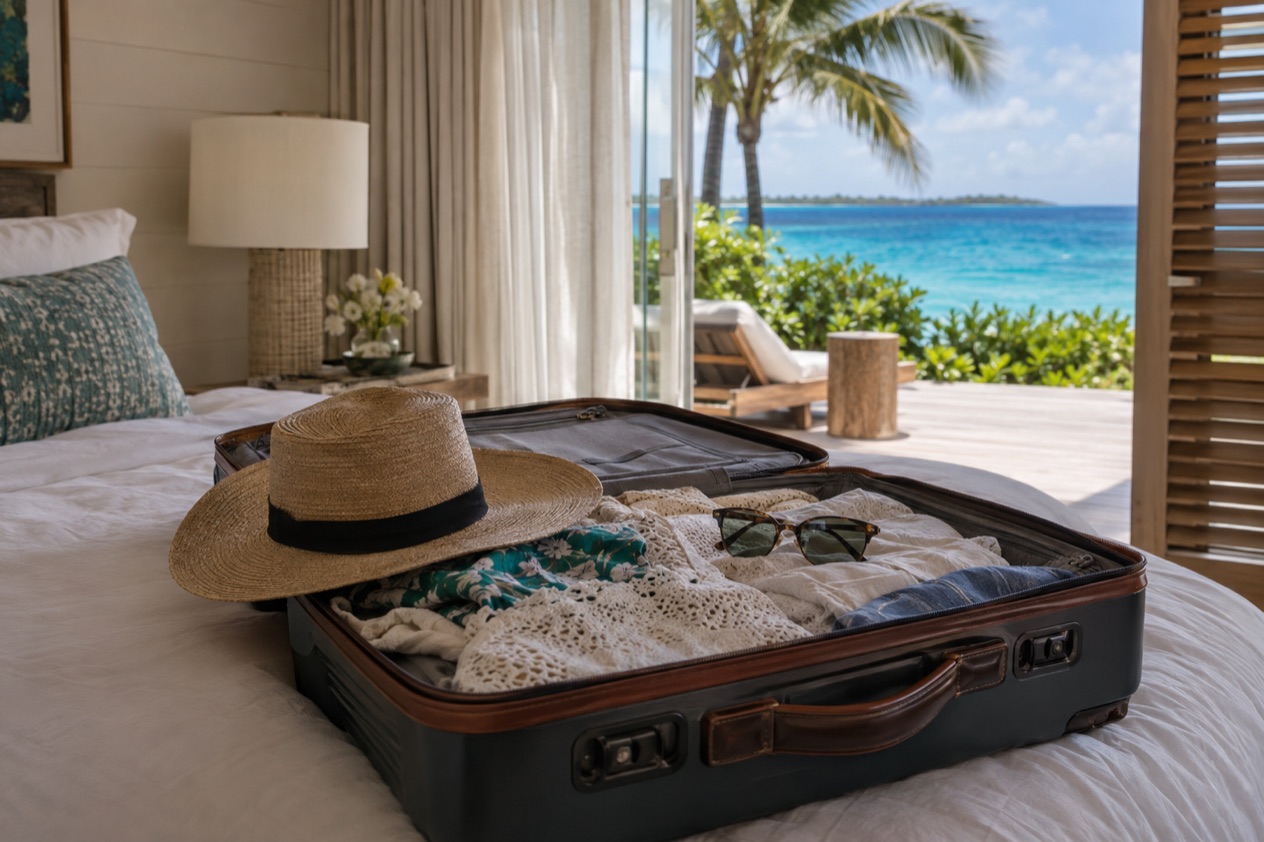
What should you pack for the Bahamas?
Pack mostly relaxed beach clothing, a few sturdier pieces for exploring, and one smarter outfit for dinners and casinos after dark. The islands run on a casual dress code by day, and a restaurant table in flip-flops and cargo shorts is commonplace. That sets the tone for the whole suitcase: easy fabrics, few layers, and nothing that needs ironing.
The one exception is the evening in the busier resort areas. Most hotels, restaurants and casinos expect jackets for men at night, especially in cosmopolitan areas like Nassau and Paradise Island and in Freeport. A few of the more extravagant dining rooms ask for a step above casual wear in general. Packing for that takes very little space, and it saves you from being turned away from a table you were looking forward to.
Daytime clothes and shoes
For the beach and the town, think shorts, light tops, cover-ups and a second swimsuit so one is always dry. Men should bring standard swim trunks. Flip-flops carry you from the room to the sand to lunch, and nobody will look twice at them in a restaurant at midday.
If you plan to explore the islands beyond the resort, add a backpack and comfortable sneakers or shoes. A small pack holds water, a camera, a towel and a change of shirt, and it keeps your hands free in the old streets of a settlement, along a harbor or on a day around the Exumas, where Big Major Cay, often called Pig Island, sits. Keep the sneakers for walking days and the sandals for everything else.
Evening and dinner outfits
For fancy dining, women should bring a casual summer dress, which folds flat and works for almost any restaurant. Men should bring a sports jacket and slacks, which also covers the jacket expectation at hotels and casinos in Nassau, Paradise Island and Freeport. Put the jacket on top of the suitcase or wear it on the plane so it arrives without creases.
At bars, clubs and patio decks, looking relaxed and dressed down is entirely accepted. A linen shirt, a sundress or clean shorts is plenty for a rum drink on a deck by the water. Resorts also run their own entertainment, from slides and lazy rivers to casinos and concerts, so a big resort stay may call for both a swimsuit and a night-out outfit on the same day.
Electronics, medicine and paperwork for the road
Electrical outlets run at the same voltage and cycle as at home, so American phones, laptops and chargers plug straight in. Travelers bringing British or European appliances need a two-pin flat adapter and a 220-volt converter, but an American suitcase needs neither.
Carry prescription medication in its original packaging with your doctor’s prescription, and keep it in your carry-on rather than checked luggage. Medical care is available on New Providence and Grand Bahama, but the outer islands have only small clinics. That makes a small kit of your own regular medicines worth the space, along with whatever your doctor recommends for the trip.
What sun and sea gear do you need?
Sunscreen comes first, followed by a hat, swimwear and whatever you like to wear in the water. The sun in the Bahamas is intense, and sunscreen is truly needed on the beach, on a boat deck and on the walk back from lunch. Plan on bringing enough to reapply through the day rather than hoping to find your usual brand on a small island.
Sunscreen, hats and cover-ups
A hat earns its place in the bag. Women should bring one, wide-brimmed or otherwise, to block the sun on beaches, and a wide brim also shades the neck and shoulders on a long afternoon. Sunglasses and a light long-sleeved shirt or wrap give your skin a break from the glare when you step out of the shade.
Think about where you will spend the hours between breakfast and sunset. A beach chair under a palm, a harbor-side lunch and a patio deck all leave you in direct light at some point. A sarong, a loose cotton shirt or a cover-up lets you stay outside without staying exposed.
Swimwear and beach extras
Men should pack standard swim trunks, and two sets of swimwear for anyone, so a wet suit never forces a cold start the next morning. A quick-dry beach towel is handy if you are leaving your hotel for the day, since you may be away from the room’s supply for hours. A waterproof pouch protects your phone and cards from splashes and sand.
The islands lie across about 100,000 square miles of some of the clearest waters in the world, and that clarity is the reason many people pack goggles. A mask and snorkel of your own is a personal choice, and plenty of travelers bring them from home for the fit. Whether you pack them or not, the water itself is the draw, so a swim bag with room for wet things makes the day smoother.
Gear that respects the water
Several island groups run community projects to protect their coasts and reefs. On Harbour Island, the Briland Sustainable Tourism Council removed a combined 16,000 pounds of debris from the shoreline over two years, and on Abaco, Friends of the Environment focuses on education and clean-up. A reusable water bottle, a cloth bag for the beach and a trash bag for your own litter fit easily into a beach pack and match the spirit of that work.
Underwater guns are prohibited imports, so a spearfishing kit does not belong in your luggage. There is one exception, a simple sling device that the customs rules name specifically. If it is not that device, leave it at home and rely on a mask, fins and your eyes.
What can’t you bring?
You cannot bring marijuana, firearms or fireworks without special authorization, and several other categories of goods are banned or restricted at the border. Marijuana is the one most likely to catch a visitor by surprise: its purchase and use are illegal in the Bahamas and enforced with strict penalties, so it should stay out of the bag and out of the trip.
Banned and restricted items
Firearms and fireworks are restricted unless the Commissioner of Police gives special authorization. Firecrackers and impact flash devices are restricted too, except those the Comptroller considers not dangerous. A suitcase with a flare gun, a starter pistol or leftover fireworks is not worth the trouble.
Some goods are prohibited outright. Meat, fruits and vegetables, and any food articles unfit for human consumption cannot be brought in, so a fresh-produce snack from the road is best eaten before you travel.
Indecent or obscene prints, books, photographs and cards are on the list, along with any article bearing a design that imitates currency, a bank note or a coin. Copies of works that the copyright owner has flagged to the Comptroller are also prohibited.
A few categories are really for importers rather than vacationers. Trailer caravans used as living quarters or offices need the Minister’s authorization, and mechanical games and devices set in operation by insertion are restricted. Any goods whose importation is restricted under a law in force are restricted goods as well.
Business goods and samples
If you carry goods for a business purpose, such as stock to sell or equipment for a commercial job, they are restricted unless you produce a current Business License for the Comptroller’s inspection. Gear for personal use is different from merchandise, so a camera you will use on vacation is not the concern.
Freeport on Grand Bahama has its own conditionally duty-free arrangements for businesses. Those goods must be entered in writing by the owner or an authorized agent, and the importer must be a licensee of the Grand Bahama Port Authority with bond status. That is a matter for companies and not for someone arriving with a suitcase, but it explains why a commercial load is treated very differently from a carry-on.
Animals and other special cases
An import permit from the Ministry of Agriculture and Marine Resources in Nassau is required for all animals brought into the Bahamas. Traveling with a dog or cat is therefore a project that begins well before packing day, and the pet is not just another item to tuck into the luggage plan.
Driving is another point on which the Bahamas differs from home. British rules apply, so you drive on the left. That has no effect on your luggage, but it does mean a good night’s sleep before your first turn behind the wheel, and it is worth packing patience if you plan to be on the road.
Good to know before you go
The U.S. State Department rates the Bahamas Level 2, “Exercise increased caution”, and says most crime occurs in Nassau on New Providence and in Freeport on Grand Bahama.
The Bahamian dollar is on par with the U.S. dollar, and both are accepted interchangeably on all islands. ATMs are available on Nassau and Paradise Island, on Grand Bahama and on most major Out Islands, but carrying cash is advised for the Out Islands. Tipping is customary: porters and bellboys usually receive a dollar per bag, most other servers get 15%, and many establishments already include the gratuity in the total.
Most care providers overseas only accept cash, and U.S. Medicare and Medicaid do not apply, so many travelers pack supplemental medical evacuation insurance, which the State Department strongly recommends. The Atlantic hurricane season runs from June 1 to November 30, which is the stretch to keep in mind when you choose your dates.
Sources
- Bahamas Customs and Excise, Prohibited and restricted imports (https://www.bahamascustoms.gov.bs/imports-and-exports/prohibited-and-restricted-imports-and-exports/), checked October 10, 2026
- Bahamas Customs and Excise, Conditionally duty-free items (https://www.bahamascustoms.gov.bs/imports-and-exports/conditionally-duty-free-items/), checked October 10, 2026
- Bahamas Ministry of Tourism, Investments & Aviation (bahamas.com), travel blog, dress code and what to wear (https://www.bahamas.com/blog/how-to-dress-during-your-visit-to-the-bahamas), checked October 10, 2026
- Bahamas Ministry of Tourism, Investments & Aviation (bahamas.com), Island FAQ (https://www.bahamas.com/plan-your-trip/island-faq), checked October 10, 2026
- Bahamas Ministry of Tourism, Investments & Aviation (bahamas.com), Sustainability (https://www.bahamas.com/plan-your-trip/sustainability), checked October 10, 2026
- U.S. Department of State, The Bahamas Travel Information, Health (https://travel.state.gov/), checked October 10, 2026
- U.S. Department of State, The Bahamas Travel Advisory, Level 2 (https://travel.state.gov/), checked October 10, 2026
- NOAA National Hurricane Center, Climatology (https://www.nhc.noaa.gov/climo/), checked October 10, 2026
To plan your stay
- Best Time to Visit the Bahamas: Weather, Hurricane Season, Sea Temperatures and Junkanoo
- Things to Do in the Bahamas: Beaches, Blue Holes, Swimming Pigs and Fish Fry
- Where to Stay in the Bahamas: Best Islands, Resorts, Boutique Stays and How to Choose
- Getting Around the Bahamas: Flights, Ferries, Mailboats and Taxis in Nassau