
The plane drops toward Nassau, the water turns from deep blue to turquoise, and your phone still shows exactly the hour it showed in Atlanta or New York. Nothing needs adjusting, no watch to wind and no jet lag to sleep off. The Bahamas keeps Eastern Time and moves its clocks when the United States does, so the hour on the island is the hour you left behind.
What time zone is the Bahamas in?
The Bahamas is in the Eastern Time Zone, the same one used in Florida, Georgia, New York and the rest of the U.S. East Coast. For an American traveler that is the whole answer: your phone, your watch and your rental confirmation all agree with the clock on the wall of the airport in Nassau.
The country is an archipelago of 700 islands and more than 2,500 cays in the Atlantic Ocean, and one clock covers all of it. From Grand Bahama in the northwest down to Inagua in the south, nobody crosses a time line when moving from island to island. A ferry, a mailboat or a small plane changes the scenery, never the hour.
What it means when you travel from the U.S.
If you live in the Eastern zone, nothing changes at all. Dinner reservations, tee times and boat departures run on the same hour you use at home, and a morning departure from Miami or New York puts you on the beach for lunch with the whole afternoon intact. That is a large part of why a long weekend in Nassau or Freeport feels like a real weekend.
From Chicago, Dallas or Denver you gain a small adjustment, and from the West Coast a larger one. Travelers from the Central, Mountain and Pacific zones simply move their watches forward by the gap they already know between their home and the East Coast. Setting the phone to update automatically does the work on its own, and the island clocks stay put.
The hour as the islands live it
The official clock is one thing, and the pace of the islands is another. Out on Eleuthera, Cat Island or the Exumas, a lunch order can take as long as it takes the cook to walk to the dock for fresh conch, and nobody apologizes for it. The unhurried rhythm is part of the place, and it makes a hurried schedule feel out of tune.
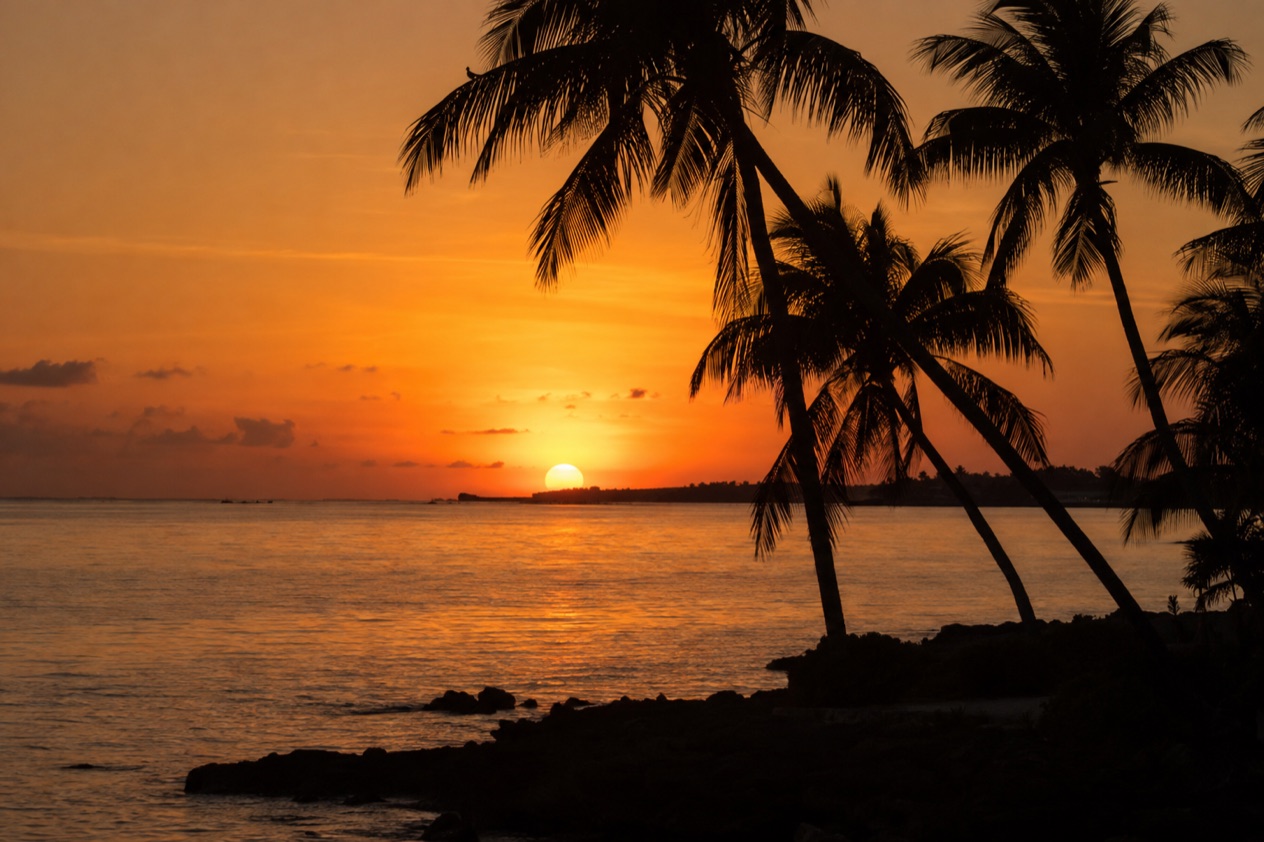
Mornings start early where fishermen work. Boats leave in the cool light, and by the time visitors wander down to a harbor for coffee, the day’s catch is already being cleaned on the quay. Evenings stretch long. The sun drops into the sea, the air cools, and conch salad, fried snapper and cold Kalik beer come out on picnic tables as the light fades.
Sunrise, sunset and the shape of a day
Because the islands sit in the Atlantic well south of most of the United States, the day length stays more even across the year than it does at home. Summer evenings do not linger as late as they do in the northern states, and winter afternoons do not shut down early. Sunset comes as a clear, colorful finish to the afternoon rather than a deadline.
That rhythm suits a simple plan. Spend the morning on the water or on a beach, take the hottest part of the day in the shade with something cold, and return to the shore for the golden hour. Many travelers find the same shape works in Nassau, on Harbour Island and on the quietest cays alike.
Flights, preclearance and the clock on your return day
Since the hour is the same at both ends, your return flight shows the same time on the departure board in Nassau as on the arrival screen at home. Nassau and Freeport both have U.S. immigration pre-clearance facilities, so travelers going back to the United States clear customs before departing the islands and land as domestic arrivals.
That fits well with the shared time zone. You leave the island on an Eastern hour, you are processed before you board, and you step off the plane at your home airport without another line. For a weekend visit it makes the last morning easier to plan, because the whole sequence runs on a clock you already know.
Does the Bahamas change its clocks?
Yes, the Bahamas observes daylight saving time and follows the U.S. calendar, so the islands move their clocks forward in spring and back in the fall alongside the East Coast. Because both sides shift together, the gap between you and the island stays at zero all year.
The change in the fall comes in early November, in the same weekend that Americans set their clocks back. In practice, you will not notice it unless you happen to be on the island that night. Phones update on their own, hotel clocks are reset by staff, and the morning after is simply an extra hour of sleep.
The spring and fall switch in practice
In spring the clocks jump ahead on the same weekend as in the United States, usually in March. A beach evening then runs later, and the sun sets at a more comfortable dinner hour. In the fall, when the clocks return to standard time, dusk comes sooner, and many people plan their sunset drink or walk a little earlier in the afternoon.
Since the dates shift every year with the U.S. rules, it is best to treat them as moving targets and let your phone handle them. If your trip crosses either weekend, the only thing to watch is an early morning departure on the day of the change, when an alarm set by hand on an old watch could be an hour off.
Why it matters for fall travel
Autumn is the season when the clock change comes up most often for visitors. The wet season of the archipelago runs from May to October, and the Atlantic hurricane season runs from June 1 to November 30, so the switch back to standard time lands inside the storm season. Neither affects the other, but both belong to the same stretch of the calendar.
If you are traveling in late October or early November, a sensible habit is to confirm any flight, ferry or excursion time against the date, not just the hour. A departure on the morning of the change is the one case where a hand-set clock can mislead you. With automatic updates, even that risk disappears.
Holidays and festivals on a fixed clock
Some of the best-known Bahamian dates are fixed on the calendar, and the hour does not move around them. Independence Day on July 10 marks the country’s separation from the United Kingdom in 1973, and it is celebrated with music and community events through the day and into the night, though sea conditions change from day to day and from one stretch of shore to another.
Junkanoo, the parade of costumes, cowbells, goatskin drums and brass, takes place in the small hours of December 26 and New Year’s Day. The dawn start is part of the tradition, with groups in elaborate costumes moving down Bay Street in Nassau as the sky lightens. Since the Bahamas is in standard time in winter, those mornings begin in the same dark hours as they do on the East Coast.
Phones, watches and the island hour
Most phones switch time on their own when they find the local network, and in the Bahamas that means no change at all for East Coast travelers. If you switch off cellular data to avoid roaming, the clock still keeps the time you set, and since it matches the island, you lose nothing. Travelers from other zones may want to check their device after landing.
A paper watch is the least fussy companion. Set it once to Eastern Time and it will agree with the island for the length of your stay. Just remember the fall and spring switch if your trip falls across either weekend, and let the hotel front desk confirm the hour when in doubt.
Good to know before you go
The U.S. State Department rates the Bahamas Level 2, “Exercise increased caution”, and says most crime occurs in Nassau on New Providence and in Freeport on Grand Bahama.
The Bahamian dollar is on par with the U.S. dollar and both are accepted interchangeably on all islands. ATMs are found on Nassau and Paradise Island, on Grand Bahama and on most major Out Islands, but carrying cash is advised for the Out Islands. Tipping is customary, with bellboys and porters usually receiving $1 per bag and most other servers about 15%, though many places include the gratuity in the total.
The Atlantic hurricane season runs from June 1 to November 30, which covers the weeks when the clocks change in the fall. Many Bahamian hotels have hurricane cancellation policies that allow full refunds. Outlets run on 120 volts, so American devices plug straight in, and driving is on the left.
Sources
- Bahamas Ministry of Tourism, Investments & Aviation (bahamas.com), Island FAQ (https://www.bahamas.com/plan-your-trip/island-faq), checked October 10, 2026
- Wikipedia, The Bahamas (https://en.wikipedia.org/wiki/The_Bahamas), checked October 10, 2026
- Wikivoyage, The Bahamas travel guide (https://en.wikivoyage.org/wiki/The_Bahamas), checked October 10, 2026
- U.S. Department of State, The Bahamas Travel Advisory, Level 2 (https://travel.state.gov/), checked October 10, 2026
- NOAA National Hurricane Center, Climatology (https://www.nhc.noaa.gov/climo/), checked October 10, 2026
To plan your stay
- Best Time to Visit the Bahamas: Weather, Hurricane Season, Sea Temperatures and Junkanoo
- Where to Stay in the Bahamas: Best Islands, Resorts, Boutique Stays and How to Choose
- Getting Around the Bahamas: Flights, Ferries, Mailboats and Taxis in Nassau
- Know Before You Go to the Bahamas: Entry Rules, Money, Getting Around and Local Customs