
The ferry leaves the airstrip on South Bimini and crosses a strip of glassy water toward North Bimini, where fishing boats rock at their docks and music drifts out of open bar doors along Alice Town. The island is so narrow that you can feel the sea on both sides of you almost anywhere you stand. A few practical things shape a trip here: how you arrive, what you carry, and how far from a hospital you are.
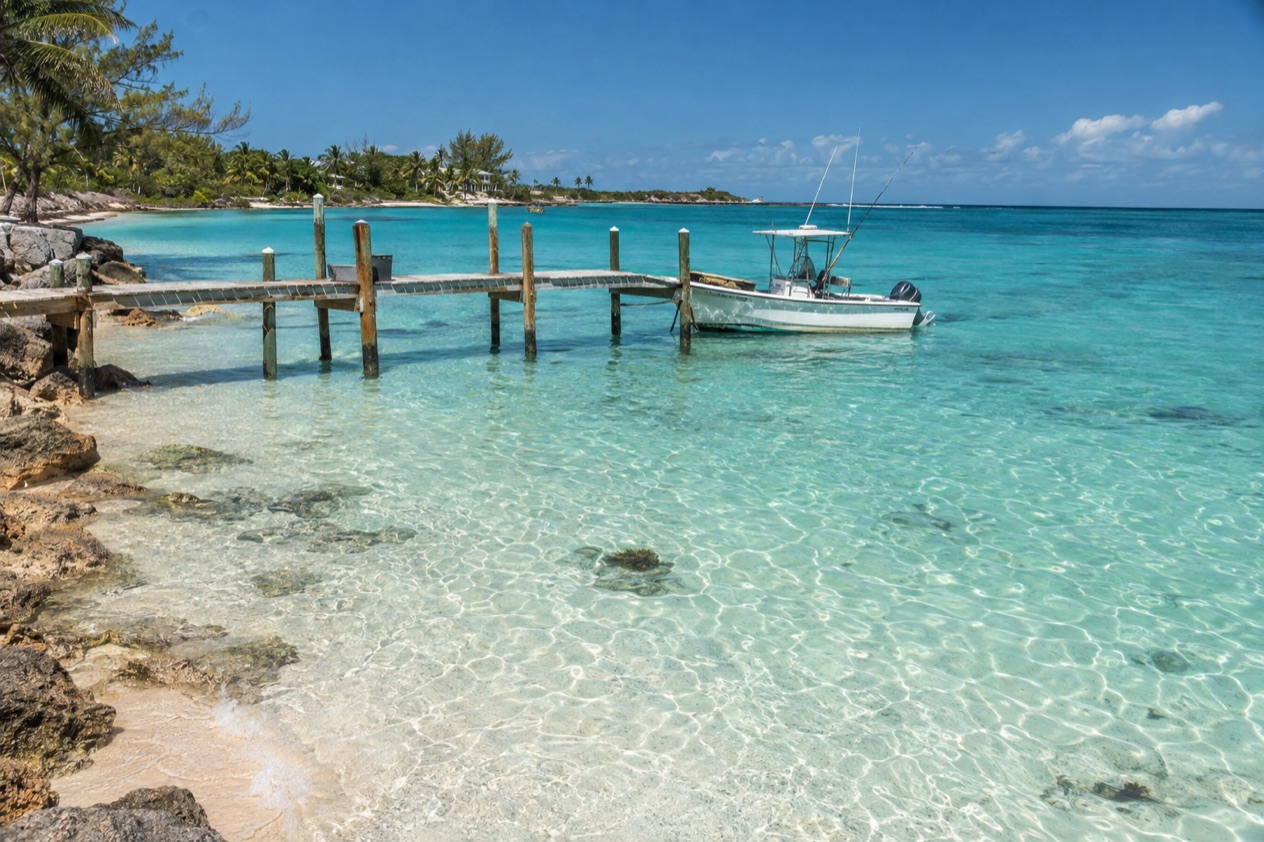
What should you know before visiting Bimini?
Four things matter most: you reach North Bimini by air and then a short hop by ferry from the airport island, the paperwork for entering the Bahamas is strict, cash is the sensible companion on the Out Islands, and medical care on the smaller islands is limited. Everything else about Bimini is relaxed, from the dress code to the pace of service.
First-time visitors are usually surprised by how little island there is. North Bimini is a long, flat ribbon, about 7 miles from end to end and only a couple of hundred yards across at its narrowest.
Alice Town, the main settlement, is a string of shops, restaurants and bars strung along a road everyone calls the King’s Highway. There is no sprawl, no skyline, no resort district. You orient yourself by the road and by the water on either side.
The second surprise is the distance, or rather the lack of it. Bimini sits 50 miles from Florida’s east coast, so it feels like a different country within a morning’s travel.
The Bahamas is that, though: a foreign country with its own entry form, its own laws and its own currency, even if the dollar in your pocket works. Visitors who treat it like a weekend in the Keys are the ones caught out by the rules on drugs, which are firm and enforced.
Finally, Bimini rewards people who come for what is actually here. You will find fishing docks, the wreck of the SS Sapona poking out of the water, and the stone alignments known as the Bimini Road lying offshore. It is a place for boats, for slow evenings on the King’s Highway, and for conversations with whoever is on the next barstool.
Entry, fees and paperwork
Every person entering the Bahamas needs a passport, and the Bahamas Department of Immigration says it must be valid for at least six months. Passport cards are not accepted for arrival by air. Travelers also fill out the Bahamas Immigration Disembarkation/Embarkation Card, the paper form that is handed in at the border.
U.S. citizens arriving as bona fide visitors do not need a Bahamian visa for a stay of up to eight months. You do need a return or onward ticket, and U.S. citizens must also present proof of anticipated departure from the Bahamas. Officers may ask to see evidence of enough funds to support yourself during the trip, so it helps to have a way to show it.
The length of stay written in your passport is set by the immigration officer at the port of entry, so it can differ from the maximum. Anyone who wants to stay longer than the period granted has to ask the Department of Immigration for permission. The old Bahamas Health Visa and the pre-arrival COVID-19 testing requirement have been eliminated, and visitors can travel freely throughout the islands whatever their vaccination status.
Shopping in Alice Town and elsewhere in the country comes with a perk. Stores that display the Global Blue Tax-Free Shopping sign let qualifying visitors skip the VAT and the service fee on their purchases, as long as they show a passport or valid ID.
| Item | Amount | Who it applies to |
|---|---|---|
| Minimum purchase for tax-free shopping | More than $25 | Shoppers showing a passport or valid ID |
| VAT saving on qualifying purchases | Up to 7% of the price | Shoppers who qualify for VAT-free shopping |
Money and cards
The Bahamian dollar is on par with the U.S. dollar, and both are accepted interchangeably on all islands. In practice that means you can pay with the bills in your wallet, and you may get your change in either currency. There is no exchange counter to find before you head to a dock or a bar.
Bimini is one of the Out Islands, and for the Out Islands carrying cash is advised. It is the habit that suits a small island with a handful of shops, a few restaurants and a lot of boats. Small bills are useful for the little purchases that make up a day here, from a plate of conch salad to a snack from a roadside stand.
Tax-free shopping is the one money detail worth knowing before you spend. Look for the Global Blue sign in a shop window and keep your passport or ID handy, since it is what lets you qualify. The savings apply to the price of the purchase and to the service fee, which makes a difference when you are buying gifts or gear before heading home.
Getting around
Most visitors arrive by air, and the first leg ends at South Bimini Airport, where commercial and charter airlines land and visitors then ferry across to North Bimini. Bimini is also served by North Bimini Airport, and between them the two airports receive domestic flights from other Bahamian islands as well as international flights from the United States. The crossing itself is the real beginning of a Bimini trip, with the water changing color beneath you and Alice Town appearing on the far shore.
If you are coming from another Bahamian island, the country is an archipelago of 16 islands that visitors reach by flying into Nassau, the gateway, or directly into an Out Island. Travelers can fly between islands on scheduled and chartered service from certified domestic and international carriers. That is how Bimini fits into a longer trip, as one stop among many islands connected by air rather than by road.
Driving in the Bahamas is on the left-hand side of the road, which matters for the first glance you give when crossing the King’s Highway on foot. Cars come from the direction you may not expect, so look right first. The traffic problems and pedestrian accidents reported for New Providence belong to Nassau, not to the quiet road that runs the length of North Bimini.
With the island this narrow, getting your bearings is simple. The settlement and its bars and restaurants sit along the one main road, the sea is a few steps away on either side, and the long bluff on the west side looks out toward the waters where the Bimini Road lies. The wreck of the SS Sapona, which ran aground in 1926 during a hurricane, is a popular scuba diving and snorkeling site near Bimini, with its upper half out of the water and its lower half submerged.
Health and the sun
The outer islands, Bimini included, have only small clinics, and medical care there is limited. Full medical care is available on New Providence and Grand Bahama, but serious illnesses or injuries might not be treatable locally even there. That is the main health fact of an island trip, and it explains why visitors think about their coverage before they leave home.
Serious problems that require hospitalization or medical evacuation to the United States can cost tens of thousands of dollars in up-front costs. Travelers who carry insurance with evacuation coverage are the ones who avoid that bill. Ambulance service exists on the major islands, but it is not something to count on for a remote stretch of coast or a small cay.
The sun is the everyday health matter. Sunscreen is really needed, because the sun in the Bahamas is intense, and on a flat, narrow island with water on both sides there is little shade between the dock and the bar. Women are advised to bring a hat, wide-brimmed or otherwise, to block the sun on the beaches, and men should pack standard swim trunks for the beach.
Dealing with the sun here is mostly habit: reapply after time on the boat, wear the hat during the middle of the day, and leave the long walks for the cooler hours of morning and evening. The reflection off the water makes a day on a fishing boat feel stronger than the same hours on land.
Local customs and etiquette
Bahamians greet each other before they do business, and the habit travels well. Say good morning or good afternoon when you walk into a shop, a restaurant or a dock office, and wait for the answer before you ask for anything. A handshake and a bit of small talk go a long way on an island of this size, where the person behind the counter may well know the person you are about to meet.
Dress is easygoing. Dining in a restaurant wearing flip-flops and cargo shorts is commonplace, so nobody will look twice if you come straight from the boat.
Swimwear belongs on the beach and the dock, though, and a shirt or cover-up is the polite thing in town, in shops and anywhere near a church. On Sunday mornings the churches fill with people in their best clothes, and a visitor who is quiet and respectful is welcome to stand at the back.
Meals follow the day. Lunch is the main social meal and can stretch, dinner comes late and unhurried, and service moves at island speed.
Conch in all its forms is the dish to try, from fritters to salad, and it is worth ordering whatever the local cook recommends rather than something you already know. The People-to-People program pairs travelers with volunteer locals who love their islands, and Bahamian ambassadors in its culinary experience often invite visitors into their homes for an authentic Bahamian meal.
Bimini has a fishing and boating culture, and that shapes conversation. Ask about the catch, the weather on the water or the old stories, and people open up, including stories of writers and anglers who made the island famous and the tale that some believe the Bimini Road was once part of the road system of Atlantis. In markets, prices are generally what they say, so bargaining is not the usual habit and is best left alone.
One law deserves plain words. Marijuana and all products containing its derivatives, such as CBD and THC, are not legal in the Bahamas, and a prescription or medical card does not exempt you from prosecution. Possession or use of illegal drugs is a criminal offense that can mean prison time, and drug violators are regularly arrested even for small quantities.
Good to know before you go
The U.S. State Department rates the Bahamas Level 2, “Exercise increased caution”, and says most crime occurs in Nassau on New Providence and in Freeport on Grand Bahama.
The Atlantic hurricane season runs from June 1 to November 30, so a trip in the autumn falls inside it and a trip in December falls just after. The Bahamas Ministry of Tourism & Aviation monitors tropical storms and hurricanes in the Atlantic, and travelers are encouraged to check the Bahamas.com hurricane page regularly for storm-related updates.
Keep your passport, your completed card and your onward ticket together in one place, since they are the first things asked for at the border. Keep your ID and passport with you for tax-free shopping too. One last habit suits Bimini: carry a little cash and a hat whenever you step out onto the King’s Highway.
Sources
- Bahamas Department of Immigration, Entry requirements (https://www.immigration.gov.bs/entry-requirements/), checked October 10, 2026
- Bahamas Customs and Excise, Conditionally duty-free items (https://www.bahamascustoms.gov.bs/imports-and-exports/conditionally-duty-free-items/), checked October 10, 2026
- U.S. Department of State, The Bahamas Travel Information, Health (https://travel.state.gov/), checked October 10, 2026
- U.S. Department of State, The Bahamas Travel Information, Traveling and transportation (https://travel.state.gov/), checked October 10, 2026
- U.S. Department of State, The Bahamas Travel Information, Local laws and special circumstances (https://travel.state.gov/), checked October 10, 2026
- Bahamas Ministry of Tourism, Investments & Aviation (bahamas.com), Island FAQ (https://www.bahamas.com/plan-your-trip/island-faq), checked October 10, 2026
- Bahamas Ministry of Tourism, Investments & Aviation (bahamas.com), People-to-People program (https://www.bahamas.com/plan-your-trip/people-to-people), checked October 10, 2026
- Bahamas Ministry of Tourism, Investments & Aviation (bahamas.com), travel blog, VAT-free shopping rules (https://www.bahamas.com/blog/taking-advantage-of-value-added-tax-free-shopping-in-the-bahamas), checked October 10, 2026
- Bahamas Ministry of Tourism, Investments & Aviation (bahamas.com), travel blog, dress code and what to wear (https://www.bahamas.com/blog/how-to-dress-during-your-visit-to-the-bahamas), checked October 10, 2026
- Bahamas Ministry of Tourism, Investments & Aviation (bahamas.com), Sustainability (https://www.bahamas.com/plan-your-trip/sustainability), checked October 10, 2026
- Bahamas Department of Immigration, Before your arrival (https://www.immigration.gov.bs/entry-requirements/before-your-arrival/), checked October 10, 2026
- U.S. Department of State, The Bahamas Travel Information, Entry and exit requirements (https://travel.state.gov/), checked October 10, 2026
- Bahamas Ministry of Tourism, Investments & Aviation (bahamas.com), Hurricane and storm information (https://www.bahamas.com/hurricane-storm-information), checked October 10, 2026
- Bahamas Ministry of Tourism, Investments & Aviation (bahamas.com), Bimini (https://www.bahamas.com/islands/bimini), checked October 10, 2026
- Wikipedia, Bimini (https://en.wikipedia.org/wiki/Bimini), checked October 10, 2026
- Wikivoyage, Bimini travel guide (https://en.wikivoyage.org/wiki/Bimini), checked October 10, 2026
- Bahamas Ministry of Tourism, Island hopping (https://www.bahamas.com/getting-here/island-hopping), checked October 10, 2026
- Bahamasair, home (https://www.bahamasair.com/), checked October 10, 2026
- U.S. Department of State, The Bahamas Travel Advisory, Level 2 (https://travel.state.gov/), checked October 10, 2026
- NOAA National Hurricane Center, Climatology (https://www.nhc.noaa.gov/climo/), checked October 10, 2026
To plan your stay
- Best Time to Visit Bimini: Weather by Month, Sea Temperatures, Festivals and Crowds
- Things to Do in Bimini: Diving the SS Sapona, the Bimini Road, Alice Town and Bahamian Food
- Where to Stay in Bimini: Alice Town, the Resorts World Beachfront and South Bimini
- Bimini from Miami: Ferry from Port Everglades, Flights to South Bimini and a Day on North Bimini