
You step off a small plane onto a warm runway, and the air smells of salt, sun-baked limestone and sea grape. A few minutes later the road runs between low scrub and flashes of turquoise, and the pace of everything drops a notch. Eleuthera rewards a little preparation: the paperwork at the border, cash in your pocket, a car for the left-hand side of the road, and a realistic idea of how far the nearest hospital is.
What should you know before visiting Eleuthera?
Four things matter most here: your travel documents, cash for an Out Island, a car and the habit of driving on the left, and the fact that medical care is limited to small clinics. Get those right and the rest of the trip is mostly beaches, boats and long lunches.
First-time visitors are often surprised by the shape of the place. Eleuthera is a thin ribbon of an island, about 110 miles from end to end, and in places little more than a mile wide, so the Atlantic is never far from one side of the road and the sheltered Bight of Eleuthera from the other. The coastline runs for 210 miles, which means a lot of shoreline with very few buildings on it.
The second surprise is how little is organized for you. There is no public transport system, so the island is explored by rental car, and there is no single town that holds everything. Governor’s Harbour, founded by the Eleutherian Adventurers in 1648, is a principal settlement and administrative center, with pastel colonial houses on a hillside above the harbor. Beyond it, the settlements are small and spaced out along one long road.
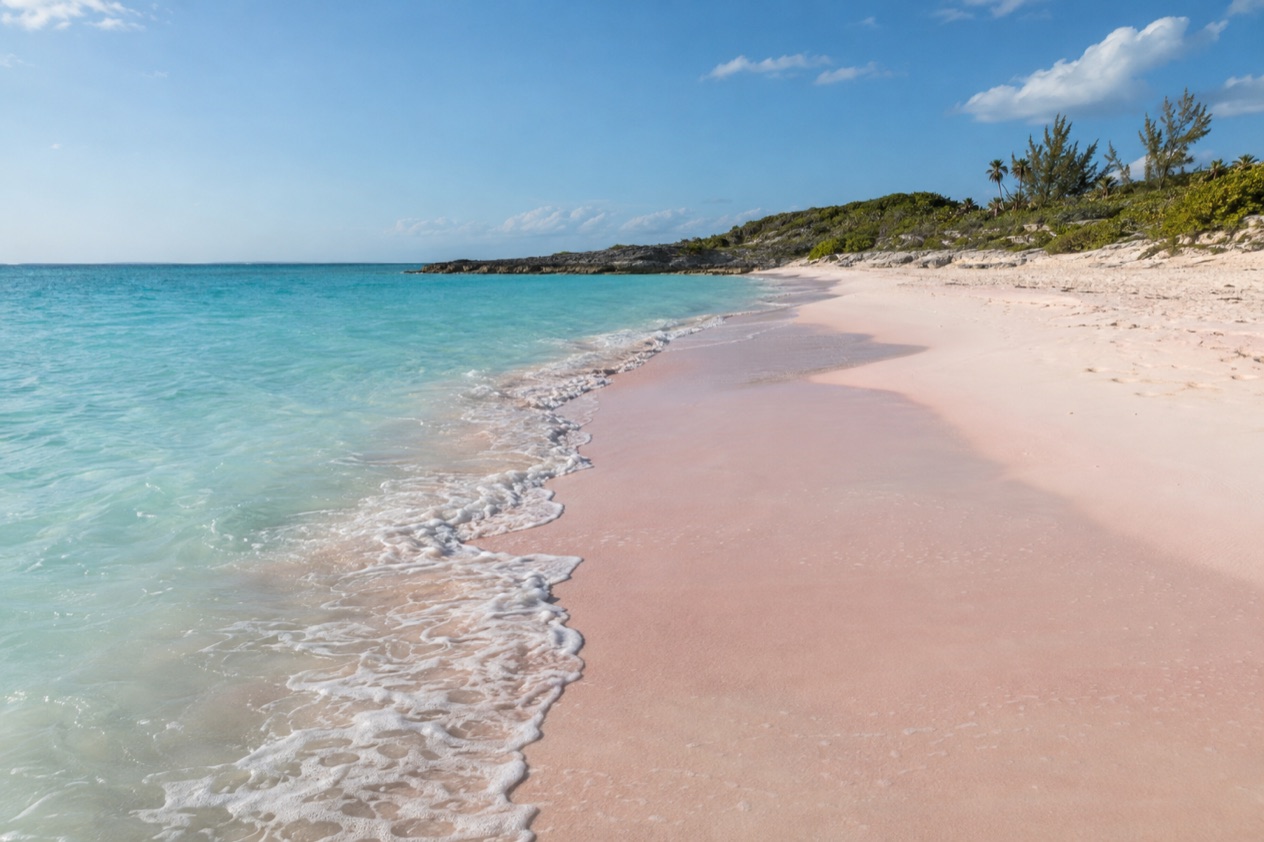
Then there is the scenery that stops drivers in their tracks. At the Glass Window Bridge, a strip of rock only thirty feet wide separates the deep blue Atlantic from the calmer green water of the Bight, and you can look at both at once. The beaches are wide and pink-tinged, backed by outcrops of ancient coral, and across the water Harbour Island has a pink sand beach that travel magazines have often called one of the most beautiful in the world.
Entry, fees and paperwork
U.S. citizens need a passport to enter the Bahamas, and they do not need a Bahamian visa for a visit as a bona fide visitor. The Bahamas Department of Immigration says the passport must be valid for at least six months, and that passport cards are not accepted for travelers arriving by air.
You must also hold a return or onward ticket, and you may be asked to show proof of sufficient funds to support yourself while you are there. Every traveler fills out the Bahamas Immigration Disembarkation/Embarkation Card, and the State Department adds that U.S. citizens should be ready to show proof of their anticipated departure from the Bahamas.
A visit can last up to eight months, provided you can support yourself, but the officer at the port of entry decides the period stamped in your passport, and it may be shorter. Staying longer means asking the Department of Immigration for permission. The Bahamas Health Visa and the pre-arrival COVID-19 testing requirement have both been eliminated, so travelers can move freely through the islands whatever their vaccination status.
The only tax worth planning around is the one you can avoid. Stores that display the Global Blue Tax-Free Shopping sign let qualifying shoppers skip the VAT and the service fee on purchases, which is a small bonus when you are buying a straw hat or a bottle of local rum.
| Fee | Amount | Who pays |
|---|---|---|
| Minimum purchase for tax-free shopping | More than $25 | Shoppers showing a passport or valid ID |
| Saving on qualifying purchases (VAT and service fee not charged) | Up to 7% of the purchase price | Shoppers who qualify at Global Blue Tax-Free stores |
Money and cards
The Bahamian dollar is on par with the U.S. dollar, and both are accepted interchangeably on all islands, Eleuthera included. You can pay in the greenbacks from your wallet and get Bahamian bills in change, so there is no exchange counter to find and no mental arithmetic at the register.
What changes on an Out Island is the advice about cash. Carrying cash is advised for the Out Islands, and Eleuthera is one of them, so it makes sense to arrive with a supply of small bills rather than counting on every roadside stand, settlement shop or beach bar to work the way a Nassau resort does.
Shopping tax-free works the same way whatever you pay with. Look for the Global Blue sign in the window, and keep your passport or another valid ID with you when you go to the register, since that is what qualifies the purchase.
Getting around
Traffic in the Bahamas keeps to the left-hand side of the road, and on Eleuthera, where there is no public transport system, visitors generally rent a car to explore. The road runs the length of the island, so you will be on it often. Drivers coming from the States should expect to spend the first few turns, and especially the first junctions, reminding themselves which side to pull onto.
Eleuthera and Harbour Island lie 60 miles east of Nassau. The Bahamas is an archipelago of 16 islands that visitors reach by flying into Nassau, the country’s gateway, or directly into an Out Island.
Scheduled and chartered air service links the islands, run by certified domestic and international carriers. Bahamasair lists a fare from Nassau to North Eleuthera starting at $80.50, which is a useful figure if you are building a trip around more than one island.
Harbour Island has a rule of its own: it is accessible only by boat or ferry. That makes the crossing part of the experience, with a small boat, a short stretch of open water and the pink sand of the three-mile beach waiting on the other side. Once there, you are on a separate island, so plan the day with the return crossing in mind.
Alongside the main road, the island’s smaller pleasures are found by pulling over. Coves, lookouts and little settlements appear between the bigger sights, and the Eleuthera Sustainability Council Cooperative has installed solar-powered lights across the island, a quiet sign of how locals think about its future.
Health and the sun
The outer islands have only small clinics, and medical care there is limited. Eleuthera falls in that category. Full medical care is available on New Providence and Grand Bahama, but even there serious illnesses or injuries might not be treatable locally. Ambulance service exists on the major islands.
What worries travelers most is the cost of the worst case. A serious health problem that needs hospitalization or medical evacuation to the United States can mean tens of thousands of dollars in up-front costs.
That is the reason to look at evacuation coverage before you leave, rather than after a bad fall on a rocky trail. With the Health Visa and the testing requirement gone, there are no health forms to complete on arrival.
The sun, by contrast, is a daily matter. It is intense in the Bahamas, and sunscreen is really needed. A hat, wide-brimmed or otherwise, keeps the glare off your face on the beaches, and the water and the pale sand throw the light back at you. Men should pack standard swim trunks for the beach, and everyone should keep a bottle of sunscreen in the beach bag.
One more legal point belongs with health: in the Bahamas, marijuana and all products containing its derivatives, such as CBD and THC, are not legal. A prescription or medical card does not exempt you, because Bahamian law makes no distinction between medical and recreational use. Drug violators are regularly arrested, even for small quantities, and possession can mean time in prison.
Local customs and etiquette
Manners on Eleuthera start with a greeting. Say good morning or good afternoon when you walk into a shop, a bakery or a roadside stand, before you ask for anything, and expect the same in return. Conversations run at the pace of the island, so a question about directions may turn into a few minutes of friendly talk about where you are from and where you are headed.
Dress is relaxed. Dining in a restaurant in flip-flops and cargo shorts is commonplace, and nobody will look twice at sandy feet.
Swimwear belongs on the beach and the boat, so pull on a cover-up or a shirt before you walk into a settlement, a store or a bakery. Churches deserve more care. On Sunday mornings the small white and pastel churches fill up with singing, and visitors who step in, or simply walk past, should wear covered shoulders and knees.
Prices in shops and at fruit stands are generally what they are, and haggling is not part of everyday buying the way it is in some markets abroad. A pleasant exchange and a smile go further. Meal times follow the day: a big plate of fish or cracked conch at lunch is a classic, with the evenings given to sunsets, rum punch and long dinners on a deck.
If you want to meet people, the island gives you the occasion. Eleuthera holds an annual Pineapple Festival in Gregory Town, a nod to the fruit that once shaped the local economy. And the People-to-People program pairs travelers with volunteer locals who share their love of the islands, sometimes inviting them home for an authentic Bahamian meal.
Good to know before you go
The U.S. State Department rates the Bahamas Level 2, “Exercise increased caution”, and says most crime occurs in Nassau on New Providence and in Freeport on Grand Bahama.
The Atlantic hurricane season runs from June 1 to November 30, so a trip in the later part of the year falls inside it. The Bahamas Ministry of Tourism & Aviation monitors tropical storms and hurricanes in the Atlantic, and travelers are encouraged to check the Bahamas.com hurricane page regularly for updates on storm-related weather.
Keep your return or onward ticket and your proof of funds where you can reach them on arrival, along with the completed immigration card, and carry cash with you whenever you head away from the main settlements. Fill the car’s tank before you leave the larger settlements, and give yourself time to drive, since the road ahead is long and the views along it are worth the pauses.
Sources
- Bahamas Department of Immigration, Entry requirements (https://www.immigration.gov.bs/entry-requirements/), checked October 10, 2026
- Bahamas Customs and Excise, Conditionally duty-free items (https://www.bahamascustoms.gov.bs/imports-and-exports/conditionally-duty-free-items/), checked October 10, 2026
- U.S. Department of State, The Bahamas Travel Information, Health (https://travel.state.gov/), checked October 10, 2026
- U.S. Department of State, The Bahamas Travel Information, Traveling and transportation (https://travel.state.gov/), checked October 10, 2026
- U.S. Department of State, The Bahamas Travel Information, Local laws and special circumstances (https://travel.state.gov/), checked October 10, 2026
- Bahamas Ministry of Tourism, Investments & Aviation (bahamas.com), Island FAQ (https://www.bahamas.com/plan-your-trip/island-faq), checked October 10, 2026
- Bahamas Ministry of Tourism, Investments & Aviation (bahamas.com), People-to-People program (https://www.bahamas.com/plan-your-trip/people-to-people), checked October 10, 2026
- Bahamas Ministry of Tourism, Investments & Aviation (bahamas.com), travel blog, VAT-free shopping rules (https://www.bahamas.com/blog/taking-advantage-of-value-added-tax-free-shopping-in-the-bahamas), checked October 10, 2026
- Bahamas Ministry of Tourism, Investments & Aviation (bahamas.com), travel blog, dress code and what to wear (https://www.bahamas.com/blog/how-to-dress-during-your-visit-to-the-bahamas), checked October 10, 2026
- Bahamas Ministry of Tourism, Investments & Aviation (bahamas.com), Sustainability (https://www.bahamas.com/plan-your-trip/sustainability), checked October 10, 2026
- Bahamas Department of Immigration, Before your arrival (https://www.immigration.gov.bs/entry-requirements/before-your-arrival/), checked October 10, 2026
- U.S. Department of State, The Bahamas Travel Information, Entry and exit requirements (https://travel.state.gov/), checked October 10, 2026
- Bahamas Ministry of Tourism, Investments & Aviation (bahamas.com), Hurricane and storm information (https://www.bahamas.com/hurricane-storm-information), checked October 10, 2026
- Bahamas Ministry of Tourism, Investments & Aviation (bahamas.com), Eleuthera and Harbour Island (https://www.bahamas.com/islands/eleuthera-harbour-island), checked October 10, 2026
- Wikipedia, Eleuthera (https://en.wikipedia.org/wiki/Eleuthera), checked October 10, 2026
- Wikivoyage, Eleuthera travel guide (https://en.wikivoyage.org/wiki/Eleuthera), checked October 10, 2026
- Wikipedia, Governor's Harbour (https://en.wikipedia.org/wiki/Governor%27s_Harbour), checked October 10, 2026
- Bahamas Ministry of Tourism, Investments & Aviation (bahamas.com), Glass Window Bridge (https://www.bahamas.com/natural-wonders/glass-window-bridge), checked October 10, 2026
- Bahamas Ministry of Tourism, Island hopping (https://www.bahamas.com/getting-here/island-hopping), checked October 10, 2026
- Bahamasair, home (https://www.bahamasair.com/), checked October 10, 2026
- U.S. Department of State, The Bahamas Travel Advisory, Level 2 (https://travel.state.gov/), checked October 10, 2026
- NOAA National Hurricane Center, Climatology (https://www.nhc.noaa.gov/climo/), checked October 10, 2026
To plan your stay
- Best Time to Visit Eleuthera: Weather, Sea Temperatures, Seasons and Festivals
- Things to Do in Eleuthera: Pink Sand Beaches, Glass Window Bridge, Queen's Baths and Harbour Island
- Where to Stay in Eleuthera: Harbour Island, Governor's Harbour, Gregory Town and the South
- Eleuthera from Miami: Connecting Through Nassau, the Harbour Island Ferry and Getting Around the Island