
On the last night of December, Nassau goes quiet for a few hours and then wakes in the dark. Cowbells, goatskin drums and brass horns come down Bay Street, and costumes of crepe paper and cardboard flash under the streetlights.
That is the Bahamas in its busy season, bright, mild and full of visitors. By summer the islands slow to a hot, wet, sleepy pace over a very warm sea, with storm season on the calendar, and every island in the archipelago keeps its own rhythm through the year.
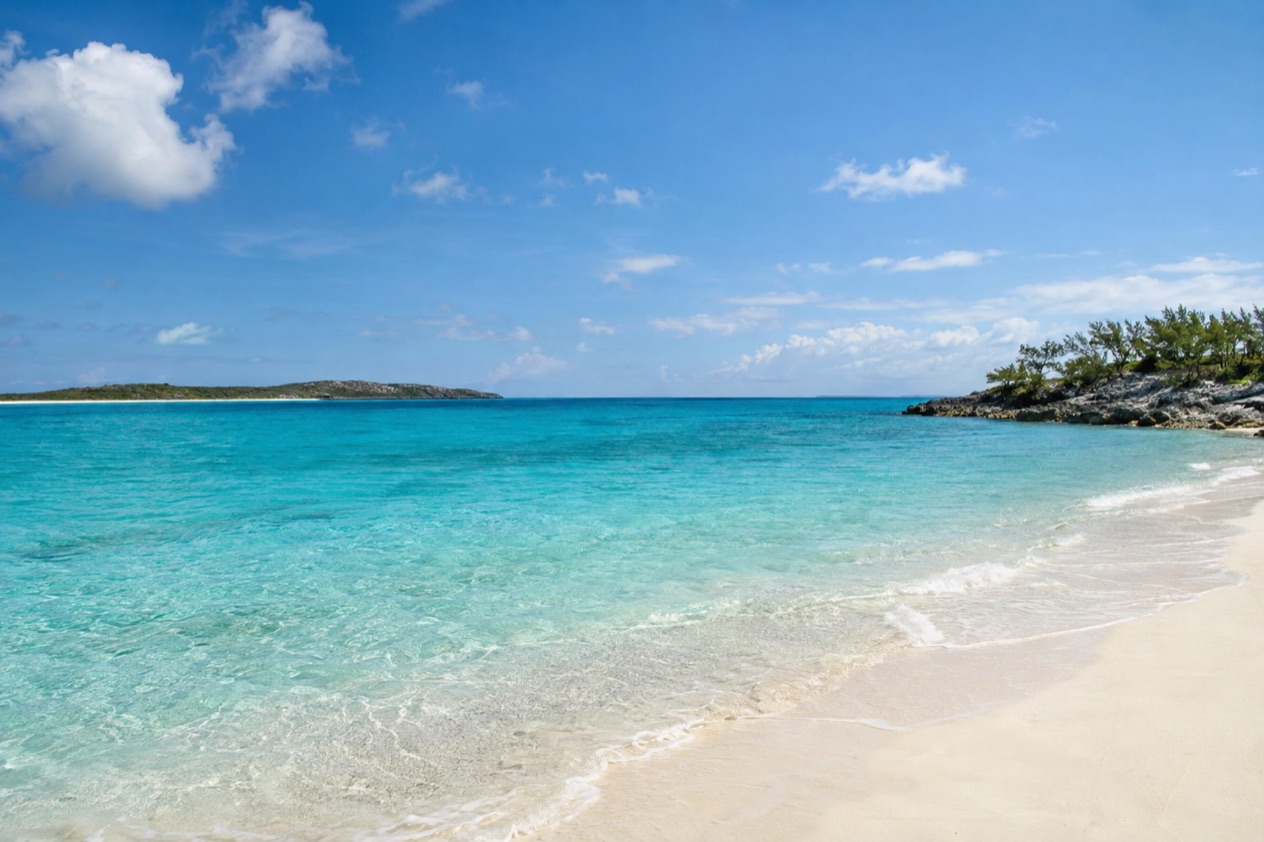
When is the best time to visit the Bahamas?
For most travelers the best stretch runs from mid-December through April, when days are warm without being heavy, the rain is lighter and the evenings are comfortable enough to eat outside in a T-shirt. It is also the time when the islands are at their liveliest, with Junkanoo at the turn of the year, regattas in the spring and the restaurants and bars along the waterfront open late.
For beach and sea, the question is how warm you like the water. If you want to float for an hour without a second thought, the summer months, from June into October, bring the warmest sea of the year.
If you prefer a sea that is refreshing and air that is gentle, April and May sit in between. Winter suits strolling, sailing, fishing and long lunches more than long hours in the water, since a cold front can cool the sea a little around the northern islands.
For sightseeing, the cooler months are kinder. Walking Nassau’s colonial streets, the forts and the straw market, or wandering Dunmore Town on Harbour Island, is far more pleasant when the sun is not pressing down. Budget travelers and anyone who dislikes crowds will do well in late spring and in the fall, when rooms are easier to find and the beaches feel roomier, as long as you accept hotter days and a real chance of rain.
Families should know that March is spring break, and the resorts, pools and beach bars around Nassau, Paradise Island and Cable Beach can be loud, with college groups mixed in among the strollers. Easter week brings another burst of family travel. If your children are happiest in quieter surroundings, the shoulder weeks around those holidays, or the early weeks of summer, are gentler.
The Bahamas weather by month
Nassau’s air and the sea around four islands follow the same arc through the year, mild in winter, hot and wet in summer.
| Month | Nassau average high (°F) | Nassau average low (°F) | Nassau rain days | Sea at Nassau (°F) | Sea at the Exumas (°F) | Sea at Grand Bahama (°F) | Sea at Bimini (°F) |
|---|---|---|---|---|---|---|---|
| January | 79.4 | 65.1 | 4.3 | 77.0 | 78.3 | 77.1 | 76.3 |
| February | 80.0 | 65.0 | 4.3 | 76.0 | 77.2 | 76.7 | 76.2 |
| March | 81.3 | 66.0 | 4.5 | 77.5 | 78.9 | 77.6 | 78.6 |
| April | 83.7 | 69.1 | 5.8 | 78.7 | 80.0 | 78.2 | 79.3 |
| May | 86.5 | 72.0 | 7.5 | 82.6 | 83.6 | 81.7 | 83.6 |
| June | 89.1 | 75.1 | 12.4 | 85.3 | 85.6 | 84.3 | 85.9 |
| July | 90.8 | 76.4 | 12.4 | 87.8 | 87.3 | 87.2 | 88.9 |
| August | 91.0 | 76.4 | 14.4 | 87.6 | 87.3 | 87.3 | 88.1 |
| September | 89.9 | 76.0 | 13.3 | 86.7 | 87.3 | 86.7 | 87.2 |
| October | 87.1 | 74.1 | 10.1 | 84.6 | 85.5 | 84.3 | 82.9 |
| November | 83.1 | 70.1 | 6.7 | 80.9 | 81.4 | 80.8 | 79.1 |
| December | 80.6 | 67.0 | 5.1 | 78.1 | 78.9 | 78.0 | 75.4 |
In Nassau, the year divides into a long mild season and a long hot one. From December to March, afternoons are pleasant, nights call for a light layer and rain falls on only a handful of days, usually as a short shower that passes quickly. A cold front now and then brings a gray, breezy day, but these fronts rarely linger.
From June to September the picture changes. Days are hot and humid, nights stay warm, and rain falls on well over a third of the month, often as a heavy afternoon downpour or a stormy spell, with sun on either side.
April and May are the bridge, warming quickly, and October and November ease back down. The sea follows the same path, a little slower than the air, so it is at its warmest in late summer when the air is already beginning to cool.
What is there to do in the Bahamas in each season?
Winter and early spring: the bright months
From December through April the Bahamas is most social. Nassau fills with Christmas decorations, the Straw Market and Arawak Cay’s fish fry stalls hum, and Junkanoo opens the new year. This is the season for walking the old streets of downtown Nassau, the forts and the waterfront, and for browsing the shops on Bay Street at a relaxed pace.
Out on the islands, the cooler air suits the activities that keep you outside all day: boat days around the Exumas, a stroll through the pastel lanes of Dunmore Town on Harbour Island, a day on the cays off the Abacos, or a long walk on the pink-tinged sand of Harbour Island’s beach. Fishing charters are active, and sailing is most comfortable. Leave the longest swimming days for later in the year, since the sea is cooler now.
May to October: hot, wet and unhurried
The warm months are made for the water. By June the sea is warm enough that a swim feels like a bath, and diving and snorkeling days stretch long.
Mornings are the sweet spot for outdoor plans, and the heavy afternoon showers are a good excuse for a long conch salad or a rum punch at a beach bar. The big resorts at Paradise Island and Cable Beach turn into water-park country, with pools and lazy rivers at their centers.
Summer also has its own celebrations: Independence Day on July 10, Emancipation Day in early August and a calendar of local festivals on the Out Islands. The trade-off is heat, humidity and the hurricane season, which peaks in late summer and early fall. Plans that rely on a particular island or a boat day deserve a flexible mindset in these months.
November and the shoulder weeks
November is a soft landing. The air loosens, the rain days thin out and the sea is still warm, while the crowds of the winter holidays have not yet arrived.
It is a good moment for island-hopping, for slow lunches of cracked conch and fried snapper, and for a first hit of Christmas atmosphere in Nassau as the lights go up. The hurricane season officially runs until the end of the month, so keep the plans easy to change.
The weeks after Christmas are the other way around: Junkanoo has passed, the Nassau streets are still decorated, and the island is full of travelers. Spring, from late March into April, is the second shoulder, with the warmth building and the regatta season on the Out Islands under way.
When is the Bahamas cheapest and least crowded?
The quietest stretch is late spring and fall, roughly May through early December, outside the holidays, when fewer people travel and rooms are easier to find. The weeks that bring the largest crowds are Christmas and New Year, the Presidents’ Day weekend, spring break in March and Easter week, whenever it falls in the spring.
At those peak moments the resorts of Paradise Island and Cable Beach are full, the beaches near Nassau are busy and peak-season rates apply. On the Out Islands the effect is gentler, but small inns have few rooms, so a full week at the turn of the year is a real thing there.
Summer sits in between. U.S. school vacations bring families from late June through August, so beaches and pools are lively even though the heat and the rain keep some travelers away.
The calmest weeks are in the fall, September and October, when the islands feel emptier, the beaches are open and many places run at a slower rhythm. The trade-off is weather, with hot days, frequent rain and the hurricane season close at hand.
Cruise ships add their own tide to Nassau’s downtown, so the streets near the port are busiest when several ships are in. Away from the port, in the Exumas, Eleuthera or the Abacos, the pace is set by the boats and the tides rather than by the calendar.
Which months should you avoid in the Bahamas?
No month is off the table, but the stretch from August through October asks for the most flexibility, because it is the wettest, the hottest and the heart of the hurricane season. The Atlantic season officially runs from June 1 to November 30, and the peak is September 10, with most activity between mid-August and mid-October.
That does not mean storms arrive every year or that a trip will be ruined, but it does mean a system can change plans for boats, flights and a particular island. The Bahamas Ministry of Tourism and Aviation monitors storms in the Atlantic, and travelers are encouraged to check the Bahamas.com hurricane page for updates. Tropical activity sometimes occurs outside the official dates, so the edges of the season count too.
Heat is the quieter issue. July and August bring the hottest days, with high humidity, and rain falls on many days of the month, usually in heavy bursts rather than all-day drizzle. Midday is best spent in the water or in the shade, with outdoor plans moved to the early morning or the evening.
At the other end of the year, winter has its own small drawback. A passing cold front can bring a cooler, gray and breezy day, and the sea can turn rougher for a day or two, particularly around the northern islands.
These spells pass, but anyone planning a purely beach-based trip in January or February should keep a few indoor ideas up the sleeve. Beach quality varies by island and by day in every season, and no month promises a particular beach will be spared.
When can you swim in the Bahamas?
The sea is at its warmest from June through October, when the water around every island in the table is in the mid-80s or higher, and it cools gradually from November to a low point in January and February.
Midwinter is when the islands differ most. Bimini’s sea is the coolest of the four in December, while the Exumas hold on to a little more warmth, and Nassau and Grand Bahama sit between them.
By July Bimini is the warmest, with the others close behind. March and April bring a quick warm-up, so spring is the sweet spot for travelers who want mild air and a sea that has already lost its winter chill.
The beaches change with the seasons as well. In the winter months, long walks, shell hunting, picnics and boat days take over from long hours in the water.
In summer, the sea is the main event, with early mornings the calmest for time on the sand, and afternoons often interrupted by a shower. Wave conditions vary from one beach to another and from one day to the next, so a quick look at the water on arrival tells you more than any month.
Festivals and events in the Bahamas through the year
Winter holidays and Junkanoo
Junkanoo is the heart of the Bahamian year. The largest celebration takes place on Bay Street in downtown Nassau, and Bahamians across the 16 islands celebrate the tradition, which UNESCO recognizes as an Intangible Cultural Heritage.
Organized groups of up to 1000 people spend almost the whole year preparing costumes and music, which is why the parades feel so polished. It is a bi-annual celebration, with parades on Bay Street and on many of the Out Islands, and the main ones come in the early hours of December 26 and January 1.
What you see is a river of color, with huge costumes, cowbells, whistles, horns and goatskin drums, and groups competing for the crowd’s favor. Come with patience and a light layer, since the parade runs through the early morning, and the crowd along the street is part of the show.
December in Nassau has a gentler side too. Pompey Square hosts Christmas caroling and decorations through the month. On Arawak Cay, the Christmas Village (known as Christmas On Da Cay) offers authentic Bahamian gifts, Christmas decorations, Bahamian treats and Bahamian entertainment, a good place for souvenirs and a plate of something local.
Spring regattas and summer celebrations
Spring on the Out Islands is the season of sailing. The Family Island Regatta at George Town, Exuma, usually in the spring, brings traditional Bahamian work boats, fast sloops with enormous sails, to race in the harbor, with music, food stalls and a festival feel on shore. Easter week, which moves every year, brings church services, family gatherings and a holiday mood across the islands.
Summer has its own flavor. Independence Day on July 10 is marked with ceremonies, music and fireworks, and Emancipation Day in early August, with its public holiday, brings beach gatherings and cultural events. In early summer the Pineapple Fest in Gregory Town, Eleuthera, celebrates the island’s fruit, usually around June. Many of these events are local, with the Out Islands setting the tone, so dates and details shift from year to year.
Nature seasons and food calendars
Food has its own calendar here, and the clearest marker is crawfish season, which runs from August 1 to March 31. On many menus the words crawfish and lobster are used interchangeably, so a plate of lobster in these months is likely to be Bahamian crawfish. Try it as a crawfish salad, with onions, sweet peppers, lime juice and diced lobster, served on a bed of greens or in a sandwich.
For a hearty start to the day, Stew Lobster, big chunks of crawfish simmered in a rich brown gravy, is on the breakfast menu at Gone Fishing on Arawak Cay. Conch, the other national favorite, is served all year as salad, fritters, cracked conch and in chowder, usually along the stalls at Arawak Cay and at seaside shacks on the Out Islands.
Outside the plate, the sea sets the tempo: calm summer mornings for time on the water, cooler winter days for sailing and fishing, and the long light of late spring for island-hopping. Each season has its moment, and the islands reward whoever matches the plan to the month.
Sources
- NOAA NCEI, GHCN-Daily station BF000078073 (Nassau Airport), normals 1991-2020 computed from the daily record (https://www.ncei.noaa.gov/access/services/data/v1?dataset=daily-summaries&stations=BF000078073), checked October 10, 2026
- Open-Meteo Marine API, average 2015-2024, checked October 10, 2026
- sunrise-sunset.org, sunrise and sunset calculated for the 15th of the month, checked October 10, 2026
- Wikipedia, Geography of the Bahamas (https://en.wikipedia.org/wiki/Geography_of_the_Bahamas), checked October 10, 2026
- Wikivoyage, The Bahamas (https://en.wikivoyage.org/wiki/The_Bahamas), checked October 10, 2026
- NOAA National Hurricane Center, Climatology (https://www.nhc.noaa.gov/climo/), checked October 10, 2026
- Bahamas Ministry of Tourism, Investments & Aviation (bahamas.com), Hurricane and storm information (https://www.bahamas.com/hurricane-storm-information), checked October 10, 2026
- Bahamas Ministry of Tourism, crawfish season (https://www.bahamas.com/blog/its-crawfish-season), checked October 10, 2026
- Bahamas Ministry of Tourism, Junkanoo (https://www.bahamas.com/events/junkanoo), checked October 10, 2026
- Wikipedia, Junkanoo (https://en.wikipedia.org/wiki/Junkanoo), checked October 10, 2026
- Bahamas Ministry of Tourism, Christmas season (https://www.bahamas.com/blog/christmas-season-officially-launched-in-the-bahamas), checked October 10, 2026
- Wikipedia, The Bahamas (https://en.wikipedia.org/wiki/The_Bahamas), checked October 10, 2026
- U.S. Department of State, The Bahamas Travel Advisory, Level 2 (https://travel.state.gov/), checked October 10, 2026
To plan your stay
- Things to Do in the Bahamas: Beaches, Blue Holes, Swimming Pigs and Fish Fry
- Where to Stay in the Bahamas: Best Islands, Resorts, Boutique Stays and How to Choose
- Getting Around the Bahamas: Flights, Ferries, Mailboats and Taxis in Nassau
- Know Before You Go to the Bahamas: Entry Rules, Money, Getting Around and Local Customs