
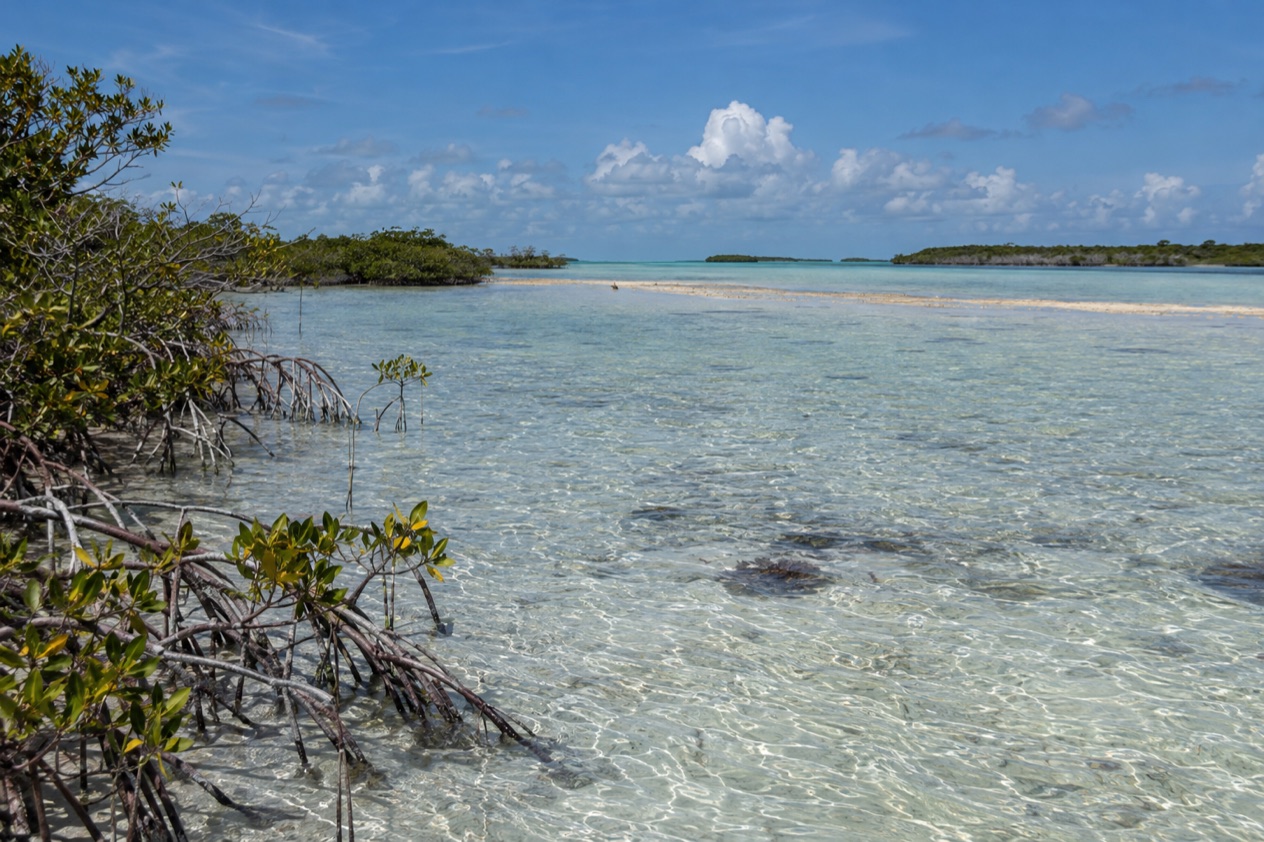
You step off a small plane onto Andros and the first thing you notice is how much green there is: pine, mangrove and scrub stretching away from the runway, with a thin line of turquoise at the edge. The pace drops at once, and the air smells of salt, wet leaves and somebody’s lunch on a grill. Andros rewards a little preparation, and the essentials are the entry papers, cash, the left side of the road and the sun.
What should you know before visiting Andros?
Four things matter most: Andros is enormous and split into separate parts, medical care is limited, cash is the safest way to pay, and the traffic keeps to the left. Everything else follows from those, from how you plan your days to what you pack.
Andros is an archipelago in its own right. North Andros, Mangrove Cay and South Andros are the three major islands, and they are threaded together by mangrove creeks, tidal swamps and hundreds of small cays. The whole thing stretches 104 miles from end to end, which is why people who say they have been to Andros may mean very different places. Choose the stretch you want, and treat the rest as another trip.
What surprises first-time visitors is the scale and the quiet. Andros covers about 2,300 square miles, more than all the other Bahamian islands put together, yet it feels like the least crowded place you have been in a long time.
Stretches of the shore are empty, the water inland is a patchwork of blue holes, and the nearest big city is across the sea. Nassau lies about 31 miles to the east, on the far side of the deep channel called the Tongue of the Ocean.
The island is also famous for what lies under and around it. More than 180 blue holes are scattered inland and along the shore, the highest concentration in the world, and the island sits beside the third largest barrier reef in the world.
West Side National Park protects 1.5 million acres of wilderness. Bring curiosity for the water and the wild interior, and expect fishing, creeks and reef to matter more here than shopping or nightlife.
Conservation is a living subject on Andros. The Small Hope Bay Foundation works toward an environmentally and economically sustainable future on the island, and the Bonefish & Tarpon Trust has helped establish six nationally protected bonefish conservation zones across the Bahamas. Visitors who come for the flats and the reef are guests in a place where people are actively protecting both.
Entry, fees and paperwork
U.S. citizens need a passport to enter the Bahamas, and no Bahamian visa if they arrive as a bona fide visitor staying no more than eight months. The Bahamas Department of Immigration says the passport must be valid for at least six months beyond arrival and that passport cards will not be accepted for entry by air. Plan the passport well before you book anything else.
Alongside the passport, you complete a Bahamas Immigration Disembarkation/Embarkation Card. U.S. citizens must also show proof of anticipated departure, and the Bahamas Department of Immigration requires every visitor to hold a return or onward ticket. You may be asked to show evidence of enough funds to support yourself during the stay, so keep a statement or a booking confirmation within reach of your passport.
The maximum stay is eight months, but the period stamped in your passport is up to the immigration officer at the port of entry and can be shorter. To extend a visit beyond the period granted, you must ask the Department of Immigration for permission. Look at the stamp before you leave the counter, since that date, not the maximum, is the one that counts.
The old Bahamas Health Visa and the pre-arrival COVID-19 testing requirement have been eliminated, so all visitors can travel freely to and throughout the islands regardless of vaccination status. If you plan to travel on to another country afterward, your travel documents must allow entry there as well.
Drug laws deserve a clear mention because they catch people out. Marijuana and every product containing its derivatives, including CBD and THC, are not legal in the Bahamas, and a prescription or medical card does not exempt you from prosecution. Drug violators are regularly arrested, even for small quantities, and possession of any illegal drug is a criminal offense that can mean time in prison. Leave anything of the kind at home.
Money and cards
The Bahamian dollar is on par with the U.S. dollar, and both are accepted interchangeably on all islands. In practice you can spend the bills in your wallet without converting anything, and you may get Bahamian notes back as change. Keep them as souvenirs or spend them before you fly, since they are not useful at home.
ATMs exist in Nassau and Paradise Island, on Grand Bahama and on most major Out Islands, but carrying cash is advised for the Out Islands, and Andros is one of them. Arrive with enough dollars for the days you plan to spend away from a town, because a small settlement on a long island is not the place to start looking for cash.
Shoppers who qualify for VAT-free shopping save up to 7 percent of the purchase price, and they pay neither the VAT nor the service fee. Look for stores that display the Global Blue Tax-Free Shopping signage.
You need a passport or valid ID and must spend more than $25. Such shops are more likely in Nassau than in a bush settlement, so treat this as a bonus of the trip rather than part of the Andros plan.
Getting around
Driving in the Bahamas is on the left-hand side of the road. For an American that means a few careful minutes at every junction and roundabout, and a habit of glancing right before you pull out. Take the first miles slowly, and remember that the passenger-side door is now the curb side.
The traffic horror stories that surround Nassau, with its severe congestion and frequent pedestrian accidents, belong to New Providence, not to Andros. Even so, the habit of driving on the left and watching for people on foot is worth bringing with you everywhere. Heavy rain can flood roads in many parts of the islands, so slow down when a storm has just passed.
The Bahamas is an archipelago of 16 islands reached by flying into Nassau, the country’s gateway, or directly into an Out Island. Travelers can also fly between islands on scheduled and chartered air service from certified domestic and international carriers. Because Andros sits across the Tongue of the Ocean from Nassau, you reach it through the air or the sea, never by road from the capital.
Distances on Andros itself are long, and the island is divided by water into sections, so think of each part as its own base. Choose a settlement, a lodge or a fishing camp that suits what you came for, and spend your days in that area rather than trying to cover the whole island.
Health and the sun
Medical care on the outer islands is limited, and Andros has only small clinics. Care is available on New Providence and Grand Bahama, but even there serious illnesses or injuries might not be treatable locally. Ambulance service exists on the major islands, so do not count on a quick response in a remote corner of a very large island.
Serious health problems that require hospitalization or medical evacuation to the United States can cost tens of thousands of dollars in up-front costs. For a trip to a place as remote as Andros, medical evacuation coverage is the one insurance worth thinking about before departure. Pack any prescription medicines you rely on in your carry-on, in their original containers.
The sun is intense, and sunscreen is really needed. On the water, whether you are on a flats boat or a reef trip, the glare comes from above and from the surface, so a hat makes a real difference. Women are advised to bring a hat, wide-brimmed or otherwise, to block the sun on beaches.
Spend the hottest hours of the day in shade, under a palm or on a covered porch, and plan your outdoor time for the early morning and the late afternoon. A long-sleeved light shirt is a good companion for a day in a boat. Keep sunscreen in your day bag, not in the room.
Local customs and etiquette
Greetings matter in the Bahamas. Say good morning, good afternoon or good evening when you enter a shop, a restaurant or a small office, and wait for a reply before you ask your question. On Andros, where settlements are small and everyone seems to know everyone, that simple courtesy opens many doors.
Dress is relaxed. Dining in a restaurant wearing flip-flops and cargo shorts is commonplace, and men should pack standard swim trunks for the beach. For church services, when you are welcome, dress modestly with covered shoulders and knees, because Sunday dress in a village church is traditionally smart. Leave swimwear for the beach and the boat, and slip on a shirt or a cover-up before you walk through a settlement.
Meals follow the day’s rhythm. Breakfast is early, and a plate of boiled fish, johnnycake or grits is a typical Bahamian start. Lunch is the main meal for many people, and dinner in small places can be early, so ask what is available before the kitchen has closed. Conch, fried snapper, peas and rice, and coconut desserts are the dishes to look for.
Bahamians like to share their home islands with visitors. The People-to-People program pairs travelers with volunteer locals, and ambassadors in the culinary experience often invite visitors into their homes for an authentic Bahamian meal.
Accept an invitation warmly, bring a small thank-you, and ask before you take a photograph of a person. Bargaining is not the habit in shops, though a friendly chat about the price of a craft at a straw market is part of the pleasure.
Good to know before you go
The U.S. State Department rates the Bahamas Level 2, “Exercise increased caution”, and says most crime occurs in Nassau on New Providence and in Freeport on Grand Bahama.
The Atlantic hurricane season runs from June 1 to November 30, and the Bahamas Ministry of Tourism & Aviation monitors tropical storms and hurricanes in the Atlantic. Travelers are encouraged to check the Bahamas.com hurricane page regularly for storm-related weather conditions, especially before a trip that falls inside those months.
Keep your return ticket, your completed card and your passport together in one place, along with a note of your accommodation, because those are the papers an officer may ask to see. A last habit worth building on a trip to such a big, quiet island: fill your wallet with cash and your water bottle before you leave a settlement, then go and find the blue water.
Sources
- Bahamas Department of Immigration, Entry requirements (https://www.immigration.gov.bs/entry-requirements/), checked October 10, 2026
- Bahamas Customs and Excise, Conditionally duty-free items (https://www.bahamascustoms.gov.bs/imports-and-exports/conditionally-duty-free-items/), checked October 10, 2026
- U.S. Department of State, The Bahamas Travel Information, Health (https://travel.state.gov/), checked October 10, 2026
- U.S. Department of State, The Bahamas Travel Information, Traveling and transportation (https://travel.state.gov/), checked October 10, 2026
- U.S. Department of State, The Bahamas Travel Information, Local laws and special circumstances (https://travel.state.gov/), checked October 10, 2026
- Bahamas Ministry of Tourism, Investments & Aviation (bahamas.com), Island FAQ (https://www.bahamas.com/plan-your-trip/island-faq), checked October 10, 2026
- Bahamas Ministry of Tourism, Investments & Aviation (bahamas.com), People-to-People program (https://www.bahamas.com/plan-your-trip/people-to-people), checked October 10, 2026
- Bahamas Ministry of Tourism, Investments & Aviation (bahamas.com), travel blog, VAT-free shopping rules (https://www.bahamas.com/blog/taking-advantage-of-value-added-tax-free-shopping-in-the-bahamas), checked October 10, 2026
- Bahamas Ministry of Tourism, Investments & Aviation (bahamas.com), travel blog, dress code and what to wear (https://www.bahamas.com/blog/how-to-dress-during-your-visit-to-the-bahamas), checked October 10, 2026
- Bahamas Ministry of Tourism, Investments & Aviation (bahamas.com), Sustainability (https://www.bahamas.com/plan-your-trip/sustainability), checked October 10, 2026
- Bahamas Department of Immigration, Before your arrival (https://www.immigration.gov.bs/entry-requirements/before-your-arrival/), checked October 10, 2026
- U.S. Department of State, The Bahamas Travel Information, Entry and exit requirements (https://travel.state.gov/), checked October 10, 2026
- Bahamas Ministry of Tourism, Investments & Aviation (bahamas.com), Hurricane and storm information (https://www.bahamas.com/hurricane-storm-information), checked October 10, 2026
- Bahamas Ministry of Tourism, Investments & Aviation (bahamas.com), Andros (https://www.bahamas.com/islands/andros), checked October 10, 2026
- Wikipedia, Andros, Bahamas (https://en.wikipedia.org/wiki/Andros,_Bahamas), checked October 10, 2026
- Wikipedia, Fresh Creek (Andros Town) (https://en.wikipedia.org/wiki/Fresh_Creek), checked October 10, 2026
- Bahamas Ministry of Tourism, Investments & Aviation (bahamas.com), travel blog, Andros nature (https://www.bahamas.com/blog/the-wild-side-of-andros), checked October 10, 2026
- Bahamas Ministry of Tourism, Island hopping (https://www.bahamas.com/getting-here/island-hopping), checked October 10, 2026
- Bahamasair, home (https://www.bahamasair.com/), checked October 10, 2026
- U.S. Department of State, The Bahamas Travel Advisory, Level 2 (https://travel.state.gov/), checked October 10, 2026
- NOAA National Hurricane Center, Climatology (https://www.nhc.noaa.gov/climo/), checked October 10, 2026
To plan your stay
- Best Time to Visit Andros: Weather by Month, Sea Temperatures, Hurricane Season and Festivals
- Things to Do in Andros: Blue Holes, Barrier Reef Diving, Bonefish Flats and Island Food
- Where to Stay in Andros: North Andros, Mangrove Cay, South Andros and How to Choose
- Andros from Nassau: Flights, Mailboats and the Fresh Creek Side of the Island