
You step off the boat or the small plane onto Harbour Island and the pace drops at once. Pastel clapboard cottages line the lanes of Dunmore Town, conversations carry across picket fences, and the Atlantic breeze comes in from the pink sand on the far side. A few practical things are worth settling before you arrive: the entry paperwork, how money works, how to get around, and the island’s small-town manners.
What should you know before visiting Harbour Island?
Four things matter most: your entry documents, cash for an out island, the fact that cars drive on the left, and the strength of the sun. Everything else on Harbour Island follows an easy, informal rhythm, and the island is small enough that a few good habits carry you through your stay.
First-time visitors are often surprised by the scale. Harbour Island is a small island off the northeast coast of Eleuthera, and Dunmore Town is its only town.
There is no skyline and no big resort strip, just a village that was once the capital of the Bahamas and still has the tidy, historic look to show for it. The streets are narrow, the buildings are low and brightly painted, and the whole place reads as a village rather than a resort.
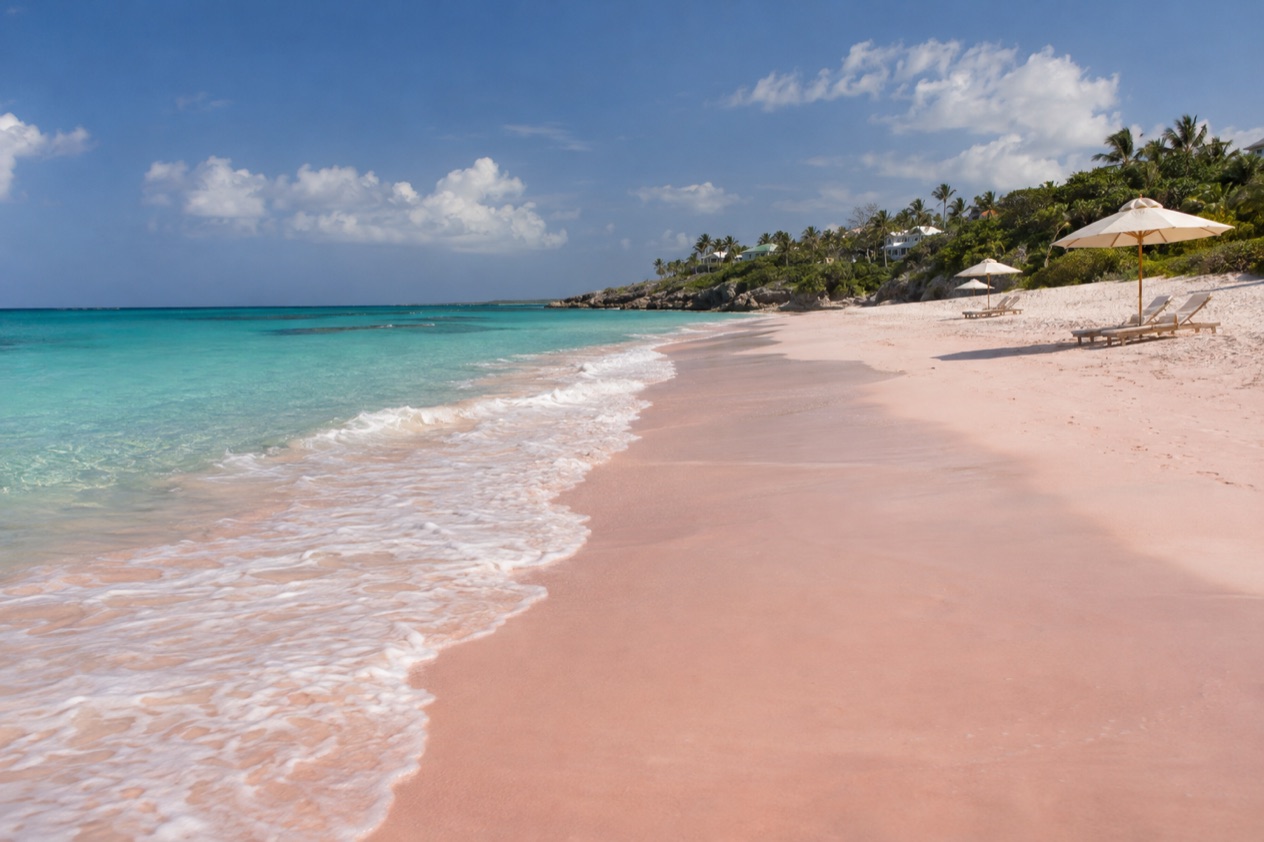
The other surprise is the beach. The famous pink sand lies along the island’s eastern, Atlantic side, and it stretches for over three miles. It is a long, open shoreline rather than a sheltered cove, so you walk a lot of it and meet few people along the way. The color is soft and shifts with the light, and it is most obvious in the low sun of early morning and late afternoon.
Finally, the island runs on outer-island time. Medical care is limited, cash matters more than you might expect, and the Bahamas keeps strict laws on drugs. The sections that follow take these one at a time so nothing catches you off guard once you land.
Entry, fees and paperwork
U.S. citizens need a passport to enter the Bahamas, and no Bahamian visa is required for a visit as a bona fide visitor. The Bahamas Department of Immigration says the passport must be valid for at least six months, and passport cards are not accepted. Every traveler also fills in the Bahamas Immigration Disembarkation/Embarkation Card, the paper form that records who is arriving and who is leaving.
You must hold a return or onward ticket, and U.S. citizens must also present proof of anticipated departure from the Bahamas. Immigration officers may ask you to show enough money to support yourself during the stay, so keep your bookings and a means of payment within reach when you reach the desk.
The maximum stay for a visitor is eight months, although the period stamped in your passport may be shorter, at the discretion of the officer at the port of entry. Anyone who wants to stay longer must ask the Department of Immigration for permission. The pre-arrival health visa and COVID-19 testing requirement have been eliminated, and travelers can move freely through the islands whatever their vaccination status.
There is no arrival charge to reckon with in what we know, but shopping offers a saving. Stores that display the Global Blue Tax-Free Shopping signage let qualifying visitors skip the VAT and the service fee, so keep your passport or a valid ID with you when you buy gifts.
| Fee | Amount | Who pays |
|---|---|---|
| VAT saving at Global Blue Tax-Free stores | Up to 7% of the purchase price | Shoppers who qualify |
| Minimum spend for tax-free shopping | More than $25 | Shoppers who qualify |
Money and cards
The Bahamian dollar is on par with the U.S. dollar, and both are accepted interchangeably on every island. In practice you can spend the dollars in your wallet without exchanging anything, and you may get Bahamian bills in your change, which are perfectly good to spend while you are there.
ATMs are available in Nassau and Paradise Island, on Grand Bahama and on most major out islands. Carrying cash is advised for the out islands, and Harbour Island is one of them. Bring enough small bills for the days you plan to stay so that you are never relying on a machine alone.
Shopping tax-free is the one money habit worth learning. Look for the Global Blue Tax-Free Shopping sign in a shop window, bring your passport or valid ID, and the savings come off a qualifying purchase. It is a small thing, but it adds up if you are buying local crafts, clothing or rum to take home.
Getting around
Driving in the Bahamas is on the left-hand side of the road, which matters even on a small island, because the lanes of Dunmore Town are narrow and visitors who are used to driving on the right can easily drift to the wrong side at a corner. Take the first few turns slowly and look both ways twice.
The Bahamas is an archipelago of 16 popular islands, reached by flying into Nassau, the country’s gateway, or directly into an out island. Harbour Island lies off the northeast coast of Eleuthera, so the usual approach is by way of Eleuthera. Between islands you can fly on scheduled and chartered air service from certified domestic and international carriers.
Bahamasair lists a fare from Nassau to North Eleuthera starting at $80.50, which gives you an idea of the cost of an island hop from the capital. From the Eleuthera side, you cross the short stretch of water to Harbour Island itself.
Hazards listed for the busier islands, such as heavy traffic in Nassau, common pedestrian accidents on New Providence and frequent road flooding after rainstorms in Nassau and Freeport, belong to those places rather than to this quiet island. They are worth remembering only if your trip passes through Nassau on the way.
Health and the sun
Medical care in the Bahamas is concentrated on New Providence and Grand Bahama, and even there, serious illnesses or injuries might not be treatable locally. The outer islands have only small clinics, and care is limited. Harbour Island visitors should plan on that basis and treat the island as a place for relaxing rather than for taking health risks.
Serious health problems that require hospitalization or medical evacuation to the United States can cost tens of thousands of dollars up front. That is why travel insurance that covers evacuation is a sensible part of the trip. Ambulance service is available on the major islands, but traffic congestion on New Providence can cause delays.
The sun is the everyday health matter. It is intense, and sunscreen is really needed, especially on a long, open beach with little cover. Women should bring a hat, wide-brimmed or otherwise, to block the sun on the sand, and men should pack standard swim trunks for the beach. On a three-mile strip you can easily spend hours in the open without noticing the burn.
Local customs and etiquette
Bahamians greet each other, and you, with a spoken hello. A simple good morning or good afternoon when you enter a shop, a restaurant or a lane where someone is sitting on a porch is the polite thing to do, and it often leads to a short chat. Skipping the greeting and going straight to your request can come across as abrupt.
Dress is relaxed. Dining in a restaurant wearing flip-flops and cargo shorts is commonplace, so you do not need to pack formal evening clothes. Still, cover your swimwear with a shirt or a wrap when you walk through Dunmore Town, and dress more neatly if you plan to step into a church service, where residents tend to wear their best.
Dunmore Town is a village with a long history, and the residents live there year-round. Keep your voice down on the quiet lanes at night, ask before you photograph people, and treat the pastel cottages and their gardens as private homes rather than scenery. A friendly attitude goes a long way on an island where everyone knows everyone.
Local food is part of the culture. Conch salad, fried snapper and other island favorites are everyday dishes, and Bahamian hosts are often glad to share a meal and a story. Take your time over lunch and dinner, because service is unhurried and nobody is trying to rush you out of the door.
One law deserves a direct mention. Marijuana and all products containing its derivatives, such as CBD and THC, are not legal in the Bahamas, and a prescription or medical card does not exempt you from prosecution. Drug violators are regularly arrested, even for small quantities, and possession can bring time in prison.
Good to know before you go
The U.S. State Department rates the Bahamas Level 2, “Exercise increased caution”, and says most crime occurs in Nassau on New Providence and in Freeport on Grand Bahama.
The Atlantic hurricane season runs from June 1 to November 30, so a trip in the autumn falls inside it. The Bahamas Ministry of Tourism & Aviation monitors tropical storms and hurricanes in the Atlantic, and travelers are encouraged to check the Bahamas.com hurricane page regularly for updates on storm-related weather.
Dunmore Town keeps Eastern time. Keep your passport, your return ticket and the immigration card close at hand when you reach the desk, and carry a little cash to Harbour Island before you settle in.
Sources
- Bahamas Department of Immigration, Entry requirements (https://www.immigration.gov.bs/entry-requirements/), checked October 10, 2026
- Bahamas Customs and Excise, Conditionally duty-free items (https://www.bahamascustoms.gov.bs/imports-and-exports/conditionally-duty-free-items/), checked October 10, 2026
- U.S. Department of State, The Bahamas Travel Information, Health (https://travel.state.gov/), checked October 10, 2026
- U.S. Department of State, The Bahamas Travel Information, Traveling and transportation (https://travel.state.gov/), checked October 10, 2026
- U.S. Department of State, The Bahamas Travel Information, Local laws and special circumstances (https://travel.state.gov/), checked October 10, 2026
- Bahamas Ministry of Tourism, Investments & Aviation (bahamas.com), Island FAQ (https://www.bahamas.com/plan-your-trip/island-faq), checked October 10, 2026
- Bahamas Ministry of Tourism, Investments & Aviation (bahamas.com), People-to-People program (https://www.bahamas.com/plan-your-trip/people-to-people), checked October 10, 2026
- Bahamas Ministry of Tourism, Investments & Aviation (bahamas.com), travel blog, VAT-free shopping rules (https://www.bahamas.com/blog/taking-advantage-of-value-added-tax-free-shopping-in-the-bahamas), checked October 10, 2026
- Bahamas Ministry of Tourism, Investments & Aviation (bahamas.com), travel blog, dress code and what to wear (https://www.bahamas.com/blog/how-to-dress-during-your-visit-to-the-bahamas), checked October 10, 2026
- Bahamas Ministry of Tourism, Investments & Aviation (bahamas.com), Sustainability (https://www.bahamas.com/plan-your-trip/sustainability), checked October 10, 2026
- Bahamas Department of Immigration, Before your arrival (https://www.immigration.gov.bs/entry-requirements/before-your-arrival/), checked October 10, 2026
- U.S. Department of State, The Bahamas Travel Information, Entry and exit requirements (https://travel.state.gov/), checked October 10, 2026
- Bahamas Ministry of Tourism, Investments & Aviation (bahamas.com), Hurricane and storm information (https://www.bahamas.com/hurricane-storm-information), checked October 10, 2026
- Wikipedia, Harbour Island, Bahamas (https://en.wikipedia.org/wiki/Harbour_Island,_Bahamas), checked October 10, 2026
- Wikivoyage, Harbour Island travel guide (https://en.wikivoyage.org/wiki/Harbour_Island), checked October 10, 2026
- Wikipedia, Dunmore Town (https://en.wikipedia.org/wiki/Dunmore_Town), checked October 10, 2026
- Bahamas Ministry of Tourism, Investments & Aviation (bahamas.com), Harbour Island Pink Sand Beach (https://www.bahamas.com/natural-wonders/harbour-island-pink-sand-beach), checked October 10, 2026
- Bahamas Ministry of Tourism, Investments & Aviation (bahamas.com), Sugar Beach (https://www.bahamas.com/natural-wonders/sugar-beach), checked October 10, 2026
- Bahamas Ministry of Tourism, Island hopping (https://www.bahamas.com/getting-here/island-hopping), checked October 10, 2026
- Bahamasair, home (https://www.bahamasair.com/), checked October 10, 2026
- U.S. Department of State, The Bahamas Travel Advisory, Level 2 (https://travel.state.gov/), checked October 10, 2026
- NOAA National Hurricane Center, Climatology (https://www.nhc.noaa.gov/climo/), checked October 10, 2026
To plan your stay
- Best Time to Visit Harbour Island: Pink Sand Beach Weather, Seasons and Festivals
- Things to Do in Harbour Island: Pink Sand Beach, Dunmore Town and Eleuthera Day Trips
- Where to Stay in Harbour Island: Dunmore Town, Pink Sand Beach and Choosing a Hotel
- Harbour Island from Miami: Flights via Nassau, the Ferry and the Pink Sand Beach