
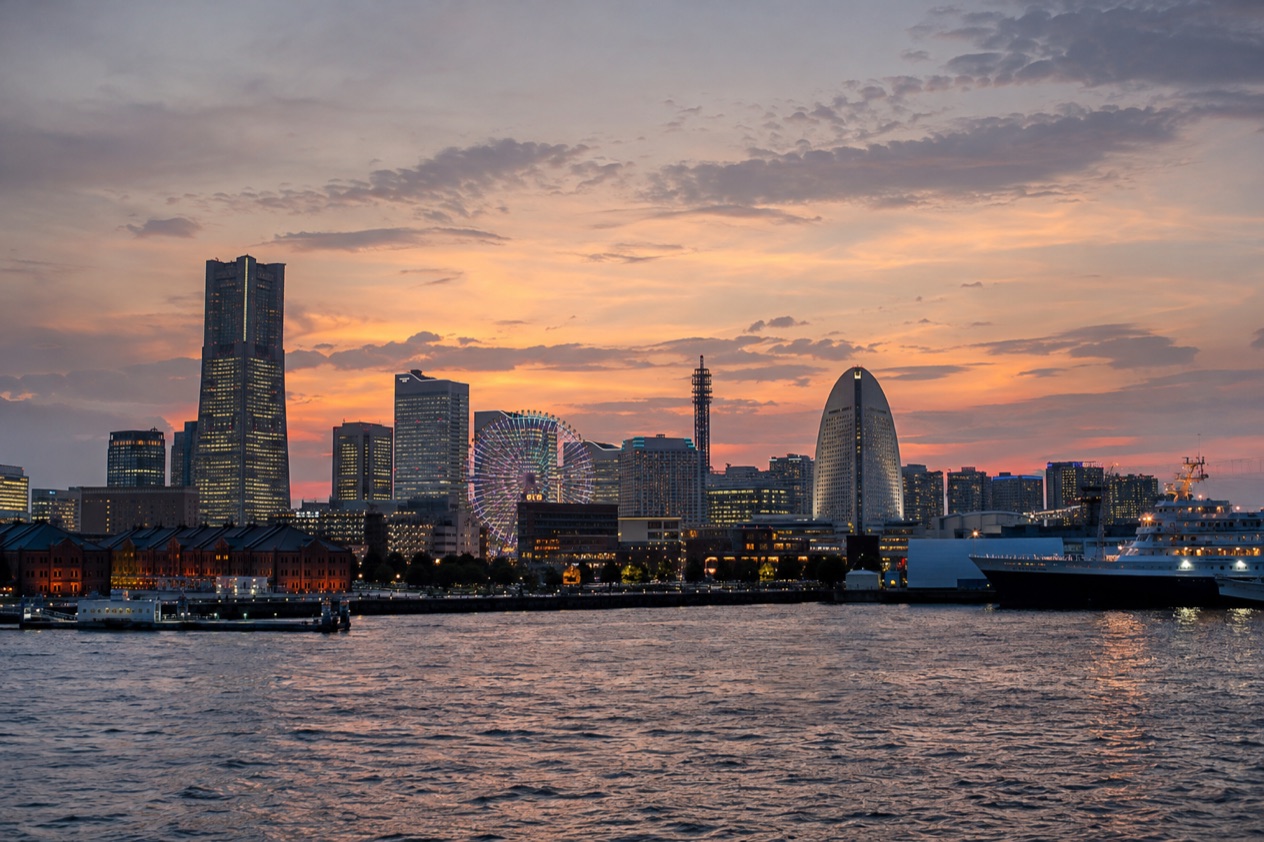
On an evening walk along the waterfront in Yokohama, the lights of the harbor come on one by one, and the smell of steamed buns drifts out from the lanes of Chinatown. This is a port city that has looked outward since the day its harbor opened, and you can feel it in the red gates, the brick warehouses and the glass towers standing side by side. It suits travelers who like a city with a seafront, good eating and room to wander, and who want something different from Tokyo next door.
Where is Yokohama and what is it like?
Yokohama sits on the western coast of Tokyo Bay, directly south of Tokyo, in the Kantō region of the main island of Honshu. It is the second largest city in Japan, yet it feels less like a single center and more like a string of districts, each with its own mood, strung along a working harbor.
The city grew up around its port, which officially opened on June 2, 1859, and that history still shapes what you see. Warehouses have become shops and galleries, the quays are now promenades, and the streets near the water mix Japanese, Chinese and Western influences in a way that is hard to find in inland cities. Yokohama has also been twinned with San Diego, California, since October 1957, a small reminder of how long the city has had its eyes on the Pacific.
The pace is easier than in Tokyo. It is a city for people who enjoy walking, eating and looking at the harbor, and for travelers who like to have a big city’s choices without the crush of its center.
Its pleasures are cumulative: a meal here, a view there, a garden in between. If that sounds like your kind of trip, the city rewards a slow approach.
What is there to do in Yokohama?
Yokohama’s draws are concentrated in a handful of districts, and what sets the city apart from its neighbors is the blend of port history, Chinese food culture and a modern waterfront. Four reasons stand out.
Chinatown and its restaurants
Yokohama Chinatown is the largest Chinatown in Japan, larger than both Kobe Chinatown and Nagasaki Chinatown. It holds about 300 restaurants, so the real question is what to eat rather than where to find food. Think steamed pork buns, sesame dumplings, noodle soups, roasted chestnuts and plates of stir-fried dishes shared at round tables.
Come hungry and walk the lanes before deciding. Red and gold gates mark the entrances, shopfronts spill out with stalls, and the smells change from one block to the next. It suits groups who like to share dishes and travelers who enjoy browsing as much as sitting down. A good plan is to snack your way through the side streets and save a proper meal for the end.
Minato Mirai 21 and the waterfront
Minato Mirai 21 is the modern face of Yokohama, a district of towers, shopping complexes and harbor promenades whose construction started in 1983. It is built for strolling: you drift between waterside walkways, shops and viewpoints, with the bay always at your side.
The district is most atmospheric when the lights come on over the water, and the walk along the harbor is a pleasure whether you are traveling as a couple, with friends or with family.
Sankei-en garden
Sankei-en is a traditional Japanese-style garden in Naka Ward, which opened in 1906. After the neon and the crowds of the waterfront, it gives you ponds, planted paths and the shapes of traditional architecture set among trees.
It is a good counterweight to the rest of the city and suits anyone who wants a garden visit without leaving Yokohama. The seasons change the look of the grounds, from spring blossoms to autumn color, so the garden gives a different picture on each visit.
CupNoodles Museum Yokohama
The CupNoodles Museum is one of two in Japan, the other being in Osaka Ikeda, and the Yokohama one gives the city a playful stop. It is a museum about instant noodles, a food that became a global habit, and it fits a rainy afternoon or a day with children who like hands-on attractions.
Pair it with a walk along the water afterward. Between Chinatown, the waterfront, the garden and the noodle museum, you have the main reasons people choose Yokohama over a second night in Tokyo.
How many days do you need in Yokohama?
Because Yokohama is about an hour from central Tokyo by train, travelers also see it as a day outing from the capital.
In a single day, the shape is simple. Start in Chinatown with a late breakfast of buns and tea, walk the lanes, then head to the Minato Mirai waterfront for the afternoon and let the evening lights finish the day. That gives you the food, the harbor and the skyline without rushing.
With two or three days, the city opens up. A second evening in Chinatown, trying a sit-down meal after a day of snacking, is a fine way to use the extra time. You can also let the pace loosen, with a long lunch, a café stop by the water and a walk back along the promenade after dark.
With more time, Yokohama works as a base. The Tōkaidō Shinkansen stops at Shin-Yokohama Station, which connects the city to western Japan, and Tokyo is within easy reach by JR and private railway lines. You can pair the city with the capital, or use it as a first or last night on a longer trip, particularly given how close Haneda Airport is.
Where to stay in Yokohama
The area around Yokohama Station is a major hub, with two million passengers passing through daily. Staying here puts you at the center of the rail network, so it suits travelers who plan to move between Tokyo, the airports and the rest of the city. It is a busy, urban base, with shops and restaurants all around the station.
Minato Mirai 21 is the choice for those who want to wake up beside the harbor. The district is modern, built around the waterfront, and it puts the promenades and the evening lights at your door. It works well for couples and for anyone who wants the skyline view as part of the stay.
Chinatown suits food lovers who want to be among the restaurants in the evening and in the morning. Staying near it means the lanes are a short step away when hunger strikes, which is a real asset in a neighborhood with about 300 places to eat.
Shin-Yokohama Station is where the Shinkansen stops, so it makes sense for travelers arriving from Nagoya, Kyoto, Osaka or Hiroshima who want to step off the train and straight into their lodging. Yokohama Station, however, is the more central of the two, which matters if you plan to spend your days in the main sights.
How do you get to Yokohama and get around?
From central Tokyo, a JR train or one of several private railway lines takes about 1 hour to Yokohama Station, which is more central than Shin-Yokohama Station. That makes the city a straightforward addition to any Tokyo stay.
From the airports
Haneda Airport is the nearer gateway. The Keikyu train line takes 20 minutes between Haneda and Yokohama Station, and a shuttle bus covers the same trip in 30 minutes. For many arrivals, that means you can be in the city soon after landing.
From Narita Airport, Narita Express trains and shuttle buses to Yokohama Station take approximately 1 hour 30 minutes. Both airports reach the same main station, so your first steps in the city are the same wherever you land.
By Shinkansen from western Japan
The fastest rail connection from western Japan is the Nozomi Shinkansen, which stops at Shin-Yokohama Station. Travel time is 1 hour 25 minutes from Nagoya, 2 hours from Kyoto and Osaka, and 3 hours 40 minutes from Hiroshima. That makes Yokohama a natural stop for those traveling between the Kansai region and the capital area, with the Shinkansen delivering you to the city on the Tōkaidō line.
Getting around the city
The main sights of the waterfront and Chinatown are the kind you explore on foot, moving from one district to the next and stopping for food along the way. Yokohama Station, a major hub, connects the districts to the wider rail network. Sankei-en lies in Naka Ward, away from the harbor promenades, so plan it as its own outing within the day rather than a stop on the waterfront walk.
When is the best time to visit Yokohama?
Spring and autumn are the seasons that suit travelers, with April and October offering mild air for walking the waterfront and Chinatown. In April, highs reach the mid-60s and lows the low 50s, with about nine days of rain, so a light layer and an umbrella cover most days. October is warmer, with highs around 72 degrees, though it is also the wetter of the two, with showers on about ten days and a gray, humid feel at times.
Summer is hot and sticky. In July, highs climb into the mid-80s and nights stay warm, and humidity is high, so long walks in the sun can be tiring. Rain falls on about ten days, and the sunshine is lower than in spring. It is a season for indoor stops, such as the noodle museum, and for evening strolls along the water once the heat eases.
Winter is cool and often bright. Snow or sleet is possible on several days but accumulates little, so the season suits those who like crisp air for harbor walks and a warm meal in Chinatown afterward.
Good to know before you go
Yokohama is easy to combine with Tokyo, so plan your days around the districts you want rather than the clock. Expect rain to be a possibility in any season, with humid summers and a wetter October, so an umbrella earns its place in the bag. Chinatown’s many restaurants make it a fine place to eat at any hour, and the waterfront rewards an unhurried evening.
Sources
- Japan National Tourism Organization, Yokohama (https://www.japan.travel/en/destinations/kanto/kanagawa/yokohama-and-around/), checked October 11, 2026
- Wikipedia, Yokohama (https://en.wikipedia.org/wiki/Yokohama), checked October 11, 2026
- Wikivoyage, Yokohama (https://en.wikivoyage.org/wiki/Yokohama), checked October 11, 2026
- Wikipedia, CupNoodles Museum (https://en.wikipedia.org/wiki/CupNoodles_Museum), checked October 11, 2026
- Wikipedia, Minato Mirai 21 (https://en.wikipedia.org/wiki/Minato_Mirai_21), checked October 11, 2026
- Wikipedia, Sankei-en (https://en.wikipedia.org/wiki/Sankei-en), checked October 11, 2026
- Japan Meteorological Agency (JMA), Normal values 1991-2020, monthly (https://www.data.jma.go.jp/stats/etrn/view/nml_sfc_ym.php?prec_no=46&block_no=47670), station Yokohama, elevation 39 m, checked October 11, 2026
All our pages
When to go
- Best Time to Visit Yokohama: Cherry Blossoms, Autumn Color, Weather and Festivals
- Yokohama in January: New Year Traditions, Chinatown Food and Winter Weather
- Yokohama in February: Setsubun, Plum Blossoms, Weather and What to Do
- Yokohama in March: Weather, First Cherry Blossoms and What to Do
- Yokohama in April: Cherry Blossom Petals, Weather and What to Do
- Yokohama in May: Weather, Golden Week, Chinatown and the Waterfront
- Yokohama in June: Weather, Harbor Walks, Chinatown Food and a Two-Day Plan
- Yokohama in July: Weather, Harbor Evenings and What to Do
- Yokohama in August: Heat, Harbor Evenings and Things to Do
- Yokohama in September: Weather, Harbor Evenings, Chinatown Food and a Two-Day Plan
- Yokohama in October: Weather, Waterfront Walks and Two Days in the Port City
- Yokohama in November: Weather, Harbor Walks, Chinatown and a Two-Day Plan
- Yokohama in December: Winter Lights, Late Maples, Weather and a Two-Day Plan
Things to do
- Things to Do in Yokohama: Chinatown, Minato Mirai, Sankei-en and Day Trips
- Yokohama Chinatown: Gates, Temples, Street Food and How to Get There
Where to stay
Getting there
- Yokohama from Tokyo: Train Options, Airport Links and a Day on the Bay
- Haneda Airport to Yokohama: Keikyu Train, Shuttle Bus, Taxis and Arriving at the Terminals