
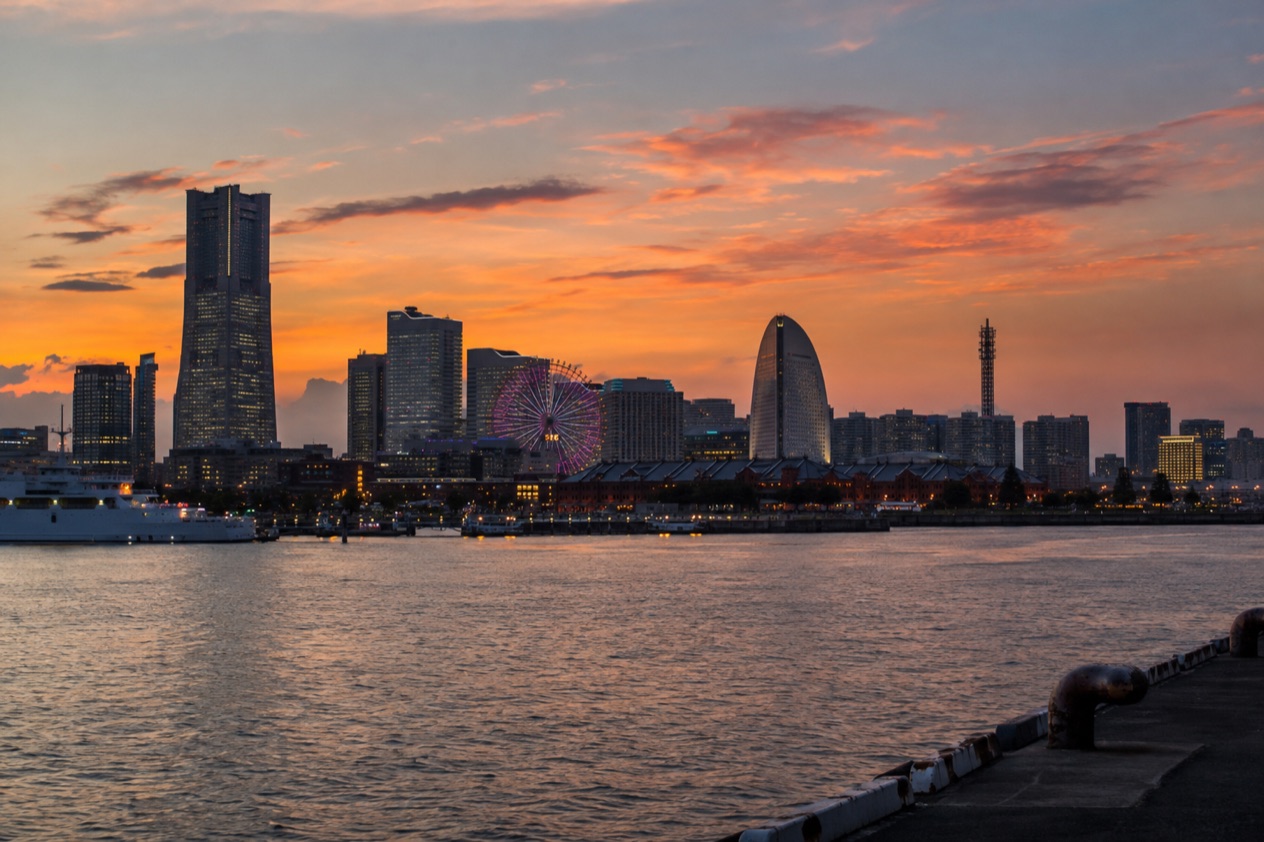
Steam rises from bamboo baskets of pork buns along the lanes of Chinatown, ship horns carry across the harbor, and the lights of the waterfront towers start to come on over the water. Yokohama is a port city on Tokyo Bay that grew up around foreign trade, and you still feel it in its brick warehouses, its hillside gardens and its restaurants. It suits travelers who like to eat well, wander a waterfront and see a Japanese city that is not Tokyo or Kyoto.
What are the best things to do in Yokohama?
Each of these gets a fuller treatment in the sections that follow. For now, here are the essentials in a line each.
- Chinatown, where roughly 250 shops and restaurants line the streets and the food is the reason to come.
- Minato Mirai 21, the waterfront district of towers, shopping halls and promenades that looks its best once the lights come on.
- Yokohama Landmark Tower, the skyscraper that anchors the skyline and gives the harbor a recognizable profile.
- Sankei-en, a traditional Japanese garden where old buildings sit among ponds and trees.
- The CupNoodles Museum, a playful stop for anyone who has ever eaten instant ramen.
- Yamashita Park and the harbor promenade, for sea air, ships and a slow afternoon walk.
- A ramen bowl in the local pork-bone style, the kind of meal that defines a quick lunch here.
- A day trip to Kamakura or Hakone, both reached by train from the city.
Yokohama is also easy to combine with a stay in Tokyo, since the two cities sit side by side on the bay. Travelers use it as a base in its own right, with its own evenings, its own food and its own museums.
The mix is what makes the city enjoyable. One hour you are among red lanterns and incense, the next beside a glass-and-steel waterfront, and later in a Western-style house on a hillside. Nothing here asks for a rigid plan, and each district rewards a few unhurried hours.
Sights and landmarks in Yokohama
The main sights of Yokohama gather around the harbor, in a handful of districts that each tell a different chapter of the city’s story. The port was officially opened on June 2, 1859, and the city that followed absorbed traders, sailors and ideas from abroad. That history is still visible in the street plans, the architecture and what is on the menu.
Minato Mirai 21
Minato Mirai 21 is the planned waterfront district that took shape after construction began in 1983, and it is the part of Yokohama that looks most like the future. Wide promenades run between shopping complexes, hotels, museums and office towers, with the water always close. The name means something like port of the future, and the district is laid out for strolling between the buildings and the bay.
The anchor is Yokohama Landmark Tower, which is Japan’s third tallest skyscraper. It holds shops, offices and a hotel, and its shape defines the skyline you see from ferries and bridges. Nearby, a giant Ferris wheel turns beside an amusement park, and the glass halls of the shopping centers give you somewhere to go when the sky turns gray. Pair a walk here with a meal at one of the restaurants overlooking the water.
Yokohama Chinatown
Yokohama Chinatown is the largest Chinatown in Japan, larger than the ones in Kobe and Nagasaki. Colorful gates mark the entrances to the district, and inside, narrow streets are crowded with restaurants, bakeries, tea shops, fortune tellers and stalls selling snacks to eat as you walk. Red and gold lanterns hang overhead, and the smell of sesame oil, ginger and steamed dough follows you from one block to the next.
Beyond the food, look for the small temples tucked among the shops, where incense burns and locals stop to pray. The streets are best explored without a fixed route, ducking down side lanes where the family-run places sit. Come hungry, since walking here is mostly a way of choosing what to eat next.
CupNoodles Museum
The CupNoodles Museum Yokohama is one of two such museums in Japan, the other being in Osaka Ikeda. It is a museum devoted to instant ramen, built around the story of how a humble packaged noodle became a household staple around the world. Exhibits trace the invention, and the displays of packaging over the years make it a good place to see design and food culture side by side.
The draw for visitors is the hands-on side, where you can decorate your own cup and choose the flavors that go inside. It suits curious adults as much as children, and it works as a lighthearted break between the more serious sights of the waterfront.
Red Brick Warehouse, Yamate and Motomachi
A few other districts reward the time. The Red Brick Warehouse buildings on the waterfront were once customs sheds and now hold shops, restaurants and event spaces, with open ground between them used for seasonal markets and festivals. Motomachi is a shopping street with a Western flavor, lined with boutiques and cafés that grew up serving the foreign community.
Up the slope behind Motomachi lies Yamate, the hillside where foreign residents once built their homes. Western-style houses and gardens stand among the trees, and the area has a different pace from the harbor below. Yokohama has been twinned with San Diego since October 1957, a reminder of how long the city has looked across the Pacific.
Outdoor things to do in Yokohama
Outdoor Yokohama is mostly gardens, waterfront promenades and park walks, with the harbor as the constant backdrop. The city lies on the western coast of Tokyo Bay, so many of its open spaces face the water. You can fill a day outdoors without leaving the city, moving between shade, sea air and a few good views.
Sankei-en
Sankei-en is a traditional Japanese-style garden in Naka Ward, which opened in 1906. It covers a total of 175 thousand square meters, a size that lets it hold ponds, hills, tea houses and historic buildings gathered from other parts of Japan. Paths wind between the structures, and the layout is meant to reveal itself slowly, with a new view appearing at each turn.
A garden like this is shaped by the seasons. Blossoms, fresh green, lotus on the ponds, colored leaves and bare winter branches each give the same paths a different look. Bring a camera, and plan on a leisurely visit rather than a rushed one, since the pleasure is in lingering at a bridge or beside the water.
Yamashita Park and the harbor promenade
Yamashita Park runs along the waterfront and gives you open lawns, flower beds and a view of passing ships. Benches face the water, and people stop here to eat an ice cream, read, or simply watch the harbor. The park sits beside the moored ship that serves as a landmark, and it links up with the promenades that lead toward Minato Mirai.
Walking the waterfront from the park to the towers is one of the pleasures of the city, since you pass piers, bridges and sculpture along the way. Osanbashi Pier, with its wide wooden deck, is a place to step out over the bay and look back at the skyline. Both stretches are free to wander and work well at any point in the day.
Hillside parks and harbor views
Beyond the waterfront, a few smaller green spaces reward a visit. Harbor View Park, on the Yamate hillside, looks out over the bay and the bridge, and it sits close to the rose gardens and Western-style houses of the area. Negishi Forest Park offers a more local setting, with lawns and trees where families spread out on the grass.
These places do not need a long plan. They are stops to slot between a museum and a meal, ways to sit down outside and take in the city at an easy tempo. Together with Sankei-en and the harbor, they show that Yokohama has more green space than its skyline suggests.
Day trips from Yokohama
The day trips from Yokohama are mostly outings to the coast and the mountains, reached by train, and to Tokyo itself. Travelers from central Tokyo reach Yokohama Station by JR or private railway in about an hour, and from the station you can set out in several directions. Here are the outings that make the best use of a day.
Kamakura
Kamakura is a seaside town of temples and shrines, and it is the most common choice for a day away from Yokohama. You reach it by train from Yokohama Station. The town is known for the Great Buddha, a large bronze figure sitting outdoors, and for Hasedera, a temple with a hillside garden and a view of the water. Tsurugaoka Hachimangu, the shrine at the end of a long approach, anchors the center.
A good day mixes a temple or two with a stroll through the small shopping lanes, where you can snack on sweets and grilled rice crackers. The town suits travelers who like to move at their own pace and are happy to walk between sights. Bring comfortable shoes, since the temples spread across several neighborhoods and hillsides.
Hakone
Hakone is a mountain resort area with hot springs, lakes and views toward Mount Fuji when the sky allows. It is a destination for onsen, the volcanic hot spring baths, and for ryokan, the traditional inns where meals and bedding follow long-standing habits. A day here can combine a ride on one of the local mountain transport lines with time beside the lake and a soak.
Hakone suits travelers who want a change of scenery after the city, with steam, forest and a slower rhythm. People stay overnight, and a day trip is possible if you plan a focused loop. Whether Mount Fuji shows itself is a matter of chance, so treat the view as a bonus rather than a promise.
Enoshima and Tokyo
Enoshima is a small island linked to the mainland by a causeway, with a shrine, steps and lookouts along its length. Seafood restaurants line the approach, and the shirasu, tiny whitebait served over rice, is a local specialty. It pairs naturally with Kamakura, and the two together fill a coastal day.
Tokyo is the other obvious outing, and since Yokohama lies directly south of it on the bay, you can go up for a day of museums, shopping or a neighborhood walk and return in the evening. Yokohama Station handles two million passengers daily, so trains in both directions are part of the city’s routine.
What to eat in Yokohama
Eating in Yokohama starts in Chinatown and spreads outward to ramen counters, old-fashioned diners and harborside cafés. The city’s open-port history shows on the plate, in Chinese cooking that has been adapted to local taste and in Western-influenced dishes that have become part of Japanese home cooking. Come with an appetite and a willingness to graze.
Chinatown eating
With roughly 250 Chinese-owned or themed shops and restaurants to choose from, Chinatown rewards a roaming approach. Start with nikuman, the fluffy steamed buns filled with seasoned pork, then move on to shumai dumplings, fried noodles and the Chinese-style set meals served in sit-down restaurants. Sweet shops sell sesame balls and almond pudding, and the tea shops pour a range of Chinese teas.
Many of the restaurants specialize in a regional style, from Cantonese dim sum to spicier Sichuan dishes. Takeaway stalls make it easy to sample several things without committing to a full meal. A common approach is to buy a few snacks, eat them on the street, and then pick one restaurant for a sit-down course.
Ramen and local classics
Yokohama is associated with a style of ramen built on a pork-bone broth with soy sauce, served with thick, straight noodles and toppings such as spinach, nori and sliced pork. It is hearty, savory and filling, and it is the kind of meal that works as a quick lunch or a late bowl after an evening out. The CupNoodles Museum makes a fitting companion to a real bowl.
Another local favorite is Napolitan spaghetti, a Japanese-style dish of noodles in a ketchup-based sauce with sausage, onion and peppers. It is often credited to the hotels of Yokohama, and it turns up in old-fashioned cafés and diners. It is a taste of the city’s mix of East and West and a nostalgic comfort food.
Cafés, bakeries and the harbor
Yokohama has a long tradition of Western-style bakeries, ice cream parlors and coffee houses, a legacy of the foreign residents who settled here after the port opened. Motomachi and the area around Yamate hold a number of cafés where you can sit down with a slice of cake and a cup of coffee. The seafood of the bay appears on menus near the waterfront.
In the evening, the izakaya, Japanese pubs with small dishes meant to be shared, come into their own. Order grilled skewers, tempura, sashimi and a cold beer or a glass of sake, and let the dishes arrive in whatever order the kitchen sends them. Craft breweries have also found a place in the city, drawing on its long link with imported beer.
Things to do in Yokohama at night
Evenings in Yokohama revolve around the waterfront lights, a good meal and a drink in a small bar. The skyline of Minato Mirai glows over the water, and people simply walk the promenades, taking in the reflections. The city rewards a slow night out rather than a rush from venue to venue.
The waterfront after dark
Once the sun goes down, Minato Mirai changes character. The towers light up, the Ferris wheel switches on its patterns, and the bridges across the harbor glow. A walk from the Red Brick Warehouse along the water toward the towers is a way to see the city at its most photogenic, with the lights doubled in the bay.
Osanbashi Pier gives a wide view of the harbor, and you can see passing boats and the lit-up skyline from its deck. Restaurants in the towers offer meals with a view of the water, and the cafés along the promenade stay open for a late drink. It suits couples and anyone who likes a reflective evening.
Izakaya, bars and live music
For a livelier night, head to the districts where izakaya and bars cluster. Noge, a lane of small drinking spots, has a casual feel, with counters where you can order a drink and a plate and chat with the people next to you. Kannai holds a mix of bars, restaurants and venues, and the streets around the station fill with people after work.
Yokohama has a long association with jazz, and small live houses in Kannai and nearby neighborhoods host music in intimate rooms. Wherever you land, a night out here tends to be conversational, with small portions and plenty of time to talk. Many bars have a focused theme, from whisky to craft beer, which makes it fun to browse.
Quieter evenings
Not every night needs a bar. You can eat a long dinner in Chinatown, where restaurants stay open into the evening and the lanterns glow against the dark. A walk along Yamashita Park after a meal is a gentle way to end the day, with the ships lit up on the water.
Others like to settle in at a hotel bar high up in a tower and watch the harbor lights from above. Whatever the style, evenings in Yokohama revolve around the water, good food and company, with plenty of options for different moods.
Things to do in Yokohama with kids
Children in Yokohama can spend days among museums made for them, an amusement park on the waterfront and boat rides across the harbor. The city has enough variety that a family can mix active stops with quieter ones. Because attractions are spread around the bay, it helps to keep each day to a couple of destinations and leave room for breaks.
Museums and hands-on stops
The CupNoodles Museum is an obvious pick for children, who can design their own cup and watch how noodles are made. The hands-on approach keeps younger visitors busy, and it gives adults a fun diversion between more serious stops. It is one of two museums of its kind in Japan.
Yokohama is also home to a museum aimed at young children and based on a well-loved cartoon hero, and to a port museum where you can see the story of the harbor and a historic sailing ship moored alongside. These stops mix play with a little learning and work in any kind of weather.
Rides, boats and animals
In Minato Mirai, the amusement park with its giant Ferris wheel is a draw for families, and the wheel gives a view over the harbor. Boat rides on the bay let children see the skyline and the ships from the water. Nearby, the waterfront promenades give room to run and look at boats.
Across the region, there is a large zoo with a range of animals and a seaside park that combines an aquarium with rides. Both are reached by train and bus or a short transfer, and each can fill most of a day. Bring snacks and plan for rests, since the grounds are wide and children tire easily.
Keeping a day easy for children
Distances between sights can add up, especially when you cross the city by train with children. Group your stops by district, so that a day around Minato Mirai and Yamashita Park stays close together, and save outings farther afield for another day. Parks and lawns along the waterfront are good places to pause.
Chinatown is a fun place for children to taste new things, with steamed buns and sweet snacks sold on the street. The crowds can make the lanes feel tight, so keep little ones close. Sun, rain and long stretches on foot are worth planning around, with a café or museum nearby as a fallback.
Good to know before you go
Yokohama sits on Tokyo Bay, south of Tokyo on the main island of Honshu, and its rail connections make it simple to fold into a wider trip. Yokohama Station is more central than Shin-Yokohama Station, which is where the Nozomi Shinkansen stops. Japan has a rainy season and a typhoon season, so rain is worth planning for when you build a flexible itinerary.
| From | How | Time |
|---|---|---|
| Central Tokyo | JR train or private railway to Yokohama Station | About 1 hour |
| Haneda Airport | Keikyu train line to Yokohama Station | 20 minutes |
| Haneda Airport | Shuttle bus to Yokohama Station | 30 minutes |
| Narita Airport | Narita Express or shuttle bus to Yokohama Station | Approximately 1 hour 30 minutes |
| Nagoya | Nozomi Shinkansen to Shin-Yokohama Station | 1 hour 25 minutes |
| Kyoto | Nozomi Shinkansen to Shin-Yokohama Station | 2 hours |
| Osaka | Nozomi Shinkansen to Shin-Yokohama Station | 2 hours |
| Hiroshima | Nozomi Shinkansen to Shin-Yokohama Station | 3 hours 40 minutes |
Sources
- Japan National Tourism Organization, Yokohama (https://www.japan.travel/en/destinations/kanto/kanagawa/yokohama-and-around/), checked October 11, 2026
- Wikipedia, Yokohama (https://en.wikipedia.org/wiki/Yokohama), checked October 11, 2026
- Wikivoyage, Yokohama (https://en.wikivoyage.org/wiki/Yokohama), checked October 11, 2026
- Wikipedia, CupNoodles Museum (https://en.wikipedia.org/wiki/CupNoodles_Museum), checked October 11, 2026
- Wikipedia, Minato Mirai 21 (https://en.wikipedia.org/wiki/Minato_Mirai_21), checked October 11, 2026
- Wikipedia, Sankei-en (https://en.wikipedia.org/wiki/Sankei-en), checked October 11, 2026