
In the first days of January, Yokohama slows to a holiday pace. Families in their best clothes make the first shrine visit of the year, shop windows carry lucky New Year decorations, and lacquered boxes of osechi, the festive New Year dishes, sit on tables across the city.
By the middle of the month the shutters are up again and the waterfront has its ordinary rhythm back. January here means a harbor city in crisp winter air, with steaming food in Chinatown and a skyline that lights up early.
What is the weather like in Yokohama in January?
January in Yokohama is cold but dry, with a winter sun and only a handful of wet days. It is a coat-and-scarf month, not a deep-freeze one.
| Month | Average high (°F) | Average low (°F) | Precipitation (in) | Days with 1 mm or more of precipitation | Hours of sunshine | Daylight on the 15th |
|---|---|---|---|---|---|---|
| December | 54.5 | 41.4 | 2.61 | 5.5 | 178 | 9 h 47 min |
| January | 50.4 | 36.9 | 2.55 | 5.1 | 193 | 10 h 00 min |
| February | 51.4 | 37.6 | 2.55 | 5.4 | 167 | 10 h 53 min |
January is the coldest of the three months, so layers are the answer: a warm coat, a sweater underneath and something for your neck and ears. Low humidity makes the cold feel crisp rather than damp, and a scarf does a lot of work along the water.
Rain is light on the calendar, and a compact umbrella in your bag covers it. Sunshine is generous for a winter month, which makes outdoor stops along the harbor pleasant to plan, and a pair of sunglasses is not a silly thing to pack.
Daylight is short but already stretching, a little longer than in December. That shapes the sightseeing: outdoor views and gardens fit best in the daytime hours, while the evening belongs to lit-up waterfront scenes and warm restaurants.
What to do in Yokohama in January
The month opens with the Japanese New Year, celebrated on January 1 and kept as the biggest family holiday of the year. The tradition that sets the tone is hatsumode, the first visit to a shrine or temple, along with osechi, a selection of dishes served in stacked boxes.
During the New Year holidays many restaurants and attractions are closed, so the first days are for watching the city celebrate rather than ticking off sights. After that, the winter season is a good fit for the harbor, the food streets and the indoor museums.
Another January custom is nanakusa-gayu on January 7, a gentle rice porridge with spring herbs that many families eat to ease the body after the rich holiday meals. Shrines and temples around the region sell good-luck charms and arrows for the year ahead, and you will see older charms being returned to be burned at shrine grounds. Coming of Age Day, a public holiday in the second week of the month, brings young people out in formal kimono and suits for photos.
Minato Mirai and the waterfront
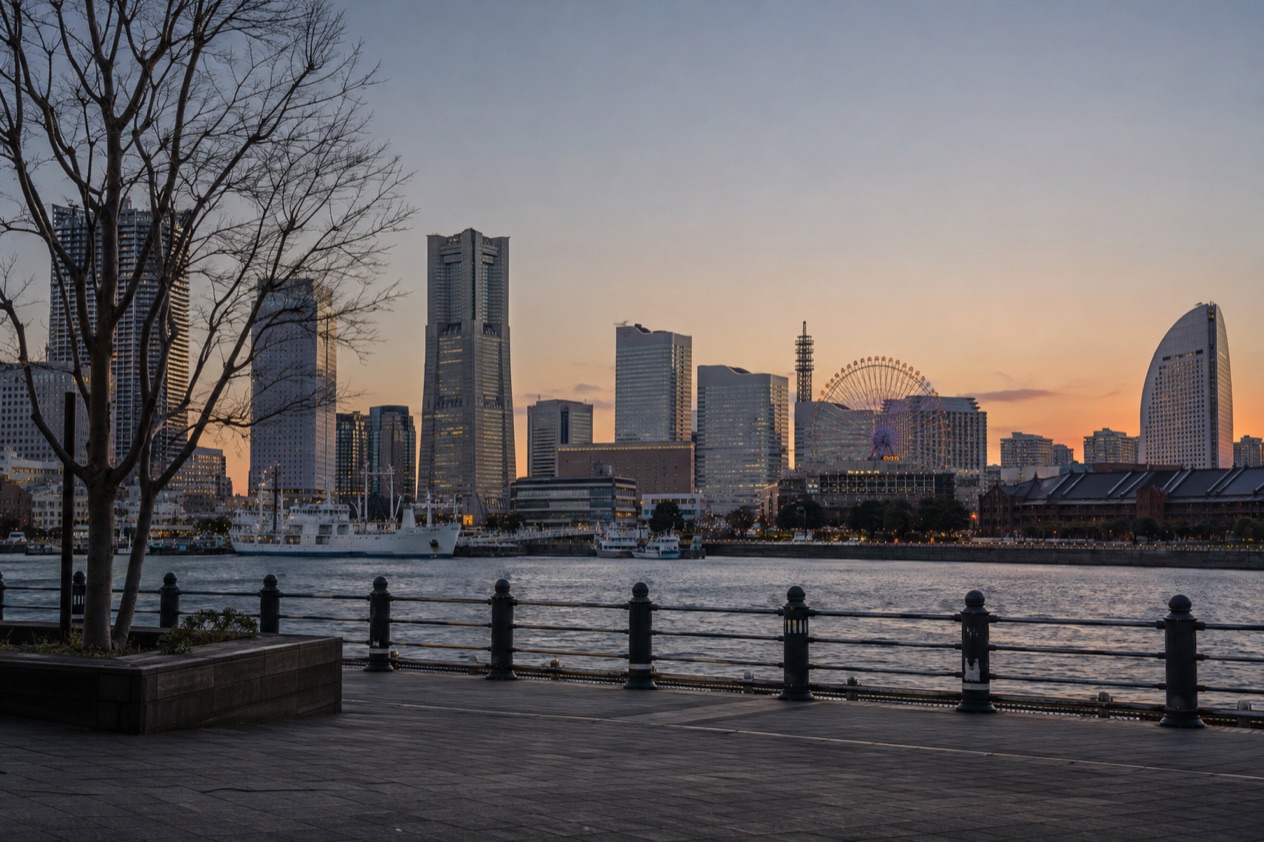
Minato Mirai 21, whose construction started in 1983, is the district that gives Yokohama its postcard skyline. Towers, the big wheel at Cosmo World and shopping complexes stand side by side along the bay. In January the cold air gives the glass-and-water scenery a sharp outline, and the illuminations at the water’s edge come into their own.
The Port of Yokohama was officially opened on June 2, 1859, and the harbor still shapes the city’s character. Old brick warehouses have been turned into shops and cafés, and Yamashita Park runs along the water with views of passing ships. A warm drink in hand and a scarf pulled up, a slow stroll here is a very good use of a sunny winter day.
Indoor stops are plentiful too: shopping complexes, observation decks and cafés with harbor views give you somewhere to warm up between outdoor stretches. The CupNoodles Museum Yokohama, devoted to instant noodles, is another indoor option, one of two museums of that name in Japan.
Chinatown and winter food
Yokohama Chinatown is the largest Chinatown in Japan, and January is a fine time to wander it, when steam rises from stalls and shopfronts. Think nikuman (fluffy steamed buns with a savory filling), fried dumplings, sesame balls and bowls of noodle soup. The gates, lanterns and temple-style buildings give the streets a bright, colorful look against the gray winter sky.
The season suits hot pot, oden (a simmering stew of daikon, eggs and fish cakes) and ramen, and Yokohama’s port heritage shows in its seafood. Mochi rice cakes appear in soups and sweets around the New Year, while sweet bean snacks and warm sake turn up in cafés and izakaya, the casual Japanese pubs. Eating is the main plan on a cold day, and the city makes it easy to say yes to one more bowl.
Gardens, plum blossoms and quieter outings
January is not cherry blossom time, but a gentler flower belongs to the month. Plum (ume) trees typically flower from January until late February in East Asia, so a garden visit may bring the first buds and a faint scent where branches are in flower. It is a small, delicate show compared with spring, best treated as a bonus rather than the reason for the trip.
Traditional gardens and shrine grounds look their most spare in winter, with bare branches, still ponds and pale light. Bring a warm layer, because stone paths and open lawns feel cold, and plan a tea or a snack afterward in a nearby café. For a day trip beyond the city, Tokyo is about 1 hour away by JR train or private railway line to Yokohama Station.
A two-day itinerary for Yokohama in January
Day 1 is for the waterfront and the skyline. Start in Minato Mirai in the morning with a coffee, then head up one of the towers for a view over the bay while the winter sun is up. Midday suits a long lunch of ramen or a set meal in one of the shopping complexes, a good way to warm up before heading back out.
In the afternoon walk to the Red Brick Warehouse district and the pier area, taking in the ships, the lawns and the harbor air. As daylight fades early, stay for the evening when the waterfront lights come on, then finish with dinner at an izakaya or a seafood restaurant. Rain card: move the day indoors, to the shopping malls, the towers’ observation decks and the cafés with harbor windows.
Day 2 belongs to Chinatown and the gardens. Begin with a late-morning visit to a traditional garden while the light is bright, looking for plum buds on the branches. Return to the center for a Chinatown lunch of steamed buns, dumplings and noodle soup, grazing from stall to stall.
After lunch, browse the sweets and tea shops, then spend the afternoon at the CupNoodles Museum Yokohama, which is also your rain card if the sky turns gray. Dinner can be hot pot or oden before you head back to Yokohama Station, with the Tokyo trains close by for a late return.
Is Yokohama busy in January?
January is a winter month for Yokohama, without cherry blossoms or autumn color to pull visitors, and its pace is set by the New Year holidays. The first days are marked by closures, since many restaurants and attractions are closed during the New Year holidays. After that, the city returns to its usual routines.
Urban shops are generally open from 10:00 a.m. to 8:00 p.m. every day, so most of the month is easy to organize around the clock of a big city. The festive mood is strongest in the first days of the year, when shrines draw families for the first visit of the year and food stalls set up outside.
What January offers is a more settled city and a calendar with few big events beyond the New Year traditions. Indoor attractions, cafés and Chinatown restaurants are the places where the winter crowd gathers, so a gray day is a good moment for them. Tokyo is only about 1 hour away by train, which means Yokohama also receives day-trippers who come out for a meal or a harbor walk.
What to pack for Yokohama in January
Packing for a Yokohama January is about warmth, small rain protection and comfortable shoes for harbor walks and garden paths.
- A warm winter coat, because cold air blows along the harbor.
- Sweaters and thin layers, for stepping from outdoor streets into heated malls.
- A scarf, gloves and a hat for evenings by the water.
- A compact umbrella, for the handful of wet days in the month.
- Comfortable shoes with grip, for paths and wet pavement.
- Sunglasses, since winter sunshine is plentiful.
Good to know before you go
What matters most in January is the New Year closure period. During the New Year holidays many restaurants and attractions are closed, so use the first days for shrines, walks and simple meals, and save museums and restaurant plans for later. There is no typhoon concern in the winter picture here, just cold, dry weather with occasional wet days.
| Type of shop | Open |
|---|---|
| Shops in urban areas (general) | 10:00 a.m. to 8:00 p.m., every day |
Yokohama in January vs December and February
Moving the trip four weeks earlier puts you in December, which is a touch milder and a bit shorter on daylight. You trade the first-of-the-year shrine visits and the New Year decorations for the lead-up to the holidays, with warm drinks and lights around the harbor. The year-end period also brings its own closures and the rush of the holiday season.
Moving four weeks later puts you in February, when days grow longer and snow or sleet shows up more often. The plum trees are further along, so a garden visit is likelier to bring flowers than in the first weeks of January. Sunshine is a little thinner, so build in more indoor stops, from museums to Chinatown meals.
Choose January if the New Year traditions appeal and you like crisp, bright winter days. Choose February if you want a first hint of plum blossoms and longer light. Choose December if you prefer a gentler chill.
Is January a good time to visit Yokohama?
Yes, for travelers who like cold, clear days, hearty food and the feeling of a city in its New Year mood. It suits food lovers, harbor walkers, museum visitors and anyone who likes seeing seasonal customs in action. It is less suited to people who want warm weather, beach time or cherry blossoms.
On arrival, plan around the New Year closures first: if you land in the opening days of the month, start with a shrine visit and a simple meal, and keep restaurant and attraction plans for the days after. Once the shutters are up again, work through the waterfront, Chinatown and one garden, with a café stop whenever the cold gets to you.
What is special about January in Yokohama is the pairing of an old harbor town and a modern skyline, with osechi on the table, steam over the Chinatown stalls and the first plum buds on bare branches.
Sources
- Japan Meteorological Agency (JMA), Normal values 1991-2020, monthly (https://www.data.jma.go.jp/stats/etrn/view/nml_sfc_ym.php?prec_no=46&block_no=47670), station Yokohama, elevation 39 m, checked October 11, 2026
- Computed from the date and the latitude of the place (sunrise equation, solar elevation -0.833 degrees), October 11, 2026
- Japan National Tourism Organization, shop and attraction hours, national holidays (https://www.japan.travel/en/plan/business-hours-and-holidays/), checked October 11, 2026
- Wikipedia, Japanese New Year (https://en.wikipedia.org/wiki/Japanese_New_Year), checked October 11, 2026
- Wikipedia, Public holidays in Japan (https://en.wikipedia.org/wiki/Public_holidays_in_Japan), checked October 11, 2026
- Japan National Tourism Organization, winter in Japan (https://www.japan.travel/en/guide/winter-guide/), checked October 11, 2026
- Japan National Tourism Organization, skiing and snowboarding in Japan: regions, resorts, seasons (https://www.japan.travel/en/sports/snow/), checked October 11, 2026
- Wikipedia, Climate of Japan (https://en.wikipedia.org/wiki/Climate_of_Japan), checked October 11, 2026
- Japan National Tourism Organization, weather and seasons in Japan (https://www.japan.travel/en/plan/weather/), checked October 11, 2026
- Japan National Tourism Organization, skiing guide (https://www.japan.travel/en/guide/skiing/), checked October 11, 2026
- Wikipedia, List of ski areas and resorts in Japan (https://en.wikipedia.org/wiki/List_of_ski_areas_and_resorts_in_Japan), checked October 11, 2026
- Japan National Tourism Organization, flowers by season: cherry blossom, plum, wisteria, hydrangea, where and when (https://www.japan.travel/en/see-and-do/flowers/), checked October 11, 2026
- Wikipedia, Prunus mume (https://en.wikipedia.org/wiki/Prunus_mume), checked October 11, 2026
- Japan National Tourism Organization, Yokohama (https://www.japan.travel/en/destinations/kanto/kanagawa/yokohama-and-around/), checked October 11, 2026
- Wikipedia, Yokohama (https://en.wikipedia.org/wiki/Yokohama), checked October 11, 2026
- Wikivoyage, Yokohama (https://en.wikivoyage.org/wiki/Yokohama), checked October 11, 2026
- Wikipedia, CupNoodles Museum (https://en.wikipedia.org/wiki/CupNoodles_Museum), checked October 11, 2026
- Wikipedia, Minato Mirai 21 (https://en.wikipedia.org/wiki/Minato_Mirai_21), checked October 11, 2026