
Early in February, bags of roasted soybeans appear in the shops of Yokohama, and somewhere in the city a household is shouting “Oni wa soto! Fuku wa uchi!” at a family member wearing a paper demon mask.
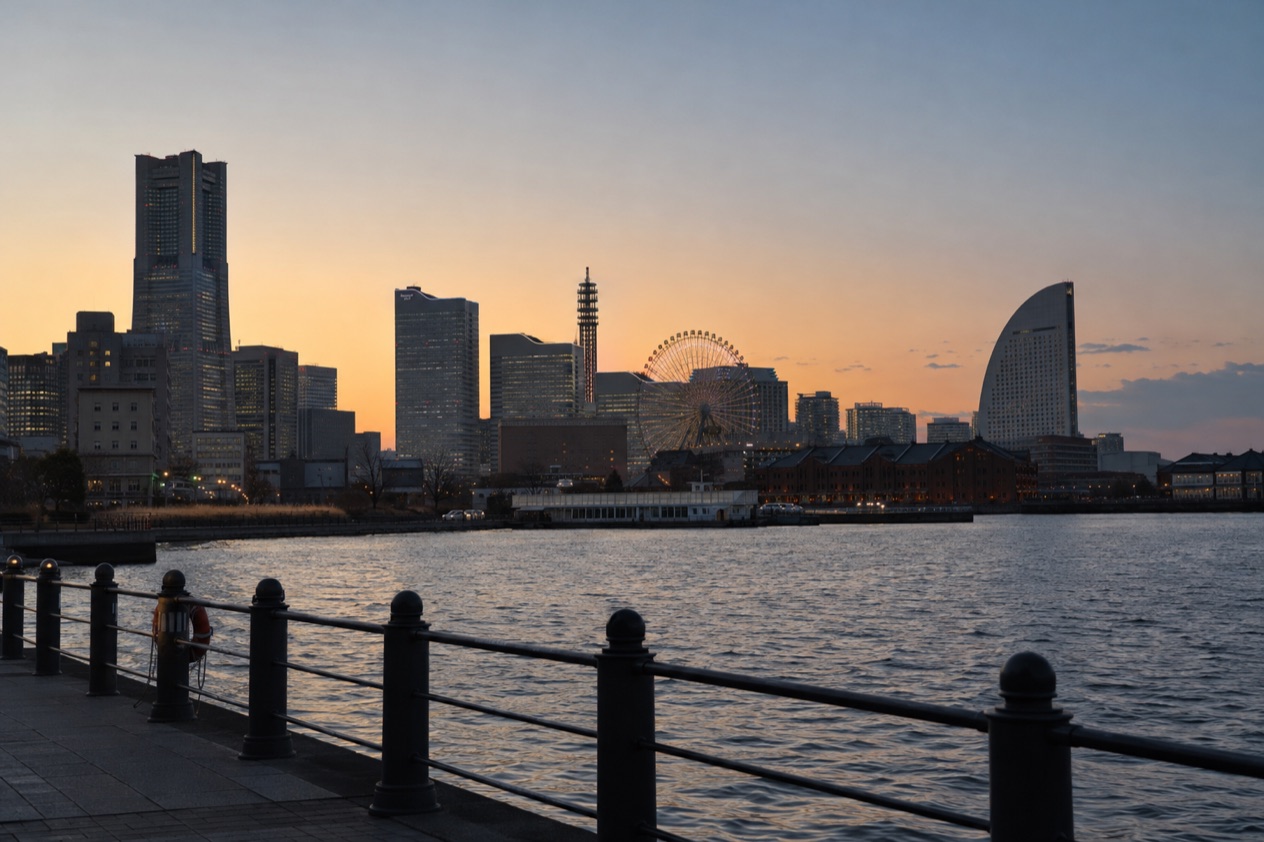
The harbor air is crisp, the cranes and the Ferris wheel stand sharp against a winter sky, and steamed buns from Chinatown warm your hands along the way. February here is a month of cold-weather strolls along Tokyo Bay, plum trees in flower, and hot bowls of everything, a few weeks before the cherry trees take over the conversation.
What is the weather like in Yokohama in February?
February in Yokohama is cold but bright and mostly dry, with daytime temperatures that call for a proper coat and nights that call for a scarf.
| Month | Average high (°F) | Average low (°F) | Precipitation (in) | Days with 1 mm or more of precipitation | Hours of sunshine | Daylight on the 15th |
|---|---|---|---|---|---|---|
| January | 50.4 | 36.9 | 2.55 | 5.1 | 193 | 10 h 00 min |
| February | 51.4 | 37.6 | 2.55 | 5.4 | 167 | 10 h 53 min |
| March | 57.2 | 42.8 | 5.49 | 10.0 | 169 | 11 h 54 min |
Highs hover just above 50°F, so a day outdoors is a day in layers: a sweater under a warm coat, with a hat and gloves for the waterfront, where the wind comes off Tokyo Bay. Evenings cool down to a little above freezing, which suits the season’s food, because a bowl of noodles or a hot pot feels like the right ending to a day outside.
Rain is light and infrequent, only a handful of wet days over the whole month, so a compact umbrella is enough. Snow or sleet shows up on about seven days, though a thin dusting is the usual result and the city is not buried in it. The sun is out for a good share of the month, and the daylight is noticeably longer than in January, which gives you more time outside before dark.
March is a different story: warmer, but far wetter, with showers on about every third day. February’s clearer skies make it easier to plan a stretch along the harbor, a garden visit and a view from a high observation deck on the same day.
What to do in Yokohama in February
February in Yokohama is about three things: the old custom of Setsubun at the start of the month, plum blossoms in the gardens before the cherry trees wake up, and a harbor city that is pleasant to wander in a heavy coat. Yokohama is the second largest city in Japan and sits on the western coast of Tokyo Bay, directly south of Tokyo, so the water is part of nearly every plan. The port opened in 1859, and the waterfront still feels like a place where Japan first met the wider world.
Setsubun and the bean-throwing
Setsubun marks the eve of spring on the old calendar, and in practice it falls at the start of February. The main ritual is mamemaki: roasted soybeans called fukumame are thrown out the front door, or at someone in an oni (demon) mask, while everyone shouts “Oni wa soto! Fuku wa uchi!” which means “Devils out! Fortune in!”
Afterward comes the eating. Custom says to eat one bean for each year of your life, plus one extra for luck in the coming year, counting age the traditional way. Shrines and temples across the region hold their own bean-throwing, often with costumed oni, and it is a lively, slightly noisy scene. If your trip lands at the start of the month, ask at your hotel which shrine nearby is holding a ceremony, and pick up a small bag of beans from a shop or supermarket to take part in your own way.
Plum blossoms and winter gardens
The Japanese plum, ume, usually flowers from January into late February, which makes it the flower of this month. Its blossoms are small and fragrant, in white, pink and deep red, and they open on bare branches while the air is still cold. Landscape gardens in and around Yokohama, Sankeien among them, are known for pairing old pavilions and ponds with plum trees, and in February the scene is more about bare stone, still water and bright petals than about green.
Cherry blossoms are still weeks away. The first bloom in Yokohama usually arrives around the end of March, and full bloom follows about a week later, so February belongs to the plums. Come with a camera, a warm layer and a little patience for each tree. For a bigger flower festival, the Mito Plum Blossom Festival in Ibaraki runs from February into March, though that is a trip out of the city.
The waterfront at Minato Mirai and Yamashita Park
Minato Mirai is the modern face of the harbor: a skyline of towers, a Ferris wheel, shopping complexes and the old brick warehouses turned into galleries and cafés. In winter the air is clear and the lights come on early, so the evenings here are as good as the days. Nearby, Yamashita Park runs along the water, and the old Hikawa Maru ship is moored at the quay.
February suits this stretch because you can walk it with a hot drink in your hand, duck into a museum when the wind picks up, and still have the light you need. The Cup Noodles Museum, where visitors design their own cup of instant ramen, is a good indoor stop when the weather turns, as are the shopping halls of the Red Brick Warehouse.
Chinatown and the food of the season
Yokohama’s Chinatown is a dense grid of gates, red lanterns and food stalls, and in cold weather it is a treat to walk through. Steamed buns (nikuman) come out of bamboo steamers, chestnuts roast in street pans, and restaurants serve everything from dim sum to stir-fried noodles and rich soups.
At home and in shops, February’s seasonal sweets and snacks lean on soybeans for Setsubun, and the bean-based treats are fun to try. In the evenings, izakaya (casual pubs) fill with the smell of grilled skewers and hot sake, and hot pots are the order of the night. Motomachi, the shopping street near Chinatown, is a good place to browse between meals.
A two-day itinerary for Yokohama in February
Day 1 is the harbor. Start at Yokohama Station, which is about an hour by JR or a private line from central Tokyo, and head to the Minato Mirai waterfront in the morning, when the light is clear and the cafés are opening. Browse the Red Brick Warehouse, then walk out along the pier for views of the bay. For lunch, move to Chinatown and graze: a steamed bun here, a plate of noodles there.
After lunch, follow Yamashita Park along the water and see the Hikawa Maru from the quay. Winter daylight is limited, so spend the late afternoon on the Landmark Tower or the Ferris wheel for an overview as the sky turns pink and the city lights come on. Finish with dinner at an izakaya or a ramen counter. If the rain comes in, the Cup Noodles Museum and the shopping halls keep the day going indoors.
Day 2 is for the gardens and the old quarter. Begin with a garden known for its plum trees, such as Sankeien, and take your time with the blossoms while the morning is fresh. Back in town, spend the early afternoon in Motomachi, browsing its shops and cafés, and in the hillside streets where the old foreign residences stand.
Round out the day with a warm lunch of soup noodles or a set meal, and then a slow walk through whatever corner of the city you have not seen. In the evening, return to the harbor for a last look at the lit-up skyline. In wet weather, a museum or a long café stop will fill the afternoon, and the hot-pot dinner will make up for any gray skies.
Is Yokohama busy in February?
February is a month between seasons in Yokohama: the cherry blossoms that draw spring visitors are still weeks away, and the city runs at its everyday winter pace.
What you notice is the mood. Setsubun brings local energy to shrines and temples at the start of the month, and plum blossoms give gardens a gentle focus, but the big spring flower season has not begun. In Yokohama, the first cherry blossoms usually open around the end of March, which is when the city’s parks and riverbanks start to draw their well-known crowds.
The big winter events of Japan are mostly elsewhere. The Sapporo Snow Festival, for example, is held over seven days in February in Hokkaido, and ski resorts in Hokkaido and the high mountains of Nagano are at their peak snow season in January and February. Yokohama is a different kind of February trip: harbor walks, hot food and gardens rather than snow sports.
Time your days around the light. With daylight at roughly eleven hours in mid-month, the afternoons are short enough that you will want your main outdoor stops done before the early evening, then you can move on to restaurants and the lit-up waterfront.
What to pack for Yokohama in February
Pack for cold, mostly dry days outdoors and for warm rooms indoors, so that you can add and remove layers easily.
- A warm coat, for the wind along the waterfront and the cold evenings.
- Sweaters or fleece layers, which you can peel off in heated museums and restaurants.
- A hat, scarf and gloves, for the harbor and the garden paths.
- A compact umbrella, because rain is infrequent but can arrive, and sleet or a little snow is possible.
- Comfortable walking shoes, for the long waterfront walks and garden paths.
- A camera or phone with a good battery, since cold drains batteries and the plum blossoms deserve photographs.
Good to know before you go
February is not a rainy month, and it is not typhoon season, so the main weather concerns are the cold wind and the occasional sleet. Late in the month, the days grow noticeably longer, which helps with sightseeing. The long New Year closures, when many restaurants and attractions shut, belong to the holiday at the very start of the year, so by February the city is back to its regular rhythm.
Plan the first day around the weather you wake up to, since the harbor is best on a clear morning and the indoor museums and shopping halls are there for the wet ones. Hot drinks from vending machines and convenience stores are everywhere, and they are a good way to keep warm between stops.
Yokohama in February vs January and March
Going four weeks earlier, to January, means slightly cooler days and a bit more sunshine, with the plum blossoms just beginning and the Setsubun festivities still ahead. The early weeks of the year also include the New Year holidays, when many restaurants and attractions close, so January can feel quieter in a different way. The days are shorter too, so there is less time for outdoor plans.
Going four weeks later, to March, brings clearly milder temperatures and far more rain, with showers on roughly every third day. The plum blossoms fade, and the city starts to anticipate the cherry trees, whose first bloom usually arrives near the end of March. The days are longer, which makes for more time at the waterfront, but you will want a rain plan every day.
Travelers who want the Setsubun custom, the plum blossoms and drier skies should choose February. Those who want the warmth of spring and the cherry trees should shift to the end of March or April, and those who want the shortest, quietest days after the holidays can look at January.
Is February a good time to visit Yokohama?
Yes, February is a good time to visit Yokohama if you like cold, clear days, hot food and a city by the water that is easy to enjoy with a coat on.
It will suit travelers who enjoy harbor walks, gardens, museums and long, warming meals, and anyone curious about the custom of Setsubun. Plum blossom fans will find plenty to photograph. It is less suited to travelers who want warm weather, beach days or the cherry blossoms, which arrive about a month later. Skiers will want to head to the mountains of Nagano or to Hokkaido instead.
On arrival, get your bearings at the waterfront, where Minato Mirai, the Red Brick Warehouse and Yamashita Park sit along the same stretch of Tokyo Bay, and then plan the plum garden for a clear morning. Keep dinner for Chinatown or a ramen counter.
What is special about February in Yokohama is the way an old custom, the first flowers and a working harbor all share the same cold, bright days. Shouts of “Fuku wa uchi!” fade, plum petals drift onto the garden paths, and the lights of Minato Mirai come on early over the bay.
Sources
- Japan Meteorological Agency (JMA), Normal values 1991-2020, monthly (https://www.data.jma.go.jp/stats/etrn/view/nml_sfc_ym.php?prec_no=46&block_no=47670), station Yokohama, elevation 39 m, checked October 11, 2026
- Computed from the date and the latitude of the place (sunrise equation, solar elevation -0.833 degrees), October 11, 2026
- Wikipedia, Setsubun (https://en.wikipedia.org/wiki/Setsubun), checked October 11, 2026
- Japan National Tourism Organization, festivals and events (https://www.japan.travel/en/see-and-do/festivals-and-events/), checked October 11, 2026
- Sapporo Snow Festival official website (https://www.snowfes.com/english/), checked October 11, 2026
- Wikipedia, Sapporo Snow Festival (https://en.wikipedia.org/wiki/Sapporo_Snow_Festival), checked October 11, 2026
- Japan National Tourism Organization, winter in Japan (https://www.japan.travel/en/guide/winter-guide/), checked October 11, 2026
- Japan National Tourism Organization, skiing and snowboarding in Japan: regions, resorts, seasons (https://www.japan.travel/en/sports/snow/), checked October 11, 2026
- Wikipedia, Climate of Japan (https://en.wikipedia.org/wiki/Climate_of_Japan), checked October 11, 2026
- Japan National Tourism Organization, flowers by season: cherry blossom, plum, wisteria, hydrangea, where and when (https://www.japan.travel/en/see-and-do/flowers/), checked October 11, 2026
- Wikipedia, Prunus mume (https://en.wikipedia.org/wiki/Prunus_mume), checked October 11, 2026
- Japan National Tourism Organization, skiing guide (https://www.japan.travel/en/guide/skiing/), checked October 11, 2026
- Wikipedia, List of ski areas and resorts in Japan (https://en.wikipedia.org/wiki/List_of_ski_areas_and_resorts_in_Japan), checked October 11, 2026
- Japan National Tourism Organization, weather and seasons in Japan (https://www.japan.travel/en/plan/weather/), checked October 11, 2026
- Japan Meteorological Agency, cherry blossom first-bloom dates 2021-2026 and 1991-2020 normal (https://www.data.jma.go.jp/sakura/data/sakura003_07.html), checked October 11, 2026
- Japan Meteorological Agency, cherry blossom full-bloom dates 2021-2026 and 1991-2020 normal (https://www.data.jma.go.jp/sakura/data/sakura004_07.html), checked October 11, 2026
- Wikivoyage, Yokohama (https://en.wikivoyage.org/wiki/Yokohama), checked October 11, 2026
- Japan National Tourism Organization, Yokohama (https://www.japan.travel/en/destinations/kanto/kanagawa/yokohama-and-around/), checked October 11, 2026
- Wikipedia, Yokohama (https://en.wikipedia.org/wiki/Yokohama), checked October 11, 2026