
In early May, carp-shaped streamers called koinobori ripple from balconies and flagpoles around Yokohama, and the steamed-bun stalls of Chinatown send up clouds of fragrant vapor. The harbor air is soft, the plane trees along the waterfront are in new leaf, and families stroll the piers in light jackets. May is the month when Yokohama, Tokyo’s port neighbor on the bay, feels most like a seaside city on vacation, with holidays at the start and warmer, greener days to follow.
What is the weather like in Yokohama in May?
May in Yokohama is mild and pleasantly warm, a clear step up from April and still short of the sticky weather that arrives in June.
| Month | Average high (°F) | Average low (°F) | Precipitation (in) | Days with 1 mm or more of precipitation | Hours of sunshine | Daylight on the 15th |
|---|---|---|---|---|---|---|
| April | 66.0 | 51.3 | 5.63 | 9.5 | 181 | 13 h 03 min |
| May | 73.6 | 59.9 | 6.01 | 9.8 | 187 | 14 h 00 min |
| June | 77.9 | 66.4 | 7.43 | 11.9 | 136 | 14 h 32 min |
Afternoons in the low-to-mid 70s are warm enough for a walk along the harbor in short sleeves, while nights fall to a level where you will want a light jacket or a simple sweater over your shirt. That layering is what Japanese spring travel advice points to as well. Humidity sits at a comfortable level for most of the month, noticeably below what June brings.
Rain falls on roughly one day in three, a pattern that makes a folding umbrella more useful than a heavy raincoat. The month holds plenty of sunshine overall, so a wet day is usually one day among several bright ones, and it suits a museum, a covered arcade or a long lunch in Chinatown.
Daylight stretches well into the evening, which gives you time to see the waterfront in full light and still have the skyline glowing when dinner is over. By June the days are longer again, but clouds take over much of the sky, and the sunshine total drops sharply.
What to do in Yokohama in May
May opens with Golden Week, a run of public holidays that sweeps through the country, and Yokohama is a natural place for Japanese families to spend them. The city sits on the western shore of Tokyo Bay, and in this weather the best plans happen outdoors: the waterfront, the parks, the gardens and the long lunches in between.
The festival calendar around the capital is lively too. Sanja Matsuri, one of the three largest Shinto festivals in Tokyo, is held at Asakusa Shrine and usually falls in May.
It brings portable shrines carried through the streets amid shouting and drums, and it makes a rewarding day out from Yokohama, since a JR train or a private railway line from Yokohama Station takes about an hour to reach central Tokyo. Kanda Matsuri, which began in the early seventeenth century as a celebration of Tokugawa Ieyasu’s victory at Sekigahara and is now also held in honor of the kami of Kanda Shrine, is another of the capital’s great processions.
Minato Mirai and the waterfront
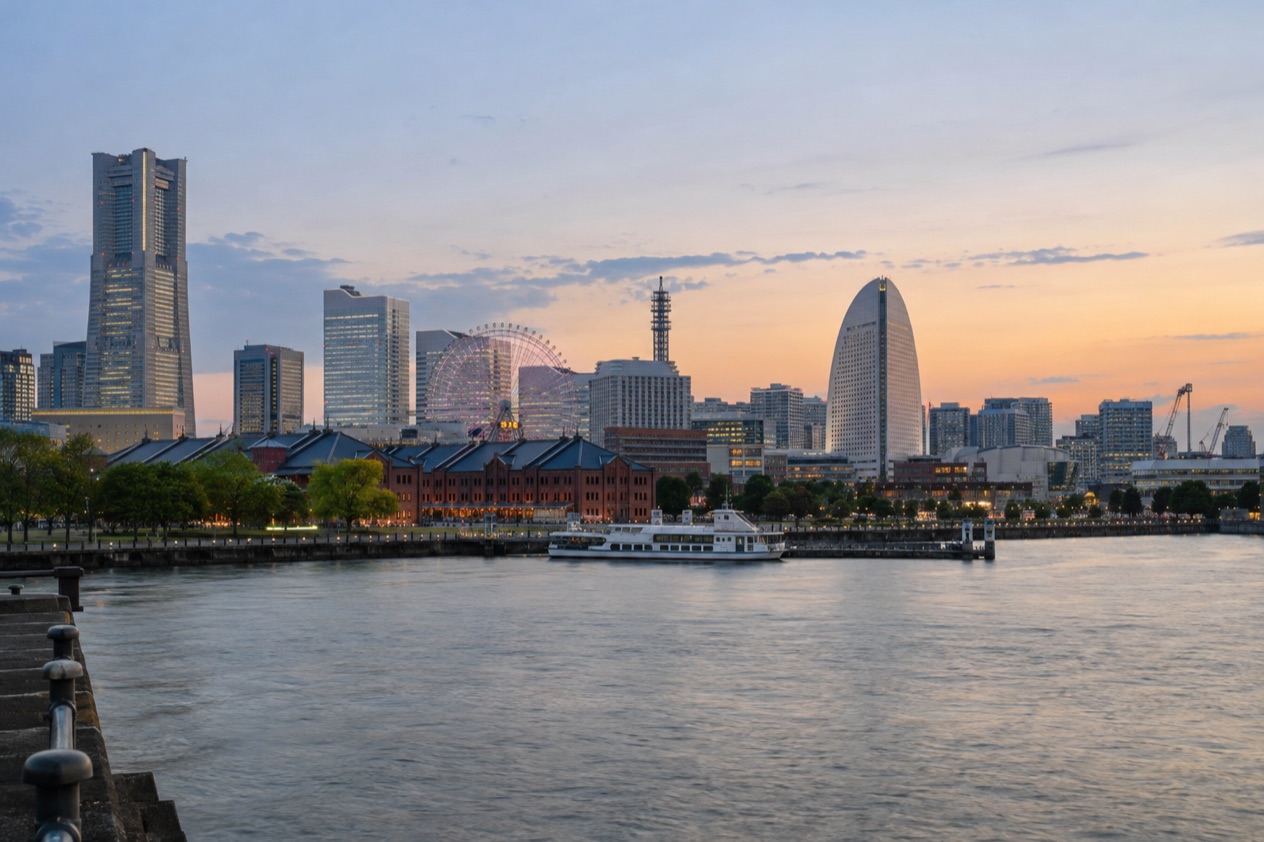
Minato Mirai 21 is the showpiece of modern Yokohama, a district of towers, shopping halls and promenades that was begun in 1983 on reclaimed harbor land. You see the Ferris wheel, the hotels shaped like sails and the long piers where cruise ships and tour boats come and go. The mild May air makes the open decks and plazas a pleasure, and you can keep walking without needing to duck into air-conditioning.
From there the shoreline leads on to Yamashita Park, a lawn-and-flowerbed strip along the water, and to Osanbashi, a pier whose wooden decks curve out over the bay. The port itself was officially opened on June 2, 1859, and the foreign-influenced architecture of the old waterfront still tells that story in brick warehouses and Western-style buildings. Spring blooms in the park beds add color, and the harbor wind keeps the air fresh.
Chinatown and the food of the season
Yokohama Chinatown is the largest Chinatown in Japan, a dense grid of gates, red lanterns and restaurants that rewards slow grazing. Street food is the draw: steamed pork buns, sesame dumplings, fried chicken on a stick and bubble tea, eaten standing at the curb. Warm May weather suits this kind of eating, with a bun in one hand and the gates and temple roofs overhead.
Seasonal Japanese flavors appear around the city too. New green tea, shincha, shows up in cafés in spring, and sweets wrapped in oak leaves, kashiwa-mochi, belong to Children’s Day on May 5, along with steamed rice dumplings in bamboo leaves. Seafood from Tokyo Bay and the Pacific fills the izakaya, the casual pubs where small plates come with beer or sake.
Museums and indoor stops for a wet day
The CupNoodles Museum in Yokohama is the clear rainy-day choice, a hands-on museum devoted to instant noodles, where visitors can design their own cup. It is one of two CupNoodles museums in Japan, the other being in Osaka. Children and adults alike enjoy it, and it fills a wet hour without effort.
Around Minato Mirai, the shopping complexes and covered walkways keep a gray day moving, with cafés, department stores and harbor-view restaurants all under one roof. When the rain eases, you can step straight back out onto the waterfront. Shops in urban areas of Japan are generally open from 10:00 a.m. to 8:00 p.m., so the evening has room for browsing before dinner.
Beyond the city, May is also the month when wisteria hangs from its trellises in Japan. The largest wisteria in the country grows at Ashikaga Flower Park in Tochigi, a planting dated to about 1870, and it makes a flower-focused outing for those who want to extend the trip beyond the harbor.
A two-day itinerary for Yokohama in May
Day 1 is about the harbor. Start from Yokohama Station and head to Minato Mirai in the morning, when the towers and plazas are at their easiest to take in on foot. Walk on to Yamashita Park and Osanbashi pier for the views over Tokyo Bay, and let the bay breeze set your pace.
At midday, move into Chinatown for lunch and a long wander between the gates, picking from noodle shops, dim sum houses and bun stalls. Afternoon is for the old waterfront district, with its brick buildings, coffee houses and small galleries. As the day lengthens, with sunlight lasting well past dinnertime, return to the water for a harbor-view dinner and the lit skyline.
If rain arrives, shift the plan indoors to the shopping halls of Minato Mirai and an afternoon in the CupNoodles Museum, then keep Chinatown for the evening, when its lanterns are lit and restaurants are warm and busy.
Day 2 widens the circle. Spend the morning in Motomachi, the shopping street that runs below the hillside neighborhood known as the Bluff, with its old Western-style houses, gardens and church spires. The climb gives a different view of the harbor than the one from the waterfront, and the leafy streets are at their freshest in May.
Take lunch at a local café or a small shop serving Yokohama-style Western dishes, then devote the afternoon to a Japanese garden such as Sankeien, a landscaped park with ponds, teahouses and old buildings gathered from other parts of the country. It is a calm way to enjoy the season’s greenery. Finish the day with seafood at an izakaya near the station.
Should rain return, a museum afternoon, a long teahouse stop or a cooking class would suit the second day equally well. Alternatively, use the day to ride a train for about an hour into Tokyo and see the neighborhoods of the festival season, then return to the harbor lights for dinner.
Is Yokohama busy in May?
May begins busy, because Golden Week, the run of holidays from April 29 to May 5, pulls families into the city, and then the pace settles for the rest of the month.
Four days within that stretch are official public holidays: Showa Day on April 29, Constitution Memorial Day on May 3, Greenery Day on May 4 and Children’s Day on May 5. When a national holiday falls on a Sunday, the next working day becomes a holiday as well, and any day that falls between two other national holidays also turns into one. These rules can lengthen the break in some years.
Beyond that first week, May is a spring month of mild weather and long days, and the city moves at a relaxed pace. The harbor promenades, parks and Chinatown fill with strollers on pleasant afternoons, while museums and shopping halls offer a choice when the sky turns gray.
The weeks around the festivals in Tokyo, especially Sanja Matsuri at Asakusa Shrine, bring extra movement along the railway lines between the two cities. The rest of the month, you can set the daily rhythm yourself, with a morning on the water, a long lunch and a flexible evening.
What to pack for Yokohama in May
May is a layering month, with warm afternoons, cooler evenings by the bay and a shower now and then. A light jacket or a simple sweater does most of the work, and the rest of the bag follows your plans for the harbor, the parks and the museums.
- A light jacket or sweater for evenings on the waterfront, where the bay air cools things down.
- Short-sleeved shirts for sunny afternoons around Minato Mirai and Chinatown.
- A compact umbrella, since rain falls on about one day in three.
- Comfortable walking shoes for piers, parks and the hillside streets of Motomachi.
- Sunglasses and a hat for bright, long days on the open promenades.
- A small bag or pouch for snacks and souvenirs from the Chinatown stalls.
Good to know before you go
The start of May is Golden Week, so expect holiday energy in the first days of the month and plan accordingly for trains and popular outings. In urban areas, shops are generally open from 10:00 a.m. to 8:00 p.m. every day, which leaves room for evening browsing. Rural areas often close earlier, sometimes as early as 6:00 p.m., a point worth remembering if you add a countryside excursion.
From Haneda Airport, the Keikyu train line reaches Yokohama Station, and a shuttle bus covers the same trip. From western Japan, Nozomi Shinkansen trains stop at Shin-Yokohama Station, while central Tokyo travelers use Yokohama Station, which is more central. Pick the station that matches your hotel, since the two are separate.
Yokohama in May vs April and June
Moving the trip four weeks earlier brings you to April, which is cooler, with mornings and evenings that call for a proper sweater. It is also the month when the Golden Week holidays begin, with Showa Day on April 29.
Cherry blossoms in the Kanto region reach their season in late March, so April is a month of petals fading into fresh leaves rather than full bloom. The days are shorter too, so there is less evening light for the waterfront.
Moving four weeks later lands you in June, which is warmer and noticeably wetter, with more rainy days and far less sunshine. The humidity climbs, and the harbor walks feel heavier. The long June days still give plenty of daylight, but the gray skies cut into outdoor plans, so museums and indoor stops carry more of the itinerary.
Travelers who want mild air, green leaves and flexible outdoor days should stay with May. Those who prefer cooler weather and the end of the blossom season can shift earlier, and those who like warmth and do not mind rain can go later.
Is May a good time to visit Yokohama?
Yes, May is a very good month for Yokohama, especially for travelers who like to spend their days outdoors on the water, in parks and on foot through lively streets.
Families will enjoy the Children’s Day atmosphere and the carp streamers, food lovers can graze through Chinatown and the seasonal sweets, and anyone who wants a relaxed city break near Tokyo will find mild days and long evening light. Travelers who dislike holiday crowds should keep the first days of the month in mind, and those who want blossoms or hot summer beach weather would do better in another month.
On arrival, head straight for the waterfront at Minato Mirai and let the harbor set the tone, then plan Chinatown for the first meal. May in Yokohama is the month of koinobori over the harbor, new tea in the cafés and warm buns eaten beneath the Chinatown gates.
Sources
- Japan Meteorological Agency (JMA), Normal values 1991-2020, monthly (https://www.data.jma.go.jp/stats/etrn/view/nml_sfc_ym.php?prec_no=46&block_no=47670), station Yokohama, elevation 39 m, checked October 11, 2026
- Computed from the date and the latitude of the place (sunrise equation, solar elevation -0.833 degrees), October 11, 2026
- Japan National Tourism Organization, shop and attraction hours, national holidays (https://www.japan.travel/en/plan/business-hours-and-holidays/), checked October 11, 2026
- Wikipedia, Golden Week (Japan) (https://en.wikipedia.org/wiki/Golden_Week_(Japan)), checked October 11, 2026
- Wikipedia, Public holidays in Japan (https://en.wikipedia.org/wiki/Public_holidays_in_Japan), checked October 11, 2026
- Japan National Tourism Organization, flowers by season: cherry blossom, plum, wisteria, hydrangea, where and when (https://www.japan.travel/en/see-and-do/flowers/), checked October 11, 2026
- Wikipedia, Wisteria (https://en.wikipedia.org/wiki/Wisteria), checked October 11, 2026
- Japan Meteorological Agency, sakura2020.pdf (https://www.data.jma.go.jp/sakura/data/sakura2020.pdf), checked October 11, 2026
- Japan National Tourism Organization, spring in Japan (https://www.japan.travel/en/guide/spring-guide/), checked October 11, 2026
- Wikipedia, Kanda Matsuri (https://en.wikipedia.org/wiki/Kanda_Matsuri), checked October 11, 2026
- Wikipedia, Sanja Matsuri (https://en.wikipedia.org/wiki/Sanja_Matsuri), checked October 11, 2026
- Japan National Tourism Organization, festivals and events (https://www.japan.travel/en/see-and-do/festivals-and-events/), checked October 11, 2026
- Wikipedia, Gion Matsuri (https://en.wikipedia.org/wiki/Gion_Matsuri), checked October 11, 2026
- Wikivoyage, Yokohama (https://en.wikivoyage.org/wiki/Yokohama), checked October 11, 2026
- Japan National Tourism Organization, Yokohama (https://www.japan.travel/en/destinations/kanto/kanagawa/yokohama-and-around/), checked October 11, 2026
- Wikipedia, Yokohama (https://en.wikipedia.org/wiki/Yokohama), checked October 11, 2026
- Wikipedia, CupNoodles Museum (https://en.wikipedia.org/wiki/CupNoodles_Museum), checked October 11, 2026
- Wikipedia, Minato Mirai 21 (https://en.wikipedia.org/wiki/Minato_Mirai_21), checked October 11, 2026