
In Okinawa the year is told in sounds: Eisa drummers shouting their way down a street on a summer night, sanshin strings drifting out of an izakaya in Naha, wind moving through the sugarcane. Winters stay mild, summers are bright and hot, and the sea stays inviting for much of the calendar.
The former Ryukyu Kingdom left these islands their own language, music and food, including Okinawa soba, gōyā champurū and rafute. Okinawa is a subtropical chain between mainland Japan and Taiwan, and its mood shifts month by month.
When is the best time to visit Okinawa?
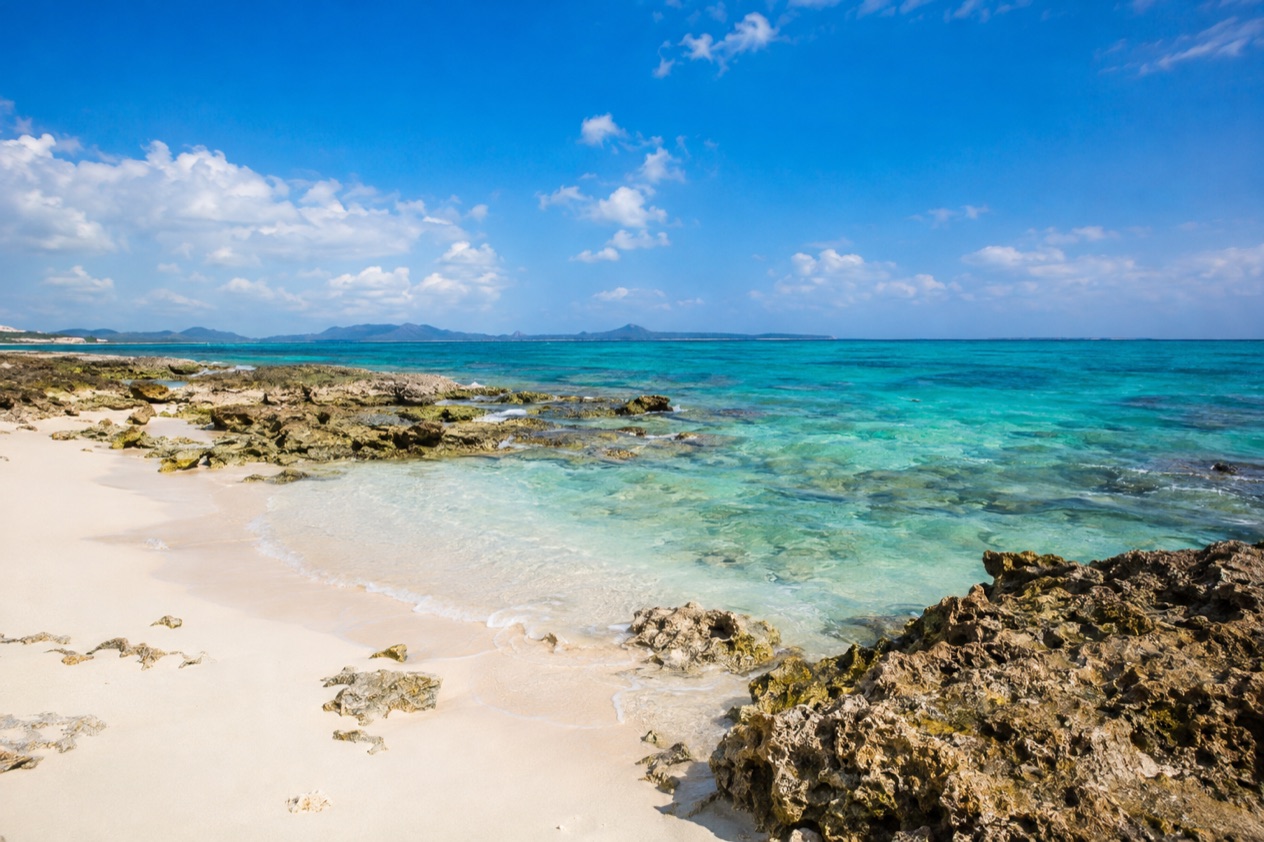
April, October and November suit travelers best, while July through September belongs to the sea. In those shoulder months the air is warm without being heavy, the evenings are comfortable for eating outside, and the water is still pleasant for a swim in October. From mid-summer the sun shines longest, and the beaches are the reason to come.
For sightseeing and food, the cooler months are kinder. Winter days are mild enough for a light jacket, though gray skies and showers are part of the picture, so it is a season for museums, pottery villages and long lunches rather than for sunbathing.
For nature and beach time, aim for the summer months, when the sea is at its warmest and the light is the brightest of the year. Early summer is wetter, with May and June carrying the heaviest rainfall of the year, so those weeks suit travelers who do not mind an umbrella in the bag.
Families who want the water will be happiest from June to October, with rainy-day backups such as Okinawa Churaumi Aquarium on the main island. Travelers on a budget who prefer quiet streets can look to the winter months, when beach weather is gone and the island moves at a slower pace. Pick the season by what you want to do, since Okinawa has something to offer in each.
Okinawa weather by month
Naha stays warm all year, and the real differences between months are the heat, the rain and the temperature of the sea.
| Month | Average high (°F) | Average low (°F) | Precipitation (in) | Days with 1 mm or more of precipitation | Hours of sunshine | Daylight on the 15th | Sea (°F) |
|---|---|---|---|---|---|---|---|
| January | 67.6 | 58.8 | 4.00 | 10.2 | 93 | 10 h 40 min | 71.7 |
| February | 68.4 | 59.2 | 4.51 | 9.9 | 93 | 11 h 16 min | 71.4 |
| March | 71.4 | 62.1 | 5.62 | 10.9 | 115 | 11 h 58 min | 71.1 |
| April | 75.7 | 66.4 | 6.34 | 10.3 | 121 | 12 h 45 min | 74.2 |
| May | 80.6 | 71.8 | 9.66 | 11.4 | 138 | 13 h 25 min | 76.8 |
| June | 85.6 | 77.4 | 11.20 | 11.3 | 160 | 13 h 46 min | 79.8 |
| July | 89.4 | 80.6 | 7.41 | 9.4 | 227 | 13 h 38 min | 84.4 |
| August | 89.2 | 80.2 | 9.45 | 12.3 | 206 | 13 h 05 min | 86.0 |
| September | 87.1 | 78.4 | 10.83 | 11.8 | 181 | 12 h 21 min | 86.1 |
| October | 82.6 | 74.3 | 7.06 | 8.8 | 163 | 11 h 35 min | 83.2 |
| November | 77.0 | 68.7 | 4.69 | 8.2 | 122 | 10 h 53 min | 79.3 |
| December | 70.7 | 62.2 | 4.33 | 9.3 | 107 | 10 h 31 min | 74.9 |
The year has two moods. From December to March the days are mild, with highs in the upper 60s and low 70s, so a light jacket or a sweater covers the evenings.
Rain falls on about as many days as it does in much of the summer, but the totals are far smaller, which means gray skies and passing showers rather than downpours. Winter also has the shortest days, with daylight ending early in the evening.
From May the heat and the wet build together, and June is the wettest month in the table. Then July turns bright, with the most sunshine of the year and the fewest rain days of the summer.
August and September bring heat close to its peak, with lows that barely cool the nights, so light clothing, sun protection and a compact rain jacket all earn their place. Long summer days leave plenty of light for an evening on the shore. October eases the heat and the rain together.
What is there to do in Okinawa in each season?
Spring and the early-summer rains
Spring is the season for walking. Temperatures climb through the 70s, and the days are long enough to fit a castle-ruin visit, a market lunch and a drive up the main island’s coast into one outing. Okinawa’s own early cherry blossoms belong to the cooler part of the year, well before the mainland’s, and the mainland’s blossom dates do not apply here, so treat spring in Okinawa as a season for gardens, markets and the first beach days.
May and June bring the heaviest rain of the year, and the rains shape what you plan. Keep the museum, pottery and aquarium days for the wet hours, and save the open-air outings for the breaks. The main island has beaches such as Manza, Emerald, Okuma, Zanpa, Moon and Sunset at Chatan, so when the sky clears you can be on the sand quickly.
Summer on the beach and under the water
July, August and September are the months for the water. The sun is strong, the sea is at its warmest, and the day starts early and ends late. Snorkeling and diving trips go out to the reefs, and the beach is where the day settles into a rhythm of swimming, shade, shaved ice and a long dinner after dark.
Summer is also the season of Eisa, with drumming and dancing around Obon in communities across Okinawa. Midday heat is best spent in the shade or the water, with the cooler hours kept for walking and eating.
Autumn and winter
October is still warm enough for the beach, and the figures show it is the least rainy month of the year. November and December are milder than the mainland, so you can walk and sightsee without the summer sweat. The brilliant autumn colors that Japan’s mainland shows from mid-November to early December are a mainland pleasure, so in Okinawa this is a season for the light, the food and the slower pace instead.
In winter the beach days thin out, since the sea is bracing and the sky is often gray. The trade-off is a quieter island, with Naha’s markets, the Ryukyu-era sites and the aquarium all easier to enjoy at a gentler pace. Okinawa has no snow season to plan around, so a sweater is the heaviest layer you need.
When is Okinawa least crowded?
Outside the New Year break, the cooler season from December to February is generally quieter. Gray skies and bracing sea keep visitors away, and the main island feels less busy as a result. The calm is a good fit for travelers who care more about food, history and slow driving than about swimming.
The busiest periods follow Japan’s own holiday calendar. Golden Week at the start of May, the summer vacation around Obon, and the New Year break all send domestic travelers to the islands, and Naha Airport is the gateway for flights from dozens of cities across Japan, including low-cost carriers. In those weeks the main attractions and popular beaches tend to hold more people than usual, and rooms are in demand.
Between the busy weeks there are good gaps. Early autumn, once the school holidays are over, and the weeks outside Golden Week in spring usually bring a calmer mood. If you want warm water and fewer people at once, the shoulder weeks at either end of summer are the compromise worth aiming for. Holiday weeks are the time to expect a fuller island, so flexible dates give you the widest choice of rooms.
Which months should you avoid in Okinawa?
No month rules Okinawa out, but May and June are the hardest on a beach plan, and midsummer asks the most of your stamina. Those two early-summer months carry the heaviest rainfall of the year, with days of gray skies and humid air that make outdoor plans harder to keep. They are still good months for museums, food and indoor sights, so the trip just needs a more flexible shape.
July and August are the hottest months, with highs near 90 and nights that barely cool down. They are also the brightest, which is why the beaches are at their liveliest, but sightseeing on foot in the middle of the day takes effort. Plan the long walks for the cooler hours and leave the middle of the day for the water or a shaded café.
September is still hot and wet, with one of the larger rainfall totals of the year. In winter, the main cost is the sea, which is too cool for a long swim, and the skies are often gray. If beaches matter most, the months between June and October give the warmest water.
When can you swim in Okinawa?
The sea is warm enough for a long swim from June to October, with the water near Naha averaging 86.1°F in September at its peak. From December to April it cools to the low 70s, which is a quick dip rather than a long swim for people. May sits between the cooler spring sea and the warmer summer water.
Okinawa Island has several beaches to choose from: Manza Beach, Emerald Beach, Okuma Beach, Zanpa Beach, Moon Beach and Sunset Beach at Chatan. Each has its own setting, so a day trip can be built around whichever is closest to where you are staying. Check local conditions at each beach before you go into the water.
Snorkeling and diving follow the same warm months, and the island’s reefs are the draw. The wider prefecture counts 160 islands, of which 49 are inhabited, so there is no shortage of coastline to explore if you have the time to go beyond the main island.
Festivals and events in Okinawa through the year
New Year and the cooler months
New Year is the biggest family holiday in Japan, and Okinawa keeps it with special meals, visits to shrines and time at home. Domestic travelers fill the islands over the break, and many shops and restaurants run on holiday schedules, so it is a good moment to see how locals celebrate.
The cooler months are also when Okinawa’s early cherry blossoms appear, well ahead of the mainland’s. These are a different flower from the mainland’s, and a different mood, with festivals held under pink blooms on the hillsides rather than in crowded city parks. For those who like their flowers with fewer people, it is a pleasure of the cooler season.
Early summer and the dragon boats
In early summer, communities along the coast hold hari, the dragon-boat races, to pray for a good catch and a safe sea. Teams paddle brightly painted boats while crowds cheer from the shore, and the day often ends with food and music. It is a local festival that visitors are welcome to watch, and a chance to see a side of the islands that has little to do with beaches.
The dates shift from one year to the next, so it is worth finding out when the races fall before choosing your week. If you catch one, it fits well with the wetter weeks of May and June, when the sky is as likely to be gray as bright.
Summer Eisa and autumn tug-of-war
Around Obon, the summer festival of the dead, young people dance Eisa through the streets, beating drums and calling out as they go. Each village and neighborhood has its own style, and the processions often continue into the night. It is one of the best ways to see Okinawan culture, as a street celebration that anyone can stand and watch.
In autumn, Naha is known for its huge tug-of-war, in which a giant rope is pulled by teams of locals while the crowd joins in. The weather has eased by then, the days are bright, and the island’s food stalls and music add to the mood. It is a lively reason to plan an autumn visit around the calendar.
Sources
- Japan Meteorological Agency (JMA), Normal values 1991-2020, monthly (https://www.data.jma.go.jp/stats/etrn/view/nml_sfc_ym.php?prec_no=91&block_no=47936), station Naha, elevation 28 m, checked October 11, 2026
- Open-Meteo Marine API, average 2015-2024, checked October 11, 2026
- Computed from the date and the latitude of the place (sunrise equation, solar elevation -0.833 degrees), October 11, 2026
- Japan National Tourism Organization, Okinawa (https://www.japan.travel/en/destinations/okinawa/okinawa/naha-and-the-main-island/), checked October 11, 2026
- Okinawa Churaumi Aquarium (https://churaumi.okinawa/en/), checked October 11, 2026
- Wikipedia, Okinawa Island (https://en.wikipedia.org/wiki/Okinawa_Island), checked October 11, 2026
- Wikipedia, Okinawa Prefecture (https://en.wikipedia.org/wiki/Okinawa_Prefecture), checked October 11, 2026
- Wikivoyage, Okinawa (https://en.wikivoyage.org/wiki/Okinawa), checked October 11, 2026
- Japan National Tourism Organization, autumn in Japan (https://www.japan.travel/en/guide/autumn-guide/), checked October 11, 2026
To plan your stay
- Things to Do in Okinawa: Churaumi Aquarium, Shuri Castle, Kerama Reefs and Okinawan Food
- Where to Stay in Okinawa: Naha, Chatan, the Aquarium Coast and Beach Resorts
- Okinawa from Tokyo: Flying to Naha, Why No Train Goes There and a First Day on the Island
- Know Before You Go to Okinawa: Entry, Money, Getting Around and Local Etiquette