
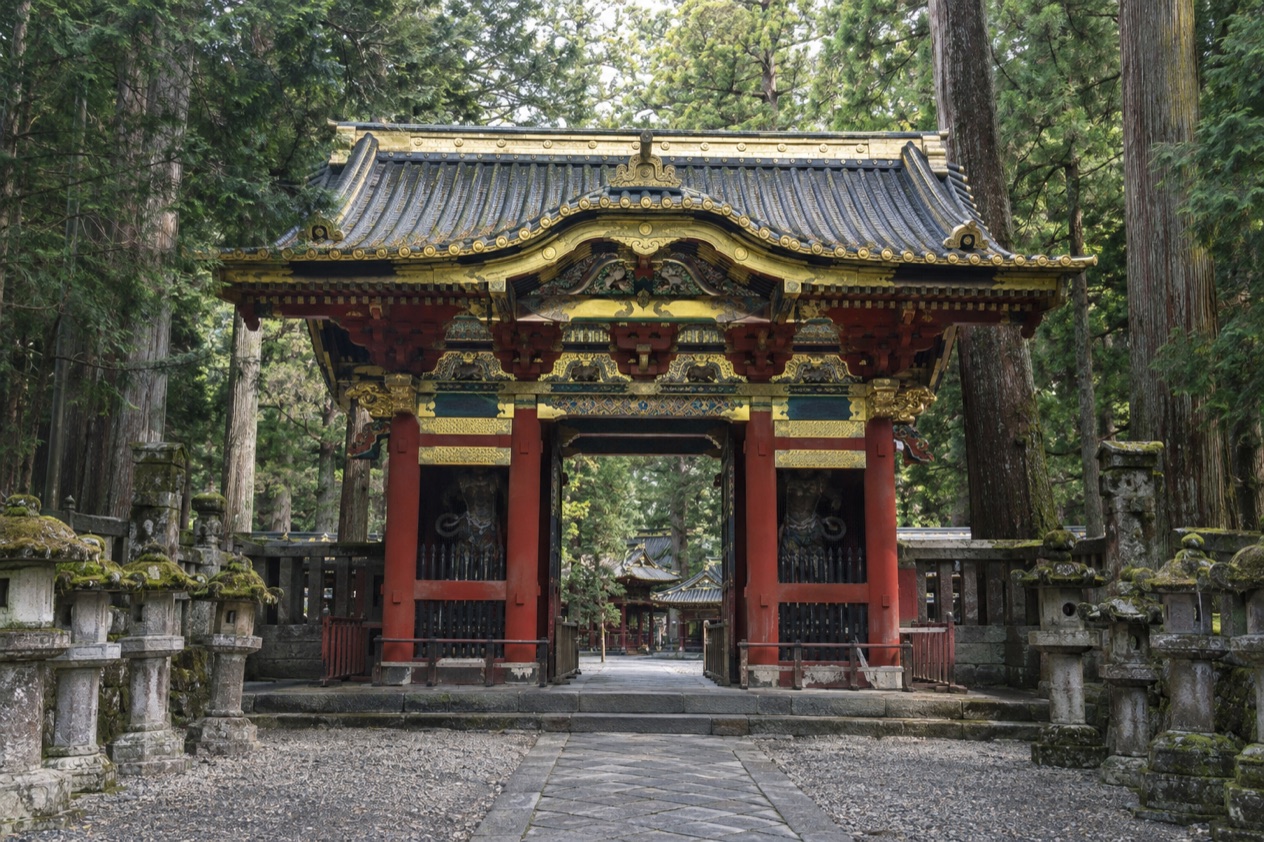
Under the tall cedars of Nikko, the lacquered gates and carved gables of Toshogu glow red and gold against dark bark, and the gravel paths between the shrine buildings crunch under every step. Rooftops, stone lanterns and moss-covered stairs follow one another up the wooded slope. Nikko is a temple town in the mountains of Tochigi Prefecture, with a lake, a waterfall and hot springs in the hills around it, a place for travelers who like to spend their days among shrines and forest.
Where is Nikko and what is it like?
Nikko is a city in Tochigi Prefecture, in the Kanto region of Japan, to the north of Tokyo and west of Utsunomiya, the prefectural capital. It is a mountain town built around a cluster of shrines and temples, with national park country spreading out behind it. The city covers a very large area, and that is the best clue to its character: Nikko is not a single center but a set of separate places, each with its own mood.
At the heart is the town of Nikko itself, home to about 76,000 people. Its streets lead up to the sacred precinct, where the shrines and temples stand among old trees. Higher in the mountains, Lake Chuzenji and Kegon Falls lie inside Nikko National Park, and the hot spring resort of Kinugawa Onsen sits within the same city limits. A traveler can spend a morning among carved gates and the afternoon beside a lake.
The pace here is set by walking and by the weather. Shrine visits mean steps, gravel and a lot of time on foot outdoors, and mountain air can shift the mood of a day from clear to misty within hours.
Nikko suits people who like history, forest and hot water, and who are happy to move slowly from one site to the next. It suits less well anyone who wants nightlife or a long list of big-city attractions, because the interest here lies in the temples, the trees and the water.
There is an old Japanese saying about the place: never say kekkō until you have seen Nikko. Kekkō means splendid, magnificent, or simply satisfied, and the saying suggests that nothing should be called magnificent before a visit here. The line has followed the town for generations, and it explains why the shrines are still the reason people come.
What is there to do in Nikko?
The reasons to come to Nikko are the shrines and temples of the sacred precinct, the lake and waterfall in the mountains, and the hot springs of Kinugawa. What sets it apart from other towns in the Kanto region is that these three worlds sit within one city, so a single stay can combine history, mountain scenery and a soak in an onsen.
The shrines and temples of the sacred precinct
Toshogu is the great draw. It is the mausoleum of Tokugawa Ieyasu, founder of the shogunate that ruled Japan from 1603 to 1867, and it is a Shinto shrine, so you pass through torii gates and courtyards rather than a temple compound. Buildings are covered in carving and color, and each gate and hall rewards a slow look at the details.
Close by stand the mausoleum of Tokugawa Iemitsu, known as Iemitsu-byo Taiyu-in, and Futarasan shrine, which dates to the year 767. Rinno-ji Temple belongs to the same group. Together these sites make a day of walking between wooded courtyards, and the shrines and temples of Nikko include 103 structures across three complexes recognized by UNESCO. The Toshogu Museum adds a roofed stop if the weather turns.
| Site | Open |
|---|---|
| Toshogu Shrine | 8:00 to 4:30 from April to October, 8:00 to 3:30 from November to March |
| Taiyuin-byo | 8:00 to 4:30 from April to October, 8:00 to 3:30 from November to March |
| Rinno-ji Temple | 8:00 to 5:00 from April to October, 8:00 to 4:00 from November to March |
| Toshogu Museum | 9:00 to 4:00 daily |
Lake Chuzenji and Kegon Falls
Lake Chuzenji is a lake inside Nikko National Park, and Kegon Falls is located at the lake, which gives a day in the mountains a natural pair of stops: water to walk beside and a waterfall to look at. The elevation changes the air, and the weather here can differ from the town below, with mist and cloud arriving more readily over the lake.
This part of Nikko suits travelers who want a break from carved wood and stone. The shoreline gives space for a long walk, the forest around the lake changes color with the seasons, and the falls provide a sound and a sight that contrast with the quiet courtyards of the shrines. It pairs with the sacred precinct in a stay of two days or more.
Kinugawa Onsen
Kinugawa Onsen is a hot spring resort in the city of Nikko, and it offers the other great pleasure of a Japanese mountain stay: a soak in mineral water after a day on foot. Resorts like this are built around bathing, and a night here often means an evening bath, a seasonal dinner and a morning bath before checkout.
It is a good fit for travelers who want the trip to end with rest rather than another sight. Combined with the shrines and the lake, Kinugawa turns Nikko from a day of sightseeing into a stay with a rhythm of walking, looking and soaking.
How many days do you need in Nikko?
Two days is a comfortable length for Nikko, and a long weekend lets you add the lake and a night in a hot spring town. Because the sacred precinct, Lake Chuzenji and Kinugawa Onsen are separate places in the same city, each deserves its own block of time instead of being squeezed into a single outing.
With a single day, the shrines and temples fill the hours. A visit to Toshogu, Taiyuin and Rinno-ji means walking uphill and down between courtyards, and the Toshogu Museum adds more to see indoors.
The line between the sites is short in the sense that they sit together on the same wooded slope, but each building holds enough detail to take time. Tobu-Nikko Station is about 2 hours from Asakusa Station and Shinjuku Station in Tokyo, so a day from the capital leaves a full morning and afternoon on site.
A second day belongs to the mountains. Lake Chuzenji and Kegon Falls make a natural outing in Nikko National Park, and the higher country around them brings a different feel from the town: a cooler day, a wider sky, and a trail beside the water. A night at Kinugawa Onsen turns the second day into a gentler one, with the soak as its closing scene.
With more time, the options widen. Buses run from Oze to Nikko between mid-spring and mid-autumn, which links Nikko with the high wetlands of Oze in the warm season. Utsunomiya, the prefectural capital, lies to the east and works as a city stop. A longer stay lets you repeat a favorite shrine in different weather, because rain, mist and sun change the look of the lacquer and the cedars.
Where to stay in Nikko
The main choice is between the town of Nikko, the area around Lake Chuzenji and the hot spring resort of Kinugawa Onsen, and each suits a different kind of trip. Because they sit in separate parts of one large city, where you sleep shapes what you see in the morning.
The town of Nikko suits travelers whose days revolve around the shrines and temples. Staying here puts the sacred precinct within reach and keeps you near the station where trains from Tokyo arrive. It is the base for people who want to explore Toshogu, Taiyuin, Futarasan and Rinno-ji without planning around a long trip each morning. Evenings are for dinner in town and an early night before another day among the cedars.
The Lake Chuzenji area suits travelers who came for the mountains. The lake and Kegon Falls sit inside Nikko National Park, and a night nearby puts you in the high country, where Oku-Nikko lies at about 4,200 feet. Staying up here means waking beside the water and the forest, with air that runs cooler than the town below. It is a choice for walkers and for travelers who like mountain mornings.
Kinugawa Onsen suits travelers who want the stay itself to be the point. As a hot spring resort, it is built for baths and slow evenings, and a night here fits the end of a sightseeing trip better than the start.
Traditional inns in onsen towns usually serve dinner and breakfast in the room or hall, and guests change into a yukata, a light cotton robe, for the evening. Each of the three areas pairs well with a night in one of the others.
How do you get to Nikko and get around?
Nikko is reached from Tokyo by train, and Tobu-Nikko Station is about 2 hours from Asakusa Station and Shinjuku Station in the capital. The city lies to the north of Tokyo, in Tochigi Prefecture.
From the Gunma side, buses run from Oze to Nikko between mid-spring and mid-autumn. That link belongs to the warm months, so it matters for travelers combining the wetlands of Oze with the shrines and the lake. Outside that season, the route is not part of the picture.
Once in Nikko, the sacred precinct is a place for walking. The shrines and temples sit together on a wooded slope, and moving between Toshogu, Taiyuin, Futarasan and Rinno-ji means steps, gravel and uphill paths.
Opening hours shape the day, since Toshogu and Taiyuin close at half past four from April to October and an hour earlier from November to March. Rinno-ji stays open a little longer, and the Toshogu Museum keeps its own hours.
Lake Chuzenji and Kegon Falls lie within Nikko National Park, and Kinugawa Onsen sits in a separate part of the city. Because the city is so large, the places within it are not neighbors, and a day plan works best when it stays within one area. Local bus, taxi and rental car details are best settled on the day with the station or the hotel, since the only transport facts for the city are the train from Tokyo and the seasonal bus from Oze.
When is the best time to visit Nikko?
Autumn, and October in particular, is a rewarding month in Nikko, because the leaves turn around the lake and the shrine courtyards while the air stays cool. At Oku-Nikko, close to Lake Chuzenji, highs in October reach the mid-50s and nights drop into the low 40s, with snow rare and rain falling on about eleven days. Humidity is high, so mist and low cloud are part of the scene.
Spring is the other good season. In April at Oku-Nikko, highs hover around 50 degrees and nights stay near freezing, and snow still falls on several days, so the mountains wake slowly while the town below warms earlier. Sunshine is generous that month, with long bright spells between wet days.
Summer brings the dampest weather: July is the rainiest of the months for which we have figures, with rain on most days, humidity near its peak and few hours of sunshine. The air is mild at the lake, with highs in the low 70s, which makes the high country a gentler place than the lowlands.
Winter turns Oku-Nikko into snow country. In January highs sit just above freezing, nights fall well below it, and snow or sleet falls on most days. Hours of daylight at the shrines are shorter, and Toshogu and its neighbors close an hour earlier from November to March. Toshogu holds grand festivals in spring and autumn, with processions of costumed warriors, and those weeks bring the largest gatherings of the year.
Good to know before you go
Weather in Nikko depends on where you stand. Rain is part of life here in every season but winter, when snow takes its place, and the wet months bring humidity as well.
Walking in the shrines means shoes on gravel and stone, and visitors keep their voices low and bow at the torii as a matter of habit. Nikko is a place to bring patience for weather and a willingness to let the plan change when the cloud comes down.
Sources
- Japan National Tourism Organization, Nikko (https://www.japan.travel/en/destinations/kanto/tochigi/nikko-area/), checked October 11, 2026
- Wikipedia, Nikkō, Tochigi (https://en.wikipedia.org/wiki/Nikk%C5%8D,_Tochigi), checked October 11, 2026
- Wikivoyage, Nikko (https://en.wikivoyage.org/wiki/Nikko), checked October 11, 2026
- Wikipedia, Nikkō Tōshō-gū (https://en.wikipedia.org/wiki/Nikk%C5%8D_T%C5%8Dsh%C5%8D-g%C5%AB), checked October 11, 2026
- Wikipedia, Kegon Falls (https://en.wikipedia.org/wiki/Kegon_Falls), checked October 11, 2026
- Wikipedia, Lake Chūzenji (https://en.wikipedia.org/wiki/Lake_Ch%C5%ABzenji), checked October 11, 2026
- Wikipedia, Kinugawa Onsen (https://en.wikipedia.org/wiki/Kinugawa_Onsen), checked October 11, 2026
- Japan Meteorological Agency (JMA), Normal values 1991-2020, monthly (https://www.data.jma.go.jp/stats/etrn/view/nml_sfc_ym.php?prec_no=41&block_no=47690), station Okunikko, elevation 1292 m, checked October 11, 2026
All our pages
When to go
- Best Time to Visit Nikko: Weather by Month, Cherry Blossoms, Autumn Color and Snow
- Nikko in January: Snowy Shrines, Lake Chuzenji and a Two-Day Plan
- Nikko in February: Snow, Setsubun, Shrines and What to Wear
- Nikko in March: Snowy Shrines, Lake Chuzenji and a Two-Day Plan
- Nikko in April: Yayoi Festival, Spring Blossoms, Weather and Shrines
- Nikko in May: Weather, Toshogu Shrine, Lake Chuzenji and Golden Week
- Nikko in June: Hydrangea Season, Weather and What to Do
- Nikko in July: Cool Mountain Air, Lake Chuzenji, Toshogu and Rainy-Season Weather
- Nikko in August: Mountain Weather, Shrines and Lake Chuzenji
- Nikko in September: Weather, Lake Chuzenji, Toshogu and a Two-Day Plan
- Nikko in October: Autumn Leaves, Weather and Two Days at the Shrines and Lake Chuzenji
- Nikko in November: Autumn Leaves, Shrine Hours, Lake Chuzenji and Weather
- Nikko in December: Snow, Toshogu Shrine and Winter Weather