
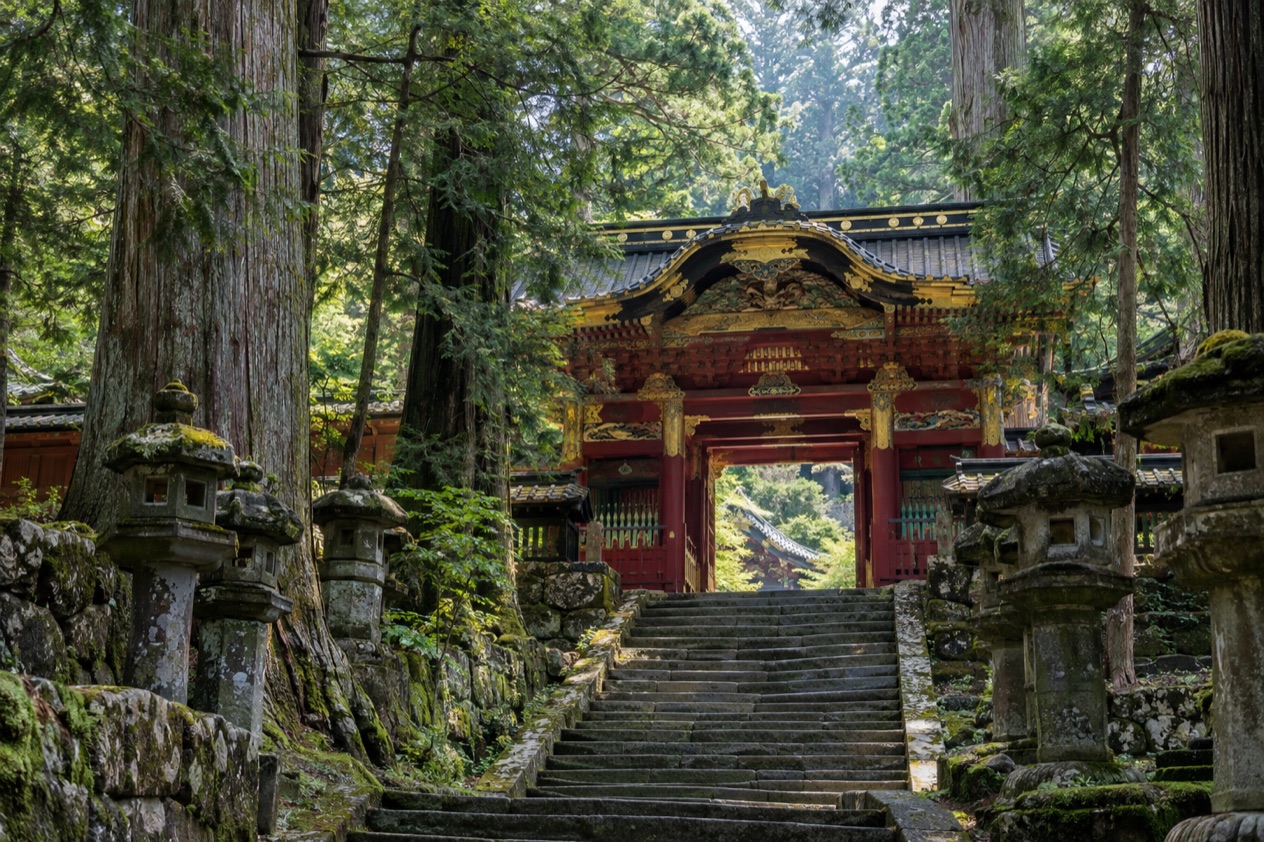
Under the cedars at Toshogu, red lacquer and gold leaf glow against deep green in May, and by January the same paths are laced with snow and the steam of hot springs. Nikko keeps a mountain calendar: cherry petals in spring, rain and mist through the wet months, cool summers by Lake Chuzenji, then turning leaves and the first flakes of winter. This is the shrine town and lake country of Tochigi Prefecture, and each season gives it a different reason to go.
When is the best time to visit Nikko?
For most trips, late April through May and the stretch of autumn from October into November are the best times to visit Nikko, while winter belongs to travelers who would rather have snow than leaves. Spring brings mild days and fresh green around the shrines. Autumn brings crisp air, and across Japan the trees turn red, yellow and orange from mid-November into early December.
For sightseeing, the pleasure is in walking from one precinct to the next, and spring and autumn are the seasons when that feels natural. Toshogu and Taiyuin-byo, the mausoleum of the third shogun’s era, sit among tall trees, and the shrines are best seen when you can linger outdoors without a heavy coat or an umbrella.
Food follows the weather. Nikko is known for yuba, the delicate skin lifted from heated soy milk, served fresh, simmered or rolled around fillings, and it tastes best on a cold day with a bowl of hot soba beside it. Winter and spring bring Tochigi strawberries, and in summer shaved ice is the cooling treat.
For nature, Lake Chuzenji and the waterfalls and marsh trails around it ask for dry footing and some sunshine, so late spring and early autumn suit them. Buses from Oze in Gunma to Nikko run between mid-spring and mid-autumn, which matters if you are linking the two mountain areas.
If you are planning around the weather rather than the calendar, June through September has more rain days and fewer hours of sun, and the sights are still there under an umbrella. Families will find the longest days from late spring into early summer, which stretches the hours at the lake and the shrines, while winter gives children snow to look at. Tobu-Nikko Station is about two hours from Asakusa or Shinjuku, which puts Nikko within reach of a Tokyo stay.
Nikko weather by month
At Oku-Nikko, near Lake Chuzenji, the year runs from snowy, freezing winters to a damp and mild summer.
| Month | Average high (°F) | Average low (°F) | Precipitation (in) | Days with 1 mm or more of precipitation | Hours of sunshine | Daylight on the 15th |
|---|---|---|---|---|---|---|
| January | 31.5 | 17.8 | 2.26 | 6.4 | 165 | 9 h 54 min |
| February | 33.1 | 18.0 | 1.91 | 6.6 | 167 | 10 h 50 min |
| March | 39.6 | 23.7 | 4.27 | 9.5 | 190 | 11 h 54 min |
| April | 50.2 | 32.4 | 6.08 | 10.7 | 187 | 13 h 06 min |
| May | 59.5 | 41.9 | 6.97 | 11.3 | 174 | 14 h 06 min |
| June | 64.4 | 50.7 | 9.01 | 14.3 | 108 | 14 h 39 min |
| July | 71.8 | 58.8 | 11.04 | 16.4 | 110 | 14 h 27 min |
| August | 73.2 | 60.1 | 13.09 | 15.3 | 128 | 13 h 37 min |
| September | 66.0 | 53.4 | 16.10 | 14.4 | 105 | 12 h 28 min |
| October | 56.7 | 42.3 | 9.48 | 11.1 | 123 | 11 h 19 min |
| November | 47.5 | 32.4 | 3.84 | 6.7 | 152 | 10 h 15 min |
| December | 37.0 | 23.2 | 2.30 | 6.2 | 153 | 9 h 40 min |
Winter has the fewest days with precipitation, but that does not make it dry. At this height the moisture falls as snow or sleet on most days from December through March, and a couple of feet of snow can pile up in each of January, February and March. Summer is the opposite: warm, humid, and wet with rain that builds to a peak in August and September.
For packing, that means real winter layers, waterproof boots and gloves from December to March, with nights well below freezing in the deep months. April still brings an occasional snowy day, and May calls for a fleece and a light shell. From June to September a rain jacket matters more than a sweater, though evenings by the lake can cool off. October needs a warm layer, and November already feels like early winter.
The light changes the rhythm of a visit. December days are short, with barely ten hours of daylight, so the shrines and the lake fit into a compact stretch. By June the days are long, so a sightseeing plan can run late even when the sky stays gray.
What is there to do in Nikko in each season?
Nikko changes its character more than almost any other day-trip destination from Tokyo, and the best activity depends on the season. The shrines and temples are the constant, while the lake, the waterfalls, the marshland trails and the hot springs shift from one season to the next. A few things are worth leaving for another time, such as the high lake country in deep winter if you are after long walks.
Spring: cherry blossoms and fresh green
At Utsunomiya, the Tochigi city whose records are used to date the bloom, cherry trees usually open around March 30 and reach full bloom around April 6. No bloom date is given for Nikko itself, and the lake country sits higher and runs colder, so treat the Utsunomiya dates as a guide to the start of the season rather than a promise.
Spring is when Toshogu and Taiyuin-byo are most pleasant to walk, with the carvings and gold leaf set against new foliage and a light jacket or sweater enough for much of Japan. April can still bring snow around the lake, and May is mild by comparison. The Nikko Toshogu Spring Grand Festival falls in May, with a procession of costumed warriors.
The rainy months and summer
June and July are the damp, gray months. Sunshine drops sharply, humidity climbs, and rain comes on more than half the days. This is the season for indoor stops, long lunches of yuba and soba, and soaking in an onsen while the mist hangs over the trees. Waterfalls tend to look full after rain, though no promise can be made about any single day.
Summer around Lake Chuzenji is gentle compared with the lowlands, with highs only in the low 70s. It suits lakeside walks, boat rides and a bowl of shaved ice made from the region’s natural ice. Rain remains frequent in August, and September is the wettest month, so keep a rain jacket within reach and leave the highest trails for a clear stretch.
Autumn leaves
Across Japan, autumn brings moderate temperatures that suit walking, and the trees show red, yellow and orange from mid-November to early December. At Oku-Nikko, October is cool and November is already close to winter, with the first snow arriving as flurries, so layers matter more than usual. No usual date is given for the leaves at Nikko itself.
Autumn is a season for the lakeshore, the waterfalls and the long avenues of trees at the shrines, with grilled river fish, mushrooms and soba on the table. Rain eases after September, though October still brings plenty of damp days.
Winter and snow
Winter is the season of snow and cold, with the lake country heavily dusted from December to March. It suits travelers who want frosted cedars around the shrines, hot soup and an outdoor bath with snow falling. Walks around the lake need proper winter footwear, and the short days leave less time for long outings. Toshogu and Taiyuin-byo keep shorter hours from November to March, which is worth planning around when daylight is already brief.
| Site | Open April to October | Open November to March |
|---|---|---|
| Toshogu Shrine | 08:00-16:30 | 08:00-15:30 |
| Taiyuin-byo | 08:00-16:30 | 08:00-15:30 |
When is Nikko least crowded?
The calendar offers clues rather than a guarantee. The national holiday weeks, Golden Week in early May, Obon in mid-August and the New Year stretch, are the times when Japanese travel plans cluster, and they are worth keeping in mind when choosing dates. The cherry bloom in early April and the autumn color season are the other moments when people want to be in the mountains.
The weather points the other way. June and July are damp, and September is the wettest month, with the fewest hours of sun in the whole year. Late winter has snow and cold. These are the months when the weather, not the calendar, sets the pace, and a rain jacket or a good pair of boots matters more than a reservation.
Staying overnight rather than coming as a day trip from Tokyo gives you more time in the town and by the lake. Tobu-Nikko Station is about two hours from central Tokyo, so an overnight stay is a natural way to see more.
Beyond the holiday weeks, there is no month that can be labeled empty or full, and the surest way to enjoy the shrines and the lake is to match your plans to the weather of the month you choose.
Which months should you avoid in Nikko?
No month needs to be avoided outright, but June through September asks the most patience, and deep winter asks the most preparation. Everything depends on what you want to do.
The damp months of June and July bring rain on more than half the days, high humidity and the dimmest light of the year. August stays wet, and September is the wettest month by a wide margin. If your plan is long walks, views over the lake or time on the waterfalls trails, the rain and cloud will limit what you can do, but the shrines, museums and onsen still work well under an umbrella.
From December to March, the lake country is cold and snowy, with nights far below freezing and snow or sleet falling on most days. For travelers who come for the snow that is the point, but for anyone planning long outdoor days, winter makes everything slower. Toshogu and Taiyuin-byo also close earlier from November on, and daylight is brief.
The blooms and autumn color are the other consideration. Early April is the usual start of cherry season in Utsunomiya, and the colors across Japan arrive from mid-November, so these weeks may draw more visitors. The shoulder weeks of May and October are mild but still call for layers, and no day can be promised dry or clear.
Festivals and events in Nikko through the year
Winter: New Year, Setsubun and snow
New Year is the biggest family holiday in Japan, and the first shrine visit of the year, hatsumode, is a tradition from the first days of January. Toshogu and the other shrines in Nikko take part, with visitors paying respects and buying lucky charms for the year ahead. Many families also eat osechi, the festive boxed dishes, and rice cakes in soup.
In early February, Setsubun marks the turn toward spring with the ritual of throwing roasted beans to chase away bad luck. In the hot-spring village of Yunishigawa in Nikko, winter brings a festival of kamakura, dome-shaped snow huts lit from within. It is a chance to see the cold season at its most atmospheric.
Spring: hanami and the Toshogu festival
Hanami, picnicking beneath the cherry trees, is the spring ritual across Japan, and in Tochigi it begins around the turn of March into April, as the Utsunomiya dates suggest. People gather with food and drink under the blossoms, and the season is short, so plans shift with the weather from one spring to the next.
Golden Week, a run of national holidays in early May, brings many Japanese families on the road. In May, Toshogu holds its Spring Grand Festival, with a procession of costumed warriors in the style of the samurai era, a ceremony tied to the shrine’s history. Details and the exact days vary, so confirm them before you plan around it.
Summer and autumn: Obon and the colors
Obon, in mid-August, is when families honor their ancestors, returning to hometowns, visiting graves and joining bon-odori dances in the evenings. Lanterns are lit, and local festivals take over town squares. It is also a national holiday season, so the roads and trains see more traffic.
In autumn, Toshogu holds its Autumn Grand Festival in October, echoing the spring procession. From mid-November the leaves bring walkers to the lake and the shrine avenues, and the season is as much a local celebration as a seasonal change. Year after year, the festival calendar and the weather combine to give Nikko its distinct moods, from the gold of the shrines to the white of winter.
Sources
- Japan Meteorological Agency (JMA), Normal values 1991-2020, monthly (https://www.data.jma.go.jp/stats/etrn/view/nml_sfc_ym.php?prec_no=41&block_no=47690), station Okunikko, elevation 1292 m, checked October 11, 2026
- Computed from the date and the latitude of the place (sunrise equation, solar elevation -0.833 degrees), October 11, 2026
- Japan National Tourism Organization, Nikko (https://www.japan.travel/en/destinations/kanto/tochigi/nikko-area/), checked October 11, 2026
- Wikipedia, Nikkō, Tochigi (https://en.wikipedia.org/wiki/Nikk%C5%8D,_Tochigi), checked October 11, 2026
- Wikivoyage, Nikko (https://en.wikivoyage.org/wiki/Nikko), checked October 11, 2026
- Japan National Tourism Organization, autumn in Japan (https://www.japan.travel/en/guide/autumn-guide/), checked October 11, 2026
- Japan National Tourism Organization, spring in Japan (https://www.japan.travel/en/guide/spring-guide/), checked October 11, 2026
- Japan Meteorological Agency, cherry blossom first-bloom dates 2021-2026 and 1991-2020 normal (https://www.data.jma.go.jp/sakura/data/sakura003_07.html), checked October 11, 2026
- Japan Meteorological Agency, cherry blossom full-bloom dates 2021-2026 and 1991-2020 normal (https://www.data.jma.go.jp/sakura/data/sakura004_07.html), checked October 11, 2026
To plan your stay
- Things to Do in Nikko: Toshogu Shrine, Lake Chuzenji, Kegon Falls and Kinugawa Onsen
- Where to Stay in Nikko: Station Side, Shrine Precinct, Ryokan Stays and Heritage Stays
- Nikko from Tokyo: Tobu Railway Trains, Limited Express Names and a Day in Nikko
- Know Before You Go to Nikko: Entry, Getting There, Weather and Etiquette