
The first train out of Tokyo has a particular hush to it: commuters heading the other way, a paper cup of coffee from a station kiosk, and the buildings thinning out as the city lets go. By the time the cedars and the mountains show up in the window, you are already in a different Japan, one of lacquered gates, carved shrines and hillside forest. This is how to travel from Tokyo to Nikko, and what to plan for the day once you step off at the other end.
How do you get to Nikko from Tokyo?
Nikko lies about 87 miles north of Tokyo, in Tochigi Prefecture, and the train on the Tobu Nikko Line from Asakusa or Shinjuku brings you to Tobu-Nikko Station in a ride of about two hours. That one line is the thread of the whole trip. It is run by a private company, Tobu Railway, which means the journey starts from Tobu’s own platforms rather than from the big JR hubs visitors know best.
What decides your choice is mostly where you are sleeping in Tokyo. Asakusa and Shinjuku are the two stations the Japan National Tourism Organization names as starting points, and they sit in very different parts of the city: Asakusa among the temple streets and old shops of the east side, Shinjuku among the towers and neon of the west. Starting from whichever one is closer to your hotel keeps the morning simple, because the ride afterward runs on the same railway either way.
The line itself is a long one. It begins at Tobu-Dobutsu-Koen Station in Miyashiro, Saitama, and ends at Tobu Nikko Station in Nikko, Tochigi, and the trains you board in Tokyo are part of that same system.
Some of them run through from the Tokyo Metro Hanzomon Line, which links the subway network to the Tobu tracks. Trains on the line carry names, and the limited express services are the ones to look for on the departure board.
Japanese trains have a reputation for being always on time, which lets you plan a day in Nikko almost to the minute: a morning arrival, a long stretch among the shrines, and a return that you can set from the hours of the sites you want to see. Nikko is also the kind of place where the landscape does half the work. The town sits among mountains, and the saying goes that you should never say kekkō (splendid, magnificent) until you have seen Nikkō.
Ways to get to Nikko from Tokyo
Tobu Railway from Asakusa and Shinjuku
The main way to reach Nikko is the Tobu Nikko Line, a railway that Tobu Railway has operated since the line opened on October 1, 1929, as an electrified, dual-track route. Stations along it carry numbers with the prefix TN in orange, a system introduced in March 2012, so you can follow your progress on the signs and on the map above the doors.
From both Asakusa and Shinjuku, Tobu-Nikko Station is about two hours away. The line is built for speed, with an operating speed of 75 miles/h, and it reads as a country railway in the second half of the ride: fields, small towns, and then hills. Sit on the side of the car you prefer and watch the city fall away.
This way suits anyone who wants to stay on one railway from start to finish. Asakusa is the better start if your hotel is in the east of the city, near the Senso-ji area, and Shinjuku is the one if you are staying on the west side. Either way, you arrive at the same terminal in Nikko.
Limited express trains on the Tobu Nikko Line
The Tobu Nikko Line runs several named limited express services: SPACIA KINU and KEGON, REVATY KINU, KEGON and AIZU, KIRIFURI, and JR NIKKO and KINUGAWA. The names are worth knowing because they are what you will see on the departure boards and in the station announcements.
A limited express is the kind of train you board when you want the ride to be part of the outing rather than a chore. The names tell you which service you are looking at, and the same line carries them all, so there is no second railway to figure out. Pick the name that matches the departure time you want and you are set.
Through trains via the Hanzomon Line
A second way into the same railway is through service. Some trains on the Tobu Nikko Line run through to Churo-Rinkan on the Tokyu Den-en-toshi Line via the Tokyo Metro Hanzomon Line, which means the Tobu tracks are tied into the subway system of the capital. For a traveler, that matters less as a route than as a reminder of how the city’s railways are stitched together.
In practice, you will meet this if your hotel is near a Hanzomon Line station and you notice trains that carry on beyond the usual terminus. Tokyo has many operators, among them Japan Railways, Tokyo Metro and the Toei Subway, and each has its own ticket machines and gates. The Tobu trains are one more name on that list.
Buses from Oze in the warm months
There is also a bus connection, but it comes from the other direction. Buses run from Oze, in Gunma, to Nikko between mid-spring and mid-autumn, which makes them a link for travelers who have been walking in the wetlands and mountains there rather than a way out of Tokyo.
If your plans take you through the high country before Nikko, this is the road to know about. Outside those months the service does not run, so the line from Tokyo remains the way in. The two routes are not rivals: one leaves from the capital, the other from the mountains, and they meet at the same town.
Options compared
| Option | Time each way | What to know |
|---|---|---|
| Tobu Nikko Line from Asakusa Station to Tobu-Nikko Station | About 2 hours | Operated by Tobu Railway, with limited express services including SPACIA KINU/KEGON |
| Tobu Nikko Line from Shinjuku Station to Tobu-Nikko Station | About 2 hours | Same line and same terminus, with names such as REVATY KINU/KEGON/AIZU and JR NIKKO/KINUGAWA |
The two rows look alike for a reason. The Tobu Nikko Line is the thread, and whether you board at Asakusa or Shinjuku, the ride ends at the same station in Nikko. The choice between them is about your hotel, not about the journey, and the same limited express family serves the line.
The seasonal bus from Oze is different in kind. It does not start in Tokyo, it runs only between mid-spring and mid-autumn, and it belongs to a trip that begins in the mountains of Gunma. Think of it as a way to arrive in Nikko from the north side of a hiking trip, and of the Tobu line as the way to arrive from Tokyo.
One more thing the table cannot show is how the trip feels. Trains on this line stop at named stations that you will see on the display above the door, and the names are in English as well as Japanese. That makes the ride a good one for a first visit, because you can follow along without guessing.
Making a day of it
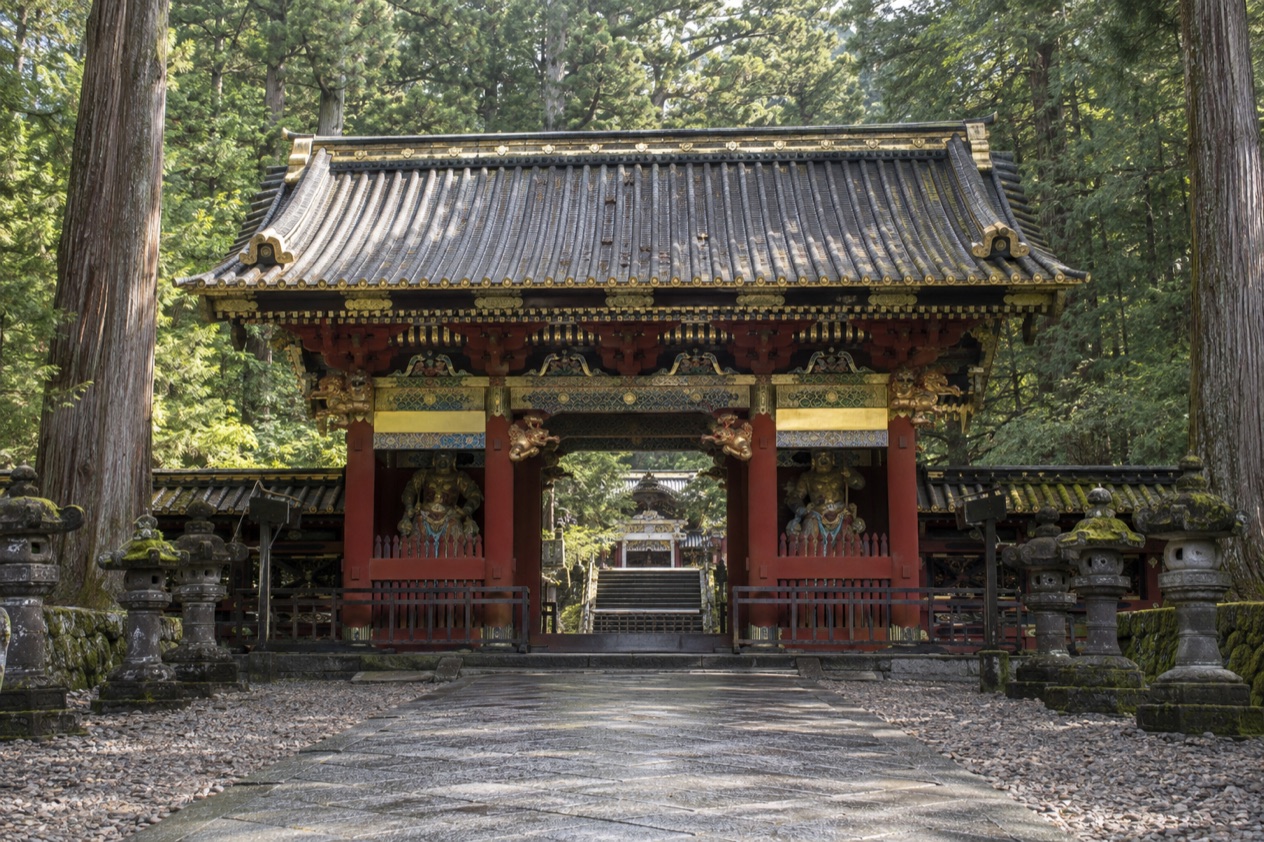
The reward at the end of the ride is the UNESCO World Heritage collection of shrines and temples, which includes 103 structures across three complexes. Toshogu Shrine is the best known, a gilded and carved compound where the details are the point: the relief carvings of animals, the red and gold gates, and the cedars around it. The Taiyuin mausoleum is a smaller and quieter-feeling counterpart, and the Toshogu Museum gives the story behind the buildings.
| Site | Open |
|---|---|
| Toshogu Shrine | 8:00 a.m. to 4:30 p.m. from April to October, 8:00 a.m. to 3:30 p.m. from November to March |
| Taiyuin | 8:00 a.m. to 4:30 p.m. from April to October, 8:00 a.m. to 3:30 p.m. from November to March |
| Toshogu Museum | 9:00 a.m. to 4:00 p.m. daily |
Those hours shape the day more than anything else. From November to March the two main sites close an hour earlier, so a winter visit has less daylight to fill and a tighter order of stops. From April to October you have an extra hour, which is enough to add the museum without rushing the gates.
Nikko rewards slow looking. A shrine here is not a single building but a sequence of gates, courtyards, stairways and halls, each with its own carving and color, and the forest around them is part of the setting. Bring layers for the walk between sites, since the town sits among mountains, and bring patience for the stairs. Comfortable shoes matter more than a camera.
The name Kegon turns up in the train names for a reason: the Kegon waterfall is among the sights of the wider Nikko area, and the names KINU and KINUGAWA point to the Kinugawa river region. You do not need to chase them all in one day. Choose the shrines and temples as your core, and treat the rest as the reason to come back.
A last point on pacing: the town itself has about 76,000 people, and its municipal area is large, covering mountains and lakes well beyond the shrine district. That is why the day is best planned around a few named places, not an attempt to see everything. Go in knowing which two or three you care about, and let the rest be a bonus.
Good to know before you go
Trains in Tokyo are run by several operators, among them JR, Tokyo Metro and the Toei Subway, so the ticket and the gate you use depend on the company. Tobu’s own trains run from Tobu’s own stations, and the Tobu Nikko Line stations carry TN numbers that help you follow the route.
Japanese trains have a reputation for keeping to the timetable, so plan with the printed times. The hours of the shrines change with the season, which is the detail most worth keeping in mind when you set the day.
Sources
- Wikipedia, Tobu Nikko Line (https://en.wikipedia.org/wiki/Tobu_Nikko_Line), checked October 11, 2026
- Wikipedia, Tokyo Station (https://en.wikipedia.org/wiki/Tokyo_Station), checked October 11, 2026
- JR East, JR-EAST Pass overview (https://www.jreast.co.jp/e/pass/), checked October 11, 2026
- Japan National Tourism Organization, Nikko (https://www.japan.travel/en/destinations/kanto/tochigi/nikko-area/), checked October 11, 2026
- Wikipedia, Nikkō, Tochigi (https://en.wikipedia.org/wiki/Nikk%C5%8D,_Tochigi), checked October 11, 2026
- Wikivoyage, Nikko (https://en.wikivoyage.org/wiki/Nikko), checked October 11, 2026
- Japan National Tourism Organization, trains and buses (https://www.japan.travel/en/guide/how-to-travel-by-train-and-bus-in-japan/), checked October 11, 2026
- Japan National Tourism Organization, traveling by rail (https://www.japan.travel/en/guide/traveling-by-rail/), checked October 11, 2026
- Japan National Tourism Organization, getting around Japan: trains, subways, buses, taxis (https://www.japan.travel/en/plan/getting-around/), checked October 11, 2026
To plan your stay
- Best Time to Visit Nikko: Weather by Month, Cherry Blossoms, Autumn Color and Snow
- Things to Do in Nikko: Toshogu Shrine, Lake Chuzenji, Kegon Falls and Kinugawa Onsen
- Where to Stay in Nikko: Station Side, Shrine Precinct, Ryokan Stays and Heritage Stays
- Know Before You Go to Nikko: Entry, Getting There, Weather and Etiquette