
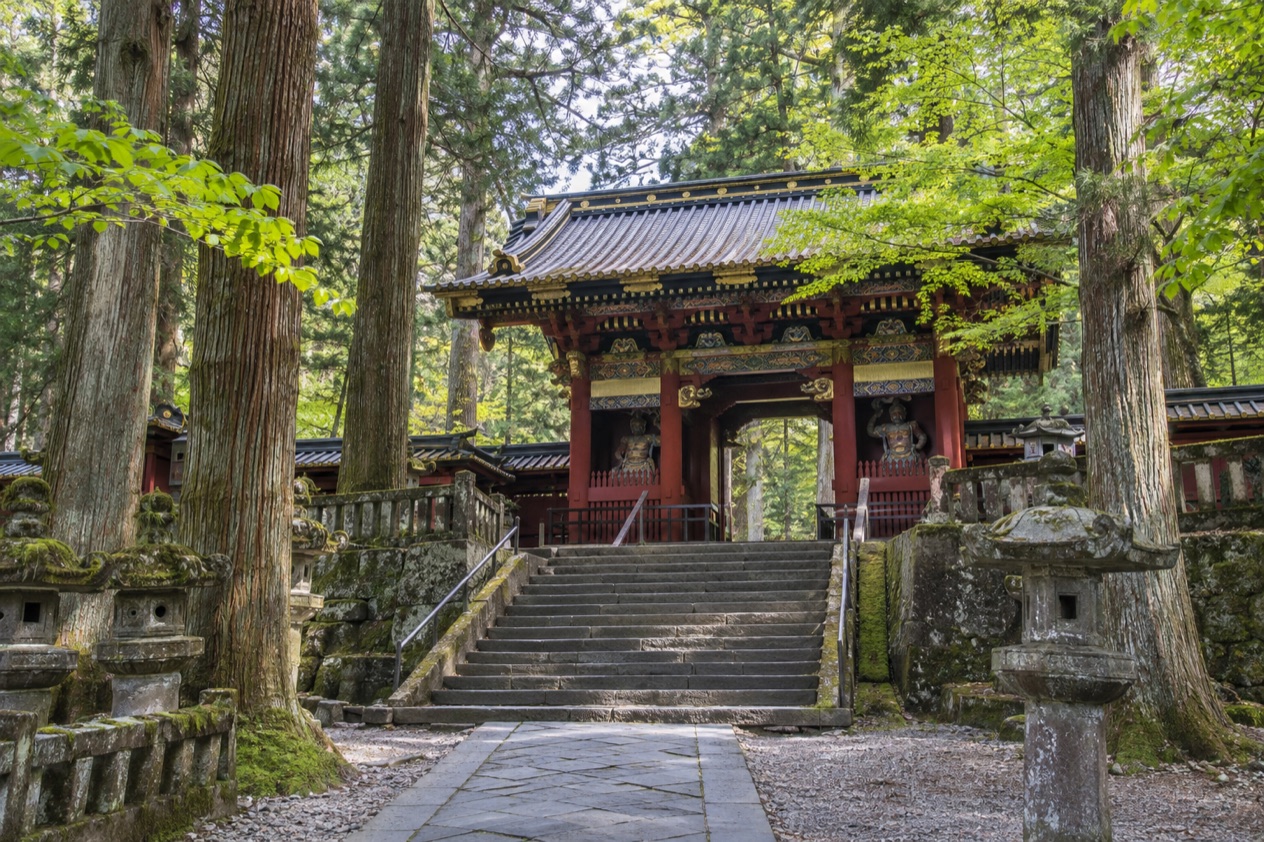
In April, the cedar avenues around Nikko’s shrines still hold the chill of winter, and the first cherry petals drift down onto stone lanterns and moss-covered steps. Festival floats roll through the old streets, bowls of fresh yuba (tofu skin) steam on lunch tables, and the high ground near Lake Chuzenji is only just letting go of the snow. This is Nikko in April: a month of thaw, blossoms and shrine-hopping, for travelers who like to watch spring arrive in stages.
What is the weather like in Nikko in April?
April is cool and changeable, a month of thaw in which winter and spring trade places from one day to the next.
| Month | Average high (°F) | Average low (°F) | Precipitation (in) | Days with 1 mm or more of precipitation | Hours of sunshine | Daylight on the 15th |
|---|---|---|---|---|---|---|
| March | 39.6 | 23.7 | 4.27 | 9.5 | 190 | 11 h 54 min |
| April | 50.2 | 32.4 | 6.08 | 10.7 | 187 | 13 h 06 min |
| May | 59.5 | 41.9 | 6.97 | 11.3 | 174 | 14 h 06 min |
Afternoons reach the low 50s, which is enough for a sweater and a coat while you walk between shrine buildings. Nights drop to just above freezing, and the lakeside can feel properly wintry once the sun goes behind the ridges.
Wet days are frequent without being constant, and not all of the wet falls as rain. Snow or sleet still shows up on more than eight days of the month, adding up to about five inches over April, so a morning can open with a dusting on the cedars and turn to drizzle by lunch. Sunshine is nearly as generous as in March, which means bright spells between the gray ones.
Daylight is the quiet gift of the month. Evenings stay light well after dinner time begins, and the shrine grounds close long before dark, so you have room for a slow walk, a coffee, or a bath at the hotel before the day is over. Waterproof layers matter more than a heavy coat, and gloves and a hat earn their place near the lake.
What to do in Nikko in April
The month’s big local event is the Yayoi Festival at Futarasan Shrine, which usually takes place in mid-April. Decorated floats are pulled through the streets of town, with costumed bearers and the sound of festival flutes and drums following them. It is a spring ritual in the old town rather than a spectacle staged for visitors, and it gives the streets near the shrines a very different mood from the rest of the month.
Cherry blossoms are the other pull. Japan’s weather agency has no blossom station at Nikko itself, but at Utsunomiya, the reference city for the area, full bloom usually comes around the start of April. Higher up the valley spring arrives later, which is why snow and blossoms can both be part of the same week. Petals along the river and around temple gates make a good excuse for an unhurried afternoon.
Toshogu and the shrine and temple grounds
Toshogu is the center of any visit. You pass under a great torii, climb stone steps between tall cedars, and arrive at a compound of carved and gilded buildings, with panels of animals, flowers and birds, and the famous carving of the three monkeys. April air makes the pale stone and the bright lacquer stand out against the dark trunks.
Taiyuin, a quieter-looking mausoleum nearby, is built in the same decorative style and takes less time to explore. Rinno-ji, with its large hall, and Futarasan Shrine sit among the same trees. Shoes come off before the interior halls, so thick socks make cold wooden floors much more comfortable on a cool morning.
| Site | Open |
|---|---|
| Toshogu Shrine | 08:00-16:30 from April to October |
| Taiyuin | 08:00-16:30 from April to October |
Lake Chuzenji and the high country
Up at Lake Chuzenji, April belongs to the in-between season. Patches of snow can linger on shaded slopes, the water is dark and cold, and the shoreline paths are often damp. The plateau trails and Kegon Falls, where the lake spills over a cliff into a gorge, give the day a different feel from the carved gold of the shrines.
This is the part of Nikko where weather decides the plan. A gray, wet morning looks very different from a bright one, and the temperatures here are noticeably lower than in town, so bring the warmest layers you own. Cafés and lodges around the lake are a good place to warm up between walks.
Eating in Nikko in spring
Nikko is known for yuba, the delicate skin that forms on heated soy milk, served fresh, rolled, simmered or in a soup. Many restaurants build a set meal around it, often with soba noodles and seasonal vegetables. In a cool April, a hot bowl of noodles or a tofu-based lunch fits the weather very well.
Spring also brings wild mountain vegetables, called sansai, to many Japanese menus, and you may find them tempura-fried or dressed in a light sauce. Tea shops and sweet stalls near the shrine approach offer something warm between sights, and a stop in a small izakaya in the evening is a pleasant way to close the day.
For a gentler pace, the old streets between the station and the shrines reward wandering. Small shops sell local sweets and crafts, and the stone Shinkyo Bridge over the river gives a first look at the green slopes around town. On a rainy day, indoor halls, tea rooms and long lunches fill the hours.
A two-day itinerary for Nikko in April
Day 1. Reach Nikko from Tokyo (Tobu-Nikko Station is about two hours from Asakusa and Shinjuku) and start with the old town. Walk toward the red Shinkyo Bridge, then climb into the shrine district. Spend the middle of the day inside Toshogu, then Taiyuin, then Rinno-ji and Futarasan, keeping an eye on the closing time of half past four.
Lunch is a yuba set meal in one of the restaurants near the shrines. After the compounds close, there is still plenty of daylight for wandering the streets, a sweet and a hot drink in a tea shop, and an early look at the river. Dinner can be soba or a small izakaya, followed by a long bath at your lodging.
Day 2. Go up to Lake Chuzenji and Kegon Falls while your legs are fresh, with the warmest layers on. Walk the lakeshore, look over the falls, and enjoy the cold clear air of the high ground. If sleet or heavy rain sets in, turn the day indoors with a long lakeside café stop, a museum or a hot spring bath, then come back down for dinner in town.
Is Nikko busy in April?
For most of the month Nikko is in its spring season, with blossoms in the lower town and a festival in the middle of the month, and the pace picks up toward the end.
The date to keep in mind is April 29, Showa Day, when Golden Week begins. This holiday period runs through May 5 and includes four public holidays, so much of Japan is on vacation. If your trip falls in the last days of April, expect the shrine district to feel the effect of the holidays, and plan that part of the visit with this in mind.
Before April 29, the month is a stretch of ordinary spring days. Blossom viewing, the Yayoi Festival and the thaw give the town a lively mood without the weight of a national holiday. Along the shrine paths, the weather matters as much as the calendar, because a wet gray day changes who is out walking.
If one holiday falls on a Sunday, the next working day becomes a public holiday, and a day between two holidays also becomes one. In a year where this happens around Golden Week, the break can be longer than the dates suggest, so it is worth looking at the calendar before choosing your days.
What to pack for Nikko in April
Layers are the answer here, because town, shrines and lake sit at different temperatures, and a day can pass from wet to bright and back.
- A light jacket or sweater for town and the shrine grounds, where afternoons are cool but not cold.
- A warm coat, hat and gloves for Lake Chuzenji, where mornings and evenings stay near freezing.
- A waterproof jacket and a small umbrella for the frequent damp days.
- Shoes that handle wet stone steps and patches of snow.
- Thick socks, since shoes come off at temple and shrine interiors.
- A small day bag for layers as the day warms and cools.
Good to know before you go
April in Nikko is a month of snow and rain at altitude, so conditions near the lake can differ a lot from those in town. Toshogu and Taiyuin keep their longer April to October hours, closing at half past four, which shapes the day. Golden Week starts on April 29, and the holidays that follow change the rhythm of the town for the first days of May.
Nikko in April vs March and May
Going four weeks earlier brings winter. March snow or sleet falls on more than twenty days, the nights are well below freezing, and the shrines open with shorter hours, until half past three from November through March. It is a starker, colder visit, with fewer signs of spring in the high country.
Going four weeks later brings warmth. May has barely a day of snow or sleet, highs near 60, and daylight past fourteen hours, so the lakeside is far easier to enjoy. It also has the most rain days of the three months, and it starts just after Golden Week, when much of Japan travels.
Travelers who want snow-dusted cedars, blossoms and a festival in the same trip should stay with April. Those who want comfortable walks at the lake should lean toward May, while anyone who prefers a wintry, stripped-back mood might choose March.
Is April a good time to visit Nikko?
Yes, for travelers who enjoy a changeable spring and are happy to dress in layers, April is a rewarding time to come. The shrines are open for their longer hours, daylight is generous, and the Yayoi Festival and cherry blossoms give the old town a seasonal rhythm.
It suits those who like walking among old cedars and cool air. It suits less well anyone who wants steady warmth or a dependable view of the lake, since snow and rain can still arrive on a cold day. People who dislike wet shoes and chilly mornings may prefer a later month.
On arrival, begin with the shrine district while the day is long, and leave the lake for a day when the sky looks promising. What sets April in Nikko apart is the overlap: a blossom on a branch above a patch of snow, a festival float in a street that still smells of cedar smoke.
Sources
- Japan Meteorological Agency (JMA), Normal values 1991-2020, monthly (https://www.data.jma.go.jp/stats/etrn/view/nml_sfc_ym.php?prec_no=41&block_no=47690), station Okunikko, elevation 1292 m, checked October 11, 2026
- Computed from the date and the latitude of the place (sunrise equation, solar elevation -0.833 degrees), October 11, 2026
- Japan Meteorological Agency, cherry blossom first-bloom dates 2021-2026 and 1991-2020 normal (https://www.data.jma.go.jp/sakura/data/sakura003_07.html), checked October 11, 2026
- Japan Meteorological Agency, cherry blossom full-bloom dates 2021-2026 and 1991-2020 normal (https://www.data.jma.go.jp/sakura/data/sakura004_07.html), checked October 11, 2026
- Japan Meteorological Agency, sakura2020.pdf (https://www.data.jma.go.jp/sakura/data/sakura2020.pdf), checked October 11, 2026
- Japan National Tourism Organization, spring in Japan (https://www.japan.travel/en/guide/spring-guide/), checked October 11, 2026
- Japan National Tourism Organization, flowers by season: cherry blossom, plum, wisteria, hydrangea, where and when (https://www.japan.travel/en/see-and-do/flowers/), checked October 11, 2026
- Wikipedia, Wisteria (https://en.wikipedia.org/wiki/Wisteria), checked October 11, 2026
- Japan National Tourism Organization, shop and attraction hours, national holidays (https://www.japan.travel/en/plan/business-hours-and-holidays/), checked October 11, 2026
- Wikipedia, Golden Week (Japan) (https://en.wikipedia.org/wiki/Golden_Week_(Japan)), checked October 11, 2026
- Wikipedia, Public holidays in Japan (https://en.wikipedia.org/wiki/Public_holidays_in_Japan), checked October 11, 2026
- Japan Meteorological Agency, biological season observations (https://www.data.jma.go.jp/sakura/data/index.html)
- Japan National Tourism Organization, Nikko (https://www.japan.travel/en/destinations/kanto/tochigi/nikko-area/), checked October 11, 2026
- Wikipedia, Nikkō, Tochigi (https://en.wikipedia.org/wiki/Nikk%C5%8D,_Tochigi), checked October 11, 2026
- Wikivoyage, Nikko (https://en.wikivoyage.org/wiki/Nikko), checked October 11, 2026
To plan your stay
- Things to Do in Nikko: Toshogu Shrine, Lake Chuzenji, Kegon Falls and Kinugawa Onsen
- Where to Stay in Nikko: Station Side, Shrine Precinct, Ryokan Stays and Heritage Stays
- Nikko from Tokyo: Tobu Railway Trains, Limited Express Names and a Day in Nikko
- Know Before You Go to Nikko: Entry, Getting There, Weather and Etiquette