
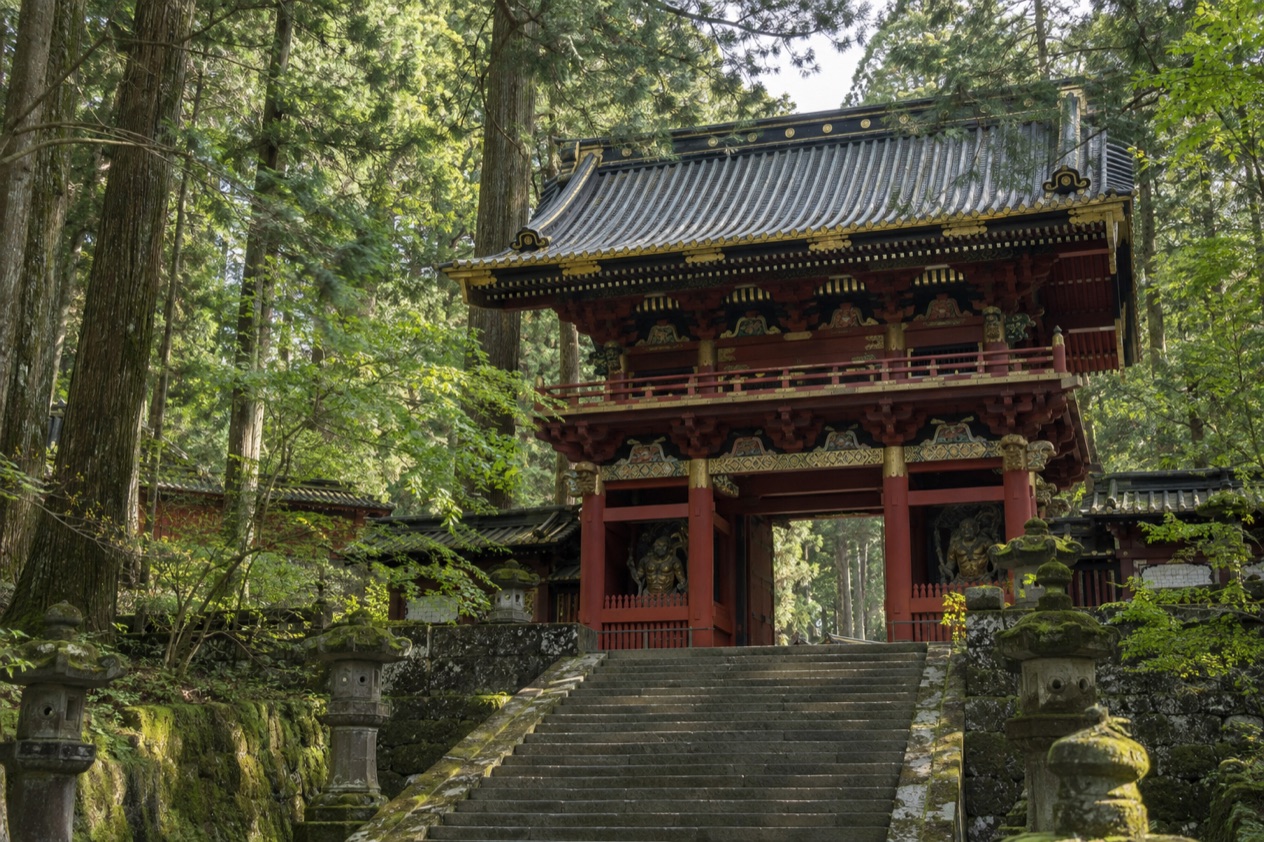
Under the tall cedars of Nikko, the light comes down in thin shafts onto moss-covered stone lanterns, and the sound of water follows you from one courtyard to the next. Red lacquer, gold leaf and dark carved wood appear between the trunks, then give way again to forest. Nikko is a mountain town in Tochigi Prefecture with a shrine-and-temple district, a high lake, a great waterfall and a hot spring resort, and it suits travelers who like their sightseeing mixed with long stretches outdoors.
What are the best things to do in Nikko?
The best things to do in Nikko are to walk through its shrines and temples, then head up to the lake and the waterfall in the national park, and finish the day in a hot spring. Japan has a saying for the place: never say kekkō until you have seen Nikko, kekkō meaning splendid, magnificent, or perfectly satisfied. Whatever you take from it, the town gives you a lot to look at in a single stay.
- Tōshōgū Shrine, where gates, carvings and halls are covered in color and gold, is the heart of any visit.
- Rinno-ji and Taiyuin, the temple neighbors of the shrine, add Buddhist halls and a quieter mausoleum to the same district.
- Futarasan Shrine completes the three complexes that together make up the UNESCO World Heritage site.
- Lake Chuzenji, formed when a volcano blocked a river, gives you a mountain lake to walk beside or look over.
- Kegon Falls drops straight from the lake into a gorge, and you can watch it from viewing points.
- Kinugawa Onsen is a hot spring resort named for the river that runs through it.
- Oze, reached by bus in the warmer half of the year, brings wetland and mountain walking to a day out.
- Yuba, the soft tofu skin the region is known for, turns a lunch into a local tasting.
The pieces fit together naturally. The shrines are the cultural center and the national park is the natural one. The onsen and the table (yuba, soba, shaved ice) are how a visit slows down. Each of them is developed in the sections that follow, with the details that help you choose between them.
Sights and landmarks in Nikko
The landmarks of Nikko gather in one wooded district, where the shrines and temples of the UNESCO World Heritage site include 103 structures across three complexes. Those complexes are Tōshōgū Shrine, Futarasan Shrine and the temple Rinno-ji. Paths, stone stairs and cedar avenues link them, so a visit tends to feel like a long walk through a single forested precinct rather than a list of separate stops. The opening hours below cover the shrine, the mausoleum and the museum, and the first two shift with the season.
| Site | Open |
|---|---|
| Tōshōgū Shrine | 8:00 a.m. to 4:30 p.m. (April to October), 8:00 a.m. to 3:30 p.m. (November to March) |
| Taiyuin-byo | 8:00 a.m. to 4:30 p.m. (April to October), 8:00 a.m. to 3:30 p.m. (November to March) |
| Tōshōgū Museum | 9:00 a.m. to 4:00 p.m. daily |
Tōshōgū Shrine
Tōshōgū is a Shinto shrine dedicated to Tokugawa Ieyasu, the shogun who unified Japan and founded the Tokugawa line. Where many Japanese shrines rely on plain wood and quiet lines, this one is crowded with decoration. Gates are layered with carved flowers, birds and mythical beasts, and the buildings are painted in red, white and gold.
Look for the carvings that visitors talk about afterward. A panel of three monkeys, one covering its eyes, one its ears and one its mouth, illustrates the saying about seeing, hearing and speaking no evil. A small sleeping cat is carved over a doorway, and the ornate Yomeimon gate rewards a slow look at its many figures. The scale of the work, rather than any single piece, is what stays with you.
Allow yourself to wander off the main axis. Side paths lead through the cedars to smaller halls and stairways, and the Tōshōgū Museum, open every day, shows objects tied to the shrine and its history. The shrine suits anyone who likes craftsmanship, and it also appeals to travelers who enjoy a story with a clear cast of characters.
Rinno-ji and Taiyuin
Rinno-ji is the Buddhist temple of the district and the third part of the World Heritage site alongside Tōshōgū and Futarasan. Its main hall holds large gilded figures that give the room a very different mood from the colorful shrine next door. The contrast between Shinto and Buddhist space is one of the interesting things about spending time here.
Taiyuin-byo is the mausoleum of Iemitsu, Ieyasu’s grandson. It follows the same love of carved and painted detail as Tōshōgū, but on a more contained scale, with gates, courtyards and halls that you take in one at a time. Its hours match those of the main shrine, so the two fit comfortably into the same day.
Futarasan Shrine, Shinkyo bridge and quiet corners
Futarasan Shrine is the third of the three complexes and is dedicated to the mountains of the area. It sits among trees, with a plainer look than Tōshōgū, and its grounds are a place to pause between more ornate buildings. The red Shinkyo bridge over the river near the entrance to the district is a landmark in its own right, and travelers photograph it as the opening or closing image of the visit.
Beyond the main precinct, the town itself has the feel of a mountain gateway, with lodging, tea shops and small stores for sweets and crafts lining its streets. Kanmangafuchi, a gorge with a row of small stone Jizo statues in moss-colored robes, adds a gentler note away from the big complexes.
Outdoor things to do in Nikko
Outdoors, Nikko means Nikko National Park, where a lake, a waterfall, marshland and forest trails sit above the shrine district. The higher ground gives the area a different character from the town below, with mountain air and water as the main subjects. Hikers, photographers and travelers who simply like looking at a view find plenty to do here.
Lake Chuzenji
Lake Chuzenji lies within Nikko National Park, in the city of Nikko. It was created 20,000 years ago when Mount Nantai erupted and blocked the river, and the volcano still stands above the water as the dominant shape on the shoreline. The lake invites a slow circuit: walking along the edge, stopping at a viewpoint, or simply sitting with a drink and watching the water change color as clouds move.
Lakeside villages and old summer retreats give the shore a resort feel, with cafés and small shops. Boats on the lake and the ridgelines on the far side add to the picture. It suits travelers who want unhurried time beside water more than a checklist of sights.
Kegon Falls
Kegon Falls is at Lake Chuzenji, and the main fall drops about 318 feet. The water leaves the lake and plunges into a rocky gorge, throwing up mist and a steady roar that carries well beyond the viewing area. Cliffs and trees frame the drop, and the sheer vertical line is what gives the falls their drama.
Viewing platforms let you look at the falls from different angles, and the experience changes with the season. In autumn the surrounding leaves add color to the gorge, while in winter cold air and ice change the texture of the whole scene. Pair the falls with time at the lake itself, since the two share the same stretch of the national park.
Other walks and waters in the national park
Smaller waterfalls near the lake, the open wetland of Senjogahara with its boardwalks, and the hot spring lake of Yunoko all appear on walkers’ lists, along with ropeway viewpoints that look over the whole basin. Each gives a different texture of landscape, from grass and reed to forest and open sky.
In the town, the Kinugawa River and the stone-lined gorge at Kanmangafuchi offer a riverside stroll with a slightly different mood from the mountain scenery up the hill. Trails leave from several points, so a day can be assembled from one or two stops and a lot of walking, with a meal in between.
Day trips from Nikko
The day trips from Nikko lead to a wetland in the mountains, a hot spring resort and the prefecture’s capital city. Nikko itself is in Tochigi Prefecture, in the Kanto region, so most outings stay within reach of the town and the national park around it.
Oze
Oze is a highland wetland across the prefecture line in Gunma, and buses run from Oze to Nikko between mid-spring and mid-autumn. That seasonal window shapes the outing: it is a warm-half-of-the-year trip, and the bus link is part of what makes it work as a day out from Nikko.
What draws walkers there is the openness. Boardwalks cross grassy marsh ringed by mountains, with wildflowers in season and wide sky above the plain. It suits people who like steady walking in big landscapes, with a camera or a pair of binoculars, and who enjoy being outdoors for a good part of the day.
Kinugawa Onsen
Kinugawa Onsen is a hot spring resort in the city of Nikko, named after the Kinugawa River that flows through it. The town is built around its baths, with large hotels and smaller inns where soaking is the main activity. Steam, towels over the shoulder and people in yukata, the light cotton robes of onsen towns, are part of the scene on the street.
It works as a day trip for a bath and a meal, or as a longer stay that turns a sightseeing trip into a rest. Combining it with the shrines gives you a trip with both culture and relaxation, and it is a reasonable place to end a busy sightseeing stretch.
Utsunomiya and other outings
Utsunomiya is the capital of Tochigi Prefecture and a city known across Japan for its gyoza, the pan-fried dumplings that fill specialty restaurants. It makes a different kind of day from the mountains, built around a city center and its food. A meal there adds an urban note to a Nikko stay. Tokyo is the base for travelers, and Tobu-Nikko Station is about 2 hours from Asakusa and Shinjuku, which means Nikko also works as a trip in the other direction for those who want the mountains after the capital.
What to eat in Nikko
Eating in Nikko begins with yuba, the thin, silky skin lifted from heated soy milk, and it is the dish most closely tied to the town. It appears rolled, folded, simmered in broth, wrapped around vegetables and served as part of a set meal. The texture is soft and slightly sweet, with a mild soy flavor that suits a mountain town.
A yuba meal often arrives as a series of small dishes on a tray, giving you a chance to taste it in several forms. Some come lightly dressed with soy sauce, others in a hot pot, and some deep-fried for contrast. It is an easy way to see how one ingredient can fill a whole menu.
Soba, tofu and mountain cooking
Buckwheat noodles, or soba, belong to mountain country across Japan, and Nikko is no exception. Served cold with a dipping sauce or hot in broth, they make a plain, filling lunch between sights. Alongside them, you will find regional tofu dishes, pickled vegetables, mushrooms and river fish grilled over charcoal on the menus of small restaurants.
Ryokan meals take this further. A traditional inn typically serves a multi-course dinner of local ingredients built around the season, with rice, soup and many small plates. If you stay at a hot spring inn in the area, the dinner becomes as much a part of the experience as the bath.
Sweets, ice and snacks
Shaved ice made from natural ice, a regional specialty in the mountains, is a summer treat, served with syrups and sweet toppings. Street stalls and tea shops near the shrine district sell skewers, rice crackers, steamed buns and sweets, which makes it easy to snack your way between sights without sitting down for a full meal.
Tea is the natural companion. Many tea shops serve green tea with a small sweet, and the habit of stopping for one fits the rhythm of a day on foot. Souvenir shops stock yuba products and local sweets, which are easy to carry home.
Things to do in Nikko at night
At night, Nikko turns inward, with its evenings built around dinner, a bath and a slow walk rather than around bars and clubs. The shrines are closed by then, since the last hours listed for the site are in the afternoon, so the evening belongs to the town and its lodging. That is the pattern of a mountain destination, and visitors enjoy the change of pace.
Onsen evenings at Kinugawa
Kinugawa Onsen is where the evening comes most alive. Hotels and inns open their baths, some with outdoor pools open to the night air, and guests drift between bath, dinner and a stroll in yukata. The sound of the Kinugawa River runs in the background, and the steam rising from the baths adds to the mood.
A night here suits couples, friends and solo travelers who want to rest after a day of walking. Dinner is usually served in the inn, so the evening takes shape almost on its own, with little to arrange once you arrive.
Dinner, drinks and a late stroll
In the town, small restaurants serve dinner and some izakaya, the casual Japanese pubs, pour sake and beer alongside grilled skewers and simple dishes. Local sake and regional beers are good companions for yuba and mountain vegetables. The tone is relaxed, with conversation over small plates rather than loud music.
Afterward, a walk through the streets under lanterns and lit signs is a pleasant way to end the evening. The cedar forest near the shrines looks different in the dark, and the sound of water and wind in the trees stays with you on the way back to your lodging. Stargazing from the lake area is another option for those staying near the park.
Things to do in Nikko with kids
Children in Nikko tend to enjoy the things that are big, wet or full of animals, and the town has plenty of the first two. Kegon Falls and Lake Chuzenji give them water and space, while the carvings at Tōshōgū work like a treasure hunt. Planning around a mix of cultural stops and outdoor time keeps a day varied.
Carvings, gates and stories at Tōshōgū
At Tōshōgū, the carved animals do the work of holding attention. The three monkeys, the sleeping cat, dragons and elephants hidden in the decoration turn a visit into a search, and a child can be given the job of finding them. The stories behind them, about shoguns, saying and symbols, give parents something to explain.
The shrine’s hours run to mid-afternoon in the cooler months, so a visit fits best earlier in the day plan. Stairs and stone paths run through the grounds, so shoes that grip help, and a pause on a bench between buildings keeps energy up for the next courtyard.
The lake, the falls and open air
Lake Chuzenji and Kegon Falls give children room to move. The falls are loud and impressive, with mist rising from the gorge, and the roar alone tends to make an impression. The lakeshore has space to walk and look at the water and the mountain behind it, and boats on the lake give the scene some movement.
Keep in mind that this is mountain country. Distances between sights add up, the national park sits higher than the town, and the air can be cooler than in the valley, so a layer in the bag is worth having. Fenced viewing points at the falls keep the experience manageable for families, while still letting children see the drop.
Onsen towns and meals
A stay at a hot spring resort such as Kinugawa Onsen can turn into the part of the trip children remember, with its robes, steam and varied dinners. Meals of many small dishes let young eaters pick what they like, and rice, noodles and tofu dishes give plenty of familiar territory. Soft yuba, in particular, is a mild first taste of the town.
Good to know before you go
Nikko is in Tochigi Prefecture, in the Kanto region, and Tobu-Nikko Station is about 2 hours from Asakusa and Shinjuku in Tokyo. Within the area, the shrines and temples cluster in one district while the lake, the falls and the onsen sit in separate places in the national park and the city, so a day is easiest to plan around one or two of them.
Buses from Oze to Nikko run between mid-spring and mid-autumn, which matters if the wetland is on your list. The rainy and typhoon seasons that touch Japan can affect outdoor plans, so the lake and the falls are best left flexible.
Sources
- Japan National Tourism Organization, Nikko (https://www.japan.travel/en/destinations/kanto/tochigi/nikko-area/), checked October 11, 2026
- Wikipedia, Nikkō, Tochigi (https://en.wikipedia.org/wiki/Nikk%C5%8D,_Tochigi), checked October 11, 2026
- Wikivoyage, Nikko (https://en.wikivoyage.org/wiki/Nikko), checked October 11, 2026
- Wikipedia, Nikkō Tōshō-gū (https://en.wikipedia.org/wiki/Nikk%C5%8D_T%C5%8Dsh%C5%8D-g%C5%AB), checked October 11, 2026
- Wikipedia, Kegon Falls (https://en.wikipedia.org/wiki/Kegon_Falls), checked October 11, 2026
- Wikipedia, Lake Chūzenji (https://en.wikipedia.org/wiki/Lake_Ch%C5%ABzenji), checked October 11, 2026
- Wikipedia, Kinugawa Onsen (https://en.wikipedia.org/wiki/Kinugawa_Onsen), checked October 11, 2026
To plan your stay
- Best Time to Visit Nikko: Weather by Month, Cherry Blossoms, Autumn Color and Snow
- Where to Stay in Nikko: Station Side, Shrine Precinct, Ryokan Stays and Heritage Stays
- Nikko from Tokyo: Tobu Railway Trains, Limited Express Names and a Day in Nikko
- Know Before You Go to Nikko: Entry, Getting There, Weather and Etiquette