
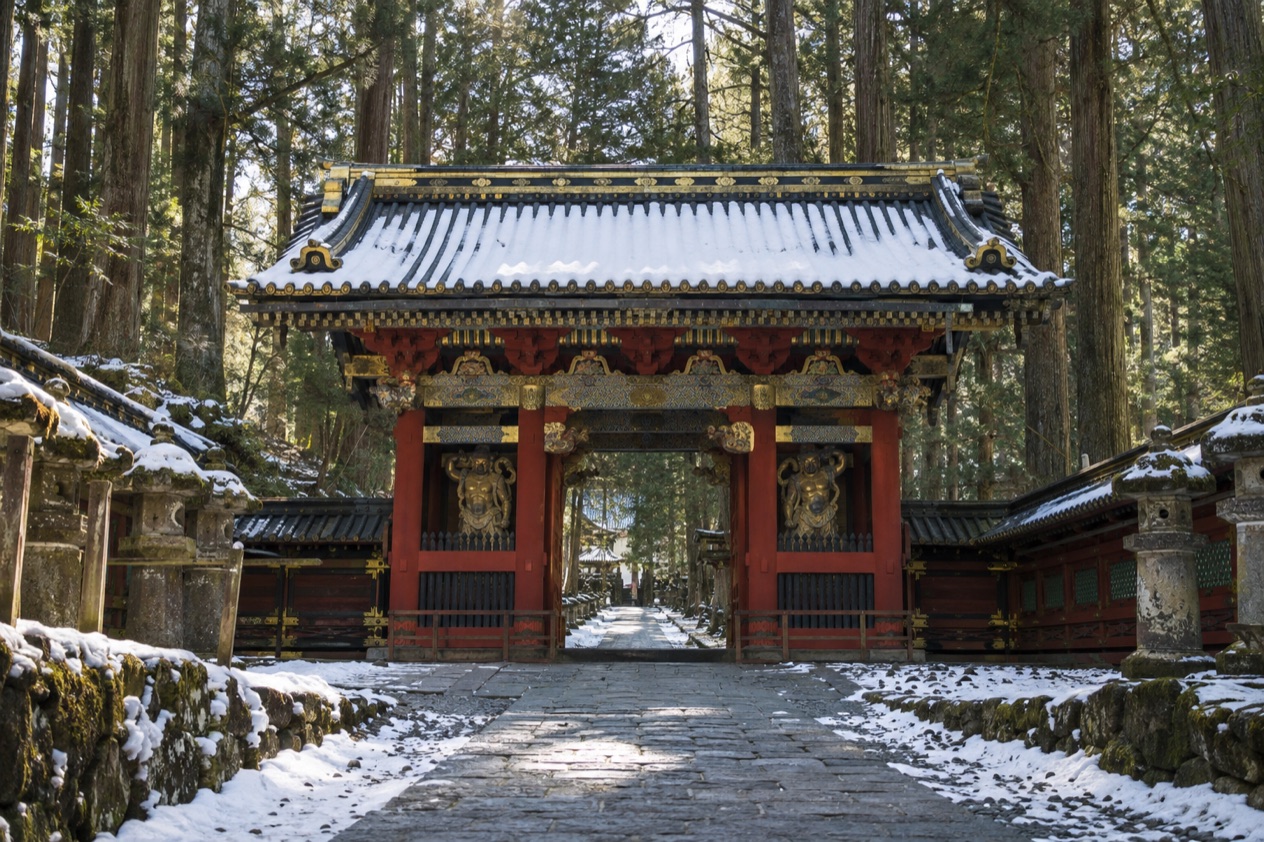
In March, snow still sits on the roofs and the stone lanterns around the Toshogu Shrine, and the red and gold carvings stand out sharply against the dark cedars. Steam rises from cups of hot tea in the shops, and the lakeside around Chuzenji feels like winter with the days growing longer. March in Nikko is a trip for travelers who want the shrines and waterfalls of Tochigi Prefecture in a cold, snowy setting, before the cherry blossoms reach the town.
What is the weather like in Nikko in March?
March at Oku-Nikko, near Lake Chuzenji, is still a snow month, with highs just above freezing and nights well below it. Spring is arriving, but it comes slowly in the mountains of Nikko National Park.
| Month | Average high (°F) | Average low (°F) | Precipitation (in) | Days with 1 mm or more of precipitation | Hours of sunshine | Daylight on the 15th | Snowfall (in) |
|---|---|---|---|---|---|---|---|
| February | 33.1 | 18.0 | 1.91 | 6.6 | 167 | 10 h 50 min | 22.0 |
| March | 39.6 | 23.7 | 4.27 | 9.5 | 190 | 11 h 54 min | 22.4 |
| April | 50.2 | 32.4 | 6.08 | 10.7 | 187 | 13 h 06 min | 5.1 |
Think in layers. A warm, windproof coat, a sweater and a thermal base layer suit a month where the daytime hovers around freezing and the nights are properly cold. Snow or sleet falls on most days of March, so the precipitation arrives mostly as flakes and slush rather than rain. Waterproof boots with a good grip matter more than an umbrella, and gloves and a hat earn their place in the bag.
The light is the quiet gain of the month. Daylight stretches well past what February offers, and sunshine is far from rare, so a gray, snowy morning can turn into a bright afternoon on the shrine steps. Sun on fresh snow is strong, and sunglasses are useful beside the lake.
What to do in Nikko in March
The great draw is the Toshogu Shrine, a Shinto shrine dedicated to Tokugawa Ieyasu, set among tall cedars. In March its lacquered gates, gilded carvings and stone lanterns stand against the snow and bare branches.
The carved panels reward slow looking: the three monkeys who see, hear and speak no evil, the sleeping cat, the elephants and the cranes. You climb stone steps, pass beneath gates and cross courtyards, and the cold makes the colors of the buildings look sharper.
Hours matter in winter. The shrine and its neighbor close earlier from November to March than in the warmer months, which shapes the day: the shrines come first, and the afternoon belongs to something else.
| Site | Open |
|---|---|
| Toshogu Shrine | 8:00 a.m. to 3:30 p.m. (November to March) |
| Taiyuin | 8:00 a.m. to 3:30 p.m. (November to March) |
The shrine district: Toshogu and Taiyuin
Taiyuin is the mausoleum of the third Tokugawa shogun, Iemitsu, and it shares the hills and cedar forest with Toshogu. Where Toshogu is dazzling, Taiyuin feels more inward, with dark lacquer, gold details and gates guarded by fierce statues. Walking between the two on snowy paths is the heart of a Nikko day in March.
Plan the shrine district first, because both sites close at 3:30 p.m. at this time of year. Wear shoes you can walk in over wet stone, and bring a warm layer for the stretches between buildings. Spend time at the carvings, then give Taiyuin its own slower visit instead of treating it as an add-on.
Lake Chuzenji and Kegon Falls
Kegon Falls drops into a gorge at Lake Chuzenji, a lake in Nikko National Park. The air is at its coldest here, among the elevations where the winter figures apply, and the surroundings keep their snowy look through March. The falls pour into a rocky basin, and spray can freeze on the cliffs near the water in the coldest weather.
This is an outing for a clear, bright spell, when the sunshine turns the snow along the shore white and the lake dark. It suits travelers who enjoy winter landscapes and do not mind cold wind coming off the water. Dress for a colder day than the one in town, with a hat, gloves and a real winter coat.
Food in March is warming and local. Nikko is known for yuba, the delicate skin that forms on heated soy milk, served as sheets, rolls or in simmered dishes, and it suits a cold day. Soba noodles in a hot broth, tofu dishes and green tea or hot sweet drinks with a plate of rice cakes fill the lunch hours at the tea houses and small restaurants near the shrines.
The cherry blossoms are a different story from the lowlands. JMA, the Japan Meteorological Agency, has no cherry blossom station at Nikko. At Utsunomiya, its reference station for the area, first bloom usually falls around the end of March and full bloom around the first week of April.
Those are the dates of Utsunomiya itself, not of Nikko, and they say that spring is only starting in the region as March ends. Plum blossoms, by contrast, flower from January until late February in East Asia, so they belong to the weeks before this month.
The mood in the streets is that of a winter destination with spring on the horizon: shop doors steamed up, heavy coats, and snow shoveled along the sides of the lanes. Buses from Oze to Nikko run only between mid-spring and mid-autumn, so that route belongs to later in the year, and this month is about the Toshogu and Lake Chuzenji side of Nikko.
A two-day itinerary for Nikko in March
Day 1 is for the shrines. Tobu-Nikko Station is about 2 hours from Asakusa Station and Shinjuku Station in Tokyo, so a morning arrival leaves time for the Toshogu Shrine before it closes. Walk the cedar avenue, climb to the gates and take your time at the carvings, since the daylight is longer than in February but the closing hour is not.
Have lunch at a yuba restaurant, with a bowl of simmered yuba or soba in hot broth. In the afternoon walk on to Taiyuin, keeping in mind that it closes at the same hour as Toshogu. In the evening, a hot meal in town, such as tofu dishes or a noodle shop, ends the day. If snow turns heavy, shorten the outdoor stretches and linger in the tea houses.
Day 2 goes to Lake Chuzenji and Kegon Falls. Start with the falls and the lakeshore, dressed for colder, snowier weather than in town.
Walk by the lake and take a hot drink in a lakeside cafe, then return to town for a late lunch of soba or tofu. The rain card is simple: on a heavy snow day, trade long outdoor stretches for tea houses and restaurant meals, and keep the shrines for the clearer hours of Day 1.
Is Nikko busy in March?
March sits between the winter season and the cherry blossom weeks, and in the mountains the winter character is still strong. Snow remains on the ground and the cold keeps the mood of the month restrained, while spring has barely started. Blossoms at Utsunomiya, the reference city for the area, usually open around the end of March, which shows that the bloom season is just beginning in the region.
What March brings, then, is a trip shaped by the weather more than by a rush. The snow decides which outings are comfortable, the closing hour of the shrines shapes the day, and the lake and falls require a warm coat. The days are growing longer, which gives more room for slow visits and meals.
For the pace of the town, expect a winter rhythm rather than a blossom-season one, with the shrines as the focus.
What to pack for Nikko in March
Pack for snow and cold, since the nights fall well below freezing and the days stay close to it. Choose clothes that layer and shoes that grip.
- A warm, windproof coat, for the cold around Lake Chuzenji and the shrine steps.
- Waterproof boots with a good grip, for snow, slush and wet stone.
- Thermal base layers and a sweater, so you can adjust between outdoor walks and warm rooms.
- A hat and gloves, because March nights are well below freezing.
- Sunglasses, since sunshine on snow is bright.
Good to know before you go
The practical point of March is the closing hour. Toshogu and Taiyuin close at 3:30 p.m. from November to March, so the shrines are a morning and early afternoon visit. Snow or sleet falls on most days of the month, which affects footing and the comfort of outdoor stretches.
Buses from Oze to Nikko do not run until mid-spring, so that route does not belong to this trip. Nikko lies in Tochigi Prefecture, in the Kanto region, and Tobu-Nikko Station is about 2 hours from Asakusa and Shinjuku stations in Tokyo.
Nikko in March vs February and April
Moving the trip four weeks earlier, to February, brings a colder and darker Nikko. The snow is similar, but the nights are sharper, the days are shorter and spring is further away. That month suits travelers who want a deep-winter look at the shrines and are ready for the cold, and who accept that sunshine hours and daylight are shorter.
Moving four weeks later, to April, changes the picture more. Snowfall falls to a fraction of March, the highs climb past 50°F, and the days are noticeably longer. Rain and precipitation increase as the snow retreats. Blossoms at Utsunomiya, the reference city, move toward full bloom in early April, so April is the month when spring arrives in earnest. Shrine hours are also longer from April, running until 4:30 p.m.
Choose March if you want winter scenery with a bit more daylight and a little more sun. Choose February for the deepest cold and April for warmer days, thinner snow and blossom season. Travelers who dislike cold and slush should lean toward April, while those who love snow around the shrines can stay with March.
Is March a good time to visit Nikko?
Yes, for travelers who want the shrines and Lake Chuzenji in a snowy, wintry setting and who are happy to dress for the cold. March suits those who enjoy cold-weather walking, hot yuba and soba lunches, and the look of gold and red lacquer against snow. It is a poorer fit for travelers hoping for blossoms or mild spring afternoons, who should choose April.
On arrival, start with the Toshogu Shrine, since it closes earlier in winter, and keep Taiyuin and the lake for the rest of your time. Wear boots that grip and a coat that blocks wind. What stays with you from March in Nikko is the contrast between the dark cedars, the white snow on the paths and the gold and red of the shrine buildings, with the days stretching out a little more each week.
Sources
- Japan Meteorological Agency (JMA), Normal values 1991-2020, monthly (https://www.data.jma.go.jp/stats/etrn/view/nml_sfc_ym.php?prec_no=41&block_no=47690), station Okunikko, elevation 1292 m, checked October 11, 2026
- Computed from the date and the latitude of the place (sunrise equation, solar elevation -0.833 degrees), October 11, 2026
- Japan Meteorological Agency, cherry blossom first-bloom dates 2021-2026 and 1991-2020 normal (https://www.data.jma.go.jp/sakura/data/sakura003_07.html), checked October 11, 2026
- Japan Meteorological Agency, cherry blossom full-bloom dates 2021-2026 and 1991-2020 normal (https://www.data.jma.go.jp/sakura/data/sakura004_07.html), checked October 11, 2026
- Japan Meteorological Agency, sakura2020.pdf (https://www.data.jma.go.jp/sakura/data/sakura2020.pdf), checked October 11, 2026
- Japan National Tourism Organization, flowers by season: cherry blossom, plum, wisteria, hydrangea, where and when (https://www.japan.travel/en/see-and-do/flowers/), checked October 11, 2026
- Wikipedia, Prunus mume (https://en.wikipedia.org/wiki/Prunus_mume), checked October 11, 2026
- Japan National Tourism Organization, spring in Japan (https://www.japan.travel/en/guide/spring-guide/), checked October 11, 2026
- Japan National Tourism Organization, autumn in Japan (https://www.japan.travel/en/guide/autumn-guide/), checked October 11, 2026
- Japan National Tourism Organization, summer in Japan (https://www.japan.travel/en/guide/summer-guide/), checked October 11, 2026
- Japan Meteorological Agency, biological season observations (https://www.data.jma.go.jp/sakura/data/index.html)
- Wikipedia, Nikkō, Tochigi (https://en.wikipedia.org/wiki/Nikk%C5%8D,_Tochigi), checked October 11, 2026
- Wikivoyage, Nikko (https://en.wikivoyage.org/wiki/Nikko), checked October 11, 2026
- Japan National Tourism Organization, Nikko (https://www.japan.travel/en/destinations/kanto/tochigi/nikko-area/), checked October 11, 2026
- Wikipedia, Nikkō Tōshō-gū (https://en.wikipedia.org/wiki/Nikk%C5%8D_T%C5%8Dsh%C5%8D-g%C5%AB), checked October 11, 2026
- Wikipedia, Kegon Falls (https://en.wikipedia.org/wiki/Kegon_Falls), checked October 11, 2026
- Wikipedia, Lake Chūzenji (https://en.wikipedia.org/wiki/Lake_Ch%C5%ABzenji), checked October 11, 2026
To plan your stay
- Things to Do in Nikko: Toshogu Shrine, Lake Chuzenji, Kegon Falls and Kinugawa Onsen
- Where to Stay in Nikko: Station Side, Shrine Precinct, Ryokan Stays and Heritage Stays
- Nikko from Tokyo: Tobu Railway Trains, Limited Express Names and a Day in Nikko
- Know Before You Go to Nikko: Entry, Getting There, Weather and Etiquette