
On festival mornings in Takayama, wooden floats with mechanical puppets creak down streets of dark, latticed merchant houses, and the smell of grilled rice cakes and fresh sake drifts out of the doorways. This is a mountain town in Gifu Prefecture, in the Japan Alps, and its old quarter has earned it the nickname Little Kyoto of Hida. It suits travelers who like to wander among craft shops, breweries and temples, eat regional food, and build a trip around a season, from April blossoms to deep winter snow.
Where is Takayama and what is it like?
Takayama, sometimes called Hida-Takayama, is a city in Gifu Prefecture, in the Chubu region of Japan, set in the heart of the Japan Alps and close to the northern part of the range. It is a mountain town, not a coastal one, and everything about it follows from that: wooden architecture built for snow, a cuisine of river fish, preserved vegetables and beef from the surrounding hills, and a calendar that swings hard between a snowy winter and a green, warm summer.
The name covers more ground than you might expect. Takayama is the largest city in Japan by area, which means the municipality stretches well beyond the old town into forested valleys and mountain villages.
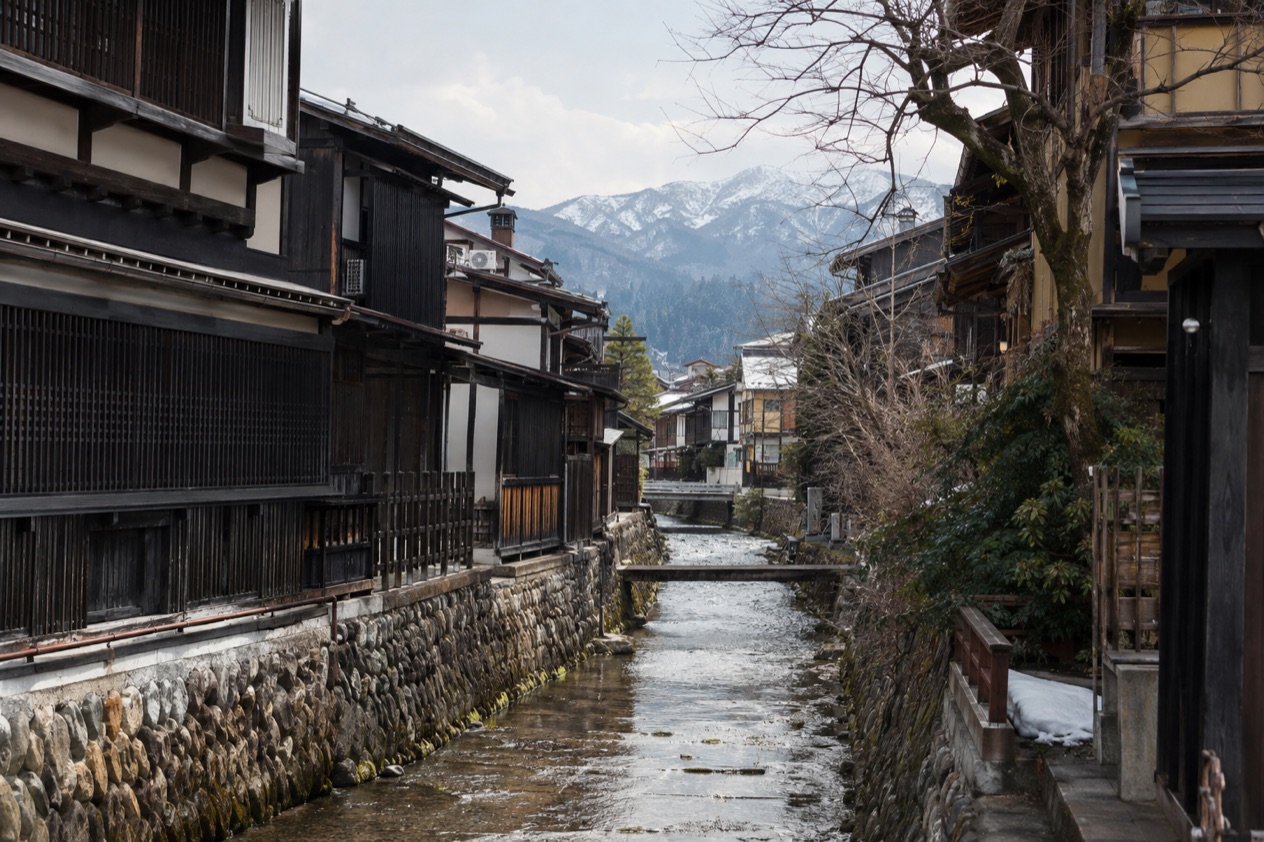
The part most visitors picture is the compact-looking historic quarter, with its Edo-style streets, sake breweries marked by cedar balls hanging under the eaves, and a river running through town. The nickname Little Kyoto of Hida comes from that quarter, though the mood is more rural and woodsy than imperial. Craftsmen here work in wood, lacquer and dyed cloth, and the shop windows show it.
The pace is that of a small provincial city. Mornings begin at the riverside market, afternoons drift between museums, workshops and teahouses, and evenings revolve around a bowl of ramen, a grilled skewer of beef or a cup of local sake.
Takayama rewards people who like to browse, taste and take their time. Travelers who want skyscrapers, big shopping complexes or a long list of nightclubs will find a different kind of Japan here, one built around craft, food and the seasons.
It also happens to be a place that looks completely different from one month to the next. Cherry trees bloom here in the middle to the end of April, weeks after the lowlands, autumn colors the hills in the fall, and winter brings heavy snow that settles on the dark tile roofs. Many people come back for a second season.
What is there to do in Takayama?
The best things to do in Takayama are to walk the old merchant streets, see the town’s festivals if the calendar allows, eat your way through the Hida region’s food, and visit its museums and craft workshops. What sets it apart from other mountain towns is how much of the traditional townscape is still in use: the houses are shops, breweries, cafés and homes, not a set.
The old town and its sake breweries
The historic quarter is the reason most people come. Lanes of dark timber houses with deep eaves and latticed fronts hold sake breweries, miso makers, craft shops and small museums.
A ball of cedar branches hanging above a doorway, known as a sugidama, tells you a brewery is there, and many breweries pour small tastings of the local rice wine. The streets reward slow walking, with your eyes on the carved details of the shopfronts and the little channels of water that run along the lanes.
The riverside gives the town its second face, with red bridges, willows and the backs of old storehouses along the water. Stopping for a cup of coffee or a dish of sweet grilled rice dumplings brushed with soy glaze is part of the routine here. It suits couples, solo travelers and anyone who likes photographing wooden architecture. Winter transforms the same streets under snow, so the town is worth seeing in more than one season.
The Takayama Festivals
Takayama is home to one of the three largest Shinto festivals in Japan, and in fact it holds two distinctive festivals a year. The Spring Takayama Festival is held on April 14 and 15, and the Autumn Takayama Festival on October 9 and 10. In both, the town’s ornate festival floats, called yatai, are brought out into the streets, and on some of them wooden puppets are worked by hidden strings in a performance called karakuri.
The spring festival comes as the cherry trees begin to open, while the autumn one arrives as the hills start to turn. If your dates are flexible, building a trip around one of them gives you a very different Takayama from the rest of the year: lanterns, drums, costumes and crowds in the street, and a town at its most ceremonial.
Market, museum and Hida food
The Miyagawa Morning Market is where the day starts for many travelers, with stalls of pickles, fresh vegetables, local snacks and crafts, plus coffee and something hot to eat while you stroll. Beyond it, the regional table is worth planning around.
Hida beef is grilled, served as sushi or skewered on a stick from a street stall. Takayama ramen comes in a light soy broth, and mountain vegetables, river fish and miso grilled on a magnolia leaf round out a meal.
For a rainy afternoon, the Hikaru Museum gives you something indoors. Its seasonal schedule is worth knowing, since it closes for the winter.
| Site | Open |
|---|---|
| Miyagawa Morning Market | From 7:00 (8:00 in winter months) to mid-morning |
| Hikaru Museum | Late February to mid-December, Thursday through Tuesday, 10:00 to 17:00 (last admission 16:00) |
How many days do you need in Takayama?
A long weekend is enough to see the heart of Takayama, and a few more days let you reach the surrounding mountains and villages. The old town, the morning market, the breweries, a museum or two and several good meals fill a short stay comfortably, especially if you keep the afternoons loose for browsing craft shops and sitting in teahouses.
With one night, you can do an evening in the old streets, a ramen supper and the market the next morning. With two nights, there is time to add a museum, a temple walk, a longer lunch of Hida beef and a visit to a brewery. If you come for the festivals, plan around the festival days themselves, when the floats move through the streets and the town’s routine gives way to processions.
A longer stay opens up the countryside. Hida no Sato, an open-air village of old farmhouses, shows how people in these mountains lived. Shirakawa-go, a village of steep thatched farmhouses in the same mountain region, makes a day trip many travelers add. The hot spring villages of the Okuhida area, also part of the greater Takayama municipality, suit anyone who wants to finish a trip in an outdoor bath with mountain views.
Winter travelers should leave room in the plan. Snow can change the look of a day, and a slow morning with coffee in a café window while the flakes fall is part of the appeal. In spring and autumn, extra time means being able to choose the clearest day for walking and still see the main sights.
Where to stay in Takayama
The main choice in Takayama is between sleeping in the historic quarter and sleeping in the streets around the station. The old town suits people who want to step out of the door into the lanes of wooden houses, sake shops and cafés, and to see them in the evening after the day-trippers have gone. Guesthouses and small inns fit into the old buildings, and some have tatami rooms and futon bedding.
A traditional ryokan, a Japanese inn, is a good fit here for a night or two. A typical stay includes a multicourse kaiseki dinner built around mountain ingredients, a yukata (a light cotton robe) to wear around the building and, in many, a communal bath fed by hot spring water.
Shoes come off at the entrance, and slippers stay on the hallway floors but not on the tatami. These habits are part of the experience, and Takayama is a natural place to try them.
The streets around the station suit travelers who prefer a more conventional hotel room and want to be near the rail line. They are also a practical base if you plan to head out for the day to Shirakawa-go or to the hot spring villages of Okuhida. People who want a full onsen experience may prefer to spend a night or two in the mountain hot spring villages within the larger Takayama municipality, then come back for the old town.
Whatever you choose, think about the season. In winter, a room with a bath after a day in the snow is worth more than a view. In the festival periods, local lodging fits into the rhythm of the town, so choosing an old town inn means waking up to the sounds of the preparations.
How do you get to Takayama and get around?
Takayama is reached by rail on the JR Takayama Line, and the line’s namesake station is where most visitors begin. One detail matters at the ticket window: Takayama Station does not accept IC cards such as Suica, Pasmo or ICOCA, so local line tickets must be bought in cash. Keep some yen in your pocket when you arrive and when you leave.
Once you are in town, the places that make Takayama what it is, the old streets, the river, the market and the breweries, belong to the historic quarter, and the town invites you to explore it on foot. The museums and the open-air village sit within the wider municipality. Beyond that, the city is vast, so reaching the hot spring villages and farmhouse settlements takes a longer outing.
Winter changes the way you move. Heavy snow falls here, with a yearly total of about 201 inches, and January brings snow or sleet on most days. Lanes can be wet and slippery, and the morning market starts later in the winter months. Allow extra time for everything, and expect the town to feel different from its summer self.
For trips beyond the center, such as Shirakawa-go, Hida no Sato or the Okuhida hot springs, the practical details depend on the season and the operator, so plan these as separate outings from the town. Having cash on hand matters here, as the station shows. Plan the rest of the route according to where you are going and the weather you find.
When is the best time to visit Takayama?
April and October are the two best months to visit Takayama, because each holds one of the town’s festivals. The Spring Takayama Festival falls on April 14 and 15, and the Autumn Takayama Festival on October 9 and 10.
April also brings cherry blossoms, usually from the middle to the end of the month, roughly three weeks after Nagoya. In April, afternoons reach the low 60s, nights fall to the high 30s, and sunshine is generous, though showers fall on about eleven days.
October is cool and crisp, with highs in the upper 60s and lows near 49, good weather for walking the old streets in a light jacket. Rain falls on roughly ten days, and the hills are turning color. Grilled river fish, mushrooms and chestnuts show up on menus, and the evenings call for a sweater. Because the festival dates fall early in the month, the rest of October gives you the season without the processions.
Summer is warm and humid. In July highs reach the mid-80s and lows stay in the mid-60s, rain falls on more than two weeks of the month, and total rainfall is heavy, so plan for showers and keep indoor stops in mind.
Winter is the season of snow: January days sit in the high 30s at best, nights drop well below freezing, and snow falls on nearly every day. The reward is the old town under white roofs, hot baths and warm food. Some places keep different hours, and the Hikaru Museum is closed from mid-December until late February.
Good to know before you go
Takayama is a place where the season sets the terms of your trip. Winter means heavy snow and a later start at the morning market, spring and autumn come with festival dates that shape the town’s calendar, and summer brings warmth, humidity and plenty of rain. Dress for the weather you expect, and leave space in the plan for a change of conditions.
Carry some yen with you, because the station does not take IC cards. Beyond that, Takayama is a town to enjoy at a slow pace: browse the shops, taste the sake, try the Hida beef and let the streets lead you from one thing to the next.
Sources
- Wikipedia, Takayama, Gifu (https://en.wikipedia.org/wiki/Takayama,_Gifu), checked October 11, 2026
- Wikivoyage, Takayama (https://en.wikivoyage.org/wiki/Takayama), checked October 11, 2026
- Japan National Tourism Organization, festivals and events (https://www.japan.travel/en/see-and-do/festivals-and-events/), checked October 11, 2026
- Wikipedia, Takayama Festival (https://en.wikipedia.org/wiki/Takayama_Festival), checked October 11, 2026
- Japan Meteorological Agency (JMA), Normal values 1991-2020, monthly (https://www.data.jma.go.jp/stats/etrn/view/nml_sfc_ym.php?prec_no=52&block_no=47617), station Takayama, elevation 560 m, checked October 11, 2026
All our pages
When to go
- Best Time to Visit Takayama: Cherry Blossoms, Autumn Color, Snow and Festivals
- Takayama in January: Snow, Weather, Old Town Food and a Two-Day Plan
- Takayama in February: Snow, Old Merchant Streets, Weather and a Two-Day Plan
- Takayama in March: Late Snow, Old Town Streets, Food and a Two-Day Plan
- Takayama in April: Spring Festival, Cherry Blossoms, Weather and a Two-Day Plan
- Takayama in May: Weather, Old Town Streets, Hida Food and a Two-Day Plan
- Takayama in June: Weather, Old Town Streets, Hydrangeas and Hida Food
- Takayama in July: Rainy-Season Weather, Old Town Streets and Hida Food
- Takayama in August: Weather, Obon Season and What to Do
- Takayama in September: Weather, Old Town Streets, Hida Beef and a Two-Day Plan
- Takayama in October: Autumn Festival, Weather and Old Town Days
- Takayama in November: Autumn Colors, Hida Beef and Old Town Walks
- Takayama in December: Snow, Weather and What to Do
Things to do
- Things to Do in Takayama: Old Town Streets, Morning Markets, Hida Beef and Festival Floats
- Takayama Festival: Yatai Floats, Lantern Processions and Spring and Autumn Dates
- Takayama Old Town: Festival Floats, Jin'ya, Temples and the Seasons