
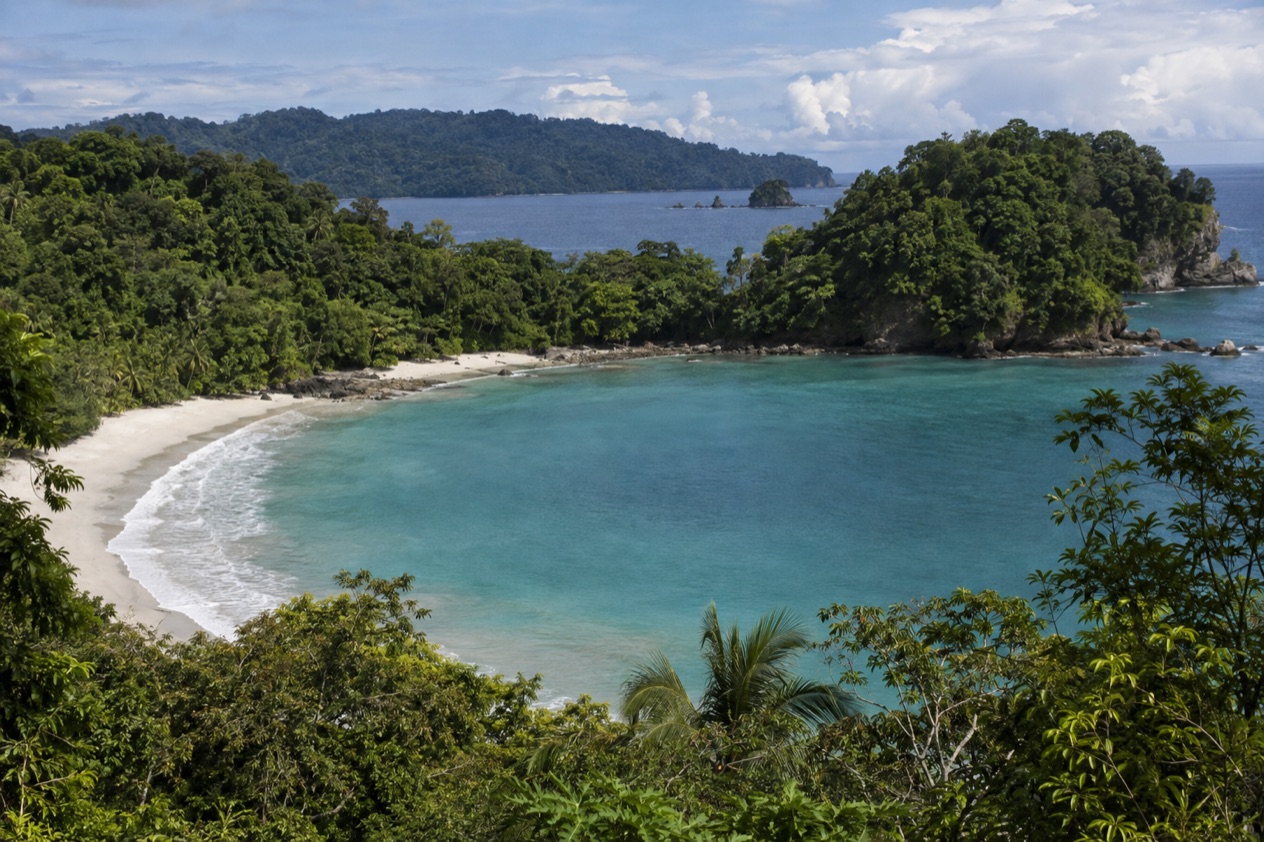
Early in the morning, a troop of white-faced capuchins crosses the road above the beach, and a sloth hangs motionless in a tree beside the path as if nothing in the world were urgent. Below, the Pacific rolls onto pale sand backed by green hills that seem to lean over the water. Manuel Antonio is a small corner of the central Pacific coast where jungle, beaches and hillside hotels sit close together, and it suits travelers who want wildlife and the sea in the same day.
Where is Manuel Antonio and what is it like?
Manuel Antonio is a stretch of hills and beaches on the central Pacific coast, just south of the town of Quepos, wrapped around one of the most visited national parks in Costa Rica. It is a resort area more than a town, a ribbon of lodging, restaurants and viewpoints strung along a single winding road that climbs from Quepos toward the park entrance.
The character is easy to describe: green, steamy and a little theatrical. Forest runs almost to the waterline, the sea shows between the trees from many balconies, and the animals do not treat the human world as separate from theirs. Monkeys sit on railings, iguanas cross the lawns of beachfront restaurants, and raccoons are alert to anything left unattended on a table.
The pace is relaxed but not sleepy. Mornings begin early because that is when the park and the wildlife feel most alive, afternoons drift toward the beach or a pool with a view, and evenings are spent at open-air restaurants watching the light go orange over the water. Quepos, down the hill, is the working town, with the market, the bus connections and the everyday shops that the hillside lacks.
Manuel Antonio is loved by first-time visitors to Costa Rica, by families who want animals without a long expedition, and by couples who want a view from the room. It may disappoint anyone looking for empty beaches or a quiet fishing-village feel, because this is one of the best-known destinations in the country and it shares its beauty with many other people. Those who prefer solitude tend to look farther along the coast.
Rain shapes the mood as much as the landscape. The region follows the Pacific pattern of a drier season from about December to April and a green, rainy season from about May to November, with showers that usually arrive in the afternoon. The forest is lushest when the rain is steady, which is also when the hillside feels most like a jungle.
What is there to do in Manuel Antonio?
The big reasons to come are the national park, the beaches, the wildlife you meet almost anywhere, and the views from the hillside itself. What sets Manuel Antonio apart from its Pacific neighbors is how compact all of it is: forest, sand and sea are within a short walk or bus ride of each other, so a single day can hold a jungle trail, a swim and a sunset.
Manuel Antonio National Park
The park is small, a patchwork of forest trails and white-sand coves where monkeys and sloths are often seen close to the paths. You walk under big trees, cross little streams and come out onto beaches such as Playa Manuel Antonio and Playa Espadilla Sur, which sit between forest and sea. Sightings are chances, not promises, but the density of animals is why so many people come.
Go early, when the light is soft and the trails are cooler, and think about walking with a guide, since trained eyes spot sloths and birds that most visitors pass without noticing. Check the park’s official page for current entry arrangements and visitor rules before you plan your day. Animals here must not be fed, and keeping food zipped away in your bag is part of the etiquette.
Beaches and the sea
Inside the park, the small beaches are the postcard stops, each tucked into its own cove with forest right behind the sand. Outside the gate lies the long public beach of Playa Espadilla, a wide strip that suits walking, sunbathing and a cold drink from one of the beach vendors. Both styles are worth trying, one wooded and intimate, the other open and sociable.
Treat the water with respect. Rip currents are very dangerous and cause several drownings of U.S. tourists each year, and most beaches do not have lifeguards or warnings about unsafe conditions. Watch how locals use the water, stay where it is easy to get out, and keep children close to shore.
Wildlife beyond the park
You do not have to enter the park to see animals. White-faced capuchin monkeys, squirrel monkeys, sloths, iguanas and raccoons are commonly seen in and around the park, and many people spot them from a hotel garden, a roadside or a restaurant terrace. Dawn and the hour before dusk are when the forest edge tends to be busiest.
Guided walks on private reserves and a boat trip on the waters near Quepos are the usual ways to see more, especially birds and mangrove life. They suit anyone who wants a slower, more informed look than a trail with crowds. Keep a respectful distance from the animals, and never offer food, however friendly they seem.
Views, sunsets and the hillside road
The road that winds from Quepos up to the park is an attraction in itself. Hotels and rentals climb the hill along it with sea views, and many restaurants have terraces cut into the slope, so a meal here often comes with a sunset over the Pacific and the dark outline of small islands offshore.
This is the time to linger over ceviche, grilled fish or a casado while the sun drops toward the Pacific. Order something cold, listen to the forest settle into its evening chorus of insects and birds, and watch the color move across the water. It is an easy, unhurried way to end a day of walking.
How many days do you need in Manuel Antonio?
Three nights is the sweet spot for most travelers, enough for the park, a beach day and a slower morning, and a long weekend can still feel complete if you plan it well. Two nights works if Manuel Antonio is one stop on a longer route, though you will spend most of your time on the park and little on anything else.
A short stay fits a morning in the park, an afternoon at Playa Espadilla and a sunset dinner on the hillside. The second day can be a guided wildlife walk or a boat outing, followed by a lazy afternoon by the pool. That rhythm, active early and restful later, matches the climate, since heat and afternoon rain make midday the natural time to rest.
With more time, the place changes character. You can spread the park, the beaches and the guided walks across separate days instead of squeezing them together, and you can stay put on a rainy afternoon without feeling you are missing anything. A longer visit also lets you look at Quepos properly, with its market, its marina and the everyday life behind the resort strip.
Day trips from here are mostly nature outings along the central Pacific coast. A boat trip through the Damas Island mangroves near Quepos is a favorite nature outing. Plan those outings with local operators, and leave room for delays on coastal roads.
If you are coming from the Central Valley, think of Manuel Antonio as the beach-and-jungle chapter of a trip, a place to arrive, unwind and then move on. Travelers who linger longer often say the pleasure is in the rhythm of the days rather than in ticking off sights.
Where to stay in Manuel Antonio
Hotels and rentals climb the hill between Quepos and the park entrance along one winding road with sea views, so where you sleep decides whether you walk or take a bus to the beach. There is really one question to settle: do you want to be high on the hill with the view, or low near the sand and the park gate?
The upper stretch of the road suits travelers who care most about the view and the forest around their room. Terraces look over the canopy to the ocean, monkeys and birds pass by at breakfast, and evenings are quiet apart from the insect chorus. The trade-off is distance, since you will rely on a bus, a taxi or a car to get down to the beach and the park.
The lower stretch, closer to the park entrance and Playa Espadilla, suits families and anyone who wants to walk to the sand, the restaurants and the park gate. It is livelier and more convenient, with more people and more movement along the road. Early risers appreciate being able to reach the park without a long ride.
Quepos, the town below the hill, is the practical option for travelers who want the local feel, shops and bus connections, and it is a base for boat trips and onward travel. It lacks the beach-at-your-door appeal but gives a sense of ordinary Costa Rican life.
In the drier months, popular rooms fill up first, so book early if you have a particular view or hillside in mind. In the green season, availability is easier, and a room with a balcony in the rain is a pleasure of its own.
How do you get to Manuel Antonio and get around?
Most visitors arrive by road from one of two international airports: Juan Santamaria International (SJO), near San Jose in the Central Valley, or Daniel Oduber Quiros International (LIR), at Liberia in the northwest, the closest airport for the Guanacaste beaches. For Manuel Antonio, San Jose is the more usual gateway, and from there the journey continues by road toward Quepos and up the hill.
Travel by road in Costa Rica is slower than maps suggest in many places, so leave room in your day, especially if you are connecting from a flight. Whichever you choose, arriving in daylight makes the winding final stretch easier.
Once you are here, the hillside road is the spine of everything. Hotels and rentals line it, so where you stay decides whether you walk or take a bus to the beach. If you stay near the bottom, walking to the beach and restaurants is easy, while higher up you will want a bus or a taxi for most trips.
Visitors who skip the car often find that buses, taxis and arranged transfers cover everything they want. If you do drive, take extra care on the curves and in the rain.
Walking is pleasant in the early morning and late afternoon, when the heat eases, but the hill is steep in places, so sturdy sandals or shoes help. Bring a light rain jacket in the green season, since showers can arrive suddenly. For passport and entry rules, travelers should confirm the current requirements before leaving home.
When is the best time to visit Manuel Antonio?
December through April is the most comfortable stretch, the drier season for the Pacific side, with sunnier mornings and fewer soaking days. January still sees showers on about nineteen days, but they tend to be short, and the sea is warm, around the mid-80s. April is the warmest of the months, with the sea near the upper 80s, though the rain starts to return, with showers on about twenty-two days.
From May to November the forest turns deep green and rain usually falls in the afternoon. July and October are the heaviest months, with a shower on nearly every day and big downpours on about a dozen of them. Mornings are often bright enough for a park visit, but afternoons can be gray and wet, so plan indoor time and keep a flexible schedule.
The temperature barely changes across the year, with highs in the upper 70s and low 80s and nights in the low 70s, so the choice is really about rain and crowds. The dry months are the busiest, and hotels fill up most around the major holiday weeks. In the green season the park and beaches feel quieter, rooms are easier to find, and the landscape is most lush.
For first-time visitors who want the most dependable beach days, aim for January through March. For those who enjoy rainforest atmosphere, fewer people and moody skies, the green season has its own rewards, as long as you accept that afternoon rain is part of the program.
Good to know before you go
The U.S. State Department rates Costa Rica Level 2, ‘Exercise increased caution,’ due to crime; it says petty crime is common throughout Costa Rica and that violent crime also affects tourists, including armed robbery, homicide and sexual assault.
The Costa Rican currency is the colon, but U.S. dollars are widely accepted in tourist areas, and many hotels, tours and restaurants quote prices in dollars, with change often handed back in colones. Keep valuables out of sight on the beach and in parked cars, as petty theft is a concern at busy spots. Watch the sea carefully, since most beaches have no lifeguards, and keep food away from the monkeys.
Sources
- Open-Meteo / ECMWF ERA5, normals 1991-2020 computed for the grid cell at 9.392N 84.1366W, checked October 8, 2026
- Open-Meteo Marine API, average 2015-2024, checked October 8, 2026
- U.S. Department of State, Costa Rica Travel Information, Safety and security (https://travel.state.gov/content/travel/en/international-travel/International-Travel-Country-Information-Pages/CostaRica.html), checked October 8, 2026
- U.S. Department of State, Costa Rica Travel Advisory, issued April 1, 2026 (https://travel.state.gov/content/travel/en/traveladvisories/traveladvisories/costa-rica-travel-advisory.html), read via the State Department open data API on October 8, 2026
- U.S. Department of State, Costa Rica Travel Information, Entry and exit requirements (https://travel.state.gov/content/travel/en/international-travel/International-Travel-Country-Information-Pages/CostaRica.html), checked October 8, 2026
All our pages
When to go
- Best Time to Visit Manuel Antonio: Dry Season, Green Season, Sea Temperatures and Festivals
- Manuel Antonio in January: Weather, Beaches, Wildlife and a Two-Day Plan
- Manuel Antonio in February: Weather, Beaches, Park Walks and a Two-Day Plan
- Manuel Antonio in March: Weather, Beaches, Wildlife and a Two-Day Plan
- Manuel Antonio in April: Weather, Beaches, Park Wildlife and a Two-Day Plan
- Manuel Antonio in May: Green Season Weather, Beaches, Wildlife and a Two-Day Plan
- Manuel Antonio in June: Green Season Weather, Beaches, Wildlife and a Two-Day Plan
- Manuel Antonio in July: Green-Season Weather, Beaches, Wildlife and a Two-Day Plan
- Manuel Antonio in August: Green-Season Weather, Beaches, Wildlife Walks and Mother's Day
- Manuel Antonio in September: Rainy-Season Weather, Swimming, Faroles and a Two-Day Plan
- Manuel Antonio in October: Green-Season Weather, Beach Days and Wildlife Walks
- Manuel Antonio in November: Green-Season Weather, Beaches, Wildlife Walks and a Two-Day Plan
- Manuel Antonio in December: Weather, Beaches, Wildlife and the Start of High Season
Things to do
- Things to Do in Manuel Antonio: National Park Trails, Beaches, Day Trips and Food
- Day Trips from Manuel Antonio: Carara Macaws, Tarcoles Crocodiles, Jaco and Quepos
- 3 Days in Manuel Antonio: Park Trails, Beaches and a Slow Final Day
- Manuel Antonio National Park: Beaches, Monkeys and Sloths, Tickets and Hours