
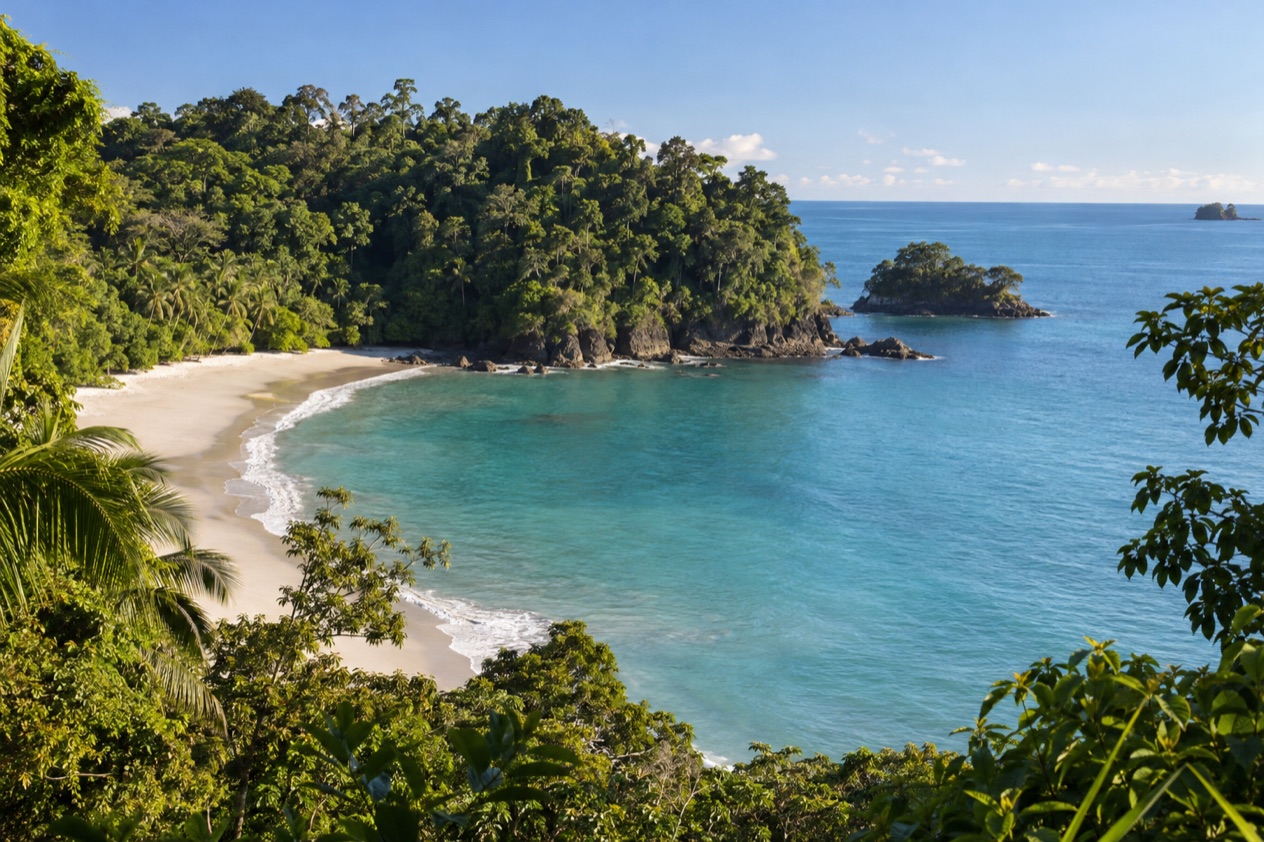
In April, the first afternoon clouds start to pile up over the hills behind Quepos, and the capuchin monkeys along the beach trails seem to know exactly when the shade will arrive. The forest is turning from dry-season gold back to deep green, the sea is bathwater warm, and the beaches are busiest when Costa Rican families arrive for Holy Week. This is Manuel Antonio at the hinge between the dry months and the green ones, for travelers who want the park and the beaches with a bit of cloud and the first rains.
What is the weather like in Manuel Antonio in April?
April is hot, humid and increasingly wet: sunny mornings are still the rule, but the rain is back and it shows up on most days of the month.
| Month | Average high (°F) | Average low (°F) | Rain days | Sea (°F) |
|---|---|---|---|---|
| March | 82.7 | 73.4 | 14.6 | 87.2 |
| April | 81.9 | 72.9 | 22.3 | 87.6 |
| May | 80.4 | 72.0 | 29.7 | 87.6 |
Mornings are the best hours of the day. Sunlight comes on strong, the warmth in the air has not turned thick yet, and creatures throughout the park are on the move.
Plan the walking, the beach trails and the photography for that stretch, because clouds tend to build later and the rain, when it comes, often falls in the afternoon or evening. Some days stay dry and some turn gray early, so treat the forecast as a hint and not a promise.
Rain here is tropical, which usually means a heavy downpour that drums on the roof and then eases, leaving steam rising from the road and the canopy dripping. Most of it is on the Pacific slope, so the hills around Quepos get wet while the coast can still be bright. Days with a real soaking are not rare, though, and the wettest ones can wipe out an afternoon outdoors.
Nights stay warm enough for a T-shirt and a cold drink on a terrace. You will want light, quick-drying clothes, sandals that grip a wet trail, and a rain jacket thin enough to live in your daypack. The sea stays pleasantly warm, and the day is long enough, about twelve hours of daylight in mid-April, to fit a morning walk, a beach break and a late sunset.
Can you swim in Manuel Antonio in April?
Yes, the water is warm enough to stay in for a long time, with no shock when you wade in, though warm water says nothing about the current.
The beaches inside and beside the national park are wide curves of pale sand backed by forest, and the sea on this part of the Pacific coast can run from gentle to rough within the same week. Tide and swell can shift conditions at any time, so check the water before you make your call.
Across Costa Rica, rip currents are very dangerous and cause several drownings of U.S. tourists each year, and most beaches have no lifeguards or warnings about unsafe conditions. Follow the flags and the lifeguards where there are any, ask your hotel what the water is doing that day, and keep children within arm’s reach.
Families usually enjoy the water best in short, supervised dips, with long stretches in the shade between them. Strong swimmers and snorkelers can look for calmer mornings, and anyone nervous in surf may prefer the hotel pool after lunch. Bring a hat, a rash guard and sunscreen, because the sun is strong even under April clouds.
What to do in Manuel Antonio in April
The calendar sets the tone. Holy Week (Semana Santa) moves every year, and when it falls in April, Holy Thursday and Good Friday are national holidays, most businesses close, and Costa Rican families fill the beaches.
The sand turns into a picnic ground, with coolers, music and kids in the surf, and the energy is cheerful and a little crowded. Juan Santamaria Day on April 11 is another national holiday, and it can bring a long weekend of local visitors to the coast.
Food is the other pleasure of the month. Ask for a casado, the plate of rice, beans, plantains and salad with your choice of fish, chicken or beef that just about every small eatery offers. At breakfast you will often find gallo pinto, rice and beans stirred together, served with eggs and a dollop of sour cream. In the afternoon heat, a fresh fruit juice, a coconut cracked open on the beach or a cold local beer is hard to beat, and the ceviche on the menus along the road to Quepos is usually made from the day’s catch.
Walking the national park
The national park is the reason most people come. It sits just south of the town of Quepos, and the trails run through forest to a handful of beaches. Sightings of squirrel monkeys, sloths, iguanas, raccoons and white-faced capuchins are common in the park and around it too, and feeding them is not allowed. That includes the clever capuchins, who will happily snatch a snack from an open bag, so keep food sealed.
April mornings are the time to go. The forest is quieter and cooler before the clouds gather, and the animals are easier to spot. Many visitors walk with a naturalist guide, who can find a sloth in the canopy that you would never see alone, and bring a telescope for a closer look.
Wildlife sightings are always a chance and not a promise, but the trails here give you good odds. Wear shoes that grip, because the paths can be muddy after rain, and check the park’s official page for current rules before you go.
Beach days and the road to Quepos
Outside the park, the beaches along the hillside road give you a more relaxed day. You can stretch out under a palm, rent a lounge chair, eat grilled fish at a beach restaurant and swim in the warm water when the flags and the conditions allow. Mornings are better for sunbathing, and late afternoon brings the light everyone photographs, when the sun drops toward the horizon and the islands off the coast turn to silhouettes.
The road itself is part of the experience. Small restaurants and viewpoints cling to the hillside, with the Pacific spread out below, and the cafés at the top are good for a coffee while a shower passes. Quepos, the working town below, has a lively market, simple sodas (small family restaurants) and the marina, which is where boat outings leave from.
Boats, mangroves and rainy-day options
From Quepos, boat trips head out along the coast, often with the chance of spotting dolphins and seabirds, and mangrove outings glide through quiet channels where herons and kingfishers perch. They are an easy way to see a different side of the area, and both suit a morning when the sea is gentle. Conditions change, so nothing is guaranteed, but the calm water of a mangrove is a good fallback when the ocean is rough.
When the rain settles in, switch to indoor pleasures. A long lunch in a hillside restaurant, a chocolate or coffee tasting, a spa treatment or a hotel pool with a view of the wet forest all make a gray afternoon feel like part of the plan. If the rain eases, an evening walk comes with the chorus of frogs and insects.
If you want a quieter hour, walk the paths of your own hotel grounds early. Many properties here sit inside patches of forest, and toucans, motmots and monkeys pass through the trees by the pool, so breakfast can double as wildlife watching.
A two-day itinerary for Manuel Antonio in April
Day 1 is for the park, and it starts early. Have gallo pinto and coffee at first light, then walk the park trails while the air is cool and the animals are moving, looking for sloths, monkeys and iguanas. As noon approaches and the temperature climbs, pass the peak-sun hours at the park beach, going in the water only if conditions and the flags allow, and having a casado at an unpretentious eatery close to the entrance.
In the afternoon, when clouds usually gather, head back to your hotel for a pool break or a nap. If the sky stays clear, walk down to the beach again for the late light. Dinner can be fresh fish at a hillside restaurant, with the sunset, around the middle of the evening’s first hour of darkness, turning the sea orange below you.
Day 2 moves to the water and the town. Start with a boat or mangrove outing from Quepos in the morning, subject to the day’s conditions. Back on land, wander the market, pick up fruit and have lunch at a soda, where the plate of the day is generous and inexpensive.
Spend the afternoon on a beach outside the park, with a lounge chair, a coconut and a book, keeping an eye on the sky. If rain comes in, switch to a coffee or chocolate tasting, a spa or a long meal at a covered restaurant. In the evening, drive or take a taxi along the hillside road for a last dinner with a view.
Is Manuel Antonio busy in April?
It can be, especially when Holy Week falls in April, because Costa Rican families and foreign travelers share the same beaches in the same days.
Outside the holiday days, the pace is easier. The last of the dry-season crowds thin out as the rains return, rooms are easier to find and restaurant tables open up.
Holy Thursday and Good Friday are the big pressure points, when the beaches fill with families and most businesses close, so the best habit is to book rooms and rental cars early for the holiday week and later for the quiet weeks around it. Juan Santamaria Day can also bring a burst of local visitors for a long weekend.
The road from the capital is about three to three and a half hours, and it gets slow when everyone leaves for the coast at once, so leave early on holiday mornings. From Jaco it is about two hours.
The national park draws the largest crowds in the middle of the day, so arriving early is both quieter and better for wildlife.
In the quiet weeks, the town feels relaxed. You can usually get a table at a favorite restaurant, find a lounge chair on the beach and walk the trails with room to stop and look up.
What to pack for Manuel Antonio in April
Pack for heat, humidity and sudden rain, with clothes that dry fast and shoes that cope with mud.
- A light rain jacket or poncho, for afternoon downpours on the trails.
- Sandals with a grip and closed shoes for the park, since paths get slick after rain.
- Quick-drying shirts and shorts, because nothing dries slowly in this humidity.
- Sunscreen, a hat and a rash guard, for strong sun on the beach and the boat.
- A dry bag or zip bags, to protect the phone and camera.
- Binoculars, for sloths and birds in the canopy.
- Bug spray, for evenings and the forest.
Good to know before you go
The U.S. State Department rates Costa Rica Level 2, ‘Exercise increased caution,’ due to crime; it says petty crime is common throughout Costa Rica and that violent crime also affects tourists, including armed robbery, homicide and sexual assault.
Before traveling, check current passport, proof-of-exit and permitted-stay requirements, and plan around Holy Thursday and Good Friday, when roads fill and many businesses close. The road to the coast is the way most visitors arrive, and the hillside road between Quepos and the park can be slow when traffic is heavy. Keep food sealed around the monkeys, never feed them, and look at the water each day before swimming, since most beaches have no lifeguard.
Manuel Antonio in April vs March and May
Moving four weeks earlier gives you a drier trip. March has far fewer rainy days and much less rain overall, the mornings and afternoons are both good for the beach, and the sea is just as warm. The price is more visitors, since rain still comes mainly as short showers with a wetter spell here and there, and rooms and tables fill faster.
Moving four weeks later takes you well into the green season. May is much wetter, with rain on almost every day, so afternoons often turn gray and beach time shrinks. The forest is lush and the crowds are thinner, which suits travelers who care more about quiet trails than sunshine.
April sits in between. If you want the most reliable beach weather, choose March. If you want the quiet and the green, choose May. April suits travelers who can plan around a mix, with active mornings and flexible afternoons, and who want to avoid the busiest dry-season weeks unless Holy Week falls in the month.
Is April a good time to visit Manuel Antonio?
Yes, for travelers who like warm days, a green forest and a trip built around the morning, and who do not mind a shower in the afternoon.
It suits wildlife watchers, who get quiet trails and active animals at dawn, and families who enjoy the holiday mood of Semana Santa on the beach. It also suits anyone who wants warm water and an easy pace. It is less ideal for travelers who need a dry afternoon for every plan, or who want a beach to themselves during the busiest holiday days.
On arrival, start with the park in the first morning hours, before the clouds and the crowds, then spend the afternoon by the pool or on the beach. What is special about April here is the change of season itself: the forest turning green, the first rains cooling the evenings, and monkeys crossing a beach trail under a sky that is just beginning to darken.
Sources
- Open-Meteo / ECMWF ERA5, normals 1991-2020 computed for the grid cell at 9.392N 84.1366W, checked October 8, 2026
- Open-Meteo Marine API, average 2015-2024, checked October 8, 2026
- sunrise-sunset.org, sunrise and sunset calculated for the 15th of the month, checked October 8, 2026
- U.S. Department of State, Costa Rica Travel Information, Safety and security (https://travel.state.gov/content/travel/en/international-travel/International-Travel-Country-Information-Pages/CostaRica.html), checked October 8, 2026
- U.S. Department of State, Costa Rica Travel Advisory, issued April 1, 2026 (https://travel.state.gov/content/travel/en/traveladvisories/traveladvisories/costa-rica-travel-advisory.html), read via the State Department open data API on October 8, 2026
To plan your stay
- Things to Do in Manuel Antonio: National Park Trails, Beaches, Day Trips and Food
- Where to Stay in Manuel Antonio: Quepos, the Hill Road and the Beach End
- Day Trips from Manuel Antonio: Carara Macaws, Tarcoles Crocodiles, Jaco and Quepos
- 3 Days in Manuel Antonio: Park Trails, Beaches and a Slow Final Day